Castle Cut Stone Veneer Cost Breakdown: Natural vs. Manufactured Pricing
Analyze the true cost of castle cut stone veneer installation. Compare natural vs. manufactured pricing, labor rates, and hidden material expenses.

The Economics of Castle Cut Stone Veneer
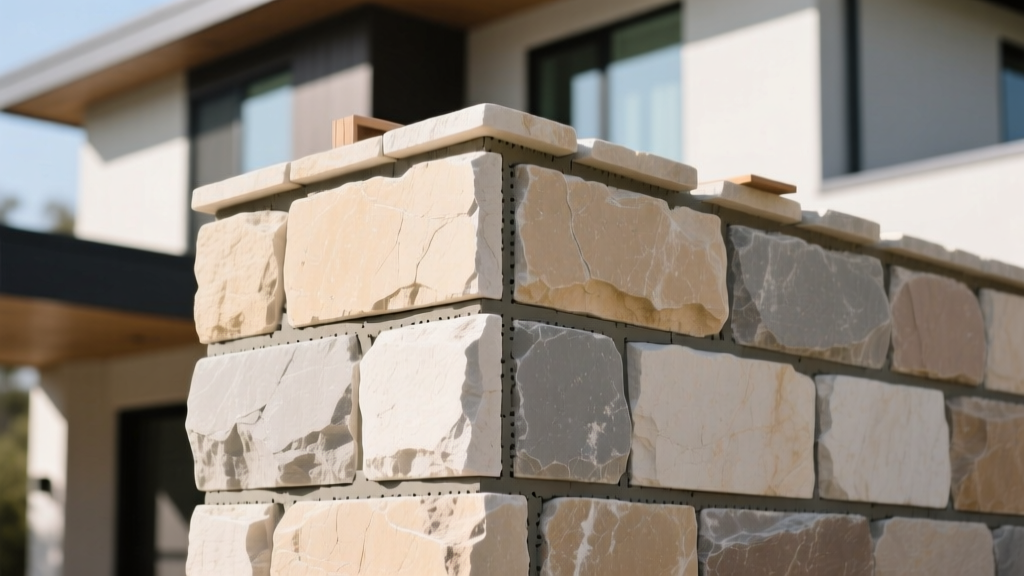
Castle cut stone veneer, characterized by its large, rectangular, ashlar-style blocks and clean, squared edges, mimics the architectural gravity of historic European manors and fortresses. Unlike irregular fieldstone or rustic ledgestone, castle cut requires precise horizontal alignment and tight, uniform mortar joints. This distinct geometric profile directly impacts both material procurement and masonry labor rates. For contractors and homeowners planning an exterior facade or interior accent wall, understanding the nuanced cost drivers of this specific profile is critical to avoiding budget overruns.
In 2026, the stone veneer market has stabilized following earlier supply chain disruptions, but freight costs for heavy natural stone and premium pricing for high-fidelity manufactured stone veneer (MSV) remain significant variables. This analysis breaks down the exact material, labor, and accessory costs required to execute a flawless castle cut installation.
Material Cost Matrix: Natural vs. Manufactured Castle Stone
The first major cost bifurcation is choosing between quarried natural stone and Manufactured Stone Veneer (MSV). Natural castle cut is typically milled from limestone or sandstone, while MSV utilizes Portland cement, lightweight aggregates, and iron oxide pigments to replicate the look without the extreme weight.
| Material Type | Average Cost (Per Sq. Ft.) | Weight (Per Sq. Ft.) | Waste Factor | Best Application |
|---|---|---|---|---|
| Natural Limestone (Castle Cut) | $14.00 - $24.00 | 12 - 15 lbs | 15% - 20% | High-end exteriors, historic restorations |
| Natural Sandstone (Castle Cut) | $11.00 - $19.00 | 10 - 13 lbs | 15% - 20% | Exterior facades, retaining wall caps |
| Premium MSV (Castle/Ashlar Profile) | $7.50 - $12.50 | 4 - 6 lbs | 8% - 10% | Interior feature walls, multi-story exteriors |
| Standard MSV (Castle/Ashlar Profile) | $5.00 - $8.00 | 4 - 6 lbs | 8% - 10% | Budget-conscious residential exteriors |
Natural Stone Pricing Variables
When sourcing natural castle cut stone, the quarry location dictates the baseline price, but freight is the true budget killer. A pallet of natural limestone veneer can weigh upwards of 3,500 pounds. If you are sourcing from a regional quarry, expect to pay $14 to $18 per square foot. Importing specific colorways (such as Indiana Limestone or Texas Cream) across the country can push material costs past $24 per square foot once LTL (Less-Than-Truckload) freight is factored in. Furthermore, natural stone requires a 15% to 20% waste factor to account for breakage during transit and the inevitable cuts needed to fit corners and maintain the ashlar bond pattern.
Manufactured Stone Veneer (MSV) Pricing Variables
MSV offers a lighter, more cost-effective alternative. Premium brands like Cultured Stone or Coronado Stone manufacture highly realistic castle cut profiles with integrated color fastness that resists UV fading. While the base material is cheaper, you must verify that the product meets ASTM C1670 standards for manufactured stone masonry units. Standard MSV options found in big-box masonry supply catalogs are adequate for interior use but may lack the depth of color variation required for large, sun-drenched exterior facades.
Labor and Preparation: The Hidden Cost Drivers
Castle cut stone is deceptively complex to install. While the squared edges mean the mason spends less time cutting and shaping individual stones compared to fieldstone, the requirement for absolute horizontal precision increases labor time. Masons must use story poles and string lines for every single course to prevent the 'stair-step' effect that plagues poorly installed ashlar veneers.
Because castle cut features long, continuous horizontal mortar joints, any substrate deflection or framing settlement will result in highly visible, continuous horizontal cracking. Ensure your framing meets L/360 deflection limits before applying the scratch coat. Never install castle cut veneer directly over green lumber or unbraced cantilevered sections.
Masonry Labor Rates
Expect to pay between $16.00 and $28.00 per square foot for professional masonry labor, depending on regional rates and site accessibility. Interior installations generally fall on the lower end of this spectrum ($16 - $20/sq ft), while multi-story exterior scaffolding work pushes rates to the higher end ($24 - $28/sq ft).
Substrate Preparation Costs
Proper prep is non-negotiable for adhered veneer. The standard assembly requires a weather-resistive barrier (WRB), self-furring galvanized metal lath, and a 1/2-inch Type S mortar scratch coat.
- Metal Lath (2.5 lb self-furring): $1.20 - $1.80 per sq. ft.
- Weep Screed (Base flashing): $1.50 - $2.50 per linear foot.
- Scratch Coat (Type S Mortar): $0.90 - $1.40 per sq. ft. (materials and labor).
Complete System Cost Estimator (Per Square Foot)
To provide a realistic budget, the following table aggregates the total installed cost for a standard 500-square-foot exterior facade project using a premium MSV castle cut profile. This assumes standard wood-frame construction with OSB sheathing.
| Cost Category | Low Estimate (Per Sq. Ft.) | High Estimate (Per Sq. Ft.) | Notes |
|---|---|---|---|
| MSV Material (Castle Cut) | $7.50 | $12.50 | Includes 10% waste factor |
| WRB & Flashing | $0.80 | $1.50 | House wrap and weep screed |
| Lath & Scratch Coat | $2.50 | $4.00 | Galvanized lath, Type S mortar |
| Setting Mortar & Accessories | $1.20 | $2.00 | Polymer-modified mortar, joint tools |
| Masonry Labor | $16.00 | $28.00 | Varies heavily by region/scaffolding |
| Total Installed Cost | $28.00 | $48.00 | Total for 500 sq ft: $14,000 - $24,000 |
Technical Execution: Mortar Selection and Jointing
The visual success of castle cut stone relies entirely on the mortar joint. Unlike dry-stack applications, castle cut requires a tooled, recessed, or flush joint to emphasize the geometric block pattern.
Use a Type S mortar mix for exterior applications due to its higher tensile bond strength and flexibility. When tooling the joints on a castle cut profile, wait until the mortar is 'thumbprint hard' before striking it with a convex jointer. Striking too early will smear the Portland cement over the stone face, causing permanent staining that requires costly acid washing to remove.
For natural stone, always back-butter each block with a thin layer of mortar to ensure 100% adhesion, as natural stone densities vary and can resist initial suction. For MSV, back-buttering is also required by most manufacturers to maintain the warranty, despite the lighter weight of the product.
Maintenance and Long-Term Value ROI
Castle cut stone veneer is a premium architectural feature that yields a high return on investment. According to real estate appraisal data, high-quality masonry exteriors can recoup 80% to 95% of their installation cost in added home value, significantly outperforming vinyl or fiber cement siding.
Maintenance costs are minimal but specific. Natural limestone and sandstone are porous and susceptible to efflorescence (white salt deposits) and water infiltration if left untreated in freeze-thaw climates. Budget $0.50 to $1.00 per square foot to apply a high-quality, breathable silane/siloxane penetrating sealer every 5 to 7 years. Never use film-forming acrylic sealers on natural stone veneer, as they trap moisture inside the masonry assembly, leading to spalling and structural degradation. MSV requires virtually no sealing, making it the superior choice for low-maintenance requirements in harsh northern climates.
Sourcing and Procurement Strategies
When ordering castle cut veneer, always purchase full pallets to ensure dye-lot consistency. MSV color batches can vary slightly between production runs. If your project requires 420 square feet, and the pallet covers 100 square feet, order five pallets (500 sq ft) rather than mixing four pallets with loose boxes. The excess material can be returned to the supplier (verify restocking fees first) or kept for future repairs. Always request the supplier's technical data sheet (TDS) and verify the product's freeze-thaw durability rating before signing the purchase order.
Written by
James ThorntonJames Thornton is a construction industry veteran with 25 years of hands-on experience in wood framing, lumber grading, and residential building codes. He started as a framing carpenter in rural Oregon, earned his ICC Residential Building Inspector certification, and eventually became a senior plan reviewer for the City of Portland Bureau of Development Services. James holds a B.S. in Wood Science & Technology from Oregon State University and is a certified lumber grader through the West Coast Lumber Inspection Bureau (WCLIB). He has inspected over 3,000 residential construction sites and authored the city's internal guide on advanced framing techniques (2x6 at 24" O.C.). James lives in Bend, OR, where he builds custom timber-frame cabins and competes in lumberjack sports.
More from James Thornton
View all
Insulation
Best Home Insulation Materials: Complete 2026 Guide
Compare top home insulation materials for 2026. Find R-values, installed costs per square foot, and best uses for fiberglass, spray foam, and mineral wool.
Aug 4, 2026

Sustainable Building
Certify Your Green Building Material for LEED and WELL
Step-by-step guide to certifying a green building material for LEED v5 and WELL v2. Master EPDs, HPDs, and VOC limits for 2026 project specifications.
Aug 4, 2026

Stone & Masonry
Veneer Stacked Stone Panels: Interior Design & Style Showcase
Discover how veneer stacked stone panels transform interiors. Explore modern design profiles, material pairings, and technical installation specs.
Aug 4, 2026