Stone Veneer Fireplace Surround Maintenance and Care Guide
Expert guide to stone veneer fireplace surround maintenance. Learn soot removal, sealing protocols, mortar repair, and safe cleaning products.
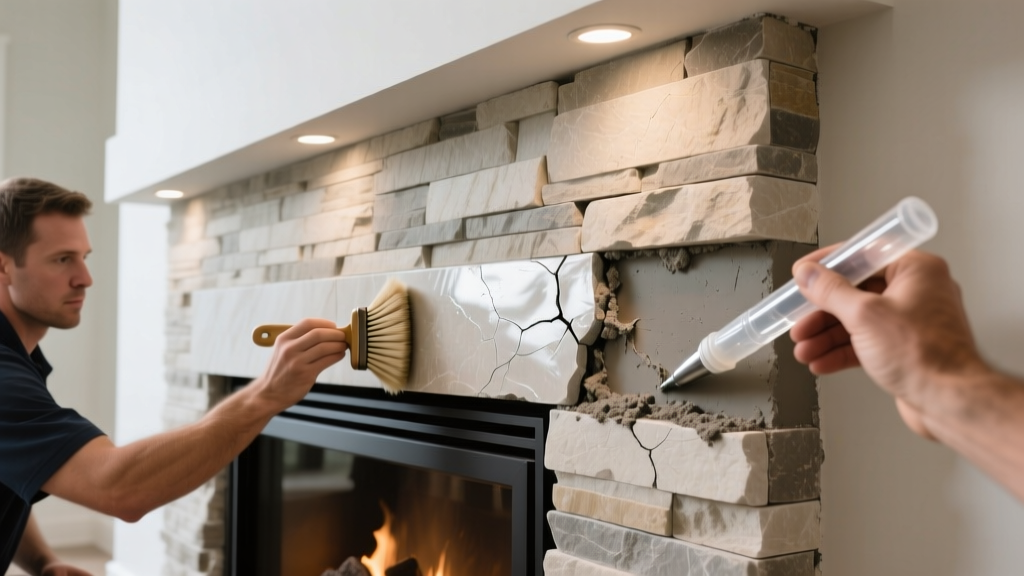
The Material Baseline: Manufactured vs. Natural Stone
Maintaining a stone veneer fireplace surround begins with identifying the exact material composition. Manufactured stone veneer (MSV) is a cementitious product cast from molds, composed of Portland cement, lightweight aggregates like pumice, and iron oxide pigments. Natural stone veneer consists of quarried geological formations like slate, limestone, or fieldstone, sliced to a 0.5-inch to 1.5-inch thickness. According to the Masonry Veneer Manufacturers Association (MVMA), MSV is inherently more porous and vulnerable to acidic degradation than high-density natural stone. Applying a natural stone cleaning protocol to MSV can permanently strip the iron oxide pigments and erode the cement binder, leading to irreversible fading and structural spalling.
The Dry-First Soot Removal Protocol
The most common mistake homeowners make when cleaning a stone veneer fireplace surround is introducing water to soot. Water acts as a carrier, driving carbon particles deep into the microscopic pores of the stone and mortar, resulting in permanent gray staining. Follow this strict dry-first protocol for routine maintenance:
- Deploy a Vulcanized Rubber Sponge: Purchase a dry chemical sponge (often sold as soot sponges). The vulcanized rubber creates a micro-abrasive action that lifts carbon from the pores without moisture. Wipe the stone in a single direction, flipping the sponge as it turns black.
- HEPA Vacuum Extraction: Use a vacuum equipped with a HEPA filter and a soft bristle brush attachment. Hold the nozzle exactly one inch above the veneer surface to extract the dislodged soot without scratching the aggregate.
- Targeted Dry Brushing: For deep mortar joints where the sponge cannot reach, use a natural Tampico fiber brush. Avoid wire brushes entirely, as steel bristles will leave behind microscopic metal fragments that will oxidize and create rust stains when exposed to ambient humidity.
CRITICAL WARNING: Never use muriatic acid, hydrochloric acid, or undiluted vinegar on manufactured stone veneer. These acidic compounds react violently with the Portland cement matrix, causing immediate efflorescence, surface etching, and permanent pigment loss.
Deep Cleaning Matrix for Stubborn Stains
When dry methods fail to remove embedded creosote, hard water deposits, or organic staining, chemical intervention is required. The National Fire Protection Association (NFPA) notes that creosote buildup near the firebox requires careful handling to avoid pushing combustible residues deeper into the masonry. Use the following matrix to select the correct chemical agent:
| Stain Type | Recommended Cleaning Agent | Application Method & Dwell Time |
|---|---|---|
| Heavy Creosote / Tar | Alkaline-based masonry degreaser (pH 10-12) | Apply with a nylon brush. Dwell for 5-7 minutes. Agitate and rinse with low-pressure warm water. |
| Hard Water / Mineral | Phosphoric acid masonry cleaner (diluted 1:10) | Pre-wet stone with clean water. Apply solution. Dwell for 3 minutes max. Neutralize with baking soda solution. |
| Organic / Mildew | Oxygenated bleach (Sodium percarbonate) | Mix powder with warm water to form a paste. Apply to joints. Dwell for 15 minutes. Scrub and rinse. |
| General Dust / Grime | pH-neutral stone soap (e.g., Simple Green Oxy) | Mix 1 oz per gallon of water. Mop or sponge onto surface. No rinse required if diluted correctly. |
For professional-grade results on high-end architectural installations, contractors frequently rely on specialized formulations like PROSOCO Sure Klean Limestone & Masonry Cleaner, which is specifically calibrated to lift biological and carbon staining without etching cementitious binders.
To Seal or Not to Seal? Porosity and Heat Tolerance
A pervasive myth in hearth design is that all stone veneer requires sealing. In reality, interior stone veneer fireplace surrounds located more than three feet from the firebox opening do not require sealing. The ambient indoor environment lacks the freeze-thaw cycles and UV exposure that degrade exterior masonry.
When Sealing is Mandatory:
- The surround is within 36 inches of an open, un-glassed firebox (high soot and creosote exposure).
- The stone is a highly porous natural material like unpolished limestone or sandstone.
- The fireplace is in a high-humidity environment (e.g., a master bathroom hearth).
The Siloxane Mandate: If you must seal a stone veneer fireplace surround, you must use a penetrating siloxane or silane-based sealer (such as PROSOCO Siloxane PD). Siloxanes penetrate up to 1/4 inch into the masonry and line the pores, creating a hydrophobic barrier while remaining 100% vapor-permeable. Never use film-forming acrylic or polyurethane sealers on a fireplace surround. Acrylic sealers create a surface film that will yellow, blister, and emit toxic volatile organic compounds (VOCs) when exposed to the radiant heat of a fire.
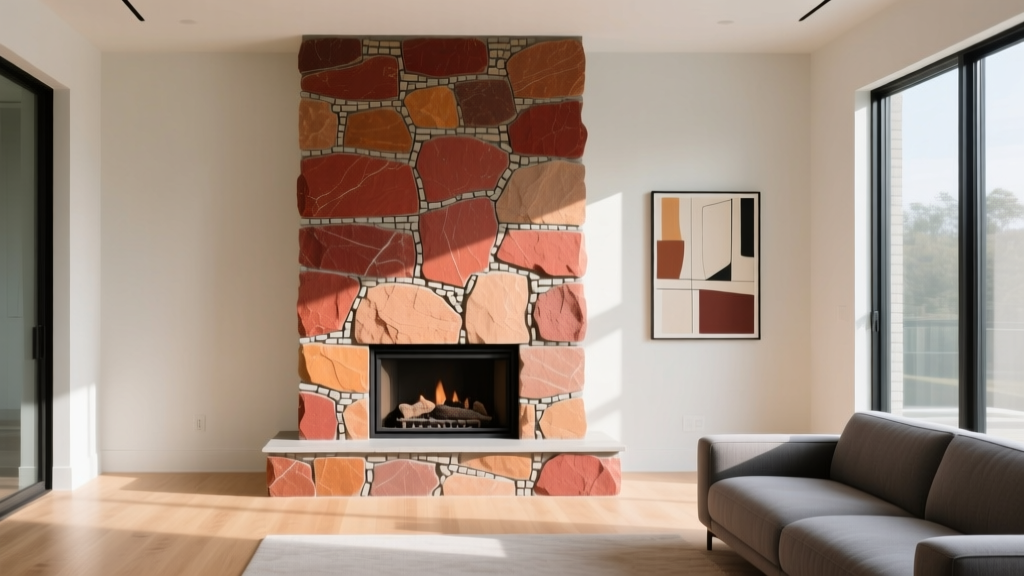
Mortar Joint Repair and Efflorescence Management
Mortar joints are the structural and aesthetic backbone of your veneer installation. Over time, thermal expansion and contraction from fireplace use can cause micro-fractures in the grout lines.
Identifying the Correct Mortar
Standard veneer mortar joints on the outer perimeter of the surround should be repaired using a Type N mortar mix (1 part Portland cement, 1 part hydrated lime, 6 parts sand). Type N offers the flexibility required to absorb thermal movement without cracking. However, if the mortar joint is located within 12 inches of the firebox opening, standard mortar will calcify and crumble under direct heat. You must use a calcium aluminate refractory mortar (such as Rutland Castable Refractory Cement), which is rated to withstand temperatures up to 2,000°F.
Efflorescence Removal
Efflorescence appears as a white, powdery salt deposit on the stone or mortar. It occurs when water-soluble salts migrate to the surface and crystallize upon evaporation. Do not wash efflorescence with water; this simply dissolves the salts and drives them back into the pores. Instead, allow the deposit to dry completely, then remove it using a stiff nylon brush and a HEPA vacuum. If the efflorescence persists, it indicates a chronic moisture intrusion issue behind the veneer, such as a failing vapor barrier or a leaky chimney chase cover, which must be addressed at the structural level.
Maintenance Cost Breakdown: DIY vs. Professional
Understanding the financial commitment of maintaining a stone veneer fireplace surround helps homeowners budget for annual hearth care. Below is a comparative cost analysis based on standard 20-square-foot surround dimensions.
| Maintenance Task | DIY Cost (Materials Only) | Professional Service Cost | Recommended Frequency |
|---|---|---|---|
| Routine Soot & Dust Removal | $15 - $25 (Sponges, brushes) | $85 - $150 (Basic hearth cleaning) | Monthly during burning season |
| Deep Chemical Creosote Cleaning | $40 - $70 (Alkaline cleaners, PPE) | $250 - $450 (Specialized masonry wash) | Annually (if open firebox) |
| Siloxane Sealer Application | $60 - $120 (Penetrating sealer) | $300 - $500 (Prep, mask, and seal) | Every 3 to 5 years |
| Mortar Repointing (Standard) | $25 - $50 (Type N mix, tuck point tools) | $400 - $800 (Grind out and repoint) | As needed (every 10-15 years) |
Frequently Asked Questions
Can I paint my stone veneer fireplace surround?
While technically possible, painting MSV is strongly discouraged. Paint fills the vapor-permeable pores of the cementitious material, trapping moisture behind the veneer. This leads to freeze-thaw spalling in colder climates and adhesive failure of the veneer backing. If a color change is absolutely necessary, use a mineral-based limewash or a specialized masonry stain that allows the substrate to breathe.
How close can combustible materials be to the stone veneer?
Stone veneer itself is non-combustible, but the framing behind it is not. The NFPA mandates that combustible materials (like wood mantels or trim) must maintain a minimum clearance of 6 inches from the firebox opening on the sides, and 12 inches on the top. Always verify local building codes and the specific clearance requirements listed by your fireplace insert manufacturer, as high-efficiency units may have altered thermal radiation profiles.
Why is my mortar joint crumbling after only two years?
Premature mortar degradation is almost always caused by improper mixing ratios or applying the mortar in extreme temperatures. If the mortar was mixed too wet (high water-to-cement ratio), it will shrink excessively and lose structural integrity as it cures. Additionally, applying standard veneer mortar too close to the firebox without a refractory additive will cause the lime and cement to calcify and turn to dust under repeated thermal cycling.
Written by
Elena RodriguezElena Rodriguez is a civil engineer and technical writer specializing in concrete technology, masonry systems, and ASTM/ACI compliance. She earned her B.S. in Civil Engineering from Texas A&M University and spent a decade at a materials testing laboratory, performing over 2,000 concrete compressive strength tests and masonry prism evaluations. Elena is an ACI-certified Field Testing Technician (Grade I) and a member of ASTM Committee C12 on Natural Building Stone. She currently consults on forensic engineering cases involving concrete failures and moisture intrusion. Based in San Antonio, TX, Elena is a proud member of the Society of Women Engineers (SWE) and coaches her daughter's FIRST Robotics team.
More from Elena Rodriguez
View all
Walls & Panels
Cost Analysis: Light Gauge Steel Framing Advantages and Disadvantages
Evaluate light gauge steel framing advantages and disadvantages through a strict cost analysis lens, comparing material, labor, and lifecycle expenses.
Aug 4, 2026

Walls & Panels
Gypsum Board Types: Exact Specifications, Thickness & Dimensions
Compare standard, Type X, and moisture-resistant gypsum board types. Get exact specifications, thicknesses, dimensions, and ASTM standards for your project.
Aug 4, 2026

Fire Resistance
Best Fire-Resistant Outdoor Decking Materials: 2026 Buyer Guide
Discover the best fire-resistant outdoor decking materials for 2026. Compare Class A PVC, aluminum, and hardwood options for WUI compliance and safety.
Aug 4, 2026