Maintaining Faux Veneer Stone Panels: A Complete Care Guide
Learn how to clean, protect, and repair faux veneer stone panels. Discover expert tips on UV protection, stain removal, and seasonal upkeep.

Material Identification: Polyurethane vs. Cement-Based Veneers
Faux veneer stone panels offer the aesthetic of natural masonry at a fraction of the weight and structural cost. However, establishing a proper maintenance protocol requires identifying your specific substrate. Misapplying natural stone cleaners to faux panels can strip UV inhibitors from synthetic boards or etch the iron-oxide pigments in cementitious composites. According to the Texture Plus Polyurethane Panel Care guidelines, synthetic panels require vastly different chemical tolerances than traditional masonry.
Before selecting a cleaning agent, perform a substrate test:
| Characteristic | High-Density Polyurethane (HDPU) | Cement-Based Manufactured Stone |
|---|---|---|
| Common Brands | GenStone, NextStone, Texture Plus | Cultured Stone, Eldorado, Coronado |
| Weight Profile | 1–2 lbs per sq. ft. | 8–12 lbs per sq. ft. |
| Acoustic Test | Hollow, dull thud when tapped | Dense, sharp click when tapped |
| Seam Construction | Interlocking shiplap or tongue-and-groove | Mortar joints or tight-stack dry-fit |
| Porosity | Non-porous, closed-cell foam | Highly porous, absorbs moisture |
Routine Cleaning Protocols for Faux Veneer Stone Panels
Routine maintenance should occur bi-annually to prevent the buildup of atmospheric pollutants, pollen, and biological growth. The cleaning methodology diverges strictly based on the material identified above.
Washing High-Density Polyurethane (HDPU) Panels
HDPU panels are essentially rigid, painted foams. The factory-applied topcoat contains UV-blocking acrylics that degrade when exposed to harsh alkalines or solvents.
- Pre-Rinse: Use a standard garden hose with a flat-fan nozzle to loosen surface dust. Do not use a pressure washer.
- Detergent Application: Mix 1/4 cup of pH-neutral dish soap (such as Dawn) per gallon of warm water.
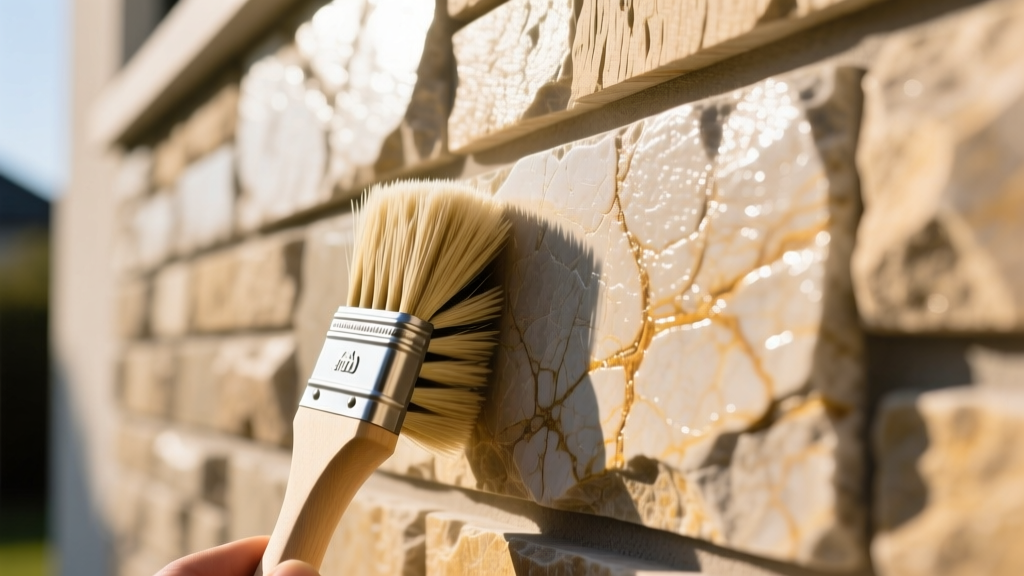
- Agitation: Scrub the faux veneer stone panels using a soft-bristled nylon detailing brush. Work in 4x4 foot sections, following the horizontal grain of the stone profile.
- Rinse: Rinse thoroughly from top to bottom to prevent soap streaking.
Washing Cement-Based Manufactured Stone
Cement-based veneers are colored throughout with mineral pigments. As noted in the Cultured Stone Care and Maintenance Guidelines, acidic cleaners will permanently bleach the iron oxides, leaving white, chalky patches.
- Pre-Wet: Saturate the stone with clean water. A dry, porous cement panel will absorb cleaning chemicals too rapidly, causing localized staining.
- Cleaning Solution: Use a dedicated masonry cleaner or a Trisodium Phosphate (TSP) substitute diluted at 1/2 cup per gallon of water.
- Agitation: Use a stiff natural-bristle brush. Avoid wire brushes entirely, as they will leave behind microscopic steel fibers that rust within 48 hours.
- Rinse: Flush with low-pressure water until the runoff is completely clear.
Never exceed 1,200 PSI when washing any faux veneer stone panels. High-pressure streams will tear the interlocking seams of HDPU panels, allowing water infiltration behind the weather-resistive barrier (WRB). On cement-based panels, pressures above 1,500 PSI will erode the cement paste, exposing the underlying aggregate and ruining the faux texture.
Stain Removal and Troubleshooting Matrix
When routine washing fails, targeted chemical interventions are required. The following matrix outlines exact formulations for common stains encountered on exterior and interior installations.
| Stain Type | Substrate | Chemical Solution | Application & Dwell Time |
|---|---|---|---|
| Efflorescence (White Salt) | Cement-Based Only | Dry stiff brush, followed by 50/50 white vinegar and distilled water. | Brush dry first. Apply liquid, dwell for 3 minutes, rinse heavily. Do not let vinegar dry on the surface. |
| Mildew & Algae | Both | Oxygen Bleach (Sodium Percarbonate) dissolved in warm water. | Apply, dwell for 15 minutes, scrub, and rinse. Oxygen bleach is preferred over chlorine bleach, which degrades HDPU UV coatings and strips cement pigments. |
| Hard Water Spots | Both | CLR (Calcium, Lime, Rust) diluted 50/50 with water. | Apply with a sponge, dwell for no more than 2 minutes, rinse immediately. Prolonged exposure will etch HDPU topcoats. |
| Grease / BBQ Splatter | Both | Undiluted citrus-based degreaser (e.g., Zep Citrus). | Spray directly, allow to emulsify for 5 minutes, wipe with a microfiber cloth, then rinse. |
For interior installations near fireplaces, soot buildup is common. Use a dry chemical sponge (vulcanized rubber) to lift soot particles from the deep crevices of the faux stone profile without driving the carbon deeper into the pores with water.
UV Protection and Preventative Coatings
Exterior faux veneer stone panels face relentless ultraviolet degradation. While HDPU panels are manufactured with UV-stable acrylic paints, prolonged southern or western exposure will cause the topcoat to 'chalk' or fade after 7 to 10 years. Cement-based panels generally retain their integral color indefinitely but may suffer from surface spalling in freeze-thaw climates if left unsealed.
For HDPU Panels: If chalking occurs, wash the surface thoroughly and allow it to dry for 48 hours. Apply a single coat of clear, non-yellowing, water-based exterior spar urethane (such as Varathane Ultimate Water-Based Spar Urethane in Matte). This restores the UV-blocking layer without adding an artificial, high-gloss plastic sheen that ruins the stone illusion.
For Cement-Based Panels: Apply a penetrating silane/siloxane masonry sealer every 5 years. Unlike film-forming acrylic sealers that trap moisture inside the stone and cause spalling during winter freezes, siloxane sealers penetrate the pores and create a hydrophobic barrier while remaining completely vapor-permeable.
Repairing Chips, Scratches, and Seam Separation
Physical damage to faux veneer stone panels is inevitable in high-traffic areas or from landscaping equipment impact. The repair methodology depends on the severity and substrate.
Fixing HDPU Seam Separation
Temperature fluctuations cause polyurethane panels to expand and contract (approximately 1/16 inch per 10 linear feet per 100°F change). If installer fasteners were over-driven or improperly spaced, seams can pull apart.
- Preparation: Clean the gap with compressed air to remove dust and insect debris.
- Filling: Inject an exterior-grade polyurethane sealant (e.g., Loctite PL Polyurethane Window, Door, and Siding). Do not use silicone, as it cannot be painted.
- Tooling: Smooth the bead with a damp sponge to mimic the rough texture of mortar or stone.
- Color Matching: Once cured, stipple the seam with exterior-grade acrylic artist paints (e.g., Liquitex Heavy Body) using a natural sea sponge to blend the repair into the surrounding multi-tonal stone profile.
Patching Cement-Based Chips
For deep chips exposing the lightweight aggregate core of cementitious panels, use a vinyl concrete patching compound. Mix the patcher with a liquid masonry bonding adhesive instead of water to ensure structural adhesion. Trowel the compound into the chip, overfilling slightly. Before it sets, use a stiff wire brush or a piece of rough natural stone to carve and texture the wet patch to match the surrounding faux profile. Once fully cured (typically 24 hours), apply a mineral-based masonry stain to color-match the repair.
Seasonal Maintenance Checklist
Proactive maintenance prevents minor issues from escalating into structural envelope failures. Adhere to this seasonal framework to maximize the lifespan of your installation.
- Early Spring: Inspect all horizontal transitions, window sills, and base flashings. Ensure that soil or mulch has not been piled against the bottom edge of the faux veneer stone panels, maintaining a strict 4-inch clearance to prevent ground-moisture wicking and termite bridging.
- Late Summer: Check for biological growth (algae/mildew) on north-facing elevations. The EPA Mold Cleanup Guidelines recommend addressing exterior biological growth before autumn rains set in, using oxygen-based cleaners to protect surrounding landscaping.
- Late Autumn: Clear gutters and downspouts above the stone veneer. Overflowing water during winter freeze-thaw cycles is the primary cause of efflorescence on cement-based panels and ice-damming behind HDPU panel seams.
- Winter: Never use metal snow shovels or chemical ice melts (calcium chloride or rock salt) near the base of the panels. Salt spray will rapidly corrode the metal lath behind cement-based veneers and degrade the acrylic topcoats on polyurethane boards. Use clean sand for traction instead.
Written by
Sarah WhitfieldSarah Whitfield is a chartered quantity surveyor (MRICS) and construction cost analyst with 15 years of experience in material pricing, procurement strategy, and project budgeting. She earned her degree in Construction Management from the University of Reading (UK) and has worked on projects ranging from $2M custom homes to $180M mixed-use developments across North America and Europe. Sarah currently leads cost estimating for BuildMat Insight, maintaining a proprietary database of 4,000+ material price points updated quarterly. She is a frequent contributor to RSMeans cost data panels and has presented at the International Cost Engineering Council (ICEC) congress. Based in Denver, CO, Sarah is an avid trail runner and volunteer mentor for Women in Construction.
More from Sarah Whitfield
View all
Wood & Lumber
What Are the Different Types of Wood? A Builder's Guide
Compare structural softwoods, finish hardwoods, and engineered lumber. Analyze Janka ratings, MOE values, and 2026 pricing for construction.
Aug 4, 2026

Walls & Panels
Steel Framing vs Wood Framing: Corrosion and Moisture Defense
Compare steel framing vs wood framing for moisture resistance. Learn about galvanized coatings, condensation risks, and corrosion protection strategies.
Jul 21, 2026

Stone & Masonry
How to Cut Stone Veneer: Wet Saw vs Grinder Comparison
Compare the best tools for cutting stone veneer. We review wet saws, angle grinders, and chop saws to help you achieve clean, chip-free cuts.
Jul 21, 2026