The Complete Veneer Stone Guide: Types, Costs, and Installation
Explore the complete guide to veneer stone. Compare natural vs. manufactured types, 2026 installation costs, mortar specs, and moisture management details.

The Anatomy of Veneer Stone: Manufactured vs. Natural
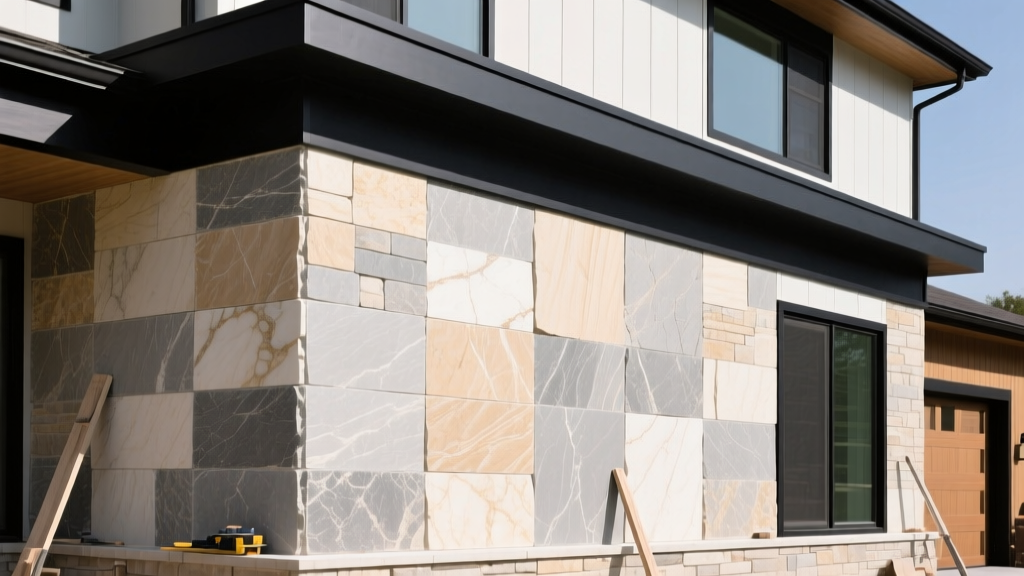
Veneer stone encompasses any non-load-bearing stone cladding applied to interior or exterior walls. The market splits into two distinct categories: Manufactured Stone Veneer (MSV) and Natural Thin Stone Veneer. Understanding the compositional differences is critical for structural planning and moisture management.
Manufactured stone veneer is a cast concrete product. It combines Portland cement, lightweight aggregates (like pumice or expanded shale), and iron oxide pigments to replicate the color and texture of quarried stone. MSV typically measures 1 to 2.5 inches thick and weighs between 8 and 12 pounds per square foot. Because of this reduced weight, MSV can be installed on standard 2x4 wood-framed walls without requiring additional structural reinforcement or specialized footing.
Natural thin stone veneer is sliced from real quarried limestone, granite, or fieldstone using diamond-tipped gang saws. While it offers the authentic mineral variance and geological imperfections that concrete cannot perfectly mimic, it is heavier (13 to 18 pounds per square foot) and more brittle during installation. Full-bed natural stone, which exceeds 25 pounds per square foot, requires a masonry block backup wall and dedicated concrete footings, placing it outside the standard veneer category for most residential wood-frame projects.
2026 Cost Breakdown: Material and Labor
Pricing for veneer stone has stabilized following the supply chain disruptions of the early 2020s, though regional labor rates continue to dictate total project costs. The following data reflects average national costs for 2026, encompassing materials, substrate preparation, and professional masonry labor.
| Material Type | Material Cost (per sq. ft.) | Labor Cost (per sq. ft.) | Total Installed Cost |
|---|---|---|---|
| Manufactured Stone Veneer (Standard) | $6.50 - $10.00 | $14.00 - $18.00 | $20.50 - $28.00 |
| Manufactured Stone Veneer (Premium/Architectural) | $11.00 - $16.00 | $16.00 - $22.00 | $27.00 - $38.00 |
| Natural Thin Stone Veneer | $14.00 - $24.00 | $18.00 - $26.00 | $32.00 - $50.00 |
Labor costs fluctuate heavily based on the complexity of the profile. A flat-field ashlar pattern installs 30% faster than a tight-fit dry-stack ledgestone profile, which requires meticulous shimming and back-buttering to maintain level coursing without visible mortar joints. For precise local budgeting, consult HomeGuide's masonry cost reports to adjust for your specific zip code's prevailing wage rates.
Critical Installation Specs: Where Veneer Fails
The majority of veneer stone failures—delamination, efflorescence, and substrate rot—are not material defects, but moisture management and mortar specification errors. Adhering to the Masonry Veneer Manufacturers Association (MVMA) installation guidelines is non-negotiable for exterior applications.
Moisture Management and Weep Screeds
Exterior veneer stone is a reservoir cladding system; it absorbs and holds water during rain events. The drainage plane behind the stone must allow this water to escape. You must install a weep screed at the base of the wall. ASTM C1063 mandates a minimum 1-inch clearance between the weep screed and concrete surfaces (like patios or driveways), and a 4-inch clearance from soil grade. Skipping the weep screed or using a flat base track traps capillary moisture, guaranteeing efflorescence and eventual lath corrosion.
Behind the lath, apply two layers of Grade D asphalt-impregnated paper, or one layer of a modern fluid-applied weather-resistant barrier (WRB) paired with a dimpled drainage mat. The dimpled mat creates a physical air gap, accelerating drainage and preventing hydrostatic pressure from pushing moisture through the sheathing.
Mortar Selection: Type S vs. Type N
Mortar is the structural glue and the sacrificial expansion joint of the veneer system. Never use Type M or pre-mixed thinset adhesives for exterior veneer stone.
- Type S Mortar (Exterior): Contains a higher ratio of Portland cement to lime, yielding a minimum compressive strength of 1,800 psi. This high bond strength is required to resist lateral wind loads, seismic shear, and freeze-thaw cycling on exterior walls.
- Type N Mortar (Interior): Yields approximately 750 psi. It is softer, more workable, and easier to tool for interior fireplaces or accent walls where freeze-thaw cycles and structural shear are not factors.
When mixing mortar, maintain a strict water-to-cement ratio. Over-wetting the mix increases shrinkage and causes micro-cracking in the scratch coat. For deeper insights on mortar compatibility and joint tooling, reference the National Park Service (NPS) guidelines on mortar specifications.
Decision Matrix: Choosing the Right Veneer
Selecting between manufactured and natural veneer stone requires balancing budget, aesthetic demands, and project timelines. Use the following matrix to align the material with your project parameters.
| Criteria | Manufactured Stone Veneer (MSV) | Natural Thin Stone Veneer |
|---|---|---|
| Aesthetic Authenticity | High (premium lines), but repetitive patterns can occur if the mason does not blend multiple boxes. | Absolute. Geological variance, unique fossil inclusions, and natural cleft faces. |
| Color Consistency | Excellent. Pigments are batch-controlled. | Variable. Quarry seams change color; require blending from multiple pallets. |
| Corner Pieces | Readily available. Manufactured with 90-degree returns that perfectly wrap corners. | Difficult to source. Natural corners require skilled masons to miter or select specific L-shaped stones. |
| Lead Time | 1 to 3 weeks (large domestic manufacturing footprint). | 4 to 8 weeks (dependent on quarry production and freight weight). |
| Cutting and Shaping | Easily cut with a standard masonry blade; lightweight aggregate reduces blade wear. | Requires diamond-tipped wet saws; high silica content accelerates blade degradation. |
Troubleshooting Common Veneer Stone Defects
Even with premium materials, improper site conditions or mason errors can trigger specific failure modes. Identifying the root cause early prevents catastrophic wall failure.
Cause: Water migrating through the unsealed stone or mortar joints, dissolving soluble salts, and depositing them on the surface as it evaporates. Often caused by missing weep screeds or improper grading directing soil moisture into the base course.
Fix: Dry brush the surface. Do not use high-pressure water, which drives moisture deeper. Apply a specialized efflorescence cleaner (diluted phosphoric acid) only after the manufacturer confirms it will not degrade the iron oxide pigments. Seal the stone with a breathable, siloxane-based penetrating sealer, never a film-forming acrylic.
Cause: Freeze-thaw damage. Moisture has penetrated the stone face, frozen, and expanded, popping the front layer off. This occurs when a non-breathable topical sealer was applied, trapping moisture inside the stone, or when the mason failed to back-butter the stones in dry, hot conditions, resulting in a poor bond to the scratch coat.
Fix: Remove affected stones with a cold chisel. Inspect the underlying lath for rust. If the lath is compromised, cut it out, patch the WRB, and install new galvanized lath before resetting the stone with Type S mortar.
Expert Sourcing and Brand Recommendations
When specifying manufactured veneer stone, prioritize brands that utilize high-density molds and multi-stage pigment application. Cultured Stone (a Boral company) remains the industry benchmark for deep-texture profiles like their Dressed Stone and Country Ledgestone lines. Eldorado Stone excels in architectural profiles and offers superior color-blending in their European Castle Stone series. For natural thin veneer, source directly from regional distributors to minimize freight costs, as shipping 15,000 pounds of quarried stone across the country will erase any material savings.
Always demand the manufacturer's CCRR (Code Compliance Research Report) from your supplier before installation. This document proves the specific veneer stone product has passed ASTM C1670 (for manufactured) or ASTM C616/C629 (for natural) testing for freeze-thaw durability, water absorption, and flexural strength, ensuring your cladding will survive the local climate.
Written by
James ThorntonJames Thornton is a construction industry veteran with 25 years of hands-on experience in wood framing, lumber grading, and residential building codes. He started as a framing carpenter in rural Oregon, earned his ICC Residential Building Inspector certification, and eventually became a senior plan reviewer for the City of Portland Bureau of Development Services. James holds a B.S. in Wood Science & Technology from Oregon State University and is a certified lumber grader through the West Coast Lumber Inspection Bureau (WCLIB). He has inspected over 3,000 residential construction sites and authored the city's internal guide on advanced framing techniques (2x6 at 24" O.C.). James lives in Bend, OR, where he builds custom timber-frame cabins and competes in lumberjack sports.
More from James Thornton
View all
Insulation
Best Home Insulation Materials: Complete 2026 Guide
Compare top home insulation materials for 2026. Find R-values, installed costs per square foot, and best uses for fiberglass, spray foam, and mineral wool.
Aug 4, 2026

Sustainable Building
Certify Your Green Building Material for LEED and WELL
Step-by-step guide to certifying a green building material for LEED v5 and WELL v2. Master EPDs, HPDs, and VOC limits for 2026 project specifications.
Aug 4, 2026

Stone & Masonry
Veneer Stacked Stone Panels: Interior Design & Style Showcase
Discover how veneer stacked stone panels transform interiors. Explore modern design profiles, material pairings, and technical installation specs.
Aug 4, 2026