Choosing the Right Eldorado Stone Veneer: Profiles, Costs, and Install
Compare top Eldorado stone veneer profiles, analyze current material costs, and learn installation best practices for exterior and interior projects.

Decoding the Eldorado Stone Veneer Portfolio
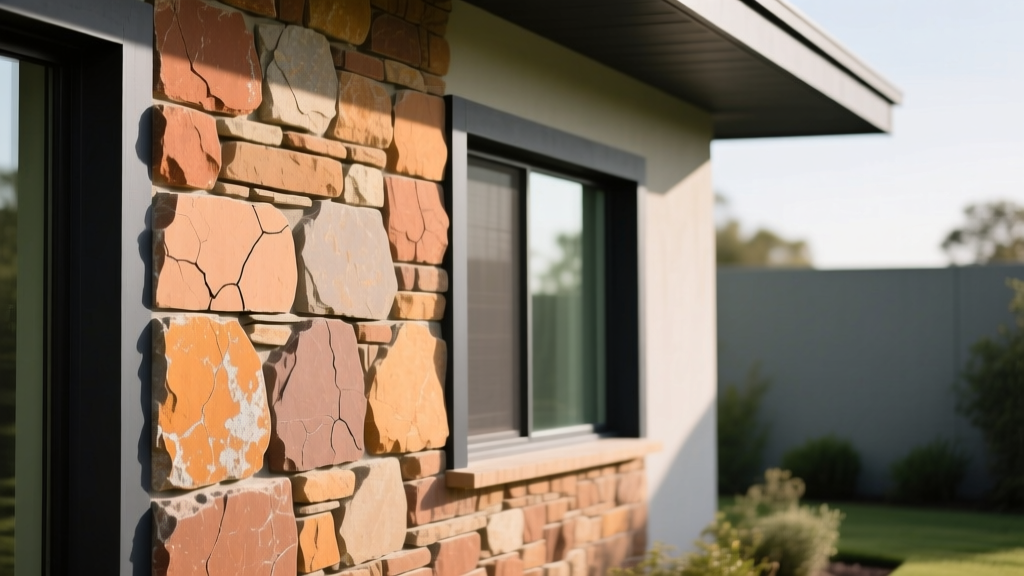
Manufactured stone veneer (MSV) has evolved from a basic masonry alternative to a premier architectural cladding material. Eldorado Stone dominates this sector by utilizing high-density concrete mixes and proprietary iron-oxide pigments that replicate the exact mineralogy of natural quarried stone. For buyers, the challenge is not whether to choose manufactured stone, but navigating Eldorado's extensive catalog of profiles to match specific architectural styles and structural requirements.
Unlike natural stone, which varies wildly in thickness and weight, Eldorado profiles maintain a consistent weight of approximately 10 to 12 pounds per square foot. This predictability is critical for structural engineering and load calculations on wood-framed exteriors and interior accent walls.
Profile Categories and Architectural Applications
Selecting the correct profile dictates the visual rhythm of the facade. Eldorado categorizes its products into distinct textural families. Below is a comparative matrix of their highest-performing profiles based on contractor installation data and architectural demand.
| Profile Name | Visual Style | Best Application | Avg. Material Cost (per sq. ft.) |
|---|---|---|---|
| Country Rubble | Irregular, rugged, heavy mortar joints | Rustic exteriors, Craftsman-style wainscoting | $8.50 - $10.00 |
| Cliffstone | Linear, stacked, minimal grout lines | Modern facades, commercial interiors, fireplaces | $9.00 - $11.50 |
| LedgeStone | Thin, elongated, dry-stack appearance | Accent bands, interior feature walls, columns | $8.00 - $9.50 |
| Shadowstone | Cut-stone, ashlar pattern, geometric | Traditional estates, Tudor-style chimneys | $9.50 - $12.00 |
| Fieldstone | Rounded, river-tumbled, organic shapes | Cottage exteriors, outdoor kitchens, hearths | $7.50 - $9.00 |
Material Pricing and Hidden Cost Variables
A common budgeting error in MSV projects is calculating costs based solely on the flat veneer square footage. A comprehensive buyer's budget must account for the complete assembly. Based on current masonry supply chain data, here is the true cost breakdown for a standard exterior installation:
- Flat Veneer Material: $7.50 to $12.00 per square foot, depending on the profile and color blend complexity.
- Corner Pieces: Sold by the linear foot. Expect to pay $12.00 to $18.00 per linear foot. Corners are mandatory for realistic depth; omitting them and returning flat stones at a 90-degree angle immediately exposes the material as veneer.
- Metal Lath and Fasteners: $1.50 to $2.50 per square foot. Must be 2.5 lb self-furring galvanized lath (ASTM C847).
- Mortar and Scratch Coat Materials: $1.00 to $1.80 per square foot. Type S mortar is the industry standard for adhered veneer due to its high tensile bond strength.
- Weather-Resistive Barrier (WRB) and Flashing: $0.75 to $1.50 per square foot.
Always order a minimum of 10% overage for flat stones and 15% for corner pieces. Cutting stones around windows, soffits, and rooflines generates significant waste, and dye-lot variations between manufacturing runs can cause noticeable color discrepancies if you need to reorder mid-project.
Installation Realities: Moisture Management and ASTM Compliance
The most frequent cause of manufactured stone veneer failure is not the stone itself, but improper moisture management behind the assembly. Because MSV is highly porous, it absorbs and holds water. If that water cannot drain or evaporate, it rots the wood framing and corrodes the metal lath.
The Drainage Plane Imperative
According to guidelines published by the Masonry Veneer Manufacturers Association (MVMA), adhered stone veneer installed over wood or steel stud framing requires a continuous drainage plane. This involves applying two layers of Grade D building paper or a code-approved WRB over the sheathing. The outer layer acts as a sacrificial slip sheet, allowing water that penetrates the mortar bed to drain downward without saturting the inner water-resistive layer.
Critical Flashing and Weep Screed Specifications
Gravity is your primary defense against moisture intrusion. The installation must incorporate a corrosion-resistant weep screed at the base of the wall. The International Building Code (IBC) mandates specific clearances for this termination point:
- The weep screed must be positioned a minimum of 4 inches above the earth grade.
- Where the veneer abuts a hard surface like a concrete patio or driveway, the screed must be at least 2 inches above the hardscape.
- The scratch coat and stone must never bridge the weep screed; doing so creates a capillary wick that pulls ground moisture directly into the wall cavity.
Pro-Tip on Mortar Application: Never 'butter' the back of the stone and push it against a dry scratch coat. The correct methodology requires applying a fresh layer of mortar to the back of the stone and pressing it firmly into the cured, dampened scratch coat until mortar squeezes out the edges. This ensures 100% adhesion and eliminates void spaces where condensation can pool.
Interior vs. Exterior: Selection and Sealing Framework
Buyers often assume that exterior-rated stone can simply be sealed and used in high-moisture interior environments, or vice versa. The vapor transmission requirements for these two environments are fundamentally opposed.
Exterior Cladding: The Case Against Sealing
For exterior applications, Eldorado Stone Technical Resources strongly advises against applying film-forming acrylic or urethane sealers. Exterior walls must 'breathe.' When sunlight hits a rain-soaked stone facade, the moisture inside the concrete needs to evaporate outward. A surface sealer traps this vapor, leading to spalling (where the face of the stone pops off) and efflorescence (white salt deposits) as the trapped water seeks an alternate exit route through the mortar joints.
Interior Applications: When Sealing is Necessary
Interior installations, particularly in kitchens, bathrooms, or behind wood-burning stoves, face different threats: grease, soot, and physical abrasion. In these scenarios, a penetrating, breathable silane/siloxane sealer is recommended. Unlike film-forming sealers, penetrating sealers line the microscopic pores of the concrete, repelling liquid water and oils while still allowing water vapor to escape. Apply the sealer only after the mortar has fully cured (typically 28 days) to prevent locking construction moisture inside the assembly.
Expert Verdict: Maximizing ROI on Your Veneer Investment
Investing in Eldorado stone veneer yields high returns in curb appeal and architectural permanence, provided the buyer respects the engineering requirements of adhered masonry. When evaluating bids from masonry contractors, do not simply award the project to the lowest price per square foot. Demand to see their proposed moisture management detail, specifically their plan for weep screeds, head flashings above windows, and WRB layering.
For modern architectural designs, linear profiles like Cliffstone and LedgeStone offer the cleanest sightlines and require less mortar tooling, slightly reducing labor costs. For traditional or rustic builds, Country Rubble and Fieldstone demand highly skilled masons capable of blending varied stone sizes and managing deep, raked mortar joints. Align your profile choice not just with your aesthetic vision, but with the specific skill set of the masonry crew executing the installation.
Written by
James ThorntonJames Thornton is a construction industry veteran with 25 years of hands-on experience in wood framing, lumber grading, and residential building codes. He started as a framing carpenter in rural Oregon, earned his ICC Residential Building Inspector certification, and eventually became a senior plan reviewer for the City of Portland Bureau of Development Services. James holds a B.S. in Wood Science & Technology from Oregon State University and is a certified lumber grader through the West Coast Lumber Inspection Bureau (WCLIB). He has inspected over 3,000 residential construction sites and authored the city's internal guide on advanced framing techniques (2x6 at 24" O.C.). James lives in Bend, OR, where he builds custom timber-frame cabins and competes in lumberjack sports.
More from James Thornton
View all
Insulation
Best Home Insulation Materials: Complete 2026 Guide
Compare top home insulation materials for 2026. Find R-values, installed costs per square foot, and best uses for fiberglass, spray foam, and mineral wool.
Aug 4, 2026

Sustainable Building
Certify Your Green Building Material for LEED and WELL
Step-by-step guide to certifying a green building material for LEED v5 and WELL v2. Master EPDs, HPDs, and VOC limits for 2026 project specifications.
Aug 4, 2026

Stone & Masonry
Veneer Stacked Stone Panels: Interior Design & Style Showcase
Discover how veneer stacked stone panels transform interiors. Explore modern design profiles, material pairings, and technical installation specs.
Aug 4, 2026