Manufactured Stone Siding Brand & Product Line Guide 2026
Compare top manufactured stone siding brands for 2026. Deep dive into Cultured Stone, Eldorado, and Coronado product lines, costs, and installation specs.
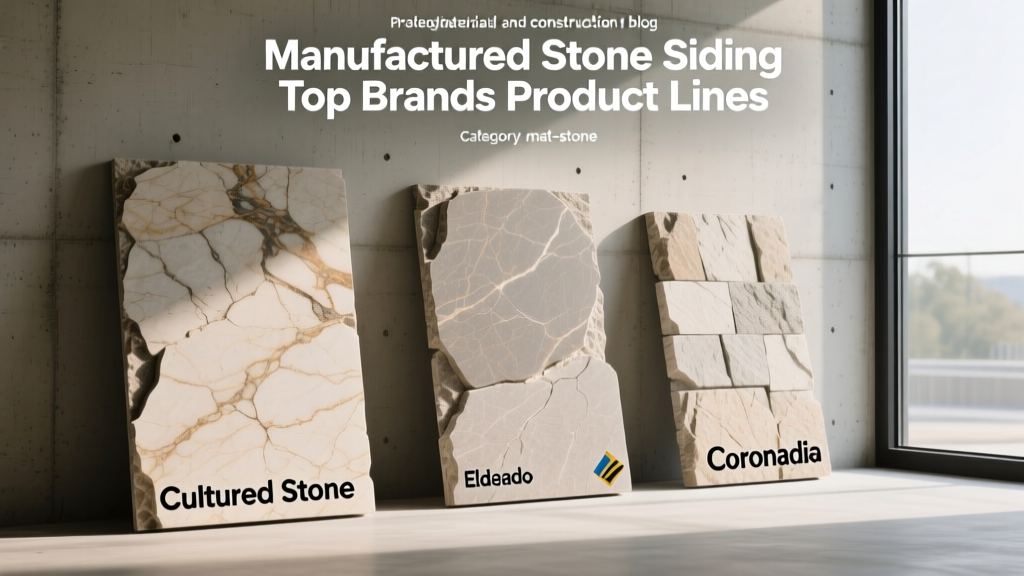
The Big Three: Dominant Brands in Manufactured Stone Siding
When specifying manufactured stone siding for exterior cladding or interior accent walls, the market is heavily consolidated around three primary manufacturers. Unlike natural stone, which is quarried and cut, manufactured stone veneer (MSV) is cast from concrete aggregates and iron oxide pigments in molds taken from real stone. This process yields a product that weighs roughly 10 to 12 pounds per square foot—less than half the weight of full-thickness natural stone—while meeting the rigorous physical standards of ASTM C1670. Below is a deep dive into the flagship brands and their most architecturally significant product lines for 2026.
Cultured Stone (Westlake Royal Building Products)
Originally founded in 1962 and now operating under the Westlake Royal umbrella, Cultured Stone remains the most recognized name in the industry. Their manufacturing process utilizes a proprietary pumice aggregate that naturally lightens the product while providing excellent thermal insulation properties.
- Signature Line: Dressed Fieldstone. This line replicates the look of hand-chiseled, rectangular stones with tight, clean joints. It is highly favored for transitional and modern farmhouse exteriors where a structured, masonry-like appearance is required without the structural load of full brick.
- Signature Line: Coral Stone. Cast from actual coral formations, this profile offers a highly textured, porous aesthetic ideal for Mediterranean or coastal applications.
- Technical Spec: Cultured Stone products typically carry a weight of 10.5 lbs/sq ft and are backed by a 50-year limited warranty against manufacturing defects and freeze-thaw degradation.
Eldorado Stone
Eldorado Stone differentiates itself through advanced color-blending technology and highly nuanced mold creation. While many competitors use standard concrete mixes, Eldorado incorporates lightweight aggregates and a multi-stage pigment application process that mimics the natural weathering and mineral deposits found in real stone.
- Signature Line: Rustic Ledge. A dry-stacked profile featuring long, linear stones with varying heights. It is the industry standard for contemporary horizontal cladding and requires no mortar joint tooling, significantly reducing labor time.
- Signature Line: Profiled Stone Veneer (PSV). Designed specifically to replicate cut limestone and sandstone, PSV features precise, squared edges that allow for incredibly tight, 1/8-inch mortar joints.
- Technical Spec: Eldorado's adherence to strict installation protocols ensures their veneers perform exceptionally well in high-moisture environments, provided a proper rainscreen or weep system is utilized.
Coronado Stone Products
Coronado is highly regarded for its regional specificity and lightweight innovations. They offer profiles tailored to specific architectural vernaculars, from Southwestern adobe to Northeastern fieldstone.
- Signature Line: Tri-Lite. This is Coronado's ultra-lightweight engineered line. Weighing in at roughly 8.5 lbs/sq ft, Tri-Lite is the optimal choice for retrofit projects, multi-story commercial facades, or interior feature walls where dead-load restrictions prohibit standard MSV.
- Signature Line: Tuscan Villa. A deeply textured, irregular profile that captures the essence of aged European rubble stone, frequently specified for high-end custom residential builds.
Head-to-Head Product Line Matrix
Selecting the right stone siding requires balancing aesthetic intent with structural and budgetary constraints. The following matrix compares the flagship offerings across critical project variables.
| Brand | Signature Line | Avg Weight (lbs/sq ft) | Material Cost (per sq ft) | Warranty | Ideal Use Case |
|---|---|---|---|---|---|
| Cultured Stone | Dressed Fieldstone | 10.5 | $9.50 - $13.00 | 50-Year Limited | Structured, traditional masonry looks |
| Eldorado Stone | Rustic Ledge | 11.0 | $10.00 - $14.50 | 50-Year Limited | Modern, dry-stack horizontal cladding |
| Coronado | Tri-Lite Series | 8.5 | $8.00 - $11.50 | 50-Year Limited | Retrofits, weight-restricted framing |
Critical Installation Variables: Beyond the Aesthetic
The most common cause of manufactured stone siding failure is not material degradation, but moisture entrapment resulting from improper water management. According to building science principles outlined by Fine Homebuilding's masonry experts, MSV acts as a reservoir cladding; it absorbs and holds water, which must be allowed to drain and dry.
Never install stone siding directly to the foundation or slab. Code requires a corrosion-resistant weep screed (minimum 0.019-inch thick galvanized steel or PVC) placed at least 4 inches above grade and 2 inches above paved surfaces. The weather-resistant barrier (WRB) must lap over the weep screed flange to ensure water drains outward, not behind the lath.
Mortar Selection and Lath Specifications
For adhered applications, the choice of mortar is non-negotiable. You must use Type S mortar, not Type N. Type S contains a higher ratio of hydrated lime and Portland cement, yielding a compressive strength of 1,800 psi and superior bond strength necessary for exterior vertical applications subject to freeze-thaw cycles.
The lath must be a minimum 2.5 lb/sq ft self-furring galvanized expanded metal lath, fastened directly to the framing studs (not just the OSB sheathing) using corrosion-resistant nails or screws spaced no more than 6 inches apart along the studs. The self-furring dimples ensure the lath stands off the WRB by 1/4 inch, allowing the scratch coat to fully encapsulate the metal, which is critical for preventing rust-induced spalling.
Procurement Strategy: Lot Blending and Overage Calculations
Manufactured stone is cast in batches, and slight variations in aggregate sourcing and pigment mixing can result in noticeable color shifts between production runs. If you order 500 square feet of Eldorado Rustic Ledge and run short, ordering an additional 50 square feet weeks later will almost certainly result in a visible color banding on your facade.
Always calculate your total square footage and add a 10% overage for flat veneer profiles, and 15% for corner pieces (which are sold by the linear foot). When the pallets arrive on-site, the mason must 'blend' the boxes—opening 3 to 4 boxes simultaneously and pulling stones from each to ensure any minor lot variations are distributed evenly across the wall, creating a natural, randomized aesthetic.
2026 Cost Breakdown: Material vs. Labor
Budgeting for stone siding requires separating the material costs from the highly variable labor rates, which have seen upward pressure due to a shortage of skilled masons. In 2026, the national average for professional installation ranges significantly based on profile complexity.
- Material Costs: $7.50 to $15.00 per square foot (including veneer, corner pieces, and mortar). Corner pieces are the hidden budget killer; they typically cost 20% to 30% more per linear foot than flat pieces cost per square foot.
- Labor Costs: $14.00 to $24.00 per square foot. Dry-stack profiles (like Rustic Ledge) are on the lower end of this spectrum because they eliminate the time-consuming process of tooling mortar joints. Grouted profiles with tight joints require meticulous pointing and cleanup, pushing labor to the higher end.
- Total Installed Cost: Expect to pay between $21.50 and $39.00 per square foot for a complete, code-compliant exterior installation.
When evaluating bids, ensure the contractor's scope includes the WRB, weep screed, lath, and scratch coat. A bid that only lists 'stone and mortar' per square foot is a red flag indicating the prep work will be billed as an unforeseen change order later in the project.