Penetrating vs Topical Marble Sealer: A Maintenance Playbook
Discover the definitive maintenance playbook for choosing, applying, and testing penetrating and topical marble sealers to prevent etching and staining.
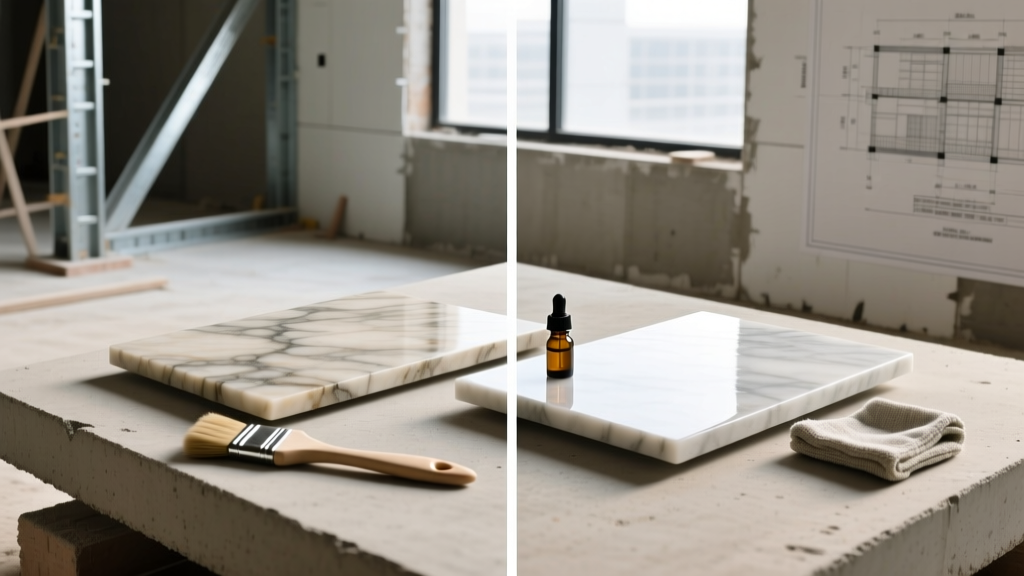
The Chemistry of Marble and Sealer Mechanics
Marble is a metamorphic rock composed primarily of calcium carbonate (CaCO3). On the Mohs hardness scale, it ranks between 3 and 4, making it significantly softer and more porous than granite or quartzite. This inherent porosity is a double-edged sword: it gives marble its stunning, luminous translucency, but it also leaves the stone vulnerable to liquid intrusion. According to the Natural Stone Institute, the capillary action of unsealed marble can draw oils, tannins, and acidic liquids deep into the stone matrix within minutes, resulting in permanent discoloration.
A high-quality marble sealer does not alter the chemical composition of the stone; rather, it acts as a microscopic barrier. Modern sealers utilize siloxane or fluoropolymer resins that penetrate the capillary network of the stone. Once the carrier solvent evaporates, these resins coat the interior walls of the pores, drastically reducing the stone's surface tension and causing liquids to bead up rather than absorb. However, not all sealers are created equal, and choosing the wrong chemistry for your specific environment can lead to trapped moisture, hazing, and accelerated stone degradation.
The Etching vs. Staining Reality Check
The most common misconception in stone care is confusing etching with staining. Staining occurs when a pigmented liquid (wine, coffee, oil) penetrates the pores. A penetrating marble sealer effectively prevents staining by blocking pore entry. Etching, however, is a chemical burn. When an acidic substance (lemon juice, vinegar, tomato sauce) contacts calcium carbonate, it physically dissolves the stone, leaving a dull, matte spot. No standard penetrating sealer can prevent etching. To mitigate etching, you must rely on rigorous daily maintenance, immediate spill cleanup, and the use of pH-neutral cleaners.
Penetrating vs. Topical Marble Sealers: A Comparative Matrix
Selecting the right marble sealer requires understanding the mechanical differences between penetrating (impregnating) sealers and topical (surface) sealers. While topical sealers were popular in the 1990s, modern stone restoration professionals overwhelmingly favor advanced penetrating fluoropolymers for interior applications.
| Feature | Penetrating (Impregnating) Sealer | Topical (Surface) Sealer |
|---|---|---|
| Chemical Base | Siloxane, Silane, or Fluoropolymer | Acrylic, Polyurethane, or Wax |
| Mechanism | Absorbs into pores; lines capillary walls | Sits on top of the stone; forms a physical film |
| Moisture Vapor Transmission | High (allows stone to 'breathe') | Low (traps moisture, risking spalling) |
| Durability | 3 to 5 years (interior) | 6 to 12 months (requires frequent stripping) |
| Average Cost (per quart) | $45 - $95 | $25 - $40 |
| Best Application | Kitchens, bathrooms, high-traffic floors | Low-traffic decorative walls, historical restoration |
Industry experts featured in Stone World consistently warn against using topical acrylic sealers on marble floors or wet areas. Because topical sealers create a non-breathable plastic-like film, any moisture vapor rising from the substrate becomes trapped. Over time, this hydrostatic pressure causes the topical coating to blister, turn milky white, and eventually force the stone surface to spall or flake.
The 3-Minute Water Drop Diagnostic Protocol
Before purchasing a marble sealer or scheduling a professional application, you must determine the stone's current absorption rate. Applying sealer to stone that is already saturated will result in the product drying on the surface, creating a stubborn, hazy residue.
Step-by-Step Diagnostic
- Clean the Surface: Use a pH-neutral stone cleaner and allow the area to dry completely for at least 12 hours.
- The Water Test: Place three to four drops of distilled water on the marble in an inconspicuous area.
- Observe the Timeline:
- Absorbs in under 1 minute: The stone is highly porous and completely unsealed. It will require two heavy coats of a fluoropolymer penetrating sealer.
- Absorbs in 3 to 5 minutes: The stone has moderate porosity or the previous sealer is degrading. One standard coat is required.
- Remains beaded after 10 minutes: The existing sealer is intact. Do not apply more sealer; proceed to routine maintenance.
Application Playbook: Fluoropolymer Penetrating Sealer
For high-performance protection, we recommend utilizing a solvent-based or advanced water-based fluoropolymer sealer (such as StoneTech BulletProof or Miracle Sealants 511 Impregnator). These products offer superior oil and water repellency compared to basic siloxane sealers.
Phase 1: Preparation
Ensure the ambient room temperature is between 50°F and 90°F (10°C - 32°C). The stone must be bone-dry. If you are stripping an old topical sealer, use a dedicated alkaline stone stripper, rinse thoroughly, and wait 48 hours before applying the new penetrating sealer.
Phase 2: Application and Dwell Time
- Saturate the Surface: Apply the sealer using a low-pressure pump sprayer or a clean, lint-free microfiber mop. Ensure the stone looks wet and glossy.
- Manage the Dwell Time: Allow the sealer to penetrate for 15 to 20 minutes. During this window, use a dry microfiber cloth to redistribute the sealer from heavily pooled areas to drier areas. This ensures an even absorption rate across the slab.
- The Critical Wipe-Down: This is where most DIY applications fail. You must completely wipe off all excess sealer before the 30-minute mark. If the solvent flashes off and the resin dries on the surface, it will form a cross-linked polymer haze that is incredibly difficult to remove.
Phase 3: Curing
While the surface may feel dry to the touch within two hours, the chemical cross-linking process takes time. Keep the marble completely dry for a minimum of 24 hours. For full chemical cure and maximum stain resistance, wait 72 hours before exposing the surface to heavy oils or acidic foods.
Daily Maintenance and Cleaning Rules for Sealed Marble
A marble sealer buys you time; it does not make the stone invincible. Your daily cleaning playbook must be designed to preserve both the sealer and the calcium carbonate matrix.
Approved vs. Banned Cleaning Agents
| Approved Agents (pH 7.0 - 8.5) | Banned Agents (Acidic or Highly Alkaline) |
|---|---|
| Dedicated pH-neutral stone cleaners (e.g., StoneTech Revitalizer) | Vinegar, lemon juice, or any citrus-based cleaners |
| Warm water with a drop of mild, non-citrus dish soap | Bleach, ammonia, or hydrogen peroxide |
| Isopropyl alcohol (diluted 50/50 with water) for disinfecting | Abrasive powders (Comet, Ajax) or magic erasers |
| Microfiber cloths and soft natural bristle brushes | Generic bathroom tile cleaners (often contain hydrofluoric acid) |
Troubleshooting Common Sealer Failures
Warning: Dealing with Sealer Haze and Streaking
If you notice a cloudy, rainbow-like, or milky haze on your marble after sealing, the resin has dried on the surface. Do not use water to fix this. Water will not dissolve the cured polymer. Instead, apply a small amount of mineral spirits or the sealer manufacturer's dedicated solvent stripper to a clean white rag. Buff the hazy area in a circular motion. The solvent will re-liquefy the surface resin, allowing you to wipe it away. For severe cases, 0000-grade (super fine) steel wool can be used gently on polished marble to mechanically lift the haze without scratching the stone.
Addressing Oil Stains on Sealed Stone
If a heavy oil (like olive oil or bacon grease) sits on a sealed marble countertop for an extended period, it may eventually bypass the fluoropolymer barrier. To extract an oil stain, create a poultice using a mixture of baking soda and acetone. Mix it to the consistency of peanut butter, apply it over the stain to a thickness of 1/4 inch, and cover it with plastic wrap. Tape down the edges and poke three small holes in the plastic for ventilation. Leave it for 48 hours. As the acetone evaporates, it pulls the oil out of the capillary network and into the baking soda matrix. Remove the dried poultice with a wooden or plastic scraper—never metal, which can scratch the marble.
By understanding the precise mechanics of your marble sealer, rigorously testing the stone's absorption rate, and adhering to strict pH-neutral maintenance protocols, you can preserve the structural integrity and visual brilliance of natural marble for decades.