Tile and Slate Flooring: Matching Materials to Room Scenarios
Discover the ideal applications for tile and slate flooring. Compare finishes, slip ratings, and costs to match the right natural stone to your room.
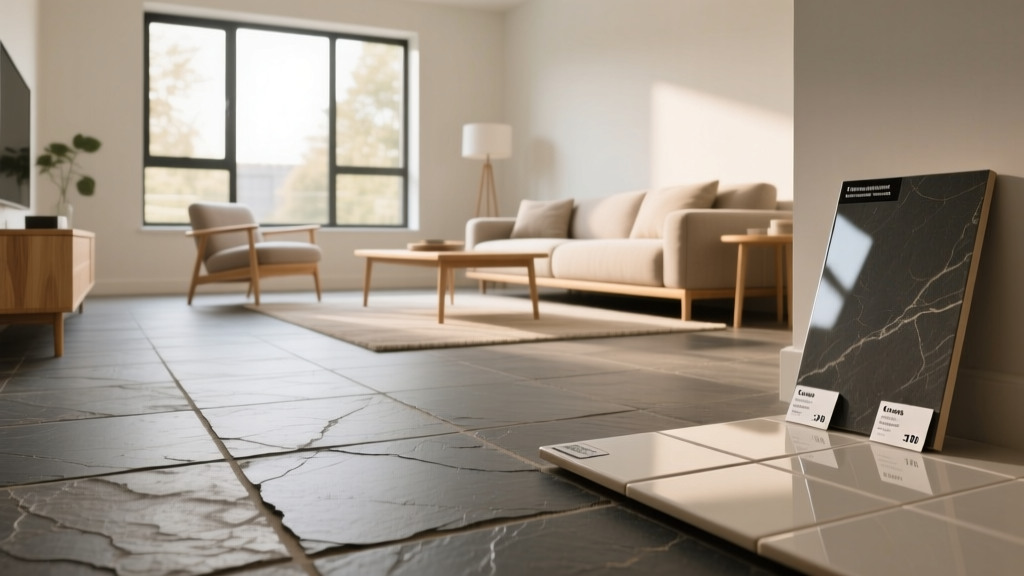
Natural slate is a metamorphic rock formed under extreme heat and pressure, resulting in a dense, foliated material prized for its durability and organic cleft textures. However, treating all slate as a monolithic flooring option leads to costly installation failures. The performance of slate varies drastically based on its geological origin, finish, and thickness tolerances. Selecting the correct tile and slate flooring requires matching specific material properties to the mechanical and environmental demands of individual rooms.
The Slate Finish Matrix: Selecting by Surface Texture
The surface finish of slate dictates its slip resistance, maintenance requirements, and suitability for specific environments. The Dynamic Coefficient of Friction (DCOF) is the critical metric here; the Tile Council of North America (TCNA) recommends a minimum DCOF of 0.42 for level interior floors expected to be wet.
| Finish Type | Average DCOF | Best Scenario | Worst Scenario | Maintenance Level |
|---|---|---|---|---|
| Natural Cleft | 0.55 - 0.65 | Mudrooms, patios, pool decks | Kitchens (traps crumbs), barefoot bathrooms | High (requires scrubbing) |
| Honed | 0.42 - 0.50 | Kitchens, living areas, bathrooms | Exterior ramps, wet pool surrounds | Medium (shows etching) |
| Polished | 0.30 - 0.38 | Low-traffic formal dining, walls | Any wet area, high-traffic entryways | High (shows scratches/water spots) |
| Tumbled | 0.50 - 0.60 | Rustic bathrooms, Mediterranean kitchens | Modern minimalist spaces, commercial lobbies | Medium (grout lines collect dirt) |
High-Moisture Scenarios: Bathrooms and Wet Rooms
When specifying slate for bathrooms, the primary decision is between gauged and ungauged tile. Ungauged slate retains its natural, uneven thickness, varying by up to 1/4 inch between adjacent tiles. This creates severe lippage (trip hazards) and makes squeegeeing water impossible. For any wet room or shower floor, you must specify gauged slate, which is machined on the back to a uniform thickness (typically 3/8 inch or 10mm).
Sealing Chemistry for Wet Environments
Slate is naturally porous and contains iron deposits that can oxidize and rust when exposed to constant moisture. According to the Natural Stone Institute, penetrating sealers are mandatory for wet areas. Avoid topical (surface-coating) acrylic sealers, which trap moisture vapor beneath the surface and cause the stone to spall.
High-Traffic Zones: Entryways, Mudrooms, and Kitchens
Slate ranks between 5.5 and 6.5 on the Mohs hardness scale. While this makes it harder than marble, it is softer than quartzite (7.0) and porcelain (7.5+). In high-traffic entryways where abrasive silica sand and grit are tracked indoors, softer imported slates (often sourced from India or China) will develop micro-scratches and lose their color vibrancy over time.
Structural Support and Point Loads
Kitchens and entryways experience heavy point loads from appliances and dropped objects. Slate has high compressive strength but low flexural strength. If the subfloor deflects, the slate will crack. The TCNA Handbook mandates a subfloor deflection limit of L/360 for natural stone. To mitigate cracking, install an uncoupling membrane like Schluter-Ditra or a crack-isolation mat over the plywood subfloor before applying a modified thinset mortar (ANSI A118.4 or A118.15).
Exterior Applications: Patios and Freeze-Thaw Environments
Using slate outdoors requires strict attention to water absorption rates. The ASTM C121 standard test measures water absorption; for exterior applications in climates with freezing temperatures, the slate must have an absorption rate of less than 3%. If water penetrates the stone's foliation layers and freezes, the expansion will cause the slate to delaminate and flake (spall).
- Vermont/New York Slate: Typically boasts absorption rates below 0.5%, making it highly resistant to freeze-thaw cycles and ideal for exterior patios in northern climates.
- Imported Slate (India/China/Brazil):strong> Absorption rates can range from 2% to 6%. These should be restricted to interior applications or exterior use only in frost-free southern climates.
Radiant Floor Heating Compatibility
Slate is an excellent thermal conductor, making it highly compatible with hydronic or electric radiant floor heating systems. However, thermal shock is a risk. The surface temperature of the slate must never exceed 85°F (29°C). When installing over radiant heat, use a high-performance, polymer-modified thinset mortar designed for thermal cycling, and ensure the heating system is fully tested and turned off for 48 hours before and after the grouting process to allow proper curing.
2026 Cost Analysis and Installation Variables
The cost of tile and slate flooring extends far beyond the price of the stone. Complex room geometries, subfloor prep, and sealing add significant labor hours. Below is a breakdown of current market rates per square foot.
| Cost Category | Economy (Imported Slate) | Premium (Domestic/Gauged) | Notes |
|---|---|---|---|
| Material | $4.00 - $7.00 | $9.00 - $16.00 | Premium includes gauging and color consistency. |
| Subfloor Prep & Membrane | $2.50 - $4.00 | $2.50 - $4.00 | Uncoupling membrane and floor leveling compound. |
| Installation Labor | $8.00 - $12.00 | $12.00 - $18.00 | Cleft/ungauged slate requires 30% more labor to level. |
| Sealing & Finishing | $1.50 - $2.50 | $1.50 - $2.50 | Includes pre-grout and post-grout penetrating sealer. |
| Total Estimated Cost | $16.00 - $25.50 / sq ft | $25.00 - $40.50 / sq ft | Excludes demolition of existing flooring. |
Troubleshooting Common Slate Flooring Failures
Even with correct material selection, improper installation techniques lead to specific failure modes. Recognizing these edge cases prevents costly teardowns.
1. Efflorescence and White Hazing
Cause: Moisture from the thinset mortar migrates through the porous slate, carrying soluble salts to the surface where they crystallize into a white powder.
Fix: Never use a water-based topical sealer to trap it. Clean the surface with a specialized efflorescence remover (phosphoric acid blend), allow the floor to dry completely for 14 days using industrial dehumidifiers, and apply a breathable, vapor-permeable siloxane sealer.
2. Iron Oxidation (Rust Staining)
Cause: Many slates, particularly multi-color Indian varieties, contain pyrite or iron sulfide inclusions. When exposed to water during installation or cleaning, these inclusions oxidize and bleed brown rust stains into the surrounding stone.
Fix: Test a spare tile by submerging it in water for 48 hours before full installation. If rust appears, the stone must be sealed on all six sides (including the edges and back) with an epoxy-based stone sealer before being set in mortar, or the batch should be rejected for wet-area use.
3. Lippage in Large-Format Slate
Cause: Large-format slate panels (e.g., 24x24 inches or larger) are prone to bowing. If installed with a standard 50% brick-joint offset, the high center of one tile rests next to the low edge of the adjacent tile.
Fix: The National Tile Contractors Association (NTCA) strictly recommends a maximum 33% (1/3) offset stagger for large-format natural stone. Use a 1/2-inch x 1/2-inch square-notch trowel and a heavy-duty lippage control clip system to maintain a flush surface.