Stone Veneer Clearance Finds: 2026 Design & Style Guide
Transform your space with discounted stone. Explore 2026 design frameworks, installation tips, and cost savings for stone veneer clearance finds.

The Art of the End-of-Run: Why Clearance Stone is a Designer's Secret
In the architectural materials market, 'clearance' is often misinterpreted as a compromise on quality. When it comes to manufactured and natural stone veneer, this is a fundamental misunderstanding. Stone veneer clearance inventory typically consists of discontinued color palettes, overstocked seasonal profiles, or end-of-run batches from premium manufacturers like Eldorado Stone, Cultured Stone, and Coronado. The structural integrity, freeze-thaw durability, and ASTM C1670 compliance of these materials remain identical to their full-priced counterparts. For designers and homeowners willing to navigate the logistics of limited stock, clearance stone veneer offers a pathway to high-end, bespoke interiors and exteriors at a fraction of the standard material cost.
This guide breaks down the exact strategies for sourcing, designing with, and installing discounted stone veneer in 2026, turning warehouse remnants into striking architectural features.
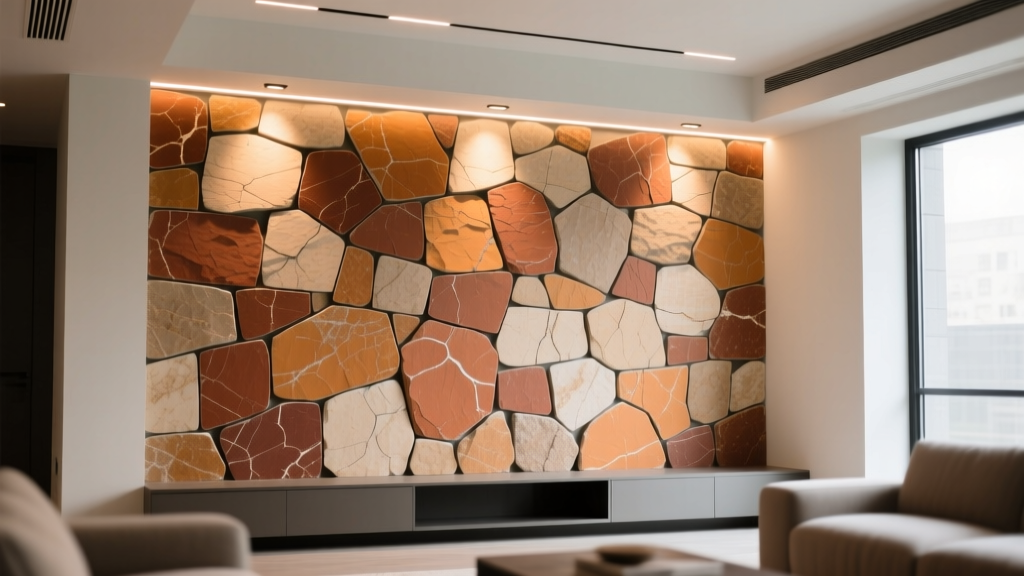
Sourcing Strategy: Where to Find Premium Stone Veneer Clearance
Finding high-quality clearance stone requires looking beyond the seasonal aisles of big-box home improvement stores. The most significant discounts are held by specialized masonry supply yards and regional distributors who need to clear warehouse space for new catalog releases.
- Q4 Inventory Purges: Distributors typically liquidate overstock between October and December to minimize year-end tax liabilities and make room for spring shipments. Discounts during this window frequently range from 40% to 65% off MSRP.
- Manufacturer Palette Updates: When brands update their color lines (e.g., phasing out a specific 'rustic cedar' tone for a more modern 'weathered oak'), the remaining inventory of the discontinued color is immediately relegated to clearance bins.
- Local Masonry Yards: Build relationships with the yard managers at local suppliers like Masonry Supply or local equivalents. Ask specifically for 'dead stock,' 'discontinued dye lots,' or 'remnant pallets.' Many yards will negotiate bulk pricing on pallets that have been sitting for over 18 months.
Pro-Tip: The Pallet Minimum
Clearance stone is almost always sold by the full pallet or in large square-foot increments (e.g., minimum 150 sq. ft. purchases). Before committing, calculate your total square footage and add a strict 15% waste factor. Because the color is discontinued, returning to the yard for an extra box of matching stone is impossible once the pallet is gone.
Design Frameworks for Discounted & Discontinued Veneers
Working with clearance stone requires a deliberate design approach, especially when dealing with limited quantities or highly specific, discontinued colors. Here are two proven frameworks for integrating these materials into modern spaces.
The Transitional Blend Technique
When you score a clearance deal on a highly textured profile like a rugged fieldstone or a stark, monochromatic ledge stone, the key to preventing a dated look is contrast. Pair the stone with ultra-modern, sleek materials. For example, if you find a pallet of discontinued Cultured Stone 'Dressed Fieldstone' in a heavy, traditional colorway, install it as a localized fireplace surround and flank it with vertical warm-walnut acoustic slat panels and matte black steel mantel shelving. The juxtaposition of the organic, heavy stone with precision-milled wood and industrial metal instantly elevates the stone from 'rustic cabin' to 'transitional luxury.'
The Monochromatic Accent Wall
If your clearance find is a smooth or brick-style veneer in a bold, discontinued color (such as a deep charcoal, oxidized rust, or stark white), utilize the monochromatic accent framework. Apply the stone to a single, high-impact wall—such as a primary bedroom headboard wall or a powder room vanity surround. Keep the adjacent walls, trim, and ceiling in a flat, matching neutral tone (e.g., pairing a rust-colored stone with a warm terracotta plaster or flat paint). This creates a cohesive, immersive environment where the stone acts as a textural element rather than a contrasting focal point.
Real-World Cost Breakdown: Clearance vs. Retail (2026 Pricing)
Understanding the true financial impact of stone veneer clearance requires looking beyond the per-square-foot material cost. The table below illustrates the financial delta between a standard retail installation and a clearance-sourced project for a 200 sq. ft. interior accent wall.
| Cost Component | Standard Retail (2026) | Clearance Sourced | Savings |
|---|---|---|---|
| Stone Material (200 sq. ft.) | $2,200 ($11.00/sq ft) | $700 ($3.50/sq ft) | $1,500 |
| Corner Pieces (20 linear ft.) | $600 ($30.00/LF) | $0 (Mitered/Cut) | $600 |
| Mortar, Lath & Accessories | $350 | $350 | $0 |
| Professional Labor | $2,400 ($12.00/sq ft) | $2,400 ($12.00/sq ft) | $0 |
| Total Project Cost | $5,550 | $3,450 | $2,100 (38%) |
Installation Gotchas with Overstock and Discontinued Batches
While the material savings are substantial, installing clearance stone introduces specific logistical and technical challenges that must be managed during the preparation and masonry phases. Adhering to guidelines set forth by the Masonry Veneer Manufacturers Association (MVMA) is critical, but clearance projects require extra vigilance.
1. The Dye-Lot Variation Trap
When a distributor liquidates clearance stone, you are often buying the remnants of multiple production runs. Pallet A might have been manufactured in March, while Pallet B was manufactured in November, resulting in subtle shifts in pigment intensity and aggregate exposure. The Fix: Never install directly from a single pallet. You must 'blend' the stone by opening all pallets and drawing pieces from each simultaneously during the installation process. This ensures any minor color variations are distributed evenly across the wall, mimicking the natural variances of real quarried stone.
2. The Missing Corner Piece Dilemma
Clearance inventory rarely includes matching corner pieces, which are often sold out first or discontinued entirely. Manufactured corner pieces are crucial for wrapping outside corners seamlessly. The Fix: If corners are unavailable, instruct your mason to use a 'quoin' or miter-cut technique, carefully grinding the edges of flat stones at a 45-degree angle to create a tight, interlocking outside corner. Alternatively, design the space to avoid outside corners entirely, terminating the stone at inside corners or against heavy wood/steel trim pieces that act as a deliberate architectural boundary.
3. Mortar and Grout Color Matching
Discontinued stone colors were often designed to pair with specific, proprietary mortar shades that may no longer be available. Using a standard grey Type N mortar can wash out the subtle undertones of a clearance stone. The Fix: Conduct a 'smear test' before the installation day. Mix small batches of Type S mortar (preferred for veneer adhesion and flexibility) with different integral pigment oxides (iron oxide for brown/red tones, chromium oxide for greens/greys). Apply the mortar to a scrap piece of the clearance stone, let it cure for 48 hours, and evaluate the contrast under the room's actual lighting conditions.
Substrate Preparation Reminder
Regardless of the stone's discount status, the substrate preparation remains non-negotiable. For interior wood-framed walls, you must apply a weather-resistive barrier (if required by local code), followed by 2.5 lb self-furring galvanized metal lath attached with 1-inch roofing nails into the studs (not just the drywall). A 1/2-inch scratch coat of Type S mortar must be applied and scored horizontally before the stone is set. Skipping this step to save money will result in delamination, voiding any remaining manufacturer warranties. For comprehensive substrate specifications, consult the technical resources provided by The Masonry Society.
Top 3 Clearance-Friendly Stone Profiles for 2026 Interiors
Not all stone profiles age equally well when pulled from a clearance bin. Based on current interior design trajectories, these three profiles offer the highest design ROI when sourced at a discount.
- Linear Ledge Stone (e.g., Eldorado 'Vintage Arcadia' style): Characterized by long, horizontal lines and tight dry-stack joints. This profile is highly forgiving of dye-lot variations because the linear geometry draws the eye horizontally, masking minor color shifts. It remains the premier choice for modern farmhouse and contemporary minimalist spaces.
- Saw-Cut Brick Veneer: Thin, sliced brick profiles (often found in clearance bins when commercial projects over-order) are perfect for industrial loft aesthetics. The inherent color variation of fired clay bricks makes batch-matching virtually unnecessary, as the 'imperfect' color shifts are celebrated as part of the rustic charm.
- Rounded River Rock / Cobble: While highly traditional, large-profile river rock can be modernized by using a stark, high-contrast mortar joint (such as bright white mortar against dark, clearance-priced grey cobble). This technique, known as 'overgrouting' or 'smearing,' unifies mismatched batches under a single, deliberate textural layer.
Summary Checklist for Your Clearance Project
Before signing the invoice at the masonry yard, run through this final verification checklist to ensure your clearance purchase translates into a successful design execution:
- [ ] Quantity Verification: Total square footage calculated + 15% waste factor. All required material is currently on the yard floor and reserved.
- [ ] Profile Continuity: Verified that all pallets share the exact same profile name and thickness, even if dye lots differ.
- [ ] Corner Strategy: Confirmed availability of corner pieces OR finalized an alternative miter-cut/trim-boundary design with the lead mason.
- [ ] Mortar Testing: Completed 48-hour mortar pigment smear tests on sample stones to ensure the joint color complements the discontinued stone hue.
- [ ] Substrate Materials: Purchased 2.5 lb galvanized lath, Type S mortar, and appropriate fasteners to meet MVMA installation standards.
By treating stone veneer clearance not as a compromise, but as a strategic sourcing advantage, you can achieve bespoke, high-impact architectural designs that defy their discounted origins.
Written by
Marcus ChenMarcus Chen is a licensed structural engineer (PE) and building materials analyst with over 12 years of experience across residential, commercial, and industrial construction. He holds a Master of Science in Civil Engineering from UC Berkeley and spent six years at Thornton Tomasetti before transitioning to independent consulting and technical writing. Marcus specializes in material selection for seismic-prone regions, concrete reinforcement strategies, and lifecycle cost analysis. His work has been cited by the American Concrete Institute (ACI) and the Structural Engineers Association of California (SEAOC). When he is not on a job site or at his desk, you will find him hiking the Sierra Nevada or restoring a 1920s craftsman bungalow in Oakland, CA.
More from Marcus Chen
View all
Construction Cost
How Much Did the Eiffel Tower Cost to Build?
How much did the Eiffel Tower cost to build in 1889? We adjust for inflation and compare its budget to modern skyscraper construction.
Aug 4, 2026

Fire Resistance
What Is a Fire Resistant Material? Testing & Certification Guide
Discover what is a fire resistant material through ASTM and UL testing. Learn how fire ratings, certifications, and assemblies work in construction.
Aug 4, 2026

Construction Cost
How Much Did the Burj Khalifa Cost to Build?
How much did the Burj Khalifa cost to build? We break down the $1.5B project and extract 5 money-saving strategies for your next build.
Jul 30, 2026