Stone Veneer Gray Profiles Compared: Top 2026 Picks
Compare the best stone veneer gray profiles for 2026. We analyze pricing, installation nuances, and top brands like Eldorado and Cultured Stone.

The Shift Toward Gray Stone Cladding
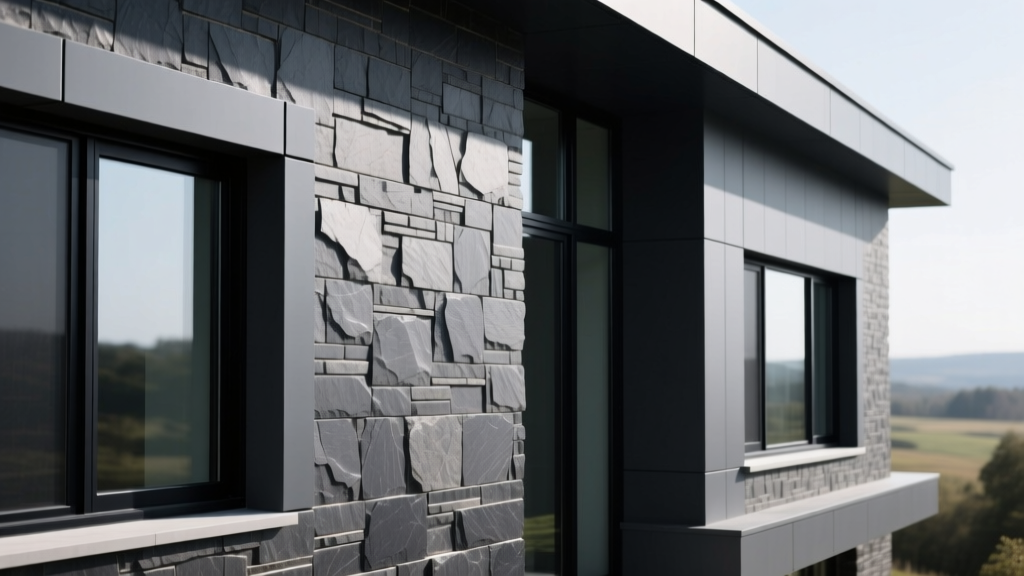
When specifying stone veneer gray tones for exterior cladding or interior accent walls, architects and contractors are moving away from monochromatic slabs toward highly textured, multi-dimensional profiles. Gray has become the dominant neutral in modern and transitional architecture, bridging the gap between the warmth of traditional earth tones and the starkness of pure white or black facades. However, not all gray manufactured stone is created equal. The interplay of shadow lines, mortar joint thickness, and pigment depth drastically alters the final aesthetic and structural performance.
This comparison review evaluates the top four stone veneer gray profiles available in 2026, breaking down material specifications, installed costs, and critical installation variables that dictate long-term durability.
Head-to-Head Comparison: Top 4 Gray Stone Veneer Profiles
| Manufacturer | Profile Name | Color / Finish | Style | Avg Material Cost (2026) |
|---|---|---|---|---|
| Eldorado Stone | Ridgestone | Leadville | Linear / Stacked | $8.50 - $10.25 / sq ft |
| Cultured Stone | Dressed Fieldstone | Smokey | Organic / Rounded | $9.00 - $11.50 / sq ft |
| Coronado Stone | Ledge Stone | Gray Mist | Ashlar / Cut | $7.75 - $9.50 / sq ft |
| Dutch Quality Stone | Dry Stack | Slate Gray | Mortarless / Tight | $8.25 - $10.00 / sq ft |
Deep Dive: Performance and Aesthetic Nuances
Eldorado Stone: Ridgestone in Leadville
Eldorado’s Ridgestone profile mimics the clean, horizontal lines of natural slate outcroppings. The 'Leadville' colorway is a sophisticated blend of cool charcoal and warm graphite, avoiding the flat, artificial look that plagues cheaper gray veneers. The stones range from 2 to 6 inches in height and up to 14 inches in length, making it exceptionally well-suited for modern farmhouse exteriors and large-scale commercial feature walls. Because of its linear geometry, installation is faster than random ashlar patterns, reducing labor costs by approximately 12% compared to fieldstone profiles.
Cultured Stone: Dressed Fieldstone in Smokey
For projects requiring a more traditional or craftsman aesthetic, Cultured Stone’s Dressed Fieldstone in 'Smokey' remains the industry benchmark. This profile features rounded, semi-weathered edges with deep, varied reliefs. The 'Smokey' pigment utilizes a multi-stage coloring process that embeds darker carbon tones into the crevices while leaving the faces a lighter, weathered ash. This depth is critical for exterior applications where direct sunlight can otherwise wash out flat gray pigments. It requires a wider mortar joint (typically 1/2 to 3/4 inch) to accommodate the irregular shapes.
Coronado Stone: Ledge Stone in Gray Mist
Coronado’s Ledge Stone offers an ashlar pattern that replicates hand-chiseled limestone. The 'Gray Mist' colorway is notably lighter than Leadville or Smokey, featuring prominent white and pale silver striations. This makes it an excellent choice for interior applications, such as fireplace surrounds or basement accent walls, where natural light is limited. The interlocking nature of the ashlar cut provides high structural cohesion when adhered to a proper scratch coat, minimizing the risk of individual stone pop-offs in high-vibration environments.
Dutch Quality Stone: Dry Stack in Slate Gray
Dry stack veneer eliminates the need for mortar jointing, relying on tight, zero-clearance stacking. Dutch Quality’s 'Slate Gray' dry stack profile is heavily textured, casting deep shadows that give the wall a rugged, three-dimensional appearance. Because there is no mortar to mix, tuckpoint, or clean, installation time is cut by up to 30%. However, dry stack applications are strictly prohibited in areas subject to direct, driving rain without an overhang, as water can infiltrate the unsealed joints and compromise the weather-resistant barrier (WRB) behind the lath.
2026 Cost Analysis: Material vs. Fully Installed
When budgeting for stone veneer gray installations, material costs represent only a fraction of the total investment. The 2026 market reflects increased costs in Portland cement, metal lath, and specialized masonry labor. Below is a breakdown of the fully installed cost per square foot for a standard exterior wood-framed wall.
| Cost Component | Standard Mortar Profile | Dry Stack Profile |
|---|---|---|
| Stone Veneer Material | $8.50 - $11.50 | $8.25 - $10.00 |
| Lath, Felt, and Fasteners | $1.20 - $1.80 | $1.20 - $1.80 |
| Scratch Coat & Mortar/Grout | $2.50 - $3.50 | $0.50 - $1.00 (Adhesive only) |
| Masonry Labor | $14.00 - $22.00 | $9.00 - $14.00 |
| Total Installed Cost | $26.20 - $38.80 | $18.95 - $26.80 |
Critical Installation Variables for Gray Tones
The most common failure in stone veneer gray installations is not structural, but aesthetic: poor mortar joint contrast. Gray stone paired with standard gray Type S mortar creates a monolithic, muddy appearance that erases the shadow lines and individual stone definitions.
Pro Tip: Mortar Selection for Gray Veneer
Always specify a light buff, natural white, or light gray Type N or Type S mortar when installing dark gray stone profiles. Use a concave or flush jointing tool to compress the mortar, which increases density and creates a subtle shadow line. Avoid raking the joints too deeply (over 1/4 inch), as this can create ledges where water and debris accumulate, accelerating freeze-thaw degradation. For exact color matching, request a 4x4 foot physical mock-up panel from your supplier before committing to the full order.
Furthermore, adherence to the ASTM C1670 standard for adhered manufactured stone masonry veneer is non-negotiable. This standard dictates the minimum compressive strength, absorption rates, and freeze-thaw durability required for exterior cladding. Ensure your chosen gray veneer carries an active ICC-ES evaluation report confirming compliance.
Durability Standards and Freeze-Thaw Resistance
Gray pigments, particularly those utilizing iron oxides and carbon black, can be susceptible to UV fading and chemical etching if the concrete matrix is not properly sealed during manufacturing. High-quality brands like Eldorado and Cultured Stone utilize integral colorants mixed directly into the concrete slurry, rather than surface-applied stains, ensuring the gray tone remains consistent even if the stone face is chipped during installation.
Warning: Efflorescence on Dark Gray Stone
Efflorescence—the migration of water-soluble salts to the surface of the masonry—appears as a stark, powdery white residue. On light-colored stone, it is barely noticeable; on dark stone veneer gray profiles, it is highly visible and difficult to remove. Never use muriatic acid or harsh chemical cleaners to remove efflorescence from gray veneer, as the acid will etch the cementitious surface and permanently alter the gray pigment. Instead, use a stiff nylon brush and a specialized, non-acidic efflorescence cleaner, and ensure your wall cavity features a properly lapped weather-resistant barrier and clear weep screeds to manage hydrostatic pressure.
To mitigate moisture intrusion, installers must follow the manufacturer's specific clearances and flashing guidelines, maintaining a minimum 4-inch clearance from grade and 2-inch clearance from rooflines. Proper integration of the weep screed with the WRB is the single most important factor in preventing the moisture entrapment that leads to both efflorescence and freeze-thaw spalling.
Decision Framework: Choosing the Right Gray Veneer
Selecting the optimal stone veneer gray profile requires balancing architectural style, budget, and environmental exposure. Use this framework to finalize your specification:
- For Modern/Contemporary Facades: Choose Eldorado Ridgestone (Leadville) or Dutch Quality Dry Stack (Slate Gray). The linear, tight-joint aesthetics complement metal roofing, large-format glass, and smooth stucco.
- For Traditional/Craftsman Homes: Specify Cultured Stone Dressed Fieldstone (Smokey). The organic shapes and wider mortar joints blend seamlessly with cedar shake roofs and painted wood siding.
- For Interior / Low-Light Areas: Opt for Coronado Ledge Stone (Gray Mist). The lighter ashlar profile reflects ambient light better than deep charcoal tones, preventing the room from feeling cavernous.
- For High-Moisture / Driving Rain Zones: Strictly avoid dry stack profiles. Mandate a mortared ashlar or ledge profile with a high-quality silane/siloxane penetrating sealer applied 28 days post-installation.
By prioritizing integral coloring, strict adherence to proper installation protocols, and deliberate mortar contrast, your gray stone veneer installation will deliver striking architectural impact and enduring structural performance.
Written by
Priya KapoorPriya Kapoor is a real estate market analyst and construction economics researcher with expertise in housing affordability, development feasibility, and infrastructure investment. She holds a Master of Regional Planning from Cornell University and previously worked as a senior analyst at CBRE's Investment Properties group, where she modeled returns for $4B in mixed-use development pipelines. Priya now runs an independent research practice advising developers, municipalities, and REITs on construction cost forecasting and market timing. She publishes the quarterly "BuildMat Market Pulse" report tracking material price indices across 12 commodity categories. Based in Austin, TX, Priya serves on the board of Habitat for Humanity Austin and is a marathon runner.
More from Priya Kapoor
View all
Construction Cost
Cost to Build a 1600 Sq Ft Home in 2026: Full Breakdown
Accurate 2026 cost to build a 1600 sq ft home—material, labor, and regional pricing breakdowns included. Plan your budget with real-time estimates.
Aug 11, 2026

Wood & Lumber
Name the Types of Wood for Pressure Treatment and Preservation
Learn how to name the types of wood best suited for pressure treatment. Compare species treatability, chemical retention levels, and 2026 preservation costs.
Aug 4, 2026

Stone & Masonry
Stone Veneer Suppliers Lindenhurst: 2026 Cost Analysis
Analyze 2026 stone veneer costs in Lindenhurst, NY. Compare local supplier pricing, delivery fees, and Suffolk County installation labor rates.
Aug 4, 2026