Where to Buy Stone Veneer Near Me: Sourcing & Supplier Guide
Discover where to buy stone veneer near me. Compare local masonry yards, big-box stores, and 2026 pricing for manufactured and natural thin veneer.
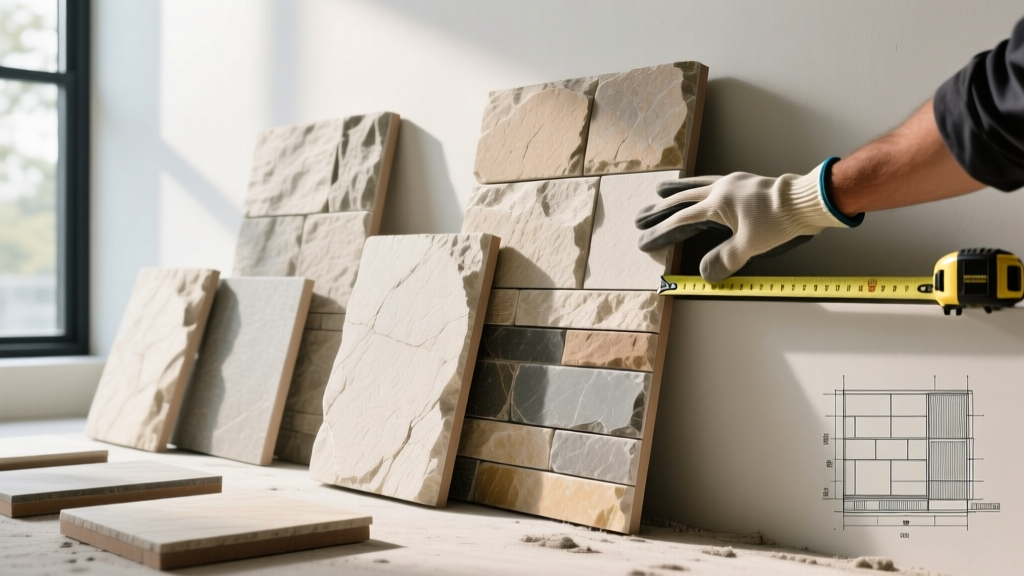
Sourcing adhered manufactured stone masonry veneer (AMSMV) or natural thin veneer (NTV) locally is driven by two critical factors: freight economics and batch consistency. When searching for where to buy stone veneer near me, buyers must navigate a fragmented market of big-box retailers, specialized masonry supply yards, and landscape fabricators. Because stone veneer is exceptionally dense—often weighing 10 to 15 pounds per square foot—shipping costs can easily eclipse material discounts offered by out-of-state online retailers. Furthermore, securing a single dye-lot for large exterior facades requires purchasing full pallets from local inventory rather than piecing together boxed sets.
The Three Main Local Sourcing Channels
Local stone veneer availability generally falls into three distinct retail categories, each serving different project scales and material requirements.
1. Big-Box Home Improvement Stores
Retailers like Home Depot and Lowe's typically stock manufactured stone veneer (MSV) from brands like Cultured Stone or generic regional manufacturers. Inventory is usually limited to 3 to 5 SKUs, predominantly basic ledge stone or fieldstone profiles packaged in 10-square-foot boxes. These locations are ideal for small interior projects, such as a single fireplace surround or a kitchen island, but they lack the depth of inventory required for full exterior home cladding.
2. Specialized Masonry Supply Yards
Dedicated masonry suppliers are the primary distributors for premium brands like Eldorado Stone, Dutch Quality Stone, and Coronado Stone. These yards sell by the full pallet (typically 100 to 125 square feet) and maintain climate-controlled warehouses to prevent efflorescence and moisture damage before installation. They also stock the specific mortars, scratch coats, and weep screeds required for code-compliant AMSMV installation.
3. Landscape and Natural Stone Yards
If your project requires Natural Thin Veneer (NTV)—real stone sliced to a 3/4-inch to 1.5-inch thickness—landscape supply yards and local stone quarries are your best local resource. These suppliers specialize in regional geology, offering locally quarried limestone, sandstone, or slate that naturally matches the surrounding architectural vernacular.
| Sourcing Channel | Best For | Selection Depth | Pricing Tier | Minimum Order |
|---|---|---|---|---|
| Big-Box Retailers | Interior accents, small fireplaces | Low (3-5 SKUs) | Mid to High (per sq ft) | 1 Box (10 sq ft) |
| Masonry Supply Yards | Full exterior cladding, commercial | High (50+ SKUs) | Competitive (Pallet pricing) | 1 Pallet (100+ sq ft) |
| Landscape / Stone Yards | Natural thin veneer, regional stone | Medium (Regional geology) | High (Natural stone premium) | 1 Pallet / Tonnage |
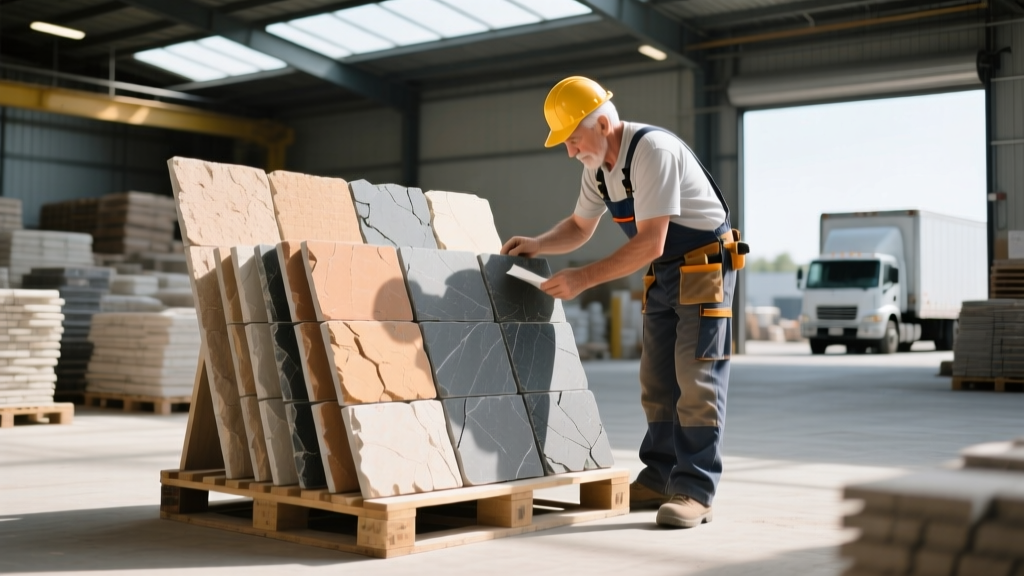
How to Vet Local Stone Veneer Dealers
Not all local dealers maintain the same quality control standards. Before committing to a purchase, verify that the supplier's inventory meets current industry specifications. According to the National Veneer Masonry Association (NVMA), manufactured stone veneer must adhere to strict performance criteria to prevent delamination and moisture intrusion.
- Request ASTM C1670 Documentation: Ensure the MSV complies with ASTM C1670 (Standard Specification for Adhered Manufactured Stone Masonry Veneer). This guarantees the stone has passed rigorous freeze-thaw and water absorption testing.
- Verify Dye-Lot Tracking: Ask the dealer if they track inventory by dye-lot. Mixing different production batches on a single wall will result in visible color banding, a common failure in DIY and poorly managed contractor projects.
- CheckAccessory Availability: A reputable masonry yard will stock matching transition pieces, outside corners, and hearth stones. If a dealer only sells flat panels, they are likely a liquidator or secondary distributor, not an authorized brand partner.
When searching for where to buy stone veneer near me, buyers often find "discounted" pallets from online retailers in different states. Be aware that a 1,000 sq ft pallet of stone veneer weighs approximately 12,000 pounds. Shipping this via Less-Than-Truckload (LTL) freight will incur heavy surcharges, residential delivery fees, and mandatory liftgate fees (often $300-$600 combined). Furthermore, freight carriers do not cover breakage on stone pallets. Always prioritize local dealers who can deliver via their own flatbed trucks with a forklift offload.
Evaluating In-Store Samples vs. Pallet Reality
Never purchase a full pallet of stone veneer based solely on a small showroom sample. Showroom samples are often sealed, professionally lit, and hand-picked. When you visit a local yard, ask to see an open pallet in the warehouse.
Inspect the back of the stone. Per guidelines referenced by The Masonry Society, the back of manufactured stone must feature a mechanical key or scored grooves at least 1/16-inch deep to ensure proper mortar adhesion. If the back is smooth or glossy, the stone will likely delaminate over time. Additionally, check the edges of the stones on the pallet for excessive chipping or "short-pour" defects where the concrete mix did not fully reach the edges of the mold. Finally, look for white, powdery residue (efflorescence) on the warehouse pallets, which indicates poor climate control and potential soluble salt issues within the concrete mix.
Step-by-Step Local Sourcing Workflow
- Calculate Exact Square Footage: Measure the total area and subtract all windows and doors. Add a strict 10% overage for cutting waste and corner transitions. (e.g., 800 sq ft wall = 880 sq ft order).
- Map Authorized Dealers: Use the dealer locators on premium brand sites like Cultured Stone Technical Resources or Eldorado Stone to find authorized local masonry yards, rather than relying on generic search engine maps.
- Call for Pallet Availability: Do not rely on website stock counters. Call the yard's commercial desk and ask: "Do you have 9 full pallets of [Brand/Color/Profile] available in the same dye-lot for immediate local delivery?"
- Inspect Upon Delivery: When the flatbed arrives, inspect the pallet wrap for tears and check the top layer of stone for transit breakage before signing the Bill of Lading (BOL). Note any damage directly on the driver's paperwork.
2026 Cost Expectations for Locally Sourced Veneer
Pricing for stone veneer fluctuates based on regional manufacturing hubs and local aggregate costs. The table below outlines average 2026 material costs sourced from local masonry yards, excluding installation labor.
| Material Type | Material Cost (Per Sq Ft) | Corner Pieces (Per Linear Ft) | Local Flatbed Delivery Fee |
|---|---|---|---|
| Manufactured Stone (Standard Profile) | $6.50 - $9.00 | $12.00 - $18.00 | $150 - $250 per trip |
| Manufactured Stone (Premium/Custom) | $9.50 - $14.00 | $18.00 - $26.00 | $150 - $250 per trip |
| Natural Thin Veneer (Regional Limestone) | $14.00 - $22.00 | $28.00 - $45.00 | $200 - $350 per trip |
| Natural Thin Veneer (Imported Slate/Quartz) | $20.00 - $32.00 | $40.00 - $65.00 | $200 - $350 per trip |
Frequently Asked Questions
Can I buy stone veneer directly from a local manufacturer?
Most regional stone veneer manufacturers operate strictly on a B2B model and will not sell direct to consumers or small contractors. They require purchases to go through authorized local masonry distributors who maintain the necessary inventory and technical support infrastructure.
Do local landscape yards sell the mortar needed for stone veneer?
Landscape yards typically sell Type N or Type S mortar for structural block work, but adhered stone veneer requires a specific polymer-modified mortar or a high-bond masonry cement. It is highly recommended to purchase your setting materials from a dedicated masonry supply yard to ensure the mortar meets the stone manufacturer's warranty requirements.
How far will local masonry yards deliver?
>Most specialized masonry yards offer free or flat-rate delivery within a 30 to 50-mile radius of their yard for orders exceeding $2,500. Beyond that radius, they will typically charge a per-mile fee or require you to arrange third-party flatbed towing.Written by
Priya KapoorPriya Kapoor is a real estate market analyst and construction economics researcher with expertise in housing affordability, development feasibility, and infrastructure investment. She holds a Master of Regional Planning from Cornell University and previously worked as a senior analyst at CBRE's Investment Properties group, where she modeled returns for $4B in mixed-use development pipelines. Priya now runs an independent research practice advising developers, municipalities, and REITs on construction cost forecasting and market timing. She publishes the quarterly "BuildMat Market Pulse" report tracking material price indices across 12 commodity categories. Based in Austin, TX, Priya serves on the board of Habitat for Humanity Austin and is a marathon runner.
More from Priya Kapoor
View all
Construction Cost
Cost to Build a 1600 Sq Ft Home in 2026: Full Breakdown
Accurate 2026 cost to build a 1600 sq ft home—material, labor, and regional pricing breakdowns included. Plan your budget with real-time estimates.
Aug 11, 2026

Wood & Lumber
Name the Types of Wood for Pressure Treatment and Preservation
Learn how to name the types of wood best suited for pressure treatment. Compare species treatability, chemical retention levels, and 2026 preservation costs.
Aug 4, 2026

Stone & Masonry
Stone Veneer Suppliers Lindenhurst: 2026 Cost Analysis
Analyze 2026 stone veneer costs in Lindenhurst, NY. Compare local supplier pricing, delivery fees, and Suffolk County installation labor rates.
Aug 4, 2026