Interior Wall Stone Veneer Cost Breakdown: What to Budget per Square Foot
Detailed cost analysis for interior wall stone veneer. Compare manufactured vs. natural stone pricing, labor rates, and hidden installation expenses.

Core Material Costs: Manufactured vs. Natural Stone Veneer
When budgeting for an interior stone accent wall, fireplace surround, or kitchen backsplash, the material itself typically accounts for 40% to 60% of the total project cost. The primary decision driving this budget is whether to use Manufactured Stone Veneer (MSV) or Natural Thin Stone Veneer. Both offer high-end aesthetics, but their pricing structures, weights, and installation requirements differ significantly.
| Material Type | Average Cost (per sq. ft.) | Weight (per sq. ft.) | Thickness | Best Interior Application |
|---|---|---|---|---|
| Manufactured Stone Veneer (MSV) | $5.50 - $11.00 | 10 - 12 lbs | 1" - 2.5" | Full accent walls, large fireplace surrounds |
| Natural Thin Stone Veneer | $12.00 - $22.00 | 13 - 15 lbs | 0.75" - 1.5" | High-end feature walls, luxury wet bars |
| Natural Full-Bed Stone | $18.00 - $35.00+ | 35 - 40+ lbs | 3" - 6" | Structural columns, heavy masonry fireplaces |
| Interlocking Faux Stone Panels | $7.00 - $14.00 | 1 - 2 lbs | 0.5" - 1" | Quick DIY basement bars, temporary staging |
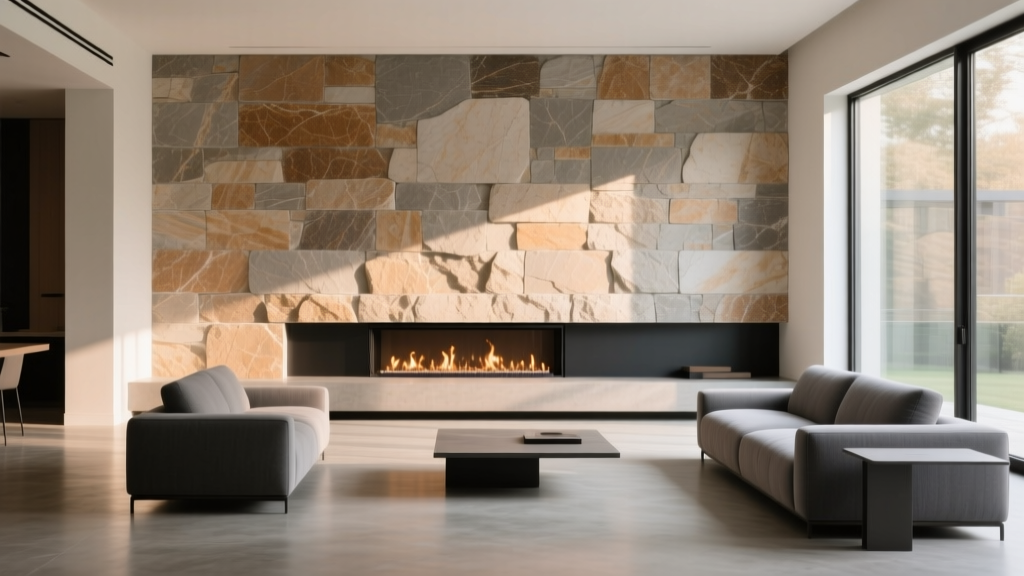
Manufactured stone, produced by brands like Eldorado Stone and Coronado Stone, uses Portland cement, lightweight aggregates, and iron oxide pigments to replicate natural textures. It remains the most popular choice for interior applications due to its lower weight and consistent color batching. Natural thin veneer, quarried and sliced from real limestone, slate, or fieldstone, commands a premium due to extraction and processing costs, but offers unmatched geological authenticity and thermal mass.
Substrate Preparation: The Hidden Cost Center
The most common budgeting error in interior stone veneer projects is underestimating substrate preparation. You cannot install mortar-based stone veneer directly over painted drywall, plaster, or standard wood paneling. The moisture from the mortar will degrade the drywall paper, and the sheer weight of the stone will rip the drywall from the fasteners, leading to catastrophic structural failure.
Standard 1/2-inch drywall attached to 2x4 framing at 16 inches on-center can only safely support roughly 1.5 to 2 lbs per square foot of sheer dead load. Manufactured stone veneer weighs 10+ lbs per square foot. Direct application to drywall violates building codes and guarantees eventual collapse. Complete tear-out to the studs or over-sheathing with cement board is mandatory.
Auxiliary Material Pricing Breakdown
To properly prepare an interior wall, you must factor in the following substrate and bonding materials. These costs apply to a standard 2x4 framed interior wall:
- 1/2-inch Cement Backer Board (e.g., Durock or HardieBacker): $1.50 - $2.20 per sq. ft.
- Moisture Barrier (15 lb asphalt felt or Grade D paper): $0.15 - $0.30 per sq. ft. (Required behind cement board to protect wood studs from mortar moisture).
- Galvanized Metal Lath (2.5 lb self-furring): $1.10 - $1.80 per sq. ft.
- Type S Mortar (Scratch coat and setting bed): $0.60 - $0.90 per sq. ft. (Type S is required for its higher tensile and compressive strength compared to Type N).
- Polymeric Sand or Grout Bag Mix: $0.40 - $0.80 per sq. ft.
Estimated Prep Material Total: Add $3.75 to $6.00 per square foot to your base stone material cost just for the wall preparation and bonding agents.
The Corner Piece Trap: Linear vs. Square Footage
When ordering interior wall stone veneer, flat pieces are sold by the square foot, but corner pieces and keystones are sold by the linear foot. This discrepancy routinely causes budget overruns for first-time buyers.
A standard corner piece covers roughly 0.75 square feet of wall area but costs between $8.00 and $18.00 per linear foot. If your interior project involves an exposed wall end, a hearth return, or an outside corner on a peninsula, you must calculate the vertical linear footage separately. For a standard 8-foot ceiling height, an outside corner requires 8 linear feet of corner pieces. At $12 per linear foot, that single corner adds $96 to the material bill, effectively doubling the cost per square foot for that specific section of the wall.
Labor Rates and Installation Timelines
Professional masonry labor for interior veneer installation typically ranges from $9.00 to $18.00 per square foot, depending on regional labor markets, the complexity of the stone profile (e.g., dry-stack vs. grouted mortar joints), and site accessibility. Interior work often commands a 10% to 15% premium over exterior work due to the need for meticulous dust containment, floor protection, and working in confined spaces.
For a standard 50-square-foot fireplace surround, expect a two-person masonry crew to take 2 to 3 days from demolition to final grouting. Day one involves substrate prep and applying the scratch coat, which requires a 24-hour curing period before stone application can begin. Day two and three involve setting the stone, cutting around electrical outlets or mantel brackets, and tooling the joints. According to guidelines outlined by The Masonry Society, rushing the scratch coat cure time is a primary cause of veneer delamination in interior climate-controlled environments where HVAC systems can artificially dry out the mortar surface too quickly.
DIY vs. Professional Installation: A Financial Matrix
While interlocking faux panels are designed for DIY, traditional mortar-set manufactured stone veneer requires intermediate masonry skills. Below is a decision framework to help determine if self-installation is financially viable for your interior project.
| Factor | Professional Installation | DIY Installation |
|---|---|---|
| Total Cost (50 sq. ft.) | $1,400 - $2,200 | $600 - $950 |
| Time Investment | 2-3 Days (Managed) | 4-7 Days (Learning curve) |
| Warranty | 1-5 Year Labor Warranty | Voided Manufacturer Warranty |
| Tool Rental Required | No | Yes (Wet saw, mortar mixer, scaffolding) |
| Best For | Grouted joints, full rooms, high ceilings | Dry-stack profiles, small hearths, wainscoting |
The Verdict: If you choose a dry-stack profile (no mortar joints between the stones) and are working on a wall under 8 feet high, DIY can save you roughly 50% of the total project cost. However, if your design requires traditional raked or flush mortar joints, the learning curve for consistent joint tooling and color-matching the mortar makes professional hiring the safer financial choice to avoid costly tear-outs.
ROI and Long-Term Value Impact
Interior stone veneer is generally considered a high-impact aesthetic upgrade rather than a strict dollar-for-dollar structural investment. According to the National Association of Realtors (NAR) Remodeling Impact Report, interior upgrades that enhance the visual focal points of a home—such as stone fireplace surrounds and feature walls—consistently rank high in homeowner satisfaction and perceived value during resale.
While you may not recoup 100% of a $4,000 interior stone wall project in a direct home appraisal increase, the 'joy score' and the acceleration of the home's time-on-market are significant. Homes with high-end interior finishes like natural thin stone veneer in living areas and kitchens photograph exceptionally well for MLS listings, often driving higher initial offer prices compared to homes with standard painted drywall or builder-grade tile surrounds.
Frequently Asked Questions: Interior Stone Veneer Costs
Do I need to seal interior wall stone veneer, and how much does it cost?
Sealing is not structurally required indoors, but it is highly recommended for stone installed behind kitchen stoves, wet bars, or in high-dust areas. A matte-finish, penetrating siloxane sealer prevents grease absorption and makes dusting easier. Expect to pay $0.40 to $0.80 per square foot for a high-quality interior masonry sealer. Avoid glossy acrylic sealers indoors, as they trap moisture and create an unnatural, plastic-like sheen.
Can my existing interior floor support the weight of a full stone veneer wall?
Standard residential floor joists (2x10 or 2x12 at 16 inches on-center) are engineered to support a live load of 40 PSF and a dead load of 10-15 PSF. A 10-foot long, 8-foot high manufactured stone wall weighs roughly 800 to 960 lbs. Distributed over 80 square feet of floor space, this adds about 10-12 PSF of dead load. While usually within standard tolerances, installing a heavy natural full-bed stone wall (3,000+ lbs) on an upper floor (second story) requires a structural engineer's assessment and likely the addition of steel blocking or sistered joists, adding $500 to $1,500 to the project budget.
Is stone veneer cheaper than real wood paneling or high-end wallpaper?
Compared to premium interior wood cladding (like shou sugi ban or reclaimed barn wood, which ranges from $15 to $30+ per sq. ft. installed), manufactured stone veneer is often 20% to 40% more affordable. However, it is significantly more expensive than high-end architectural wallpaper or standard interior paint, positioning it as a mid-to-high-tier luxury finish.
Written by
Sarah WhitfieldSarah Whitfield is a chartered quantity surveyor (MRICS) and construction cost analyst with 15 years of experience in material pricing, procurement strategy, and project budgeting. She earned her degree in Construction Management from the University of Reading (UK) and has worked on projects ranging from $2M custom homes to $180M mixed-use developments across North America and Europe. Sarah currently leads cost estimating for BuildMat Insight, maintaining a proprietary database of 4,000+ material price points updated quarterly. She is a frequent contributor to RSMeans cost data panels and has presented at the International Cost Engineering Council (ICEC) congress. Based in Denver, CO, Sarah is an avid trail runner and volunteer mentor for Women in Construction.
More from Sarah Whitfield
View all
Wood & Lumber
What Are the Different Types of Wood? A Builder's Guide
Compare structural softwoods, finish hardwoods, and engineered lumber. Analyze Janka ratings, MOE values, and 2026 pricing for construction.
Aug 4, 2026

Walls & Panels
Steel Framing vs Wood Framing: Corrosion and Moisture Defense
Compare steel framing vs wood framing for moisture resistance. Learn about galvanized coatings, condensation risks, and corrosion protection strategies.
Jul 21, 2026

Stone & Masonry
How to Cut Stone Veneer: Wet Saw vs Grinder Comparison
Compare the best tools for cutting stone veneer. We review wet saws, angle grinders, and chop saws to help you achieve clean, chip-free cuts.
Jul 21, 2026