Best Stucco Patch Brands Compared for Seamless Repairs
Compare top stucco patch brands like Quikrete and LaHabra. Discover exact cure times, shrinkage rates, and texture tips for seamless exterior repairs.
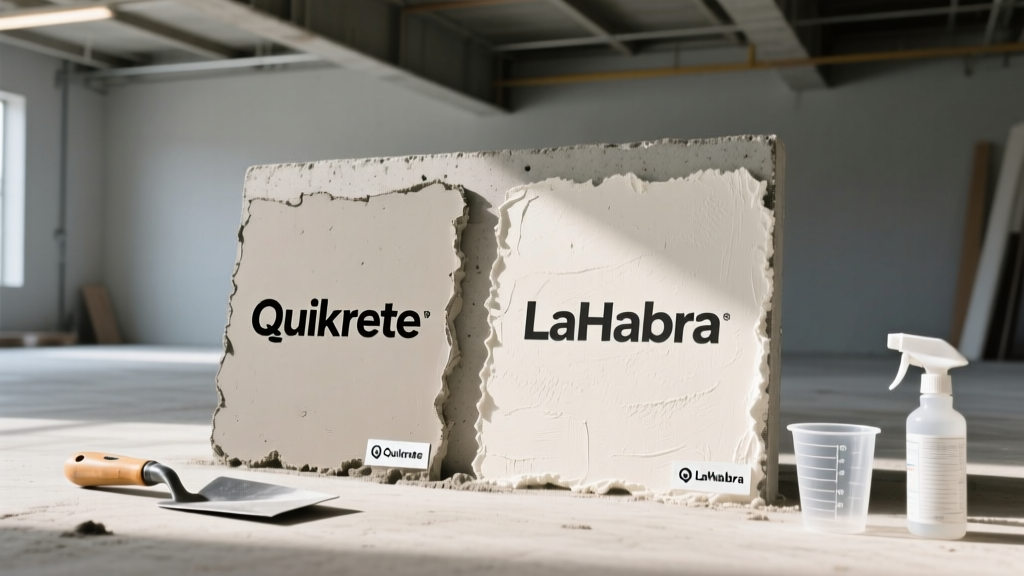
The Chemistry of Stucco Repair: Acrylic vs. Cementitious
Stucco patching is not merely about filling a void; it requires matching the substrate's vapor permeability, structural rigidity, and thermal expansion rate. Traditional three-coat stucco systems rely on a precise ratio of Portland cement, hydrated lime, and masonry sand. However, when repairing localized damage, site-mixed batches often suffer from high shrinkage and poor adhesion to cured edges. This is where modern pre-mixed stucco patch compounds excel.
Pre-mixed patches integrate acrylic polymers and proprietary water-retention agents. According to guidelines from the National Park Service Technical Preservation Services, using patching materials that are too hard or impermeable compared to the historic or existing substrate can trap moisture, leading to catastrophic spalling. Modern acrylic-modified patches solve this by maintaining a flexural strength that accommodates minor structural movement while allowing water vapor to escape.
Existing stucco acts like a sponge. If you apply a cementitious stucco patch to a dry edge, the old stucco will rapidly draw moisture out of the new patch, causing it to crumble and fail. Always mist the repair edges with water until they are damp (but not dripping) before applying any patching compound.
Brand Deep-Dive: Quikrete Stucco Patch
Product Specs & Real-World Performance
Quikrete's pre-mixed Stucco Patch (commonly found in 5 lb and 10 lb tubs) is the most widely available retail option for residential repairs. Formulated as an acrylic-modified cementitious compound, it is designed for shallow repairs up to 1/2 inch thick.
- Coverage: A 10 lb tub yields approximately 0.5 cubic feet, covering about 1.5 square feet at a 1/4-inch depth.
- Cure Time: Dry to touch in 2 hours; paintable in 24 hours; full 28-day structural cure.
- Shrinkage: Negligible due to polymer modification, though deep fills over 1/2 inch will require a secondary scratch coat.
Pros: Exceptional accessibility, long shelf life in the sealed tub, and a medium-grain aggregate that mimics standard sand-finish stucco.
Cons: The aggregate size is fixed, making it difficult to match very fine or very coarse custom finishes. Color matching out-of-the-tub is nearly impossible without integral pigments or exterior masonry stains.
Brand Deep-Dive: LaHabra Patch Plus
Product Specs & Real-World Performance
LaHabra is a staple in the professional stucco industry, and their Patch Plus line bridges the gap between retail convenience and commercial performance. Available in larger 50 lb buckets, it is heavily favored by contractors tackling extensive moisture-damage repairs or EIFS (Exterior Insulation and Finish System) base coat restorations.
- Formulation: High-build acrylic polymer with a graded silica sand aggregate.
- Application: Can be troweled up to 3/4 inch in a single lift without slumping, thanks to its high viscosity.
- Cost: Approximately $45 to $55 per 50 lb bucket (current 2026 pricing), making it significantly more cost-effective per square foot than small retail tubs.
Pros: Superior workability, longer open time (allowing for better texture manipulation), and excellent adhesion to painted or sealed stucco surfaces when scored.
Cons: Requires a drill with a paddle mixer to re-homogenize the material if it has sat in storage, as the heavy aggregate tends to settle at the bottom of the bucket.
Brand Deep-Dive: Rapid Set Stucco Patch
Product Specs & Real-World Performance
Manufactured by CTS Cement, the Rapid Set line utilizes calcium sulfoaluminate cement rather than traditional Portland cement. This chemistry fundamentally changes the repair timeline. For commercial properties or multi-family dwellings where scaffolding rental costs dictate the schedule, Rapid Set is the undisputed leader.
The product achieves structural strength in just two hours. However, this rapid hydration generates significant exothermic heat. It is critical to use cold water when mixing the dry-bag versions and to avoid applying it in direct, midday sun on south-facing walls, as the flash-set can cause plastic shrinkage cracking.
Head-to-Head Product Matrix
| Feature | Quikrete Stucco Patch | LaHabra Patch Plus | Rapid Set Stucco Patch |
|---|---|---|---|
| Base Chemistry | Portland Cement + Acrylic | Acrylic Polymer + Silica | Calcium Sulfoaluminate |
| Max Single-Coat Depth | 1/2 inch | 3/4 inch | 1 inch |
| Set Time (Initial) | 2 Hours | 4-6 Hours | 15-20 Minutes |
| Paintable After | 24 Hours | 48 Hours | 2 Hours |
| Best Application | DIY Hairline & Small Holes | Pro Large-Scale Restorations | Commercial Fast-Track Repairs |
| Shrinkage Rate | Low | Very Low | Moderate (if not cured right) |
Texture Matching: The Real Challenge
The most common reason stucco patches fail aesthetically is not structural delamination, but visual 'shadowing' caused by mismatched textures. According to InterNACHI inspection standards, uneven textures catch light differently, making repairs glaringly obvious even when painted the exact same color. Here is how to match the three most common finishes:
- Sand/Float Finish: Use a 14-inch aluminum float with a damp sponge attachment. Apply the stucco patch, let it firm up for 15 minutes, then run the float in tight, overlapping circular motions to bring the fine aggregate to the surface.
- Lace/Spanish Texture: This requires a stiff bristle brush or a specialized texture trowel. After applying the patch, stipple the surface with the brush to pull peaks of material upward. The key is matching the 'knockdown' phase—lightly flattening the peaks with a wide drywall knife after 20 minutes.
- Dash/Knockdown Finish: Pre-mixed tubs cannot replicate a heavy dash finish. You must use a hopper gun to blow a mist coat of thinned patch material over the repair, blending it into the surrounding original dash.
Common Failure Modes and Prevention
Warning: Never apply a waterproof elastomeric coating directly over a fresh cementitious stucco patch. The patch requires 28 days to off-gas internal moisture. Trapping this moisture will result in alkali-silica reaction (ASR) and efflorescence, pushing the patch out from the wall.
Delamination from Wire Mesh: If the repair exposes the underlying metal lath, the lath must be mechanically fastened with corrosion-resistant screws and washers every 6 inches. Applying stucco patch over loose lath will result in a hollow-sounding repair that cracks under thermal expansion.
Efflorescence Blooming: White, powdery salt deposits often appear on patches. This occurs when water-soluble salts from the cement are drawn to the surface. Prevent this by ensuring the weep screed at the base of the wall is clear of soil and mulch, allowing the wall assembly to drain properly.
Sourcing and Cost Breakdown
For contractors estimating repair budgets, material costs are only a fraction of the equation. A 50 lb bucket of LaHabra Patch Plus costs roughly $50, covering about 12 square feet at 1/4 inch thick. However, labor for texture matching and scaffolding setup typically runs $4 to $8 per square foot. For DIY homeowners, purchasing smaller 10 lb Quikrete tubs at $15 each is economical for isolated impact damage, but buying more than three tubs makes the transition to professional-grade bucket pricing mathematically necessary.