Evaluate CertainTeed Siding Warranties: An Installer's Guide
Learn how to evaluate CertainTeed siding warranties and follow exact installation specs to avoid voiding coverage on CedarBoards and MainStreet panels.

The Reality of CertainTeed Siding Warranties: What Installers Must Know
When contractors evaluate the building materials company CertainTeed on siding with warranty in mind, the focus often lands on the marketing promises: lifetime limited coverage, PermaColor™ fade protection, and extreme wind resistance. However, from an installation perspective, a warranty is only as strong as the compliance of the crew installing it. CertainTeed’s warranties are stringent, heavily relying on adherence to the Vinyl Siding Institute (VSI) standards and the manufacturer’s specific installation manual. A single missed nailing slot or ignored expansion gap can void a $15,000 material warranty instantly.
This guide evaluates the actual structural integrity of CertainTeed’s warranty offerings and provides the exact installation tolerances required to keep that coverage intact. Whether you are hanging traditional MainStreet™ DL4 profiles or insulated CedarBoards® D6, understanding the intersection of building science and warranty law is critical for protecting your contracting business and your client’s investment.
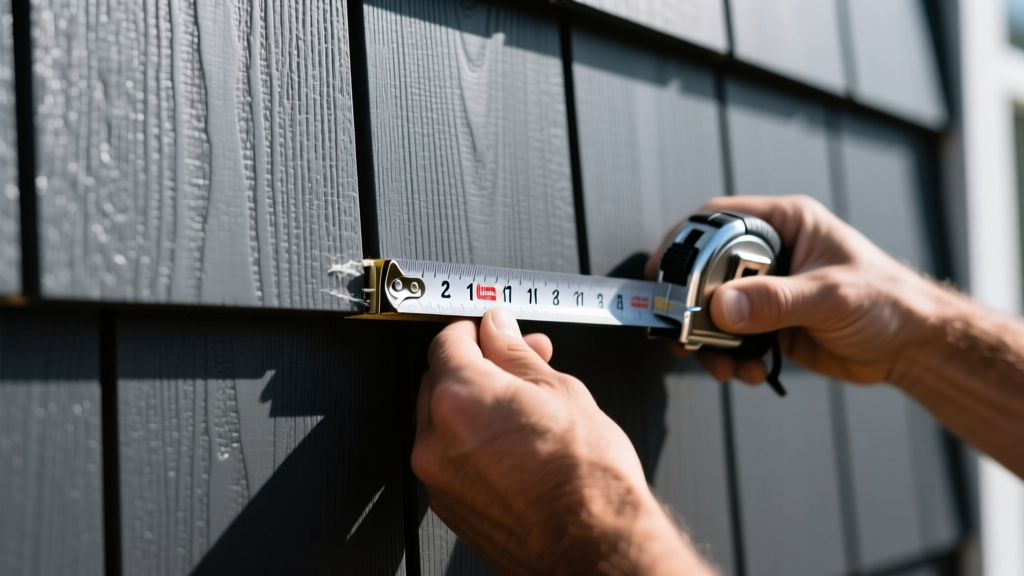
Evaluating the Core Warranty Pillars
Before driving the first nail, contractors must understand what CertainTeed actually covers. The warranty is not a blanket guarantee against all failures; it is a highly specific contract based on material defects and environmental performance.
- PermaColor™ Lifetime Fade Protection: Covers excessive fading and color change. Unlike some competitors that prorate color warranties after 10 years, CertainTeed’s PermaColor is generally non-prorated for the lifetime of the original owner.
- Wind Load Resistance: Standard panels cover up to 110 mph. Reinforced insulated profiles like CedarBoards D6 are warranted for wind loads up to 212 mph (equivalent to an EF-4 tornado), provided specific fastening patterns are used.
- Transferability: The warranty can be transferred one time to a second homeowner within 50 years of installation, a massive selling point for real estate transactions.
- Exclusions: Does not cover damage from improper installation, structural settling, acts of God (hurricanes exceeding rated wind speeds), or improper cleaning chemicals.
Critical Installation Tolerances to Prevent Voids
The Vinyl Siding Institute (VSI) Installation Guidelines form the baseline for CertainTeed’s warranty enforcement. If a warranty claim is filed for buckling or pulling away from the wall, the manufacturer’s inspector will immediately measure your fastener placement and expansion gaps.
Fastener Selection and Placement
Vinyl expands and contracts significantly with temperature fluctuations. If a panel is pinned tightly to the sheathing, it will buckle in the summer heat or tear at the nailing hem in the winter freeze. CertainTeed requires panels to "hang" on the fasteners, not be clamped by them.
| Specification | Requirement for Warranty Compliance | Common Installer Mistake |
|---|---|---|
| Nail Type | 1-1/2" to 2" galvanized or aluminum roofing nails (minimum 5/16" head). | Using electro-galvanized nails that rust and streak the PermaColor finish. |
| Nail Placement | Dead center of the 3/8" x 3/4" nailing slots. | Nailing at the edges of the slot, restricting lateral thermal movement. |
| Nail Spacing | Maximum 16" on center for horizontal siding; 12" for vertical. | Spacing nails 24" apart, causing the panel to sag and voiding wind warranties. |
| Head Clearance | 1/32" gap between the nail head and the vinyl nailing hem. | Driving nails flush or "dimpling" the vinyl, which locks the panel in place. |
Thermal Expansion Clearances
Vinyl siding expands at a rate of approximately 1/2 inch per 10-foot panel across a 100°F temperature swing. CertainTeed’s warranty explicitly mandates that installers account for this movement at all termination points.
If you are installing CertainTeed siding when the ambient temperature is above 40°F (4°C), you must leave a minimum 1/4-inch gap at all J-channels, corners, and trim. If you are installing in cold weather below 40°F (4°C), the vinyl is contracted, and you must increase this gap to 3/8-inch. Failure to adjust gaps based on morning installation temperatures is the #1 reason for buckling claims in July.
Evaluating Product Lines: CedarBoards vs. MainStreet
When you evaluate CertainTeed’s product ecosystem, the warranty requirements shift slightly depending on the profile architecture. Understanding these nuances prevents catastrophic installation errors.
MainStreet™ (Traditional Hollow-Back Profile)
MainStreet is a classic hollow-back vinyl siding. Because it lacks a rigid foam backing, it is more forgiving over slightly uneven sheathing. However, it is highly susceptible to "oil-canning" (visible waviness) if the underlying wall is not plumb and flat. The warranty does not cover oil-canning caused by poor substrate preparation. Installers must use furring strips to create a perfectly flat plane before hanging MainStreet.
CedarBoards® (Insulated Siding)
CedarBoards features a contoured EPS (expanded polystyrene) foam backing laminated to the vinyl. This product carries the premium 212 mph wind warranty.
"The EPS foam backing on CedarBoards locks the panel rigidly to the wall, drastically increasing wind uplift resistance. However, if the installer uses nails that are too short to penetrate through the foam, the sheathing, and into the structural studs by at least 3/4", the wind warranty is immediately voided."
For CedarBoards, you must typically use 2-inch or even 2-1/2-inch galvanized roofing nails to account for the 1/2-inch to 5/8-inch foam thickness. Furthermore, because the foam backing creates a tighter seal against the weather-resistant barrier (WRB), proper flashing integration is non-negotiable to prevent trapped moisture.
Step-by-Step Warranty-Compliant Installation Flow
To ensure your installation passes a CertainTeed warranty inspection, follow this strict sequence for every elevation of the home.
- Substrate and WRB Verification: CertainTeed’s warranty does not cover water damage or rot. You must install a code-approved Weather-Resistant Barrier (like Tyvek® HomeWrap®) and flash all windows and doors using the AAMA 711 standard for self-adhering flashing tapes before any siding goes up.
- Starter Strip Leveling: Snap a chalk line to ensure the starter strip is perfectly level. An unlevel starter strip compounds errors up the wall, forcing panels to lock improperly and voiding the structural integrity of the interlocking system.
- Corner Post Installation: Install outside and inside corner posts first. Leave the mandatory 1/4" expansion gap at the top soffit and bottom starter. Pin the top nail at the very top of the uppermost slot, and center all subsequent nails in their slots.
- Panel Locking and Nailing: Engage the bottom lock of the panel into the starter strip or previous course. Pull the panel taut, but do not stretch it. Drive nails centered in the slots, maintaining the 1/32" head clearance.
- Overlap Management: Overlap horizontal panel joints by a minimum of 1 inch. If you are installing dark colors (like CertainTeed’s Granite Deep Color™ or Heritage Cream), increase the overlap to 1-1/2 inches to prevent the underlying nailing hem from becoming visible during extreme thermal contraction.
- Utility Trim and J-Channel Finishing: Cut panels to fit under windows and at the roofline, leaving the required expansion gap. Snap the cut edge into utility trim (undersill trim) to secure the panel without face-nailing, which is strictly prohibited and voids the warranty.
Moisture Management: The Hidden Warranty Trap
Many contractors evaluate siding warranties purely on material defects, ignoring the moisture clauses. According to data from the CertainTeed Siding Resource Center, moisture intrusion from the interior (humidity) or exterior (flashing leaks) is the leading cause of warranty claim denials.
When installing insulated siding like CedarBoards, the foam backing reduces the drying potential of the wall assembly to the exterior. You must ensure that the interior vapor retarder is correctly specified for your specific climate zone (e.g., Class I vapor retarder in cold climates, Class III or none in hot-humid climates). If an inspector finds that the installer ignored basic building science principles regarding vapor drive and WRB integration, the claim will be denied under the "improper installation and ventilation" exclusion clause.
Common Warranty Voids and How to Avoid Them
❌ The Mistake: Face Nailing
Driving a nail directly through the face of the vinyl panel to secure it near a roofline or window, then covering it with caulk.
✅ The Fix: Utility Trim
Cut the panel, leave a 1/4" gap, and lock it into utility trim. Never puncture the exposed face of the siding; it compromises the structural web and voids the PermaColor warranty.
❌ The Mistake: Caulking the Bottom Ledge
Applying a bead of silicone caulk along the bottom edge of the starter strip or J-channel to "seal out water."
✅ The Fix: Weep Holes
Vinyl siding is a draining cladding system, not a barrier system. Water that gets behind the panels must exit through the weep holes at the bottom. Caulking traps water and rots the sheathing.
Frequently Asked Questions
Does CertainTeed cover fading from UV exposure on dark colors?
Yes, under the PermaColor™ Lifetime Fade Protection. However, "fading" is defined by specific Delta-E color shift metrics. Normal, uniform weathering is expected, but excessive, uneven fading or chalking is covered. Ensure you are using their proprietary darker color formulations, as painting standard vinyl a dark color yourself will instantly void the warranty due to heat-absorption warping.
Can I mix CertainTeed siding with another brand’s trim?
While physically possible, mixing manufacturers can complicate warranty claims. If a failure occurs at the intersection of a CertainTeed panel and a third-party J-channel, the manufacturers will likely blame each other’s thermal expansion rates. For a bulletproof warranty, use CertainTeed’s matched trim and accessory lines.
What happens if my crew uses a pneumatic nail gun instead of hand-nailing?
CertainTeed permits the use of pneumatic power nailers, provided they are equipped with adjustable depth-of-drive gauges. The gun must be calibrated so the nail head stops exactly 1/32" above the nailing hem. If your crew "blows" the nails through the vinyl or pins them tight, the warranty is void. Always test the air compressor pressure on a scrap piece of siding every morning before starting the wall.
Written by
James ThorntonJames Thornton is a construction industry veteran with 25 years of hands-on experience in wood framing, lumber grading, and residential building codes. He started as a framing carpenter in rural Oregon, earned his ICC Residential Building Inspector certification, and eventually became a senior plan reviewer for the City of Portland Bureau of Development Services. James holds a B.S. in Wood Science & Technology from Oregon State University and is a certified lumber grader through the West Coast Lumber Inspection Bureau (WCLIB). He has inspected over 3,000 residential construction sites and authored the city's internal guide on advanced framing techniques (2x6 at 24" O.C.). James lives in Bend, OR, where he builds custom timber-frame cabins and competes in lumberjack sports.
More from James Thornton
View all
Insulation
Best Home Insulation Materials: Complete 2026 Guide
Compare top home insulation materials for 2026. Find R-values, installed costs per square foot, and best uses for fiberglass, spray foam, and mineral wool.
Aug 4, 2026

Sustainable Building
Certify Your Green Building Material for LEED and WELL
Step-by-step guide to certifying a green building material for LEED v5 and WELL v2. Master EPDs, HPDs, and VOC limits for 2026 project specifications.
Aug 4, 2026

Stone & Masonry
Veneer Stacked Stone Panels: Interior Design & Style Showcase
Discover how veneer stacked stone panels transform interiors. Explore modern design profiles, material pairings, and technical installation specs.
Aug 4, 2026