T1-11 Siding Product Deep Dive: Plywood vs OSB Grades & Costs
Explore T1-11 siding product lines, comparing plywood and OSB panels. Learn about APA grades, thickness specs, brand options, and 2026 installation costs.
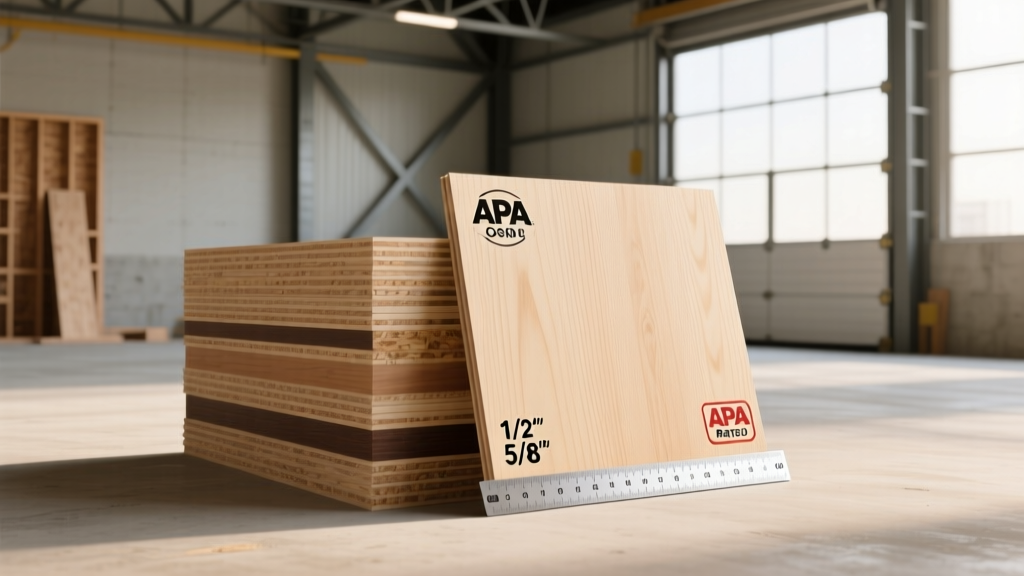
The Anatomy of T1-11: Beyond the Grooves
T1-11 siding, formally recognized in the industry as Texture 1-11, is a structural wood panel featuring routed vertical grooves—typically spaced at 4-inch or 8-inch on-center (OC) intervals. Originally popularized in the 1960s for its rustic aesthetic and rapid installation, modern T1-11 has evolved into a highly engineered building envelope component. Unlike standard lap siding that requires a separate sheathing layer, T1-11 functions as a dual-purpose material: it provides both the structural shear wall bracing and the exterior weather-resistant cladding in a single 4x8-foot sheet.
The 'T' designates the textured face, which is achieved either by rough-sawing the face veneer (in plywood variants) or by pressing a textured overlay (in OSB variants). While often associated with shed construction, premium-grade T1-11 is heavily specified in 2026 for modern cabin builds, agricultural structures, and architectural accent walls. Understanding the distinct product lines, resin binders, and veneer grades is critical for architects and builders to prevent premature delamination and edge swelling.
Plywood vs. OSB T1-11: A Material Matrix
The market divides T1-11 into two primary substrates: traditional plywood and Oriented Strand Board (OSB). While they share the same routed profile, their manufacturing processes dictate vastly different performance characteristics in high-moisture environments.
| Performance Metric | Plywood T1-11 (Veneer) | OSB T1-11 (Strand) | Engineered Wood Panel (e.g., LP SmartSide) |
|---|---|---|---|
| Core Composition | Cross-laminated wood veneers (3-5 plies) | Compressed wood strands with wax/resin | Treated wood strands with zinc borate |
| Moisture Resistance | High (if Exterior rated) | Moderate (prone to edge swelling) | Exceptional (proprietary resin overlays) |
| Structural Shear Value | Excellent (meets PS 1-09) | Good (meets PS 2-10) | Excellent (requires specific nailing) |
| Paint Adhesion | Requires oil/alkyd primer on knots | Excellent with acrylic latex | Superior (pre-primed factory options) |
| Weight (per 4x8 sheet) | ~85 lbs (5/8" thickness) | ~95 lbs (7/16" thickness) | ~105 lbs (7/16" thickness) |
Traditional Plywood Product Lines
Major manufacturers like Georgia-Pacific (GP) and Roseburg dominate the plywood T1-11 sector. GP’s Plytanium Texture 1-11 is a benchmark product, typically manufactured with an A-C or B-C face grade. The 'A' or 'B' face features a smooth, sanded veneer suitable for high-end exterior stains, while the 'C' back face contains tight knots and minor repairs. For structural applications, builders must specify panels stamped as 'Exterior' rather than 'Exposure 1', ensuring the use of 100% waterproof phenolic glues that will not degrade under continuous weather exposure.
OSB and Engineered Alternatives
OSB T1-11 is manufactured using compressed wood strands, resulting in a lower material cost but a higher risk of edge swelling if the routed grooves or panel edges are left unsealed. To combat this, the industry has shifted toward treated engineered panels. LP Building Solutions produces the SmartSide Panel Siding line, which features a grooved profile mimicking T1-11 but incorporates a zinc borate treatment for termite and fungal resistance, topped with a resin-saturated overlay that completely eliminates the traditional OSB edge-swelling vulnerability.
Decoding APA Stamps and Thickness Specifications
Every legitimate wood structural panel bears a stamp from APA - The Engineered Wood Association. Misreading this stamp is the most common cause of premature siding failure. The stamp dictates the panel's exposure durability classification:
- Exterior: Bonded with fully waterproof adhesives. Designed for continuous, long-term exposure to weather and moisture. Mandatory for uncoated T1-11 applications.
- Exposure 1: Bonded with exterior-grade adhesives but may contain interior-grade veneers in the core. Designed to resist construction delays and temporary weather exposure, but must be protected by paint, stain, or a weather-resistant barrier for long-term use.
2026 Material Pricing and Yield Analysis
Pricing for T1-11 panels fluctuates with softwood lumber indices and resin costs. The data below reflects Q1 2026 national average retail pricing for standard 4x8-foot sheets. Builders must factor in a 10-12% waste factor for complex rooflines and window cutouts.
| Product Category | Nominal Thickness | Groove Spacing | Avg. Retail Price (Per Sheet) | Cost Per Sq. Ft. |
|---|---|---|---|---|
| OSB T1-11 (Standard) | 3/8" (11/32") | 8" OC | $38.00 - $45.00 | $1.18 - $1.40 |
| Plywood T1-11 (A-C Grade) | 3/8" (11/32") | 4" OC | $52.00 - $60.00 | $1.62 - $1.87 |
| Plywood T1-11 (Structural) | 5/8" (19/32") | 8" OC | $75.00 - $88.00 | $2.34 - $2.75 |
| Engineered Panel (LP SmartSide) | 7/16" | 8" OC | $58.00 - $68.00 | $1.81 - $2.12 |
Critical Installation Gotchas and Moisture Management
According to moisture management guidelines published by the Building Science Corporation, wood structural panels act as vapor semi-impermeable layers. When installed as T1-11 siding, the drying potential of the wall assembly is heavily restricted. Therefore, exterior detailing must be flawless to prevent bulk water intrusion.
The Horizontal Joint Vulnerability
T1-11 panels are manufactured in 4x8-foot sheets. When installed vertically, the top edge of the lower panel meets the bottom edge of the upper panel. This horizontal joint is the single highest point of failure in T1-11 installations. You must install a minimum 4-inch wide, 26-gauge galvanized Z-flashing over the lower panel before setting the upper panel. Never rely on caulking for horizontal T1-11 joints; caulk will inevitably crack due to the hygroscopic expansion and contraction of the wood fibers.
Bottom Edge Clearance and Wicking
The end-grain at the bottom edge of a T1-11 panel acts like a bundle of microscopic straws. If the panel touches soil, mulch, or even a concrete patio, it will wick moisture upward, leading to severe delamination and rot within 24 months. Maintain a strict 6-inch minimum clearance between the bottom edge of the T1-11 panel and any grade or horizontal surface. If installing over a deck, utilize a specialized drip-edge flashing that directs water away from the panel's end-grain.
If using OSB-based T1-11, any field cuts or routed grooves exposed to rain before priming will suffer irreversible edge swelling. The strands will expand, creating a raised 'ridge' along the groove that is impossible to sand flat. All OSB T1-11 cuts and grooves must be sealed with an exterior-grade, solvent-based primer on the same day they are cut.
Fastener Schedules and Shear Values
Because T1-11 acts as structural sheathing, the fastener schedule must meet local building codes for shear walls. Typically, this requires 8d galvanized ring-shank nails (or 2-inch exterior wood screws) spaced at 6 inches on-center along the panel edges and 12 inches on-center in the intermediate framing. Nails must be driven flush; over-driving will crush the textured face and compromise the structural holding power, while under-driving will leave protrusions that telegraph through paint and trap moisture.
Expert Verdict: When to Specify T1-11
T1-11 remains an unbeatable choice for projects requiring rapid enclosure, rustic aesthetics, and dual-purpose structural sheathing. For high-end residential cabins where deep, transparent stains are desired, specify 5/8-inch A-C Plywood T1-11 with 4-inch OC grooves. For agricultural buildings, sheds, and budget-conscious residential projects where opaque acrylic paints will be used, OSB T1-11 or engineered alternatives like LP SmartSide panels offer superior dimensional stability and long-term moisture resistance at a competitive price point. Always verify the APA exposure stamp and prioritize Z-flashing over caulking to ensure the cladding survives the elements for decades.