How Vinyl Siding and Colors Affect Longevity and Fade Resistance
Analyze how vinyl siding and colors impact thermal expansion, UV fade resistance, and overall lifespan, featuring LRV data and capstock technology.
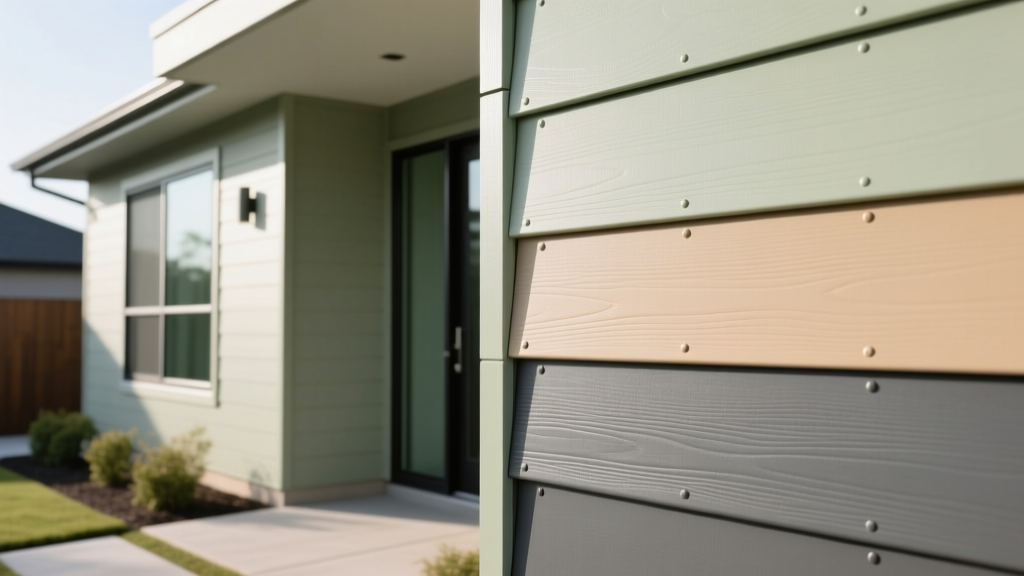
The physical lifespan of polyvinyl chloride (PVC) exterior cladding is inextricably linked to its pigment. While standard white or light-tan profiles routinely achieve their 40-year rated lifespans, darker and more saturated hues introduce severe thermodynamic stresses. Understanding the relationship between vinyl siding and colors requires analyzing solar heat gain, Light Reflectance Value (LRV), and the chemical engineering of modern capstock layers. As of 2026, material science has largely mitigated historical fading issues, but thermal expansion and structural warping remain critical failure points for dark-colored installations.
The Physics of Color: Solar Heat Gain and Thermal Expansion
PVC is a thermoplastic. It expands when heated and contracts when cooled. The rate and extent of this movement are dictated by the surface temperature of the siding, which is a direct function of its Light Reflectance Value (LRV). LRV measures the percentage of visible and usable light reflected by a surface. Standard white vinyl reflects up to 80% of solar radiation (LRV 80), while deep charcoal or navy blue profiles may absorb up to 85% of it (LRV 15).
According to testing data referenced by the Vinyl Siding Institute (VSI), a 12-foot panel of standard vinyl will expand and contract approximately 1/2 inch over a 100°F temperature swing. Dark colors drastically widen this temperature delta.
| Siding Color Profile | Approx. LRV | Peak Surface Temp (Direct Sun) | Expansion per 12ft Panel | Risk of Thermal Buckling |
|---|---|---|---|---|
| Arctic White / Cream | 75 - 85 | 105°F - 115°F | 0.35 inches | Low |
| Sandstone / Light Gray | 45 - 60 | 125°F - 135°F | 0.45 inches | Moderate |
| Forest Green / Brick Red | 25 - 35 | 145°F - 155°F | 0.55 inches | High |
| Charcoal / Matte Black | 05 - 15 | 160°F - 175°F+ | 0.65+ inches | Extreme |
Capstock Technology: Engineering Dark Vinyl for Longevity
Historically, dark vinyl siding suffered from rapid UV degradation, resulting in chalking, chalking, and severe fading within 5 to 7 years. The introduction of co-extruded capstock layers revolutionized color durability. Today, premium dark vinyl siding utilizes a dual-layer construction: a rigid PVC substrate for structural integrity, topped with a microscopic capstock layer designed for UV and heat resistance.
ASA vs. PMMA Capstock Formulations
When specifying dark vinyl siding and colors, the chemical composition of the capstock is the primary determinant of fade resistance.
- Acrylonitrile Styrene Acrylate (ASA): The current industry standard for dark and ultra-dark vinyl siding. ASA is inherently UV-stable and does not rely on titanium dioxide (TiO2) pigments, which can only effectively protect lighter colors. ASA capstock allows manufacturers to produce deep blacks and navy blues that retain colorfastness for 20+ years.
- Polymethyl Methacrylate (PMMA / Acrylic): Often used in high-end architectural cladding. PMMA offers superior impact resistance and gloss retention but is generally more expensive and less flexible than ASA during extreme thermal contraction.
- Standard PVC with TiO2: Adequate only for pastel, white, and light-tan colors. Applying standard PVC formulations to dark colors guarantees severe chalking and structural embrittlement.
Even with advanced ASA capstock, dark vinyl siding is highly susceptible to concentrated thermal reflection from neighboring Low-E (low-emissivity) windows. The concave shape of certain dual-pane windows can focus solar radiation into a tight beam, pushing localized surface temperatures on dark vinyl past 200°F. This exceeds the melting point of PVC (approx. 165°F to 185°F), causing irreversible warping and dripping. If your home features large, south-facing Low-E windows, maintain a minimum 10-foot clearance with dark vinyl, or install physical shading structures.
Real-World Failure Modes by Color Profile
Durability analysis must account for how different pigments interact with environmental stressors over a 30-year lifecycle. Based on field inspections and building science diagnostics outlined by Building Science Corporation, the following failure modes are strictly color-dependent.
1. Thermal Sagging and Loss of Interlock
Standard PVC begins to soften and lose its flexural modulus at 165°F. Dark colors routinely breach this threshold on unshaded, south-facing walls in mid-summer. When the material softens, gravity pulls the panel downward. Over successive seasons, this causes the bottom interlocking hooks to disengage, leading to wind-driven rain infiltration and panel detachment during high-wind events.
2. Cold-Weather Impact Fracturing
Vinyl becomes increasingly brittle as temperatures drop. While this affects all colors, dark siding experiences wider annual temperature deltas, accelerating the plasticizer depletion in lower-grade substrates. A panel that reaches 170°F in July and -10°F in January undergoes extreme molecular stress. When struck by hail or debris in freezing conditions, dark panels lacking ASTM D4226 impact modifiers will shatter rather than dent.
3. Chalking and Chalking Reversal
While ASA prevents true UV fading, lower-quality dark panels may still exhibit 'chalking'—a powdery residue on the surface caused by the breakdown of the top molecular layer. In dark colors, this appears as a grayish, chalky haze that is highly visible and difficult to wash off permanently.
Warranty Implications and the LRV Threshold
Manufacturers structure their limited lifetime warranties around the LRV threshold, typically set at 45. If you select a color with an LRV below 45, standard warranties are often voided unless you purchase a specific 'dark color' product line engineered with ASA capstock.
For example, premium lines like CertainTeed CedarBoards or Mastic Royal Building Products offer specialized dark palettes. However, even these specialized lines often carry reduced warranties regarding thermal distortion. While the fade warranty remains intact (e.g., Delta E of less than 3 Hunter units over 10 years), the warp and buckle warranty may be reduced from 'lifetime' to 10 or 15 years. Always verify the specific warranty document for the exact SKU and color code before procurement.
Installation Tolerances for High-Expansion Colors
The National Association of Home Builders (NAHB) and installation manuals universally dictate that dark vinyl siding requires stricter installation tolerances than light siding. Failure to accommodate the increased thermal expansion of dark colors is the leading cause of premature buckling.
- Panel Gap Tolerances: Leave a minimum 3/8-inch gap at all ends (J-channels, corner posts) if installing in temperatures below 50°F. Leave 1/4-inch if installing above 80°F.
- Nailing Protocol: Nails must be driven perfectly straight and centered in the nailing hem slots. Never nail tight; leave exactly 1/32-inch clearance between the nail head and the vinyl hem to allow lateral sliding.
- Fastener Spacing: Reduce horizontal fastener spacing from the standard 16 inches to 12 inches on center to prevent the center of the panel from bowing outward during peak heat.
- Substrate Flatness: Dark colors highlight substrate imperfections due to high-contrast shadowing. Ensure wall sheathing is perfectly flat or install a 1/4-inch rigid foam backer board to eliminate telegraphing.
Cost Premium for Dark and Saturated Colors
Specifying dark vinyl siding and colors incurs a material premium due to the ASA capstock and thicker substrate requirements (typically 0.044' to 0.048' thickness compared to 0.040' for standard builder-grade white). Expect to pay a 15% to 25% premium per square for dark architectural profiles. For a standard 2,000-square-foot exterior, this translates to an additional $1,200 to $2,000 in material costs alone, excluding the higher labor costs associated with the stricter installation tolerances required for dark pigments.