Best Cordless Drywall Guns 2026: Makita vs DeWalt vs Milwaukee
Compare the top cordless drywall guns of 2026. We deep-dive into Makita, DeWalt, and Milwaukee screw guns for commercial and residential hanging.
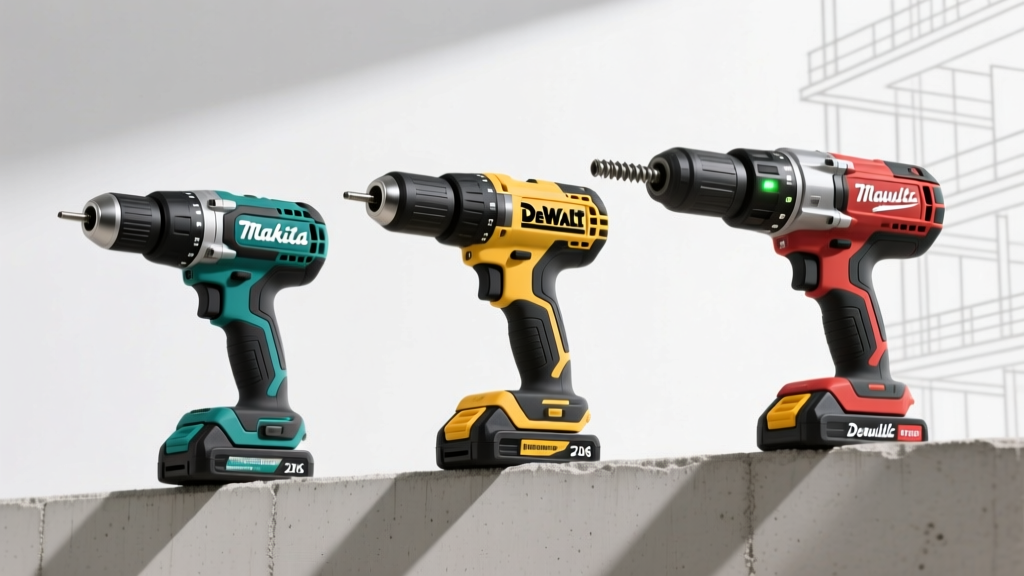
The Shift to Cordless Drywall Guns in Commercial Hanging
The transition from corded and pneumatic screw guns to brushless cordless models has fundamentally changed the economics of commercial drywall hanging. For crews installing dense, 5/8-inch Type X fire-rated gypsum board, the tool must deliver consistent torque without stripping the screw head or breaking the paper face of the board. According to the Gypsum Association's GA-216 guidelines, proper fastener depth is critical; the screw head must be driven just below the surface without tearing the face paper. Achieving this on thousands of square feet daily requires a drywall gun with a precision clutch, high RPM, and ergonomic balance.
In this 2026 deep-dive, we evaluate the three dominant players in the cordless drywall gun market: Makita, DeWalt, and Milwaukee. We bypass generic marketing claims to analyze clutch mechanics, battery ecosystem costs, and real-world failure modes on the job site.
Head-to-Head Specification Matrix
Before examining the nuanced differences in clutch design and ergonomics, here is the baseline specification matrix for the flagship bare-tool models currently dominating commercial job sites.
| Feature | Makita XSF02 (18V LXT) | DeWalt DCF622 (20V MAX) | Milwaukee 2866-20 (M18 FUEL) |
|---|---|---|---|
| Motor Type | Brushless | Brushless | Brushless (POWERSTATE) |
| No-Load Speed | 4,000 RPM | 4,400 RPM | 4,500 RPM |
| Clutch Mechanism | Push-Drive (Motor off until pushed) | Friction Nose-Cone | Friction Nose-Cone |
| Weight (Bare Tool) | 3.4 lbs | 3.6 lbs | 3.8 lbs |
| Collated Attachment | Not Native (Requires 3rd party) | Native (DCF6202 Magazine) | Native (48-32-2101 Auto-Feed) |
| Avg. Bare Tool Price (2026) | $169 | $179 | $199 |
Makita XSF02 18V LXT: The Ergonomic Veteran
The Makita XSF02 remains a favorite among old-school hangers who prioritize battery life and acoustic comfort over raw speed. Its defining feature is the Push-Drive technology. Unlike traditional friction clutches where the motor spins continuously while the trigger is pulled, the Makita's motor remains entirely off until the nose cone is depressed against the drywall.
Real-World Performance & Edge Cases
Because the motor only engages upon contact, the XSF02 consumes up to 30% less battery per sheet compared to friction-clutch competitors. It also drastically reduces job site noise and prevents the bit from spinning and grinding against the drywall paper if the user slips. However, the push-drive mechanism has a known failure mode: dust ingress. When cutting out electrical boxes or working near sanded joint compound, fine gypsum dust can pack into the push-drive sleeve, causing the clutch to stick and resulting in shallow screw sets.
Makita XSF02 Verdict
- Pros: Exceptional battery life; quiet operation; lock-on button for continuous driving; lightweight.
- Cons: No OEM collated auto-feed magazine; push-drive sleeve prone to dust jamming; lower 4,000 RPM slows down high-volume ceiling work.
DeWalt DCF622 20V MAX: The Collated Specialist
DeWalt engineered the DCF622 specifically to bridge the gap between loose-screw detail work and high-volume production hanging. The tool's primary advantage is its seamless integration with the DCF6202 collated magazine attachment, which holds strips of 50 screws. For crews hanging 5/8-inch Type X board on commercial metal stud framing, the collated system reduces screw-loading time by approximately 40%.
The Collated Magazine Advantage
The DCF622 operates at 4,400 RPM using a traditional nose-cone friction clutch. The torque delivery is highly optimized for fine-thread drywall screws (1-5/8 inch to 2-1/2 inch). A critical design win for DeWalt is the tool-free depth adjustment ring. Unlike competitors that require a hex key or awkward dial, the DeWalt ring clicks into distinct detents, allowing hangers to adjust depth on the fly when transitioning from 1/2-inch standard board to denser 5/8-inch fire-code board.
DeWalt DCF622 Verdict
- Pros: Best-in-class OEM collated attachment; tool-free depth adjustment; excellent fine-thread screw retention in the nose cone.
- Cons: Friction clutch drains battery faster during idle trigger-pulls; slightly front-heavy when the magazine is fully loaded.
Milwaukee M18 FUEL 2866: The Torque & Tech Powerhouse
The Milwaukee 2866-20 represents the high-torque, high-RPM end of the spectrum. Pushing 4,500 RPM via its POWERSTATE brushless motor, this gun is designed to sink 2-inch and 2-1/2-inch coarse-thread screws into dense wood framing or double-layer 5/8-inch gypsum assemblies without bogging down.
Auto-Feed and Brushless Efficiency
Milwaukee's 48-32-2101 auto-feed attachment is widely considered the most robust on the market. It features an enclosed screw strip path that significantly reduces the dust ingress issues seen in open-magazine designs. Furthermore, the M18 FUEL's electronic clutch provides highly consistent depth control, minimizing the 'screw pop' callbacks that plague manual clutch guns when framing lumber dries and shrinks.
Milwaukee 2866-20 Verdict
- Pros: Highest RPM (4,500); robust enclosed auto-feed magazine; handles long coarse-thread screws in dense framing effortlessly.
- Cons: Heaviest in the class; premium price point; auto-feed attachment is sold separately and adds to the total kit cost.
Battery Ecosystem & Cost of Ownership Analysis
When evaluating a drywall gun, the bare tool price is only a fraction of the total cost of ownership. Commercial hanging crews typically run 2.0Ah compact batteries to minimize wrist fatigue, but these require frequent swaps.
- Makita 18V LXT: The most mature battery ecosystem. A 2.0Ah BL1820B battery costs roughly $99. The push-drive motor allows a single 2.0Ah battery to hang approximately 40-45 sheets of 4x12 drywall.
- DeWalt 20V MAX: A 2.0Ah DCB203 costs around $109. Due to the continuous-spin friction clutch, expect 30-35 sheets per charge. DeWalt's PowerStack pouch-cell batteries (1.7Ah) offer a lighter, higher-discharge alternative that extends life by roughly 15%.
- Milwaukee M18: The 2.0Ah REDLITHIUM CP2.0 is priced at $119. Similar to DeWalt, the friction clutch yields about 30-35 sheets per charge. Milwaukee's high-output XC5.0 batteries are overkill for drywall and will cause severe repetitive strain fatigue.
Troubleshooting Common Drywall Gun Failures
Even with premium brushless tools, improper setup leads to failed inspections and costly rework. Here is a diagnostic framework for the three most common fastener failures when using cordless drywall guns.
1. Paper Tear (Over-Driving)
Symptom: The screw head breaks through the face paper of the gypsum board, rendering the fastener structurally useless for holding the board to the stud.
Cause: Depth collar set too deep, or the user applying excessive forward pressure on a friction-clutch gun.
Fix: Back off the depth collar by one click. If using the Milwaukee or DeWalt, train hangers to let the tool's weight provide the forward pressure rather than leaning into the gun.
2. Screw Pop (Under-Driving)
Symptom: The screw head protrudes above the drywall surface, making it impossible to tape and mud smoothly. Over time, these screws will 'pop' outward as the framing shifts.
Cause: Depth collar set too shallow, or dust buildup in the nose cone preventing the bit from seating fully.
Fix: Clean the nose cone with compressed air. Advance the depth collar deeper. Ensure you are using the correct bit (a #2 Phillips bit is mandatory; worn #1 bits will cam out and cause shallow sets).
3. Stripped Screw Heads
Symptom: The bit spins inside the screw head, stripping the Phillips cross and leaving a damaged fastener in the board.
Cause: RPM too high for the specific screw coating, or using a bit that is not magnetized or is worn down.
Fix: Switch to a fresh, high-quality #2 Phillips bit. If hanging dense Type X board, ensure the gun's battery is fully charged; voltage drop in depleted batteries can cause the motor to stutter and strip heads under load.
Ergonomics and Job Site Safety
Hanging drywall is notoriously hard on the upper extremities. Repetitive use of a screw gun can lead to carpal tunnel syndrome and tendonitis. According to OSHA's hand and power tools guidelines, minimizing vibration and weight is critical for operator safety. The Makita XSF02's push-drive mechanism eliminates the high-frequency vibration of a continuously spinning motor, making it the most ergonomic choice for crews doing 8-hour shifts. For ceiling work, pairing any of these guns with a pole-mounted auto-feed system (like the Milwaukee Flat-Packer) removes the overhead strain entirely.
Final Verdict: Matching the Gun to the Crew
There is no single 'best' cordless drywall gun; the correct choice depends entirely on your crew's specific workflow and existing battery investments.
- Choose the Makita XSF02 if your crew primarily hangs walls, values battery life over raw speed, and wants the quietest, most ergonomic tool for all-day use without an auto-feed magazine.
- Choose the DeWalt DCF622 if you need a versatile hybrid tool that transitions quickly between loose-screw detail work and collated production hanging, especially if you are already invested in the 20V MAX ecosystem.
- Choose the Milwaukee 2866-20 if your crew specializes in high-volume commercial ceilings, frequently drives long screws into dense framing, and demands the most robust, dust-resistant auto-feed attachment on the market.
Investing in the right clutch mechanism and feed system will pay for itself within the first month through reduced fastener waste, fewer callback repairs, and increased daily square-footage output.