Code Compliance Guide: Vetting Your Gypsum Board Supplier
Ensure building code compliance by vetting your gypsum board supplier. Learn to verify UL fire ratings, ASTM standards, and required documentation.
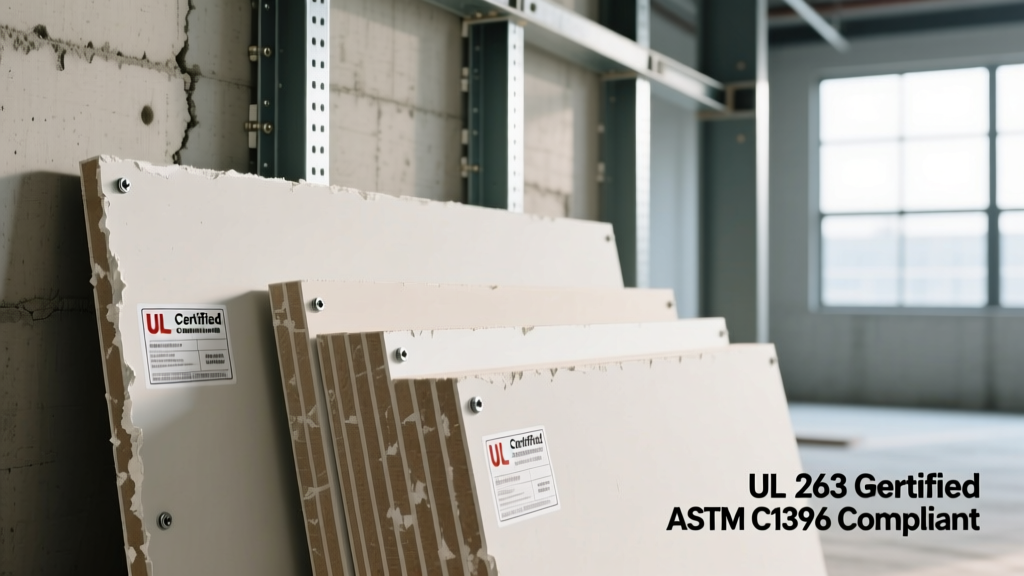
The Liability of Procurement: Why Supplier Vetting Matters
Procuring drywall for commercial and multi-family residential projects extends far beyond negotiating price per square foot. When a general contractor or procurement manager selects a gypsum board supplier, they are implicitly accepting liability for the material's compliance with the International Building Code (IBC), local fire marshals, and acoustic mandates. If a supplier delivers non-compliant boards, mislabels fire-rated assemblies, or fails to provide the necessary chain-of-custody documentation, the project faces failed inspections, costly tear-outs, and delayed certificates of occupancy. In 2026, with stricter enforcement of IBC 2024 adoption cycles and enhanced sustainability mandates, auditing your gypsum board supplier is a critical risk-management protocol.
The Compliance Documentation Matrix
Before issuing a purchase order, require your supplier to submit a comprehensive compliance package. A reputable supplier will have these documents readily available and indexed by project phase. Below is the mandatory documentation matrix you must enforce.
| Document Type | Governing Standard / Code | Compliance Purpose | Supplier Deliverable Requirement |
|---|---|---|---|
| Product Specification Sheets | ASTM C1396 / C1658 | Verifies physical properties, thickness, and core composition. | Current mill certificates and ASTM test summaries. |
| Fire Resistance Listings | UL 263 / ASTM E119 | Confirms the board's performance in specific rated assemblies. | UL Design Numbers (e.g., U419) and assembly guides. |
| Mold & Moisture Testing | ASTM D3273 / D6329 | Validates resistance to mold growth in high-humidity zones. | Independent lab reports showing a score of 10. |
| Acoustic Test Data | ASTM E90 / IBC Chapter 12 | Proves STC and OITC ratings for multi-family demising walls. | Tested assembly reports, not just marketing claims. |
| Sustainability Declarations | LEED v4.1 / ISO 14025 | Required for commercial green building certifications. | Type III Environmental Product Declarations (EPDs). |
Verifying Fire-Rated Assemblies: Type X vs. Type C
Fire-rated gypsum board is the backbone of passive fire protection in modern construction. However, simply ordering "fire-code drywall" from a supplier is insufficient. The IBC requires that fire-resistance-rated assemblies be constructed in accordance with tested designs, typically listed by UL Product IQ or the Gypsum Association. Your supplier must provide the exact UL Design Numbers corresponding to your architectural drawings.
Understanding Core Composition and Calcination
Standard 5/8-inch Type X gypsum board (ASTM C1396) contains glass fibers and other additives to reinforce the core after the chemically combined water calcinates (boils off) during a fire. This provides a minimum 1-hour fire rating on standard wood or steel stud assemblies. However, for 2-hour or 4-hour ratings, or when architects specify lighter-weight framing, you must procure Type C gypsum board. Type C features a higher concentration of glass fibers and shrinkage-resistant vermiculite additives. If a supplier attempts to substitute Type X for Type C in a 2-hour UL assembly (such as UL Design U465) without a formal Engineering Judgment (EJ) from UL, the assembly will fail inspection. Always demand the supplier's cross-reference chart mapping their specific SKUs to approved UL designs.
Suppliers often propose "or equal" substitutions to meet budget constraints. In fire-rated assemblies, an equivalent thickness or weight does not equal code compliance. The specific brand and product line must be listed in the UL design. If a substitution is necessary, the supplier must provide a UL Engineering Judgment letter explicitly approving their product for that specific assembly.
Moisture, Mold, and Glass Mat Standards
Wet-area compliance is a frequent source of litigation and failed inspections. The IBC strictly regulates the use of water-resistant gypsum backing board. While traditional "green board" (water-resistant gypsum board) is suitable for areas with occasional moisture, it is explicitly prohibited by code as a tile backing board in direct water-exposure areas like shower stalls and tub surrounds.
Differentiating the Product Tiers
- Water-Resistant (WR) Gypsum Board: Features a water-repellent core and green face paper. Suitable for bathroom walls outside the wet zone. Must comply with ASTM C1396.
- Mold-Resistant (MR) Gypsum Board: Often features a purple face paper and is tested to ASTM D3273. A compliant supplier will provide lab results showing a score of 10 (no mold growth after 4 weeks in a controlled chamber).
- Glass Mat Gypsum Board: Governed by ASTM C1658, this product replaces the paper facing with fiberglass mats, making it impervious to moisture degradation and mold food sources. This is the mandatory choice for exterior sheathing, high-humidity commercial kitchens, and shower enclosures.
When auditing a supplier, verify that their edge-stamping clearly identifies the board type. Inspectors will look for the ASTM standard printed directly on the tapered edge of the board to verify it matches the approved submittals.
Acoustic Separation and IBC Chapter 12 Mandates
For multi-family residential, hospitality, and healthcare projects, acoustic compliance is non-negotiable. IBC Chapter 12 mandates a minimum Sound Transmission Class (STC) of 50 for walls and floor/ceiling assemblies separating dwelling units. Your gypsum board supplier must do more than sell acoustic sealant and sound-damping boards; they must provide tested assembly data.
Request the supplier's acoustic manual, which should detail the STC and Outdoor-Indoor Transmission Class (OITC) ratings for various configurations involving their specific products, such as double-layer 5/8-inch applications with viscoelastic damping compounds or resilient channels. Ensure the supplier's data aligns with the Gypsum Association's GA-600 manual, which remains the industry standard for fire and sound control design.

Sustainability and EPD Requirements
In 2026, commercial projects targeting LEED v4.1, WELL, or local green building codes (like CALGreen) require rigorous environmental documentation. A compliant gypsum board supplier must provide Type III Environmental Product Declarations (EPDs) that detail the cradle-to-gate environmental impact of their products. Furthermore, for indoor air quality compliance, the supplier must provide third-party certifications, such as GREENGUARD Gold, proving that the board and its associated joint compounds emit volatile organic compounds (VOCs) below strict microgram-per-cubic-meter thresholds. Refusal or inability to provide current EPDs is a primary disqualifier for Tier-1 commercial general contractors.
Red Flags When Auditing a Supplier
During the procurement and submittal phase, watch for these critical warning signs that indicate a supplier may compromise your project's code compliance:
- Reluctance to Provide UL Listings: If a supplier claims their board is "just as good as" a listed product but cannot provide the specific UL Design documentation, reject the submittal.
- Missing Edge Stamps: Gypsum boards delivered to the site without clear, legible edge stamps indicating the manufacturer, ASTM standard, and fire/moisture ratings will be flagged by the building inspector.
- Improper Storage Practices: A supplier who stores moisture-resistant or glass-mat boards outdoors without heavy-duty weatherproofing compromises the product before it even reaches the job site. Water-damaged boards lose structural integrity and mold resistance.
- Outdated Technical Data Sheets (TDS): Ensure the TDS provided references the most recent ASTM C1396 revision. Older sheets may not reflect current testing methodologies or code updates.
Step-by-Step Supplier Verification Workflow
Implement this standardized workflow for your procurement and quality assurance teams to ensure total compliance from order to installation:
- Pre-Qualification Submittal: Require the supplier to submit a master compliance binder containing all ASTM test reports, UL listings, and EPDs for the specific SKUs bid on the project.
- Independent Verification: Cross-reference the supplier's claimed UL Design Numbers directly within the UL Product IQ database to ensure the listings are active and applicable to your framing types (wood vs. steel, gauge thickness).
- Delivery Inspection Protocol: Train site superintendents to inspect the first delivery. Verify that the edge stamps on the physical boards match the approved submittal package exactly. Check for transit damage, specifically crushed edges or water staining.
- Chain of Custody for Specialized Boards: For high-liability areas like elevator shafts (which often require 2-hour or 3-hour shaft liner assemblies), require the supplier to provide a batch-specific certificate of compliance ensuring the shaft liner panels meet the exact density and core hardness required by the engineering specifications.
By treating your gypsum board supplier as a compliance partner rather than a mere commodity vendor, you insulate your firm from the catastrophic costs of failed inspections and ensure the life-safety integrity of the built environment.
Written by
James ThorntonJames Thornton is a construction industry veteran with 25 years of hands-on experience in wood framing, lumber grading, and residential building codes. He started as a framing carpenter in rural Oregon, earned his ICC Residential Building Inspector certification, and eventually became a senior plan reviewer for the City of Portland Bureau of Development Services. James holds a B.S. in Wood Science & Technology from Oregon State University and is a certified lumber grader through the West Coast Lumber Inspection Bureau (WCLIB). He has inspected over 3,000 residential construction sites and authored the city's internal guide on advanced framing techniques (2x6 at 24" O.C.). James lives in Bend, OR, where he builds custom timber-frame cabins and competes in lumberjack sports.
More from James Thornton
View all
Insulation
Best Home Insulation Materials: Complete 2026 Guide
Compare top home insulation materials for 2026. Find R-values, installed costs per square foot, and best uses for fiberglass, spray foam, and mineral wool.
Aug 4, 2026

Sustainable Building
Certify Your Green Building Material for LEED and WELL
Step-by-step guide to certifying a green building material for LEED v5 and WELL v2. Master EPDs, HPDs, and VOC limits for 2026 project specifications.
Aug 4, 2026

Stone & Masonry
Veneer Stacked Stone Panels: Interior Design & Style Showcase
Discover how veneer stacked stone panels transform interiors. Explore modern design profiles, material pairings, and technical installation specs.
Aug 4, 2026