Is Gypsum Board the Same as Drywall? Cost Breakdown & Pricing Guide
Is gypsum board the same as drywall? We break down the technical differences, material costs, and installed drywall system pricing for your next project.

The Short Answer: Terminology vs. Technical Reality
When estimating interior construction costs, buyers and contractors frequently ask: is gypsum board the same as drywall? Fundamentally, yes and no. Gypsum board is the precise, technical manufacturing term for the extruded gypsum core sandwiched between paper or fiberglass facers, as defined by ASTM C1396 standards. Drywall, conversely, is the colloquial catch-all term used to describe either the finished wall system (board + tape + joint compound) or specific branded products like USG Sheetrock.
Material Cost Breakdown: Gypsum Board Panel Pricing
To accurately forecast material expenses, you must price the raw gypsum board by type, thickness, and facing. The Gypsum Association categorizes these panels by performance characteristics, which directly dictate the per-sheet cost. Below is the current market pricing for standard 4x8 and 4x12 panels based on major North American manufacturers (USG, CertainTeed, Georgia-Pacific).
| Board Type | Thickness / Dimensions | Core / Facing | Avg. Cost (4x8 Sheet) | Avg. Cost (4x12 Sheet) |
|---|---|---|---|---|
| Standard (Regular) | 1/2" x 4x8 | Gypsum / Paper | $14.00 - $17.50 | $22.00 - $26.00 |
| UltraLight Standard | 1/2" x 4x8 | Lightweight Gypsum / Paper | $15.50 - $19.00 | $24.00 - $29.00 |
| Type X (Fire-Rated) | 5/8" x 4x8 | Glass-fiber reinforced / Paper | $18.00 - $23.50 | $28.00 - $34.00 |
| Moisture-Resistant (Green/Purple) | 1/2" x 4x8 | Silicone-treated / Treated Paper | $20.00 - $25.00 | $31.00 - $38.00 |
| Glass Mat (e.g., DensGlass) | 1/2" x 4x8 | Gypsum / Fiberglass Mat | $35.00 - $45.00 | $54.00 - $68.00 |
Brand Premiums and Specialized Cores
Not all gypsum board is priced equally. Standard commodity boards from Georgia-Pacific or National Gypsum will sit at the lower end of the ranges above. Premium USG Sheetrock or CertainTeed boards command a 5% to 12% premium. Furthermore, specialized boards like CertainTeed AirRenew (which features VOC-scavenging technology) or USG EcoSmart (which uses 25% less water in manufacturing and weighs 25% less than standard 5/8" Type X) will push costs 15% to 20% higher than standard Type X equivalents.
Installed "Drywall" Costs: The System Premium
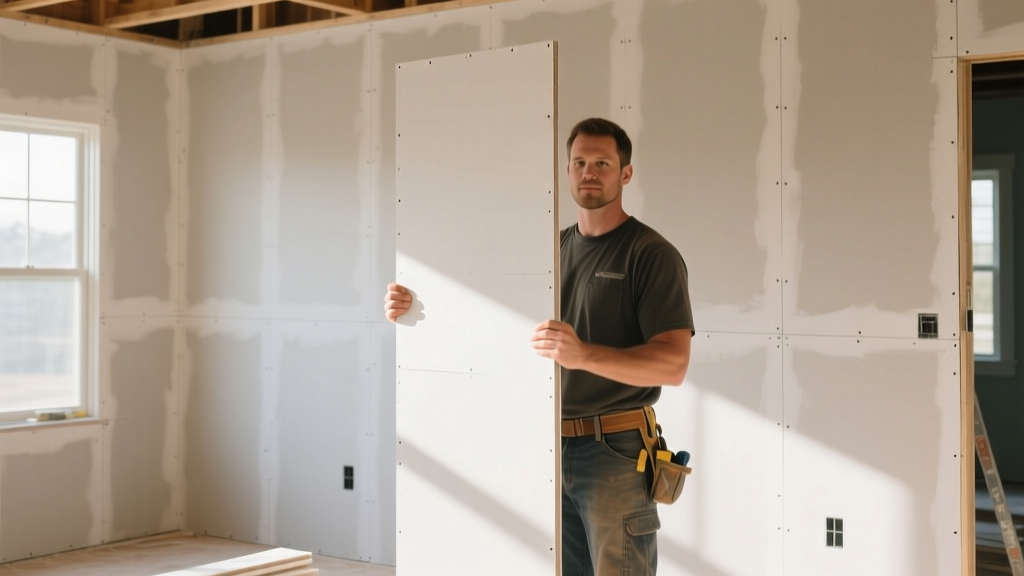
When a general contractor or drywall subcontractor bids a project, they are quoting "drywall" as a complete system. This includes material delivery, hanging (fastening to studs), taping, applying joint compound (mud), sanding, and cleanup. The cost of the raw gypsum board typically represents only 25% to 35% of the total installed drywall cost. The remainder is driven by labor and the specified finish level.
Drywall Finish Levels and Cost Impact
The Gypsum Association defines six levels of drywall finish. Specifying the wrong level is a primary source of budget overruns and client disputes.
- Level 0: No taping or finishing. (Cost: $0.00/sq ft added). Used for temporary enclosures.
- Level 1: Tape embedded in joint compound, no wipe coat. (Cost: $0.35 - $0.50/sq ft). Used in plenums or concealed areas.
- Level 2: Tape embedded, one wipe coat over joints and fasteners. (Cost: $0.60 - $0.85/sq ft). Used as a substrate for tile or in garages.
- Level 3: Two coats of compound over joints, one over fasteners. (Cost: $0.90 - $1.20/sq ft). Used where heavy textured finishes will be applied.
- Level 4: Three coats over joints, two over fasteners. (Cost: $1.30 - $1.75/sq ft). The residential and commercial standard for flat paint and light textures.
- Level 5: Level 4 plus a skim coat over the entire surface. (Cost: $2.10 - $2.85/sq ft). Mandatory for high-gloss paints, critical lighting (grazing light), or smooth modern aesthetics.
Upgrading from a Level 4 to a Level 5 finish increases the labor and material cost of the finishing phase by 60% to 80%. Always confirm the architectural finish schedule before accepting a baseline drywall bid, as contractors will default to Level 4 pricing unless Level 5 is explicitly specified.
Hidden Cost Variables: Weight, Waste, and Logistics
Beyond the per-sheet price and finish levels, three logistical factors drastically alter the final cost of your gypsum board installation.
1. Panel Weight and Labor Fatigue
Standard 1/2" gypsum board weighs approximately 1.9 lbs per square foot. A 4x12 sheet weighs nearly 92 lbs. However, modern lightweight boards (like USG UltraLight) weigh roughly 1.6 lbs per square foot, dropping the 4x12 sheet weight to 77 lbs. While lightweight boards cost $1.50 to $3.00 more per sheet, they reduce hanger fatigue, increase daily installation square footage by up to 15%, and lower the risk of workplace back injuries. For large commercial projects, the labor savings of lightweight board almost always offset the material premium.
2. Type X Fire-Rating Logistics
Building codes often mandate 5/8" Type X gypsum board in garages, multi-family separation walls, and commercial corridors. Type X is denser and heavier (approx. 2.3 lbs/sq ft). Hanging 5/8" board on ceilings requires more fasteners, heavier scaffolding, and significantly more physical effort. Expect ceiling labor rates to increase by 20% to 30% when switching from 1/2" to 5/8" board.
3. Waste Factor Calculations
Gypsum board generates substantial waste due to off-cuts around windows, doors, and electrical boxes.
- Standard rectangular rooms: Calculate a 7% to 10% waste factor.
- Complex layouts (angles, arches, bulkheads): Calculate a 15% to 20% waste factor.
- High-end residential (Level 5 finishes): Material waste is less critical than labor waste, but board damage during transit increases replacement costs.
Decision Framework: Material-Only vs. Turnkey Bidding
Knowing whether to purchase raw gypsum board yourself or solicit turnkey drywall bids depends on your project scale and risk tolerance.
| Scenario | Recommended Approach | Why? |
|---|---|---|
| DIY Basement / Garage | Buy Raw Gypsum Board | You control the material cost, can rent a panel lift for $40/day, and avoid paying a contractor's 20% overhead markup on materials. |
| New Home Construction | Turnkey Drywall Bid | Subcontractors have wholesale accounts and can source 54" or 16-foot boards that reduce seams and labor. They also carry liability insurance for scaffolding and finishing defects. |
| Commercial Tenant Improvement | Turnkey with Material Allowance | Specify the exact ASTM standard (e.g., ASTM C1396 Type X) and brand in the contract, but let the GC handle logistics, hoisting, and waste removal. |
Final Cost Verification Checklist
Before signing a contract or placing a lumberyard order, verify these four data points:
- Thickness & Code Compliance: Does the bid specify 5/8" Type X where local fire codes mandate it (e.g., shared garage walls)?
- Moisture Exposure: Are wet areas (showers, tub surrounds) specified with glass mat gypsum board or cement board, rather than standard green-board?
- Finish Level Alignment: Does the drywall finish level match the painting specification? (Never apply high-gloss paint over a Level 4 finish).
- Waste & Cleanup: Does the turnkey quote include hauling away the scrap gypsum and empty joint compound buckets? Disposal fees for gypsum are strictly regulated in many municipalities due to hydrogen sulfide gas generation in landfills.
Ultimately, while gypsum board and drywall refer to the same fundamental building material, treating them as identical in a budget will lead to financial shortfalls. Price the gypsum board for your raw material baseline, and price the drywall system to understand your true project completion costs.
Written by
Priya KapoorPriya Kapoor is a real estate market analyst and construction economics researcher with expertise in housing affordability, development feasibility, and infrastructure investment. She holds a Master of Regional Planning from Cornell University and previously worked as a senior analyst at CBRE's Investment Properties group, where she modeled returns for $4B in mixed-use development pipelines. Priya now runs an independent research practice advising developers, municipalities, and REITs on construction cost forecasting and market timing. She publishes the quarterly "BuildMat Market Pulse" report tracking material price indices across 12 commodity categories. Based in Austin, TX, Priya serves on the board of Habitat for Humanity Austin and is a marathon runner.
More from Priya Kapoor
View all
Construction Cost
Cost to Build a 1600 Sq Ft Home in 2026: Full Breakdown
Accurate 2026 cost to build a 1600 sq ft home—material, labor, and regional pricing breakdowns included. Plan your budget with real-time estimates.
Aug 11, 2026

Wood & Lumber
Name the Types of Wood for Pressure Treatment and Preservation
Learn how to name the types of wood best suited for pressure treatment. Compare species treatability, chemical retention levels, and 2026 preservation costs.
Aug 4, 2026

Stone & Masonry
Stone Veneer Suppliers Lindenhurst: 2026 Cost Analysis
Analyze 2026 stone veneer costs in Lindenhurst, NY. Compare local supplier pricing, delivery fees, and Suffolk County installation labor rates.
Aug 4, 2026