PVA Drywall Primer vs Acrylic: Long-Term Durability on Gypsum Board
Analyze how PVA drywall primer impacts the 15-year durability of gypsum board finishes, comparing failure modes, adhesion, and acrylic alternatives.
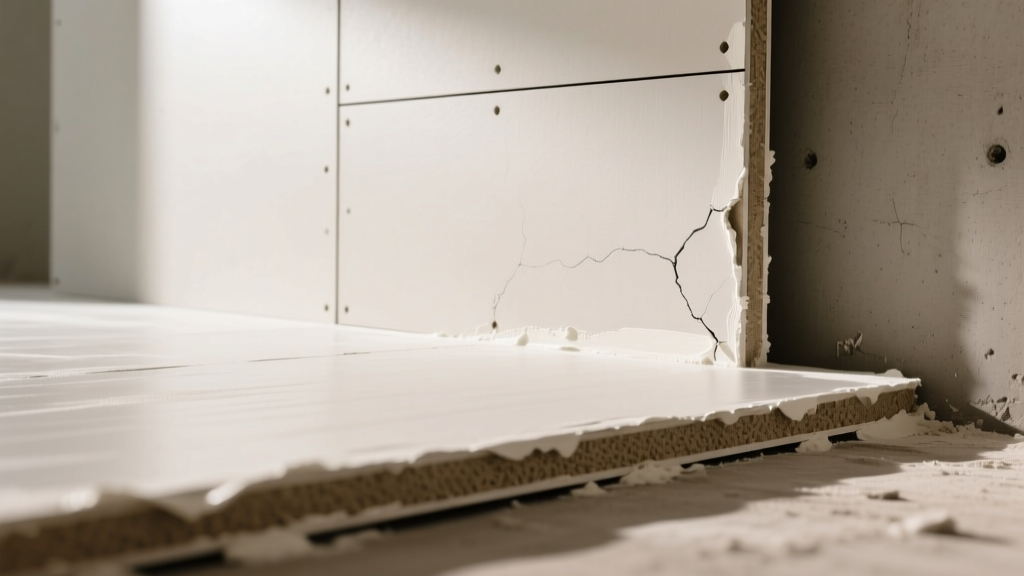
The Chemistry of Gypsum Board and PVA Primer Adhesion
To understand the long-term durability of a painted drywall finish, you must first examine the microscopic interaction between the gypsum board's paper face, the joint compound, and the primer. Polyvinyl Acetate (PVA) drywall primer is specifically engineered as a "size" for new, unpainted gypsum panels. Unlike standard architectural primers that sit on top of a surface, PVA penetrates the porous paper face of the drywall and the calcium carbonate matrix of the joint compound.
When PVA dries, it cross-links to form a continuous, breathable film that equalizes the surface tension across the entire wall. This is critical for lifespan: raw drywall paper and dried joint compound absorb moisture and resins at vastly different rates. Without a PVA sealer, the topcoat's binder is absorbed unevenly, leading to premature resin depletion in the paint film. Over a 10 to 15-year period, this uneven absorption causes the topcoat to become brittle over the seams, resulting in micro-cracking and sheen degradation.
If PVA is skipped on a Level 4 drywall finish, the topcoat will dry faster over the joint compound than over the paper face. This creates "joint banding"—visible seams that appear under angled light. While not a structural failure, this visual degradation effectively ends the aesthetic lifespan of the paint job, forcing a costly repaint within 3 to 5 years.
PVA Drywall Primer vs. 100% Acrylic: A 15-Year Durability Matrix
While PVA is the undisputed standard for standard living spaces, it is not a universal solution. The Painting Contractors Association (PCA) outlines specific environmental parameters for primer selection. Below is a durability and lifespan comparison between PVA and 100% Acrylic primers on interior gypsum board.
| Durability Metric | PVA Drywall Primer | 100% Acrylic Primer |
|---|---|---|
| Adhesion to Raw Paper | Excellent (Penetrating bond) | Good (Surface film bond) |
| Moisture Resistance | Poor (Re-emulsifies in high humidity) | Excellent (Hydrophobic film) |
| Stain Blocking | None (Water-soluble) | Moderate to High |
| Topcoat Sheen Uniformity | Superior (Equalizes porosity perfectly) | Good (May require 2 coats for dark colors) |
| Expected Finish Lifespan | 10-15 Years (Standard climate) | 15-20+ Years (All climates) |
| Average Material Cost (2026) | $22 - $30 per gallon | $45 - $65 per gallon |
Real-World Failure Modes: When PVA Compromises Drywall Lifespan
PVA drywall primer is highly effective in climate-controlled living rooms, bedrooms, and hallways. However, misapplication or environmental mismatch will actively reduce the lifespan of the gypsum board assembly. According to finishing guidelines published by the Gypsum Association, the integrity of the paper face must be maintained to prevent core degradation.
1. The High-Humidity Re-emulsification Trap
PVA is water-soluble. If applied to gypsum board in a bathroom, laundry room, or unconditioned basement, ambient moisture can cause the PVA film to re-emulsify over time. When the primer softens, it loses its grip on the paper face. The topcoat then peels away in large sheets, often taking the top layer of the drywall paper with it. For any room with sustained relative humidity above 60%, PVA must be abandoned in favor of a 100% acrylic or alkyd-based primer to protect the physical lifespan of the board.
2. Joint Compound Burnishing and Flaking
If a drywall finisher over-trowels the joint compound (burnishing it to a glass-like shine), the surface pores are closed. PVA primer relies on penetrating these pores to create a mechanical bond. On burnished mud, PVA will dry on the surface as a weak, plastic-like skin. When the topcoat is applied and cures, it shrinks slightly, pulling the weak PVA film off the burnished mud. This results in localized flaking along the seams within the first 12 months.
Always lightly sand Level 4 and Level 5 finishes with 150-grit or 180-grit sandpaper or a fine sanding sponge before applying PVA. This breaks the surface tension of any burnished joint compound and opens the microscopic pores, ensuring the PVA penetrates deeply and locks the finish in place for decades.
Application Metrics for Maximum Finish Lifespan
The durability of a PVA-primed wall is directly tied to the precision of its application. Under-applying PVA leaves dry spots that will flash; over-applying creates a thick, glassy film that topcoats cannot adhere to properly. Follow these exact metrics for optimal longevity:
- Wet Mil Thickness: Apply at 1.5 to 2.0 wet mils. This typically requires a 3/8-inch to 1/2-inch nap roller cover.
- Coverage Rate: Expect 300 to 400 square feet per gallon on standard untextured gypsum board. Highly porous lightweight joint compounds may drop coverage to 250 sq ft/gal.
- Ambient Temperature Limits: Do not apply if wall surface or air temperature is below 50°F (10°C). PVA will not coalesce into a continuous film at lower temperatures, resulting in a powdery, non-durable surface.
- Dry Time Before Topcoat: Minimum 60 minutes at 77°F and 50% relative humidity. In cooler or more humid conditions, extend this to 3 hours to prevent trapping moisture beneath the topcoat, which can cause long-term blistering.
Cost-Benefit Analysis: Primer Upfront vs. Repaints Over a Decade
Contractors and homeowners often debate the upfront cost of primer versus the long-term maintenance of the drywall finish. Let us analyze the financial impact on a standard 2,500 sq. ft. home, which yields approximately 7,500 sq. ft. of paintable drywall surface.
- Scenario A: Skipping Primer (The False Economy)
Without PVA, the raw drywall absorbs the first coat of premium topcoat ($65/gallon) instantly. The wall will require three coats of topcoat to achieve uniform sheen and hide the joint compound. Material cost: ~37 gallons of topcoat = $2,405. The uneven resin absorption will likely cause joint banding within 4 years, necessitating a full repaint. - Scenario B: Proper PVA Application
Applying one coat of PVA ($26/gallon) seals the board. The premium topcoat now only requires two coats to achieve a flawless, durable finish. Material cost: 19 gallons PVA ($494) + 25 gallons topcoat ($1,625) = $2,119. The uniform resin distribution ensures the paint film remains flexible and intact for 12 to 15 years.
By utilizing a dedicated PVA drywall primer, you not only save roughly $286 on the initial project but you effectively double the aesthetic lifespan of the paint job, delaying a $4,000+ professional repaint by nearly a decade.
Expert Verdict: When to Use PVA and When to Upgrade
PVA drywall primer remains the most chemically appropriate and cost-effective sealer for new, unpainted gypsum board in standard interior environments. It equalizes porosity, prevents joint banding, and provides a stable foundation that extends the visual and physical lifespan of the topcoat. Products like KILZ PVA Drywall Primer or Sherwin-Williams Drywall Primer are industry standards that deliver reliable cross-linking adhesion.
However, durability is context-dependent. If the gypsum board is installed in a high-humidity zone (bathrooms, saunas, indoor pool enclosures), or if the wall has been exposed to water stains, smoke, or tannin bleed from adjacent wood framing, PVA will fail. In these edge cases, the long-term lifespan of the assembly demands a 100% acrylic stain-blocking primer or a specialized alkyd sealer. Match the primer chemistry to the environmental stressors, and your drywall finish will easily outlast its expected 15-year lifecycle.