Metal Roof Flashing: Top Brands & Product Lines 2026
Compare top metal roof flashing brands for 2026. Deep dive into ATAS, Metal Sales, and Fabral product lines, gauges, costs, and installation specs.
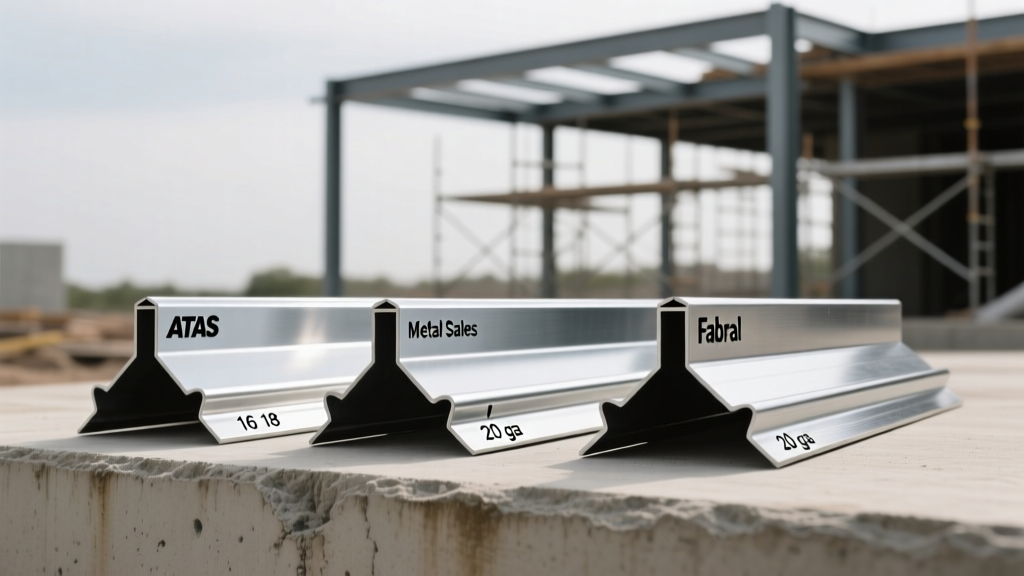
The Anatomy of Engineered Metal Roof Flashing
Metal roofing systems are only as watertight as their weakest transition point. While standing seam or exposed fastener panels shed water effortlessly across the main field, the metal roof flashing at eaves, rakes, valleys, parapets, and penetrations dictates the system's ultimate lifespan. In 2026, the commercial and architectural roofing market has bifurcated into two distinct categories: engineered architectural-grade systems and standard commercial/agricultural trims.
Modern premium flashing is not merely bent sheet metal. High-end product lines feature double-hemmed edges for structural rigidity, slotted fastener holes to accommodate thermal expansion, and integrated sealant channels designed to hold factory-applied butyl tape. Selecting the right brand and specific product line requires matching the flashing's metallurgical properties, gauge thickness, and profile geometry to the primary roof panels. Below, we deconstruct the leading manufacturers and their flagship metal roof flashing product lines.
Brand Deep-Dive: Leading Manufacturers & Product Lines
Procuring flashing from the same manufacturer as your primary roof panels is a critical best practice. Mixing brands often results in mismatched thermal expansion coefficients, incompatible paint finishes, and voided warranties. Here is a technical breakdown of the top three manufacturers dominating the 2026 market.
ATAS International (Architectural & High-End Commercial)
ATAS International is the benchmark for architectural metal systems. Their flashing lines are engineered specifically to integrate with their Advanta and SSC (Structural Standing Seam) panel profiles.
- Primary Materials: 24-gauge and 22-gauge Galvalume (AZ50 and AZ55) with 70% PVDF (Kynar 500/Hylar 5000) fluoropolymer coatings.
- Product Line Highlight: The ATAS Architectural Trim Package features concealed cleat systems for rake and eave flashings. This eliminates exposed fastener heads on the primary weather-facing planes, drastically reducing capillary action risks.
- Best Application: High-visibility commercial facades, municipal buildings, and premium residential standing seam projects where aesthetic continuity and 40+ year lifespans are mandated.
Metal Sales Manufacturing Corporation (Commercial/Industrial Workhorse)
Metal Sales provides the backbone for large-scale commercial, industrial, and retail metal buildings. Their approach to metal roof flashing prioritizes structural integrity, weather resistance, and cost-effective procurement for massive square-footage projects.
- Primary Materials: 24-gauge G90 Galvanized and 24-gauge AZ50 Galvalume, available in both bare mill finish and SMP (Silicone Modified Polyester) paint systems.
- Product Line Highlight: Their Structural Trim & Flashing Catalog includes heavy-duty base flashings and counter-flashing reglets designed for masonry-to-metal transitions. They offer custom CNC folding for complex parapet caps up to 20 feet in length, minimizing end-lap vulnerabilities.
- Best Application: Warehouses, distribution centers, and agricultural facilities where exposed fastener flashings and robust G90 galvanized substrates provide the best ROI.
Fabral (Residential & Agricultural)
Fabral dominates the exposed fastener and light commercial sector. Their flashing lines are optimized for high-volume, rapid-installation scenarios without sacrificing critical weather barriers.
- Primary Materials: 29-gauge and 26-gauge Galvalume, heavily utilized in their corrugated and R-panel compatible trim lines.
- Product Line Highlight: The Fabral Standard Trim Package includes pre-punched ridge caps and Z-flashings with integrated closure strip channels. The 26-gauge line offers a thicker substrate for high-wind uplift regions compared to the budget 29-gauge options.
- Best Application: Pole barns, residential barndominiums, and light retail strip malls utilizing exposed fastener panels.
Material Specification & Gauge Selection Matrix
Choosing the correct substrate and coating is non-negotiable. The Metal Construction Association (MCA) strictly advises against mixing dissimilar metals in flashing assemblies. Use the matrix below to align your material choice with the project environment.
| Material / Coating | Standard Gauges | Corrosion Resistance | Best Use Case | Expected Lifespan |
|---|---|---|---|---|
| Galvalume AZ55 | 24ga, 22ga | Exceptional (55% Aluminum alloy) | Coastal, high-humidity, architectural | 40-60 Years |
| Galvalume AZ50 | 26ga, 24ga | Excellent (Standard commercial) | Standard commercial, residential | 30-50 Years |
| G90 Galvanized | 24ga, 22ga | Good (Zinc sacrificial coating) | Interior, agricultural, painted systems | 20-40 Years |
| Aluminum (.032") | N/A (Measured in inches) | Superior (No rust, highly malleable) | Direct salt-spray coastal zones | 50+ Years |
Custom Fabrication vs. Stock Trim: When to Upgrade
While stock metal roof flashing (typically folded in standard 10-foot or 12-foot lengths with 3-inch return legs) is sufficient for basic eaves and rakes, complex transitions demand custom fabrication. According to the Sheet Metal and Air Conditioning Contractors' National Association (SMACNA) architectural guidelines, custom flashings should be specified when:
- Parapet Caps exceed 16 inches in width: Standard stock caps lack the structural rigidity to prevent oil-canning and wind uplift without intermediate concealed cleats.
- Valley transitions involve pitch changes: Custom W-flashing with soldered or welded seams prevents the capillary draw that inevitably defeats standard lapped valley metal.
- Historical or high-end architectural profiles are required: Custom CNC-brake forming allows for double-lock standing seam flashings and reglet systems that stock trims cannot replicate.
Real-World Failure Modes & Installation Gotchas
Even the most premium ATAS or Metal Sales flashing product line will fail if installation protocols are ignored. The majority of metal roof leaks occur not in the panel field, but at the flashing intersections due to three specific installer errors.
Never use copper flashings, copper snow guards, or untreated steel fasteners in direct contact with Galvalume or Galvanized steel panels. The galvanic reaction will destroy the zinc/aluminum coating within 24 to 36 months, leading to catastrophic red-rust bleeding. Always use stainless steel or hot-dipped galvanized fasteners with EPDM or Neoprene sealing washers.
Metal expands and contracts significantly with temperature fluctuations. When fastening long runs of rake or eave flashing, do not use standard round-hole punch-outs. Utilize slotted fastener holes (e.g., 1/4" x 3/4" slots) and place the fastener in the center of the slot. This allows the metal roof flashing to slide up to 3/8" in either direction without buckling or tearing the fastener head through the metal.
The Capillary Action Threat at End Laps
Water can travel upward against gravity between two tightly pressed metal surfaces—a phenomenon known as capillary action. When lapping two pieces of metal roof flashing end-to-end:
- Maintain a minimum 4-inch overlap.
- Apply a continuous 3/8-inch by 1/8-inch bead of factory-approved butyl tape (such as Eternabond or Tremco) exactly 1 inch from the leading edge of the overlap.
- Secure the lap with #10 x 1-1/2" hex washer head stitch screws spaced no more than 12 inches on center.
- Never rely solely on liquid caulk (like polyurethane or silicone) for primary water sealing in horizontal laps; liquid sealants degrade under UV exposure and thermal cycling, whereas butyl tape remains permanently pliable.
2026 Cost Breakdown & Procurement Guide
Pricing for metal roof flashing varies wildly based on gauge, coating, and whether the profile is stock or custom-fabricated. Below is the current 2026 national average pricing matrix for procurement planning. Note that these figures represent material costs only and do not include freight, fabrication labor, or installation.
| Flashing Type | Material / Gauge | Brand Tier | Avg. Cost per Linear Foot |
|---|---|---|---|
| Standard Eave/Rake (Stock) | 29ga Galvalume | Economy (Fabral) | $2.50 - $3.80 |
| Standard Eave/Rake (Stock) | 26ga Galvalume (Painted) | Mid-Tier (Metal Sales) | $4.20 - $6.50 |
| Architectural Concealed Cleat | 24ga AZ55 (PVDF Coated) | Premium (ATAS) | $8.50 - $12.00 |
| Custom Parapet Cap (Up to 20') | 22ga Galvalume (PVDF) | Premium / Custom | $18.00 - $28.00 |
| Pipe Flashing Boot (Standard) | EPDM / Aluminum Collar | Universal Accessory | $25.00 - $45.00 (per unit) |
Specifying the correct metal roof flashing requires looking beyond the initial linear foot cost. A 24-gauge PVDF-coated architectural flashing system from a premium manufacturer may cost three times more upfront than a 29-gauge exposed-fastener alternative. However, the elimination of exposed fastener heads, the integration of concealed cleats, and the superior corrosion resistance of the AZ55 substrate effectively eliminate the maintenance cycle, delivering a lower total cost of ownership over the 40-year life of the building envelope.