Premium Wood Fences: Top Brand Product Lines Compared 2026
Compare top premium wood fences brands for 2026. Deep dive into BarretteWood, Outdoor Essentials, and tropical hardwood lines, pricing, and grading.
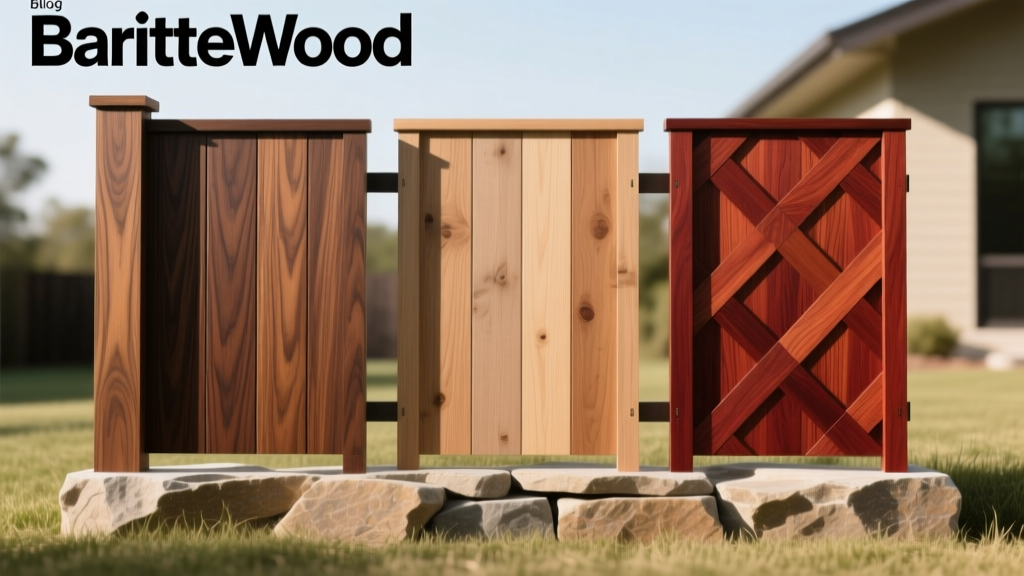
The Dimensional Shrinkage Problem in Modern Wood Fences
When evaluating wood fences for residential or commercial perimeter security, the most critical hidden variable is dimensional accuracy. The North American lumber market has seen a steady reduction in nominal versus actual dimensions over the last decade. A standard big-box store '1x6' cedar picket often measures just 0.5 inches thick by 5.5 inches wide. This 1/2-inch thickness severely compromises wind-load resistance and accelerates warping under thermal cycling. Premium product lines, however, maintain true 3/4-inch (0.75") thicknesses. When specifying wood fences for high-wind zones or long-term privacy, verifying the actual milled thickness of the picket and backrail is the first step in quality assurance.
Brand Deep-Dive: BarretteWood Premium Cedar Systems
BarretteWood dominates the premium pre-assembled cedar market, specifically through their Pro-Series and traditional Western Red Cedar lines. Their primary advantage lies in structural reinforcement and strict adherence to Western Red Cedar Lumber Association (WRCLA) grading standards.
Select Tight Knot (STK) vs. Clear Grade Specifications
BarretteWood offers their panels in both Clear and Select Tight Knot (STK) grades. For 2026 installations, STK is the optimal choice for privacy fences. STK allows for small, tight knots that do not compromise structural integrity, offering a 20% to 30% cost savings over Clear grade while providing superior dimensional stability. Clear grade cedar, while visually flawless, is actually more prone to splitting and checking because it is typically cut from the outer rings of the log, whereas STK often incorporates tighter, quarter-sawn grain patterns.
Pro-Series Steel-Reinforced Panels
The standout innovation in the BarretteWood lineup is the Pro-Series 8-foot panel. Traditional wood fences suffer from backrail sagging over a 5-to-7-year period due to the sheer weight of the wet cedar and gravity. The Pro-Series integrates a hidden, galvanized steel C-channel inside the top and bottom 2x4 backrails. This allows the panel to span a full 8 feet without intermediate support sagging, a critical feature for uneven terrain where stepping the panels is required.
Brand Deep-Dive: Outdoor Essentials Pressure-Treated Lines
For budget-conscious projects requiring high rot resistance, Outdoor Essentials (widely distributed through major home improvement centers) offers the MicroPro line of pressure-treated Southern Yellow Pine. Unlike older Alkaline Copper Quaternary (ACQ) treatments that were highly corrosive to standard fasteners, MicroPro uses micronized copper azole (MCA-C).
Ground Contact vs. Above-Ground Grading
When purchasing Outdoor Essentials posts, you must verify the American Wood Protection Association (AWPA) use category stamp. For any fence post set in soil or concrete, the wood must carry a UC4A (Ground Contact) stamp, indicating a minimum copper retention level of 0.15 pcf (pounds per cubic foot) for MCA-C. Using UC3B (Above Ground) treated pine for fence posts will result in subterranean rot failure within 4 to 6 years, regardless of the concrete footing quality.
Brand Deep-Dive: AdvantageLumber Tropical Hardwood Privacy
For luxury estates and coastal properties where salt spray and extreme humidity destroy softwoods, AdvantageLumber's Ipe and Cumaru product lines represent the apex of wood fence materials. Ipe (Handroanthus spp.) boasts a Janka hardness rating of 3,680 lbf—making it nearly impervious to impact damage, wood-boring insects, and surface checking.
However, building an Ipe privacy fence requires specialized carpentry. Because of its density (it sinks in water), standard nail guns will shatter the wood or bend the fasteners. Installers must pre-drill every hole using carbide-tipped bits and secure the pickets using 316-grade stainless steel screws. Furthermore, Ipe requires a 1/8-inch gap between pickets to accommodate seasonal tangential shrinkage, meaning it is typically built as a 'shadowbox' or spaced privacy fence rather than a solid board-on-board system.
2026 Installed Cost & Lifecycle Matrix
The following matrix reflects Q1 2026 national average installed costs for a standard 6-foot-tall privacy fence, factoring in material, labor, concrete, and hardware. Regional labor variances of ±15% should be expected.
| Brand / Product Line | Material & Grade | Actual Picket Thickness | 2026 Installed Cost (per LF) | Expected Lifespan |
|---|---|---|---|---|
| Outdoor Essentials Standard | PT Pine (UC4A) | 0.625" (5/8") | $28 - $38 | 15 - 20 Years |
| BarretteWood Pro-Series | W. Red Cedar (STK) | 0.75" (3/4") | $55 - $75 | 25 - 30 Years |
| Custom Mill Clear Cedar | W. Red Cedar (Clear) | 0.75" (3/4") | $80 - $110 | 30+ Years |
| AdvantageLumber Ipe | Tropical Hardwood (Ipe) | 0.75" (3/4") | $120 - $165 | 50+ Years |
Fastener Metallurgy & Failure Mode Prevention
The most common catastrophic failure in premium wood fences is not the wood rotting, but the fasteners corroding and snapping under wind shear. The chemical composition of modern wood preservatives and natural tannins dictates strict fastener metallurgy requirements.
- Pressure-Treated Pine (MCA/ACQ): The copper in the preservative acts as a cathode in the presence of moisture, rapidly destroying standard zinc-plated or electro-galvanized nails. You must use Hot-Dipped Galvanized (HDG) fasteners meeting the ASTM A153 Class D standard, or G185 coating thickness. For coastal zones within 5 miles of saltwater, upgrade to 304 Stainless Steel.
- Western Red Cedar: Cedar contains high levels of tannic acid and natural moisture. Standard galvanized nails will react with the tannins, causing severe black streaking down the fence face and eventual corrosion. Always use 304 or 316 Stainless Steel ring-shank nails or trim-head screws for cedar fences.
- Tropical Hardwoods (Ipe/Cumaru): Due to the extreme density and natural oils, only 316 Marine-Grade Stainless Steel screws should be used. Ring-shank nails will bend upon impact, and standard stainless will pit over time in high-humidity environments.
Post Setting: Avoiding the Concrete Collar Trap
According to structural durability research published by the USDA Forest Products Laboratory, the primary cause of premature fence post failure is improper concrete encasement. Many contractors use the 'concrete collar' method, dumping wet concrete directly into the hole and sloping it upward against the wood post. This creates a cup that traps surface runoff directly against the end-grain of the post, accelerating rot.
"Wood posts set in concrete should be placed on a gravel base to allow drainage, and the concrete should be sloped away from the post at the surface to shed water. Alternatively, elevated post bases should be used to keep the wood entirely out of the ground-concrete interface."
For 2026 installations, the industry best practice is to use a 6-inch compacted gravel base at the bottom of the post hole for capillary break drainage. When pouring the concrete, the top 2 inches of the collar must be troweled to slope away from the post at a minimum 5-degree angle. For high-end cedar and Ipe fences, eliminate ground-contact wood entirely by using hot-dipped galvanized structural post bases (such as the Simpson Strong-Tie E-Z Base or ABU44Z), anchoring the steel base into a concrete pier that sits 1 inch above the finished grade. This mechanical separation guarantees the wood will never wick ground moisture, effectively extending the life of the fence posts to match the life of the premium pickets.
Selecting the right wood fence system requires looking past the aesthetic surface and evaluating the structural engineering, chemical treatments, and metallurgical compatibility of the entire assembly. By specifying true 3/4-inch dimensions, matching AWPA retention levels to soil conditions, and enforcing strict stainless steel or G185 fastener protocols, you ensure the perimeter remains secure, plumb, and visually flawless for decades.