How to Clean and Remove Weldwood Contact Cement from Concrete and Tools
Master the cleanup of DAP Weldwood contact cement on concrete slabs, formwork, and tools. Compare solvent vs. water-based removal playbooks and safety.
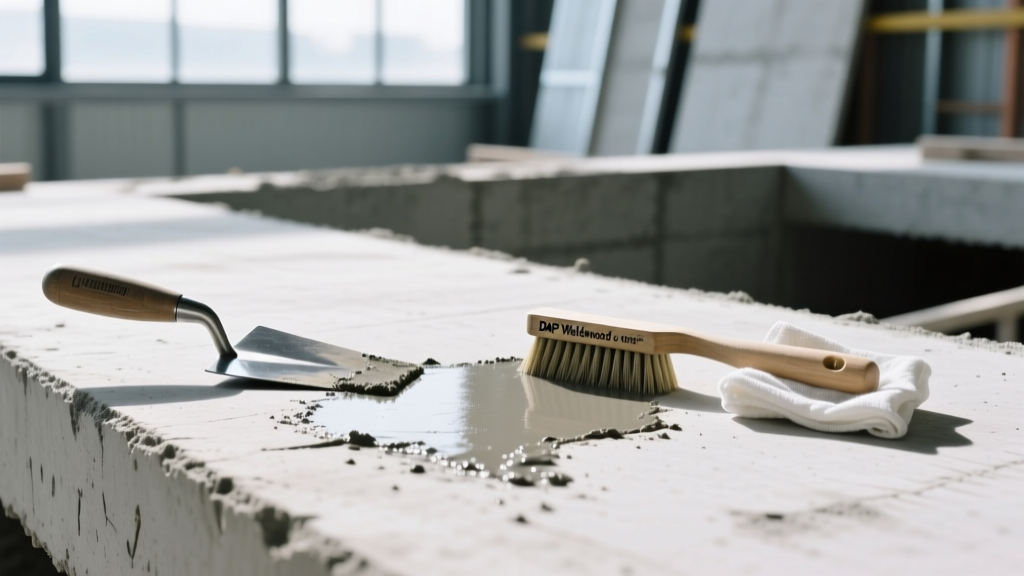
The Chemistry of Cleanup: Solvent vs. Water-Based Weldwood
Weldwood contact cement is a construction staple for bonding pressure-treated wood sleepers to concrete slabs, adhering rigid XPS/EPS insulation to foundation walls, and securing formwork liners. However, its aggressive bonding properties make cleanup notoriously difficult if mishandled. Before reaching for a rag, you must identify which specific Weldwood formulation you are using, as the cleanup chemistry is entirely different.
DAP Weldwood Original (Solvent-Based Neoprene)
This is the classic yellow, high-VOC adhesive. It relies on volatile organic compounds (VOCs) like acetone, heptane, or toluene (in older or non-regulated formulations) to keep the neoprene rubber suspended. Once the solvent flashes off, the neoprene cross-links, creating an instant, waterproof grab. Uncured cleanup requires active solvents; cured cleanup requires mechanical abrasion or aggressive chemical strippers.
DAP Weldwood Non-Flammable (Water-Based Polychloroprene)
Often used in interior commercial builds over concrete-backed cement boards, this white adhesive uses water as the carrier. Critical rule: It cleans up easily with warm, soapy water only while wet. Once the water evaporates and the latex cures (usually within 2 to 4 hours), it becomes highly resistant to water and mild solvents, requiring mechanical scraping or specialized citrus/soy-based adhesive removers.
Step-by-Step Playbook: Removing Uncured Spills on Concrete
Concrete is highly porous. If you drop a glob of solvent-based Weldwood on an unsealed slab, the instinct is to wipe it with a solvent-soaked rag. Do not wipe. Wiping drives the neoprene and yellow pigments deep into the capillary pores of the concrete, resulting in a permanent stain that will bleed through subsequent epoxy coatings or thinset mortar.
- Blot, Don't Wipe: Use a dry, heavy-duty paper towel or shop rag to gently lift the bulk of the uncured adhesive straight up off the concrete.
- Apply Solvent to the Rag, Not the Floor: Dampen a clean rag with Acetone or DAP Weldwood Cleaner. (Note: Toluene is largely phased out in 2026 due to strict OTC and CARB VOC regulations; Acetone is the modern standard).
- Dab the Residue: Press the dampened rag onto the remaining stain, allowing the solvent to re-liquefy the neoprene for 10-15 seconds.
- Lift and Repeat: Lift the rag straight up. Fold it to a clean side and repeat until the yellow transfer stops.
Cured Weldwood Removal: Mechanical and Chemical Strategies
If the contact cement has fully cured on a concrete slab or concrete formwork, chemical dissolution is rarely effective without damaging the concrete matrix or leaving a residue that ruins future adhesion.
For Concrete Subfloors and Slabs
The most efficient method for removing cured Weldwood from concrete is mechanical scarification. Use an angle grinder equipped with a 4-inch or 5-inch diamond cup wheel (specifically a 'flap' or 'segmented' style for soft material removal).
- Dust Control: Connect a HEPA shroud vacuum to the grinder. Neoprene dust is a respiratory irritant; reference the NIOSH Pocket Guide for Acetone and solvent safety to ensure your PPE (minimum N95, preferably P100 with organic vapor cartridges) is rated for both particulates and off-gassing.
- Depth: Skim the surface at a 15-degree angle. You only need to remove the top 1/16th of an inch to eliminate the adhesive barrier.
For Metal Tools and Formwork
For steel concrete forms or aluminum screeds coated in cured Weldwood, chemical softening is preferred to avoid scoring the metal.
- Apply a heavy coat of Methylene Chloride-based adhesive stripper (where legally permitted) or a high-strength Dibasic Ester (DBE) stripper.
- Cover with plastic sheeting to prevent evaporation and let it sit for 45 minutes.
- Scrape with a rigid 3-inch putty knife. The adhesive will peel off in rubbery sheets.
Solvent & Cleanup Compatibility Matrix
Not all solvents interact with Weldwood the same way. Using the wrong chemical can either fail to dissolve the neoprene or create a gummy, unmanageable mess.
| Cleanup Agent | Weldwood Original (Solvent) | Weldwood Non-Flammable (Water) | Best Use Case |
|---|---|---|---|
| Warm Soapy Water | Ineffective | Excellent (Uncured only) | Immediate tool washing for water-based formulas. |
| Acetone | Excellent | Poor (Cured) | Fast-evaporating spot cleanup on concrete and metal. |
| MEK (Methyl Ethyl Ketone) | Excellent | Poor | Heavy-duty tool soaking; slower flash-off than acetone. |
| Mineral Spirits | Poor (Smears) | Ineffective | Avoid. It dilutes but does not dissolve neoprene. |
| Citrus/Soy Strippers | Good (Slow) | Good (Cured) | Low-VOC indoor environments; requires 2+ hour dwell time. |
Tool Maintenance & Preventative Care
Replacing notched trowels and paint rollers every time you use contact cement destroys profit margins. Implement these maintenance protocols:
The 'Wet Bucket' Protocol for Water-Based Weldwood
When using the Non-Flammable water-based formula, keep a 5-gallon bucket filled with warm water and a few drops of dish soap on the job site. The moment you finish spreading, drop your trowel or roller directly into the water. Do not let it air-dry. Once the water evaporates, the polychloroprene latex forms a waterproof film that will ruin the tool.
The 'Solvent Bath' for Solvent-Based Tools
For Weldwood Original, keep a dedicated, sealable metal solvent can filled with MEK or Acetone. Submerge metal trowels and spreader knives immediately after use.
- Brush Care: Never use natural bristle brushes to apply solvent-based contact cement; the solvents will dissolve the glue holding the bristles. Use only cheap, disposable foam rollers or solvent-resistant nylon brushes.
- Notch Cleaning: Use a brass wire brush (not steel, which can spark) to clear the notches of your trowel while it is still submerged in the solvent bath.
Storage & Shelf Life Maintenance
Contact cement is notorious for 'skinning' over in the can, rendering the bottom half unusable. Proper storage maintenance ensures you get the full 12-to-18-month shelf life out of the product.
Preventing Skin in Solvent-Based Cans
The skin forms when ambient air reacts with the top layer of the adhesive. To prevent this:
- Before sealing the can, wipe the rim completely clean with an acetone-dampened rag. Any dried adhesive on the rim will break the airtight seal.
- Place a piece of heavy-duty plastic wrap over the opening before hammering the metal lid down.
- Store upside down. If a microscopic leak occurs in the lid seal, the adhesive will skin over at the bottom of the can (which is now the top), leaving the actual product at the 'bottom' (now facing down) perfectly liquid.
Maintaining Water-Based Formulas
Water-based Weldwood must never freeze. If stored in an unheated job site trailer during winter, the latex emulsion will break, turning the adhesive into a useless, stringy cottage-cheese texture. Store strictly between 65°F and 85°F. To prevent skinning in water-based quarts, spray a light mist of clean water directly onto the surface of the adhesive before sealing the lid. This creates a microscopic water barrier that prevents air contact.
Troubleshooting Common Cleanup Failures
Problem: The adhesive is smearing and getting stickier.
Cause: You are using Mineral Spirits or Paint Thinner instead of Acetone or MEK. Mineral spirits lack the solvency power to break the neoprene chains; it only softens them into a gummy paste.
Fix: Stop wiping. Let the area dry completely, then switch to pure Acetone or mechanical scraping.
Problem: White hazy residue left on concrete after water-based cleanup.
Cause: Hard water minerals or soap scum left behind after washing the tools or floor with tap water.
Fix: Mop the area with a 50/50 mix of white vinegar and distilled water to neutralize and dissolve the alkaline soap residue, then rinse with clean water.
Problem: Contact cement bleeding through thinset mortar.
Cause: Incomplete removal of solvent-based Weldwood from a concrete slab before applying cementitious leveling compounds or thinset. The neoprene acts as a bond-breaker and can chemically interfere with Portland cement hydration.
Fix: You must mechanically grind the concrete to a CSP (Concrete Surface Profile) of 2 or 3. Chemical cleaners leave a microscopic film that will cause the thinset to delaminate under stress.