Concrete Flooring Options: 2026 Cost Breakdown Analysis
Compare 2026 costs for polished, stained, stamped, and epoxy concrete flooring options. Get exact material, labor, and maintenance pricing data.
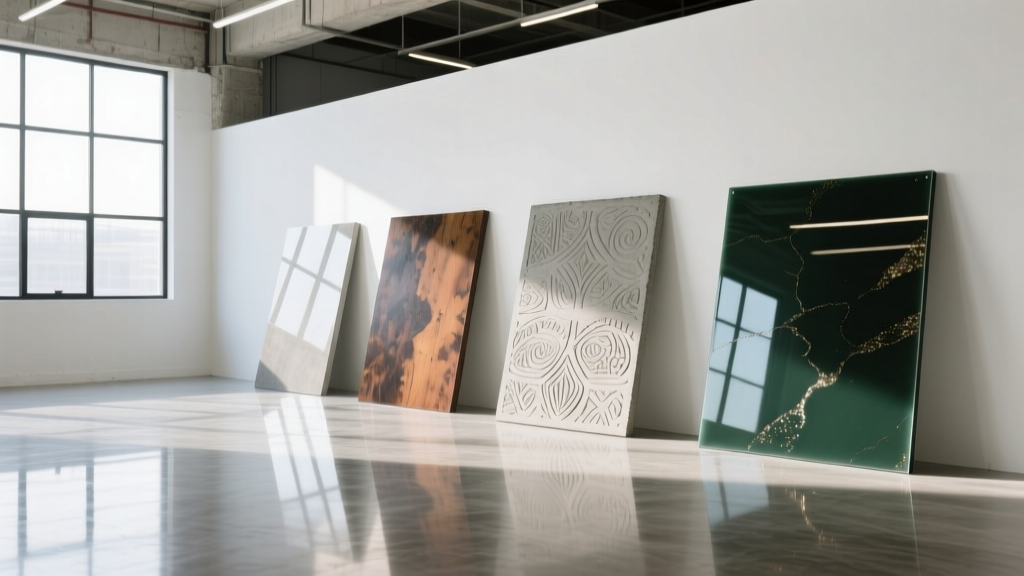
The True Cost of Concrete Flooring in 2026
Evaluating concrete flooring options requires looking far beyond the initial square-footage quote. While a basic gray slab might cost $3 per square foot, decorative and high-performance finishes can push that number past $20. In 2026, labor shortages and increased costs for specialized chemical densifiers and epoxy resins have shifted the pricing landscape. A precise cost breakdown analysis must separate material expenses from intensive labor requirements, while also factoring in the hidden site-preparation variables that frequently derail construction budgets.
Comprehensive Cost Matrix: Concrete Flooring Options
The following matrix outlines the current installed costs for the five most specified concrete finishes in residential and commercial builds. All pricing reflects 2026 national averages for a standard 1,000-square-foot interior slab.
| Flooring Option | Material Cost (sq. ft.) | Labor Cost (sq. ft.) | Total Installed | Expected Lifespan |
|---|---|---|---|---|
| Mechanically Polished | $0.50 - $1.50 | $4.00 - $10.50 | $4.50 - $12.00 | 20+ years |
| Acid Stained & Sealed | $1.00 - $2.50 | $2.50 - $5.50 | $3.50 - $8.00 | 10-15 years |
| Stamped Overlay | $3.50 - $7.00 | $6.00 - $12.00 | $9.50 - $19.00 | 15-20 years |
| 100% Solids Epoxy | $2.00 - $4.50 | $3.50 - $7.50 | $5.50 - $12.00 | 10-15 years |
| Microcement / Topping | $4.00 - $9.00 | $8.00 - $16.00 | $12.00 - $25.00 | 15-20 years |
Deep Dive: Material vs. Labor Discrepancies
One of the most critical insights when comparing concrete flooring options is the inverse relationship between material and labor costs across different finishes.
The Labor-Heavy Reality of Polished Concrete
Mechanically polished concrete utilizes the existing slab, meaning material costs are limited to chemical densifiers (like lithium silicate) and diamond abrasive pads. However, the labor is intensely demanding. Achieving a high-gloss 3,000-grit finish requires multiple passes with heavy planetary grinders (often weighing over 1,000 lbs). Contractors must progress through at least eight to ten grinding steps. If the existing slab has significant undulations, the labor cost for initial rough grinding can easily double.
The Material-Heavy Reality of Overlays and Microcement
Conversely, stamped overlays and microcement rely heavily on proprietary material systems. Products like Mapei Ultratop or specialized polymer-modified microcement kits cost significantly more per bag than standard concrete. While the application labor is still skilled work, the material cost represents a much larger percentage of the total invoice compared to polishing or staining.
Hidden Costs and Site Preparation Variables
Budget overruns on concrete floors rarely stem from the finish itself; they originate in the substrate. According to guidelines published by the American Concrete Institute (ACI), proper substrate preparation is the single most important factor in coating and overlay adhesion.
Moisture Mitigation: The Silent Budget Killer
Before applying any epoxy, microcement, or impermeable sealer, the slab must be tested for moisture vapor emission rates (MVER) or relative humidity (RH) per ASTM F2170 standards. If the internal RH of the slab exceeds 75%, standard adhesives and epoxies will suffer catastrophic bond failure.
- Testing Cost: $150 - $300 per site for in-situ RH probe testing.
- Mitigation Cost: If moisture is high, a two-part epoxy moisture vapor barrier (such as Mapei Primer MF) is required. This adds $2.50 to $4.00 per square foot to the project.
Demolition and Remediation
If you are retrofitting an existing space, removing old flooring and preparing the slab incurs additional costs:
- Shot Blasting / Scarifying: $0.50 - $1.25 per sq. ft. to remove old adhesives and open the concrete pores.
- Crack Routing and Epoxy Injection: $12.00 - $18.00 per linear foot to stabilize structural cracks before polishing or overlaying.
- Self-Leveling Underlayment (SLU): $3.50 - $6.00 per sq. ft. (installed) to correct severe floor flatness (FF) deficiencies.
Long-Term ROI and Maintenance Cost Analysis
The initial installation cost is only one side of the financial equation. The 10-year total cost of ownership (TCO) varies wildly depending on the chosen finish. Data supported by the Portland Cement Association highlights that while concrete is inherently durable, the topical treatments applied to it dictate long-term maintenance.
| Finish Type | Routine Maintenance | 10-Year Periodic Upkeep | Estimated 10-Yr Maintenance Cost |
|---|---|---|---|
| Polished | Dry dust mopping, neutral pH cleaner | Burnishing with diamond pads every 3-5 years | $0.50 - $1.00 / sq. ft. |
| Acid Stained | Damp mopping, avoid harsh chemicals | Strip and reapply acrylic or polyurethane sealer every 1-2 years | $3.00 - $6.00 / sq. ft. |
| Epoxy | Standard commercial cleaning | Apply sacrificial polyurethane topcoat at year 5-7 | $1.50 - $3.00 / sq. ft. |
Decision Framework: Choosing the Right Option for Your Budget
Use the following conditional framework to select the optimal concrete flooring option based on your specific site conditions and financial parameters:
- If the existing slab is severely damaged or cracked: Avoid polished concrete, as cracks will remain visible (even if stabilized). Choose a stamped overlay or microcement to bridge imperfections and provide a uniform aesthetic.
- If moisture vapor emissions are unmitigated and budget is tight: Do not use epoxy or film-forming sealers. Opt for a penetrating lithium silicate densifier and stain guard. This allows the slab to breathe while providing basic dust-proofing and stain resistance at under $3.00 per sq. ft.
- If the goal is maximum lifecycle ROI in a commercial space: Specify mechanically polished concrete with an integrated concrete dye. The higher upfront labor cost is entirely offset by the near-zero maintenance costs and the elimination of topical coatings that require stripping and reapplication.
- If chemical resistance is the primary requirement (e.g., garages, labs): Specify a 100% solids epoxy base with a polyaspartic topcoat. Standard water-based epoxies will degrade under UV exposure and harsh solvents within 24 months.
By analyzing the intersection of substrate condition, labor intensity, and long-term maintenance, you can accurately forecast the true cost of your concrete flooring project and avoid the common financial pitfalls associated with decorative slab finishes.
Written by
David NakamuraDavid Nakamura is a licensed architect (AIA) and construction technology writer focused on sustainable building methods, mass timber engineering, and high-performance building envelopes. He holds a Master of Architecture from the University of Washington and is a certified Passive House Consultant (CPHC). David spent eight years at the Seattle firm Mithun, where he led the design of three LEED Platinum projects, before founding his own practice specializing in net-zero residential design. He serves on the editorial advisory board of GreenBuilder Magazine and has authored peer-reviewed papers on cross-laminated timber (CLT) connections for the Journal of Structural Engineering. In his spare time, David teaches woodworking at Pratt Fine Arts Center and kayaks the Puget Sound.
More from David Nakamura
View all
Construction Cost
Labor Cost to Build a Deck Per Sq Ft: 2026 Installation Guide
Discover the exact labor cost to build a deck per sq ft in 2026. This installation guide breaks down contractor rates, complexity factors, and hidden fees.
Aug 4, 2026

Construction Cost
How Much Does It Cost to Build a 3 Bedroom House? Financing Guide
Learn exactly how much it costs to build a 3 bedroom house and explore 2026 financing options, construction loan types, and budget frameworks for your build.
Aug 4, 2026

Construction Cost
Cost to Build a Tennis Court: 2026 Guide
How much does it cost to build a tennis court in 2026? Breakdowns for asphalt, concrete, and synthetic surfaces plus fencing and lighting.
Jul 30, 2026