Granite Mortar and Pestle: Durability and Lifespan Analysis
Analyze the compressive strength, porosity, and generational lifespan of granite mortars compared to marble and cast concrete alternatives.
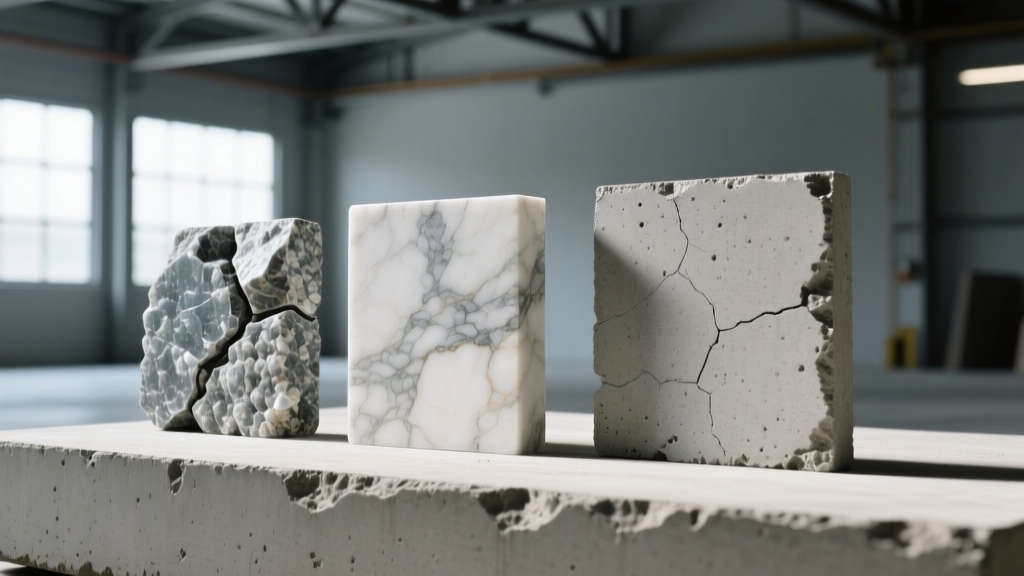
The Material Science of Granite: Compressive Strength and Hardness
To understand the generational lifespan of a granite mortar and pestle, one must first examine the geological and mechanical properties of the stone itself. Granite is a felsic intrusive igneous rock composed primarily of quartz (20-60%), alkali feldspar, and plagioclase feldspar, with trace amounts of mica and amphiboles. This specific mineral matrix is what grants granite its exceptional suitability for high-impact, high-friction applications in both construction and culinary masonry.
From a materials engineering perspective, the durability of a granite mortar is defined by two critical metrics: Mohs hardness and compressive strength. According to geological data profiled by Geology.com, the quartz content in granite registers at a 7 on the Mohs hardness scale, while feldspar sits at a 6. This means the interior surface of a granite mortar is significantly harder than carbon steel (Mohs 5-6.5) and vastly harder than the spices, seeds, and minerals it is tasked with pulverizing. Unlike softer stones that shed particulate matter into food during grinding, high-density granite resists micro-abrasion, ensuring that the tool does not degrade into the consumables it processes.
Standard architectural-grade granite exhibits a compressive strength ranging from 130 MPa to 210 MPa (19,000 to 30,000 psi). By comparison, standard residential concrete compressive strength tops out at roughly 28 MPa (4,000 psi). This extreme compressive threshold ensures that the mortar bowl will not crack or fracture under the localized, high-velocity impact forces generated by a heavy granite pestle striking the basin floor.
Comparative Durability Matrix: Granite vs. Alternatives
While granite is the industry standard for heavy-duty stone grinding, it is frequently compared to marble, volcanic basalt (molcajetes), and cast concrete or reconstituted stone. The table below breaks down the material degradation profiles of each when subjected to acidic compounds, repetitive impact, and moisture ingress.
| Material | Mohs Hardness | Porosity | Acid Reactivity | Estimated Functional Lifespan |
|---|---|---|---|---|
| Granite | 6 - 7 | 0.4% - 1.5% | Negligible | 100+ Years (Generational) |
| Marble | 3 - 4 | 1.0% - 5.0% | High (Etches easily) | 15 - 30 Years |
| Volcanic Basalt | 5 - 6 | High (Vesicular) | Low | 50+ Years |
| Cast Concrete | 4 - 5 | 10% - 18% | Extreme (Leaches lime) | 3 - 5 Years |
Marble, composed primarily of calcium carbonate, is highly susceptible to chemical etching. Grinding acidic ingredients like sumac, dried tamarind, or citric-heavy spice blends will permanently degrade the marble's surface, creating micro-pits that harbor bacteria. Cast concrete, while cheap to manufacture, lacks the structural density to withstand repetitive pestle strikes and will inevitably leach unreacted calcium hydroxide (free lime) into food products. Granite's extremely low porosity and chemical inertness make it the only stone material that guarantees both structural longevity and food safety over a multi-decade timeline.
Primary Failure Modes: What Degrades Granite?
Despite its immense compressive strength, a granite mortar is not indestructible. Failure in granite masonry tools rarely occurs through gradual wear; instead, it happens via acute mechanical or thermal events. Understanding these failure modes is critical for maximizing the tool's lifespan.
1. Thermal Shock and Spalling
Granite possesses high thermal mass but relatively low thermal conductivity. If a user attempts to 'season' or clean the mortar by pouring boiling water into a cold stone basin, or conversely, places a hot mortar into a cold water bath, the rapid differential expansion and contraction will exceed the stone's tensile strength. This results in spalling (surface flaking) or catastrophic radial fracturing. Never subject a granite mortar to rapid temperature deltas exceeding 40°C (72°F) within a 60-second window.
2. Sealer Degradation and Lipid Oxidation
While the granite itself does not degrade, the topical sealers applied to its porous exterior and the food-grade oils used to season the unpolished interior bowl do. The Natural Stone Institute notes that while modern siloxane-based sealers can penetrate deeply and resist UV and chemical degradation for years, organic oils (like mineral oil or walnut oil) used on the grinding surface will eventually oxidize and turn rancid if the tool is stored in high-humidity, poorly ventilated environments. Rancidity does not destroy the stone, but it renders the tool unusable until deep extraction cleaning is performed.
3. Impact Fracturing at the Rim
The weakest structural point of any lathe-turned stone vessel is the rim. Dropping the mortar onto a hard surface (like ceramic tile or concrete) or violently striking the rim with the pestle can induce shear fractures. Unlike the thick base, which is designed to absorb vertical compressive loads, the rim is subject to tensile and shear stresses that granite handles poorly.
The Break-In Protocol: Engineering the Grinding Surface
A newly manufactured granite mortar features an interior bowl that has been sandblasted or bush-hammered to create friction. However, this process leaves behind loose silica dust and micro-fractured stone particles. Proper initial preparation is not merely a culinary tradition; it is a vital material conditioning process that ensures the longevity of the grinding surface.
- Abrasive Particulate Extraction (Days 1-2): Grind 1/2 cup of cheap, uncooked white rice into a fine powder. The hard starch granules act as a mild abrasive, binding to and extracting loose silica dust and microscopic stone fragments trapped in the pores. Discard the grey-tinted powder and repeat until the ground rice remains pure white.
- Hydration and Pore Filling (Day 3): Wash the mortar with warm water (no soap) and allow it to air dry completely for 24 hours. This hydration cycle stabilizes the stone's internal moisture content.
- Lipid Sealing (Day 4): Apply a heavy coat of food-grade, non-drying mineral oil to the unpolished interior bowl and the pestle. Unlike drying oils (such as linseed or tung oil) which polymerize and can flake off under the mechanical shear of grinding, non-drying mineral oil remains viscous, filling the microscopic voids in the granite and preventing moisture ingress without forming a brittle surface film.
Lifespan Projection and Generational Maintenance
When maintained correctly, a solid granite mortar and pestle has an effective functional lifespan that exceeds human generational timelines (100+ years). The stone will not wear down to a smooth, unusable surface within a single lifetime, as the removal rate of granite via organic spice grinding is measured in microns per decade.
Long-Term Maintenance Framework
- Routine Cleaning: Use only hot water and a stiff natural-bristle brush. Avoid alkaline dish soaps, which will strip the mineral oil seasoning and degrade the polished exterior finish over time.
- Deep Stain Extraction: If grinding highly pigmented materials (like turmeric or dried chilies) results in staining, create a poultice using baking soda and water. Apply it to the stain, cover with plastic wrap, and let it sit for 24 hours. The poultice will draw the organic pigments out of the stone's micro-pores via capillary action without the need for harsh chemical bleach.
- Annual Resealing: Reapply food-grade mineral oil to the interior bowl once every 12 months, or whenever water stops beading on the surface and instead absorbs into the stone.
Ultimately, the durability of a granite mortar and pestle is a testament to the extreme geological pressures that formed the stone millions of years ago. By respecting its material limitations—specifically avoiding thermal shock and harsh chemical cleaners—users are investing in a piece of functional masonry that will easily outlast the kitchen it resides in.