Type N Mortar Guide: Best Applications and Scenario Matching
Discover when to use Type N mortar for masonry. Learn compressive strength specs, ASTM C270 mixing ratios, and scenario matching vs Type S and M.
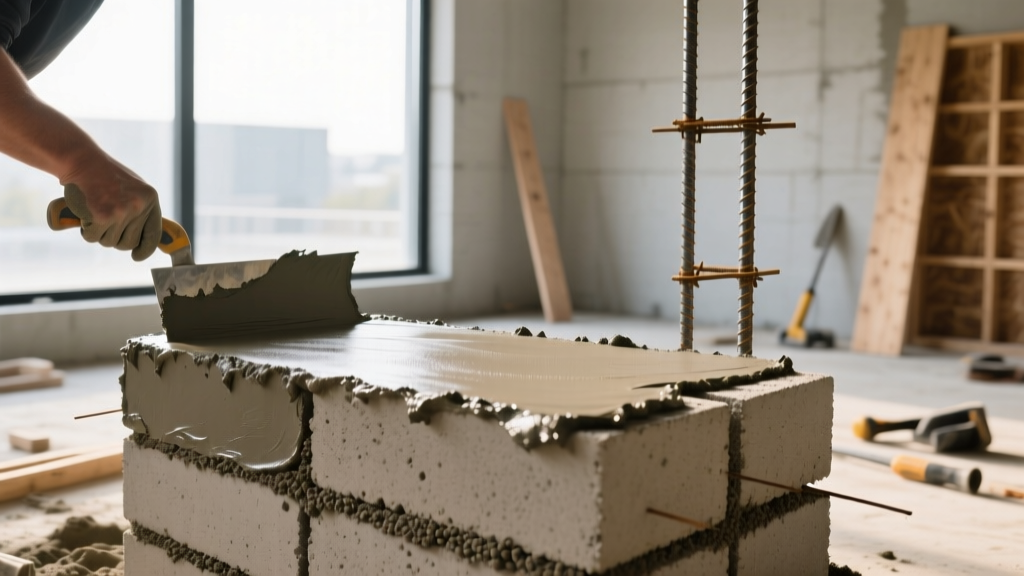
The Technical Baseline: Defining Type N Mortar
Type N mortar is a medium-strength masonry binder engineered for general-purpose, above-grade construction. Governed by the ASTM C270 standard, it is formulated to deliver a minimum compressive strength of 750 psi (pounds per square inch) at 28 days. While it lacks the sheer load-bearing brute force of Type M or Type S, Type N compensates with superior workability, higher water retention, and enhanced flexibility—traits that are critical for accommodating minor thermal expansion and structural settling without cracking.
Minimum Compressive Strength: 750 psi (28 days)
Standard: ASTM C270 / TMS 402/602
Proportion Mix (Portland): 1 part Portland cement : 1 part hydrated lime : 6 parts sand
Proportion Mix (Masonry Cement): 1 part Type N masonry cement : 3 parts sand
Primary Use Case: Above-grade exterior/interior load-bearing walls, veneers, and parapets.
Scenario Matching: Where Type N Excels (and Fails)
Selecting the correct mortar type is not about choosing the 'strongest' option; it is about matching the mortar's physical properties to the environmental and structural demands of the specific scenario. Using a mortar that is too hard (like Type M) for a soft clay brick can lead to brick spalling, as the mortar will not yield to thermal movement, forcing the brick to crack instead.
| Construction Scenario | Type N Suitability | Technical Rationale |
|---|---|---|
| Above-Grade Load-Bearing Walls | Excellent | 750 psi is sufficient for standard vertical loads in residential and light commercial structures. |
| Exterior Brick Veneer | Excellent | High lime content provides water retention and autogenous healing for micro-cracks. |
| Parapets and Chimneys | Excellent | Flexibility accommodates high thermal cycling and wind-driven rain exposure. |
| Below-Grade Foundations | Poor | Lacks the compressive strength and density required to resist severe lateral soil loads and moisture. |
| High Seismic / Lateral Zones | Marginal | Type S (1800 psi) is typically mandated by code for reinforced masonry in high seismic risk areas. |
The Autogenous Healing Advantage
One of the most underutilized benefits of Type N mortar in exterior veneer applications is autogenous healing. Because Type N contains a high ratio of hydrated lime (in traditional Portland/lime mixes), unhydrated lime particles remain in the matrix. When water infiltrates micro-cracks, these particles hydrate and expand, effectively sealing the crack from the inside out. This self-healing property drastically reduces long-term water infiltration in above-grade exterior walls, a feature entirely absent in high-strength, low-lime mortars like Type M.
Type N vs. Type S vs. Type M: The Compressive Showdown
Understanding the broader masonry mortar spectrum is critical for accurate scenario matching. The Building Code Requirements for Masonry Structures (TMS 402/602) clearly delineates when to step up or step down in mortar strength.
- Type M (2,500 psi): High Portland cement content. Extremely hard and dense. Reserved for below-grade foundations, retaining walls, and driveways subject to heavy lateral earth pressure. Warning: Using Type M with soft, historic, or low-compressive-strength bricks will cause the bricks to spall and crack.
- Type S (1,800 psi): Medium-high strength with high tensile bond strength. The default choice for reinforced masonry, structural walls at or below grade, and areas with high wind or seismic loads.
- Type N (750 psi): The versatile middle-ground. Ideal for general above-grade applications where extreme lateral loads are absent, prioritizing workability and weather resistance.
- Type O (350 psi): Low-strength, high-lime mix. Strictly reserved for interior, non-load-bearing partitions or the restoration of historic, ultra-soft masonry units.
Mixing Protocols: Proportion vs. Property Specifications
Under ASTM C270, you can specify Type N mortar using two distinct methods: Proportion Specifications or Property Specifications. Most residential and light commercial sites rely on Proportion Specifications due to the ease of field mixing.
Field Mixing by Proportion
- Measure by Volume, Not Weight: Use a standard masonry bucket or shovel to measure parts. For a traditional mix, combine 1 part Portland cement, 1 part hydrated lime (Type S), and 6 parts damp, loose masonry sand.
- Dry Mix First: Mix the dry ingredients in a mechanical drum mixer for 2 to 3 minutes to ensure uniform distribution of the cementitious materials.
- Add Water Incrementally: Add potable water slowly. The target consistency is 'buttery'—the mortar should hold its shape on a trowel turned 90 degrees, but slide off cleanly when tapped.
- Mixing Time: Once water is added, mix for a minimum of 3 minutes and a maximum of 5 minutes. Over-mixing entrains excess air, which artificially inflates the volume but destroys the compressive strength.
Type N mortar begins to lose its plasticity as hydration starts. You may retemper (add small amounts of water to restore workability) only within 2.5 hours of initial mixing, and only if the mortar has not begun its initial set. Never retemper mortar that has stiffened due to hydration, and never add 'mortar admixtures' or extra cement to old batches. Discard any mortar that has reached its initial set.
Application and Tooling Best Practices
The longevity of a Type N mortar joint depends heavily on the timing of the joint tooling. Because Type N has high water retention, it sets slightly slower than Type M.
The Thumbprint Test: Wait until the mortar joint is 'thumbprint hard.' This means you can press your thumb into the joint and leave a clear impression, but no moisture transfers to your skin. In moderate weather (70°F / 21°C), this typically occurs 45 to 60 minutes after laying the brick. Tooling too early smears the mortar and traps excess water at the surface, leading to shrinkage cracks. Tooling too late breaks the bond between the mortar and the masonry unit, creating a pathway for water infiltration.
2026 Sourcing, Packaging, and Cost Data
For contractors and DIYers purchasing pre-blended Type N mortar, the market has stabilized following the supply chain fluctuations of the early 2020s. Pre-blended bags eliminate the need to source and measure raw hydrated lime and Portland cement separately, ensuring strict adherence to ASTM C270 proportions.
| Product / Brand | Bag Size | Yield (Cubic Feet) | Avg. Retail Cost (2026) |
|---|---|---|---|
| QUIKRETE Type N Mortar Mix | 80 lbs (36.2 kg) | 0.81 cu ft | $6.50 - $7.80 |
| Sakrete Type N Mortar | 80 lbs (36.2 kg) | 0.81 cu ft | $6.75 - $8.20 |
| Spec Mix Type N (Bulk Silo) | Per Ton (Bulk) | ~12.5 cu ft / ton | $140 - $180 / ton |
Estimation Rule of Thumb: An 80 lb bag of Type N mortar will lay approximately 35 to 40 standard modular clay bricks (4" x 2 2/3" x 8") assuming a standard 3/8" concave joint and minimal waste.
Frequently Asked Questions (FAQ)
Can I use Type N mortar for a stone retaining wall?
No. Retaining walls are subject to severe lateral earth pressure and constant hydrostatic moisture. Type N's 750 psi compressive strength is insufficient for this load profile. You must use Type S (1,800 psi) or Type M (2,500 psi) mortar, paired with proper weep holes and gravel backfill drainage, to prevent structural failure and frost heave degradation.
Is Type N mortar the same as 'masonry cement'?
Not exactly, though they are related. 'Masonry cement' (ASTM C91) is a pre-packaged dry ingredient that already contains Portland cement, plasticizers, and air-entraining agents. To make Type N mortar using masonry cement, you mix 1 part Type N Masonry Cement with 3 parts sand. Alternatively, you can make Type N mortar from scratch using raw Portland cement, hydrated lime, and sand in a 1:1:6 ratio. Both methods yield a Type N mortar if they meet the 750 psi threshold.
Why did my Type N mortar joint turn white and powdery?
This is efflorescence, caused by water-soluble salts migrating to the surface of the mortar and crystallizing as the water evaporates. While Type N's high water retention is great for workability, if the wall lacks proper flashing or coping (especially on parapets), it will absorb excessive rainwater. The fix is not to change the mortar type, but to address the water intrusion source, dry-brush the efflorescence, and apply a breathable silane/siloxane masonry sealer.