Grout Paint Selection: Material Taxonomy and Compatibility
Compare grout paint types, from penetrating stains to epoxy coatings. Learn material compatibility, traffic ratings, and application costs.
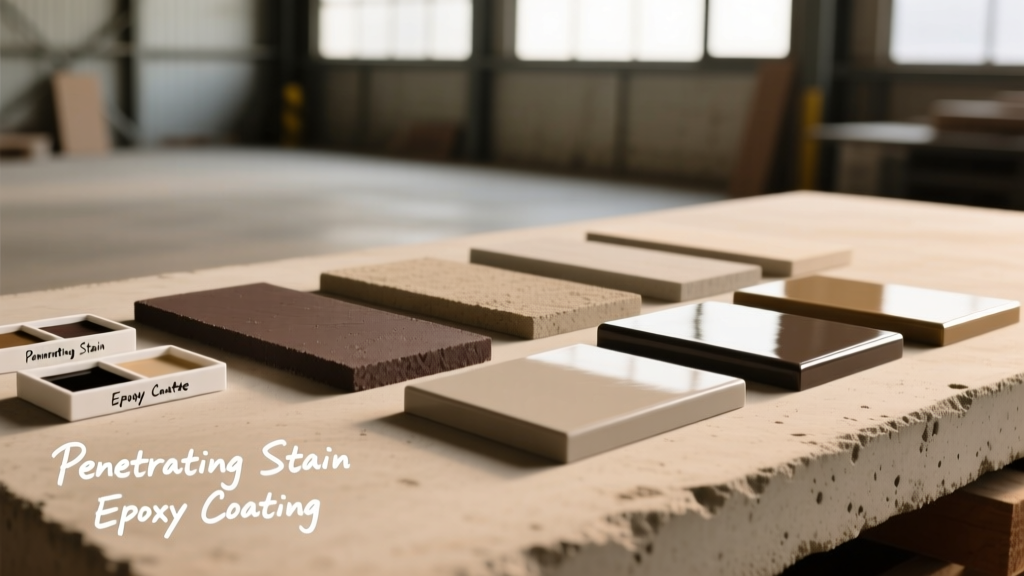
The Chemical Taxonomy of Grout Paints and Colorants
Selecting the correct grout paint requires understanding the chemical distinction between surface coatings and penetrating stains. Unlike standard wall paints, grout colorants must interact with the unique porosity and chemical makeup of the grout substrate. Misclassifying the product type leads to premature peeling, moisture entrapment, and color degradation. The market categorizes grout paints into three primary chemical families, each engineered for specific substrate conditions.
Penetrating Grout Stains (Water and Acid-Based)
Penetrating stains are the industry standard for traditional cementitious grout. Rather than forming a film on the surface, these water-based or mild-acid formulations carry microscopic pigment particles deep into the grout's capillary network. The carrier fluid evaporates, leaving the pigment locked within the pores. Because they do not create a surface barrier, penetrating stains maintain the natural texture of the grout and allow for moisture vapor transmission (MVT), which is critical in wet environments like shower pans. They require a highly porous substrate to function and will fail on sealed or epoxy grouts.
Acrylic and Polyurethane Surface Coatings
Acrylic-based grout paints act as topical sealers with integrated pigments. They form a micro-thin, flexible polymer film over the grout line. These are ideal for lightly stained grout that needs color uniformity and added stain resistance. However, because they sit on the surface, they alter the grout's texture, often giving it a slight sheen. In high-moisture environments, topical acrylics can trap hydrostatic pressure beneath the film, leading to blistering and delamination. They are best reserved for vertical backsplashes or low-traffic, dry-area flooring.
Epoxy Grout Colorants
Epoxy and urethane grouts are virtually non-porous (absorption rates below 1%). Standard stains cannot penetrate them. To change the color of epoxy grout, contractors must use specialized two-part epoxy colorants or high-adhesion urethane paints that rely on mechanical tooth and chemical bonding agents rather than pore penetration. These products are highly resistant to chemical cleaners and heavy commercial traffic but require meticulous surface preparation, including mechanical scuffing and solvent degreasing.
Material Compatibility Matrix
Matching the grout paint chemistry to the existing grout substrate is the most critical step in material selection. The following matrix outlines the correct pairings for long-term adhesion and performance.
| Existing Grout Substrate | Porosity Level | Recommended Grout Paint Type | Adhesion Mechanism | Moisture Tolerance |
|---|---|---|---|---|
| Unsealed Cementitious (Sanded/Unsanded) | High (15-20%) | Penetrating Water-Based Stain | Pore Penetration | High (Breathable) |
| Sealed Cementitious | Low (Stripped required) | Penetrating Stain (after stripping) or Acrylic | Pore Penetration / Surface Film | Moderate to High |
| Polymer-Modified (Latex/Acrylic fortified) | Medium (8-12%) | Polyurethane or Acrylic Coating | Surface Film / Mechanical Bond | Moderate |
| Epoxy Grout | None (<1%) | Two-Part Epoxy Colorant | Chemical Cross-linking | Very High (Waterproof) |
| Furan Grout (Industrial) | None (<1%) | Specialty Urethane Paint | Mechanical / Chemical Primer | Very High |
Selection Framework: Traffic, Moisture, and Substrate
Beyond basic chemistry, environmental factors dictate the specific product grade required. According to guidelines referenced by the Tile Council of North America (TCNA), moisture management and abrasion resistance must drive the final selection.
Applying a non-breathable acrylic grout paint over a concrete slab-on-grade without a vapor barrier will trap moisture. As hydrostatic pressure builds, the acrylic film will blister and peel within 6 to 12 months. For ground-level or below-grade cementitious grout, you must strictly use a breathable penetrating stain.
In commercial corridors or restaurant kitchens, standard acrylic grout paints will wear through under heavy foot traffic and aggressive alkaline degreasers. Specify a two-part epoxy colorant or a high-solids polyurethane grout coating rated for commercial abrasion (Taber abrasion test >1000 cycles) to ensure the color survives the cleaning regimen.
Product Specifications and Cost Analysis
The cost of applying grout paint is a fraction of traditional regrouting. While professional regrouting costs between $15.00 and $25.00 per square foot (including demolition and new material), professional grout colorant application ranges from $3.50 to $6.00 per square foot. For DIY applications, material costs drop significantly.
- Aqua Mix Grout Colorant (Penetrating): Widely considered the professional benchmark for cementitious grout. An 8 oz bottle covers approximately 50 to 75 linear feet of 1/8-inch grout lines. Retail cost is approximately $18.00 to $22.00 per bottle. It offers excellent UV stability and breathability.
- Custom Building Products Polyblend Grout Renew (Acrylic/Surface): A highly accessible consumer-grade topical coating. An 8 oz bottle costs around $12.00 to $14.00 and covers about 40 linear feet. Best for vertical applications and dry-area floors where a slight sheen and surface sealing effect are desired. Consult Custom Building Products technical data sheets for specific cure times.
- Laticrete SpectraLOCK Pro (Epoxy Colorant): Designed specifically for altering or refreshing epoxy and high-performance grouts. Sold in two-part kits (resin and hardener with pigment), costing roughly $65.00 to $85.00 per kit. Coverage varies heavily based on joint width, but it provides a permanent, chemical-resistant finish.
Application Failure Modes and Edge Cases
Even with the correct material taxonomy, grout paint fails when application protocols ignore substrate chemistry. The most common edge cases include:
- Efflorescence Blocking: Cementitious grout often develops efflorescence (white, powdery salt deposits). If a penetrating stain is applied over efflorescence, the salts act as a physical barrier, resulting in patchy, uneven color. The grout must be treated with a sulfamic acid cleaner and neutralized before painting.
- Silicone Caulk Interference: Change-of-plane joints (where the floor meets the wall) are typically filled with silicone caulk, not grout. Grout paint will not adhere to 100% silicone. These joints must be masked off, or the silicone must be completely removed and replaced with a color-matched silicone after the grout paint cures.
- Residual Bleach Salts: Many homeowners clean moldy grout with chlorine bleach before painting. Bleach leaves behind sodium chloride salts deep in the pores, which prevents water-based stains from penetrating evenly. Always use an alkaline or pH-neutral grout cleaner prior to colorant application, as noted in Bob Vila's grout restoration guides.
- Premature Sealing: Applying a topical grout sealer *before* a penetrating stain will block the pigment. If the grout was previously sealed, a heavy-duty sealer stripper (containing dibasic esters or similar solvents) must be used to open the pores before staining.
Frequently Asked Questions
Can I use standard interior latex wall paint on grout lines?
No. Standard latex wall paints lack the adhesion promoters required for the high-alkaline, abrasive environment of cementitious grout. They will quickly chip, peel, and trap moisture, leading to mold growth beneath the paint film. Always use a product specifically formulated as a grout colorant or grout paint.
How long does grout paint take to cure before a shower can be used?
Penetrating water-based stains typically dry to the touch in 2 to 4 hours but require a full 24 to 48 hours to fully cure and become water-resistant. Acrylic topical coatings may require up to 72 hours to achieve full chemical resistance against hot water and soap scum. Do not expose the treated grout to standing water during the cure window.
Will grout paint cover mold that has grown deep inside the grout?
Grout paint is not a biocide. If mold or mildew has penetrated deep into the porous structure of the grout, it must be killed and extracted using a specialized enzymatic or oxygenated cleaner before applying any colorant. Painting over live mold will result in the organism continuing to degrade the grout matrix from the inside out, eventually causing the painted surface to crumble.