Heavy-Duty Concrete Anchor Bolts: Hilti vs. Simpson Compared
Compare top concrete anchor bolts from Hilti and Simpson Strong-Tie. Discover load capacities, cure times, and pricing for structural projects.
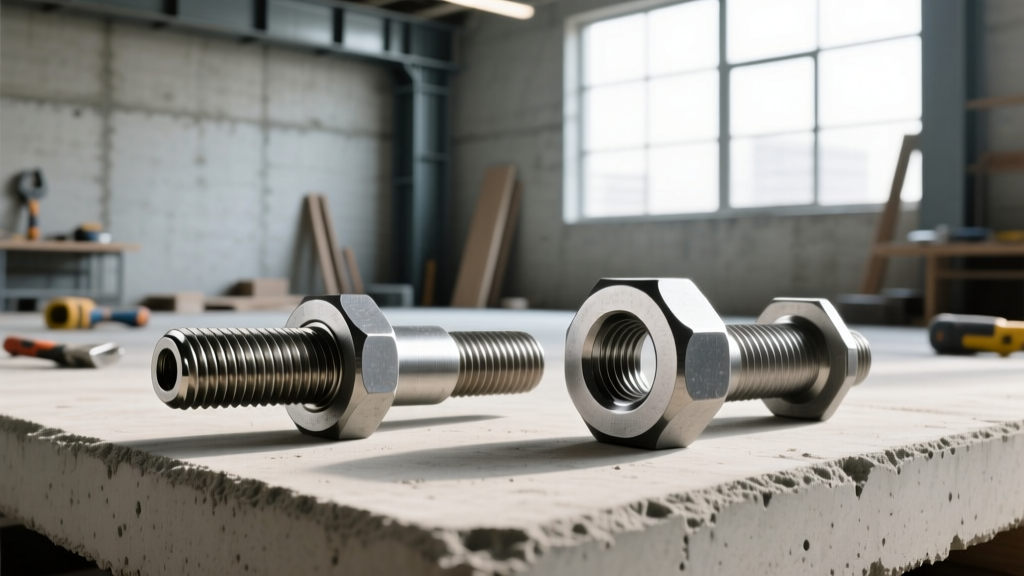
The Engineering Divide: Chemical vs. Mechanical Anchoring
When specifying concrete anchor bolts for heavy structural loads, the choice between Hilti and Simpson Strong-Tie is rarely just about brand preference—it is a decision between two distinct engineering philosophies. Hilti dominates the premium commercial and industrial sector, prioritizing rapid cure times, extreme load capacities, and proprietary installation ecosystems. Simpson Strong-Tie, conversely, excels in accessible, code-compliant versatility, particularly in wood-to-concrete and light commercial structural applications.
This deep-dive analysis dissects the flagship product lines from both manufacturers, evaluating their chemical adhesives and mechanical wedge systems against real-world installation variables, 2026 material pricing, and structural failure modes.
• Choose Hilti if: You are working in critical infrastructure, seismic zones requiring maximum tension loads, or need rapid return-to-service times where labor costs outweigh material premiums.
• Choose Simpson if: You are executing high-volume residential or light commercial builds, require extensive wood-to-concrete anchoring, or need to optimize upfront material budgets without sacrificing ICC-ES code compliance.
Chemical Adhesive Anchors: Hilti HIT-HY 200-A vs. Simpson SET-3G
Chemical anchors transfer loads through a resin bond rather than mechanical expansion, making them ideal for cracked concrete, near-edge installations, and high-tension seismic applications. The heavyweight champions in this category are Hilti’s HIT-HY 200-A (a hybrid mortar) and Simpson’s SET-3G (a high-performance epoxy).
| Specification | Hilti HIT-HY 200-A | Simpson SET-3G |
|---|---|---|
| Resin Type | Hybrid (Vinyl-Ester/Methacrylate) | Pure Epoxy |
| Gel Time (at 68°F / 20°C) | 3 minutes | 9 minutes |
| Full Cure Time (68°F) | 45 minutes | 24 hours |
| Max Base Material Temp | 176°F (80°C) | 176°F (80°C) |
| Wet Hole Installation | Approved (with specific flushing) | Approved (water-saturated) |
| Approx. Cost per 11oz Cartridge | $95 - $110 | $65 - $75 |
Real-World Application and Edge Cases
The most glaring differentiator is cure time. Hilti’s HIT-HY 200-A achieves full structural cure in 45 minutes at standard room temperature. On a commercial job site where a steel erection crew is waiting to torque baseplates, this rapid cure prevents thousands of dollars in standby labor costs. Simpson’s SET-3G, while offering exceptional long-term tensile strength and superior performance in sustained high-temperature environments, requires a 24-hour cure. If your project schedule allows for overnight curing, SET-3G provides a massive 30% material cost savings.
Both chemical systems will suffer catastrophic pull-out failures if the drilled hole is not properly cleaned. You must follow the 'Blow-Brush-Blow' protocol. Use compressed air at a minimum of 90 psi, followed by a wire brush, and a final air blow. Never skip this step; residual concrete dust acts as a bond-breaker, reducing tensile capacity by up to 60%.
Mechanical Wedge Anchors: Hilti HUS vs. Simpson Wedge-All
For standard shear loads, equipment anchoring, and non-cracked concrete applications, mechanical wedge anchors remain the industry standard due to their immediate load-bearing capability and lower material cost.
Installation Tolerances and Failure Modes
The Hilti HUS (Hilti Undercut System) utilizes a specialized expansion sleeve that cuts into the concrete, creating an undercut effect. This design provides superior vibration resistance and maintains preload better in dynamic load environments, such as heavy machinery bases. However, the HUS requires highly precise hole tolerances; an oversized hole by even 1/16-inch can compromise the sleeve's bite.
The Simpson Wedge-All (WA) relies on a traditional wedge clip that expands against the hole wall as the nut is torqued. It is highly forgiving of minor hole irregularities and is significantly faster to install in bulk. The primary failure mode for the Wedge-All is concrete spalling if over-torqued or installed too close to a free edge. While the Hilti HUS can typically be placed closer to edges without inducing split failures, the Wedge-All requires strict adherence to minimum edge distance charts.
'Never use an impact wrench to set mechanical wedge anchors. The percussive force can prematurely expand the wedge before it reaches the bottom of the hole, resulting in a false torque reading and a dangerously under-anchored connection. Always use a calibrated click-type torque wrench.'
The Hidden Economics: Material Cost vs. Labor Burden
Procurement teams often make the mistake of evaluating concrete anchor bolts strictly on unit cost. A true 2026 cost analysis must factor in the labor burden, hole preparation time, and equipment downtime.
Cost Breakdown: 100 Anchors (5/8' Diameter, 8' Embedment)
- Simpson SET-3G Route: Material cost is roughly $450. However, the 24-hour cure time requires the steel erection crew to return the next day, adding approximately $680 in remobilization and standby labor (assuming an $85/hr crew rate).
- Hilti HIT-HY 200-A Route: Material cost is roughly $650. The 45-minute cure allows the steel crew to torque and proceed on the same day, resulting in $0 in remobilization costs.
In this scenario, the Hilti system, despite a 44% higher material cost, yields a net project savings of $480. Always run a labor-burden calculation before defaulting to the cheaper chemical cartridge.
Mechanical Torque Sequence Protocol
When installing mechanical anchors like the Wedge-All or HUS in a baseplate pattern, applying full torque to one anchor before tightening the others can shift the plate and induce shear stress on the uncured or unset bolts. Follow this sequence:
- Hand-tighten all nuts until snug against the baseplate.
- Apply 30% of the specified final torque to all anchors in a star pattern.
- Apply 60% of the final torque in the same star pattern.
- Apply 100% final torque, verifying with a calibrated dial or click wrench.
Seismic Compliance and ACI 318 Mandates
For projects in Seismic Design Categories (SDC) C through F, standard mechanical anchors are frequently prohibited for tension loads. The ACI 318-19 Building Code (specifically Chapter 17) mandates the use of anchors qualified for seismic tension and shear.
Both Hilti and Simpson offer ICC-ES evaluated systems for these zones, but their execution differs. Hilti pairs the HIT-HY 200-A with their HAS-E (Hilti Anchor Rod) which features a specialized geometry designed to optimize the resin bond under cyclic seismic loading. Simpson utilizes the SET-3G with their standard threaded rods but requires stricter embedment depths and edge distances to achieve the same seismic qualification. If your structural engineer specifies seismic tension, verify the exact ESR (Evaluation Service Report) number on the submittal to ensure the specific rod-and-resin combination is approved for your exact SDC zone.
Final Verdict: Which Line Fits Your Spec?
There is no universal 'best' concrete anchor bolt. Hilti commands a premium because it solves high-stakes logistical problems: rapid cure times, extreme seismic tension capacities, and dynamic load resistance. Simpson Strong-Tie wins on high-volume efficiency, budget optimization, and broad-spectrum code compliance for standard structural connections. Match the anchor system to your project's critical path, not just the material ledger.