Masonry Sand vs Concrete Sand: Project Application Guide
Discover the critical differences in masonry sand vs concrete sand. Learn ASTM standards, mix ratios, and exact project applications for structural success.
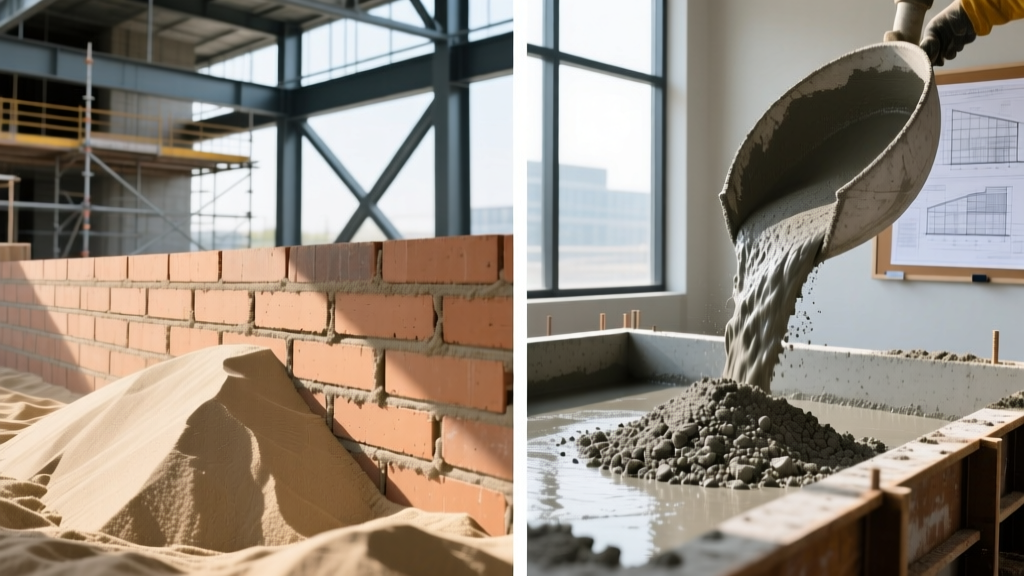
The Microscopic Divide: ASTM C144 vs. ASTM C33
The distinction between masonry sand and concrete sand is not merely a matter of labeling; it is a fundamental difference in particle geometry, sieve grading, and chemical behavior that dictates the structural integrity of your build. Swapping these materials is one of the most common and costly errors in residential and light commercial construction, leading to everything from mortar joint failure to catastrophic slab cracking.
Masonry sand is governed by ASTM C144 standards, which strictly limit the maximum particle size and require a high percentage of fine, rounded particles to ensure workability and water retention. Concrete sand, regulated by ASTM C33, demands a broader gradation with larger, angular particles designed to mechanically interlock and bear heavy compressive loads.
| Property | Masonry Sand (ASTM C144) | Concrete Sand (ASTM C33) |
|---|---|---|
| Maximum Particle Size | Passes No. 8 sieve (2.36 mm) | Passes No. 4 sieve (4.75 mm) |
| Particle Shape | Sub-rounded to rounded | Angular to sub-angular |
| Fines Content (Silt/Clay) | Strictly limited (< 3% typically) | Allowed up to 3-5% depending on use |
| Primary Function | Workability, water retention, bond | Structural interlock, load distribution |
| Typical Bulk Density | ~90 lbs/cu ft | ~100 lbs/cu ft |
Application Showcase: Where Masonry Sand Excels
Masonry sand is the backbone of vertical and veneer applications where adhesion, plasticity, and moisture management are paramount. Its fine, rounded grains act like microscopic ball bearings, allowing trowels to glide smoothly while retaining just enough water to hydrate Portland cement without bleeding out.
Type N and Type S Mortar Mixes
For standard bricklaying and concrete block (CMU) construction, Type N mortar (1 part Portland cement, 1 part hydrated lime, 6 parts masonry sand) requires the exact gradation of C144 sand. The fine particles fill the microscopic voids between the cement and lime, creating a dense, impermeable matrix that resists weathering. If concrete sand is used here, the larger No. 4 particles will scrape against the brick, ruin the tooling profile, and create weak points where water can infiltrate and freeze.
Paver Bedding and Jointing
In hardscaping, masonry sand is the mandatory choice for the 1-inch bedding layer beneath interlocking concrete pavers. Its uniform gradation allows for precise screeding to a laser-level tolerance. Furthermore, when swept into the paver joints, the fine grains compact tightly, locking the pavers in place while still allowing minor flex under thermal expansion.
When sourcing masonry sand for stucco base coats or veneer mortar, demand a washed product. Unwashed masonry sand often contains 5-8% clay and silt. While this makes the mortar feel "buttery" on the trowel, the clay shrinks drastically upon drying, causing micro-fissures in the stucco and severe efflorescence (white salt staining) on brick facades within the first six months.
Application Showcase: Where Concrete Sand is Mandatory
Concrete sand is engineered for horizontal, load-bearing applications. The angularity of the grains is its most critical feature; when mixed with gravel and cement, these jagged edges bite into one another, creating a mechanical skeleton that resists shear and compressive forces.
Structural Slabs and Footings
A standard 3000 PSI residential slab mix (typically a 1:2:3 ratio of cement, sand, and coarse aggregate) relies on C33 concrete sand to bridge the gap between the coarse gravel and the cement paste. The broader gradation of concrete sand ensures that the voids between the large gravel pieces are completely filled, minimizing the amount of expensive cement paste required. Using masonry sand in a structural footing will result in a "fat" mix that requires excessive water to achieve workability, ultimately dropping the compressive strength to below 2000 PSI and guaranteeing shrinkage cracking.
Utility Pipe Bedding and Drainage
Because concrete sand contains larger particles and fewer fines, it possesses a significantly higher permeability rate. This makes it the required material for bedding underground PVC, HDPE, and corrugated drainage pipes. It provides a stable, load-bearing cradle that will not wash away under heavy water flow, while allowing groundwater to percolate safely away from the pipe joints.
The "Can I Swap Them?" Decision Matrix
Supply chain hiccups often tempt contractors to substitute one sand for the other. Use this framework to evaluate the structural risk before making a swap.
- Scenario A: Using Masonry Sand in a Concrete Slab
Verdict: Critical Failure Risk. The lack of coarse particles and angular interlock will cause severe plastic shrinkage. The slab will cure with a weak, chalky surface layer (laitance) that will spall and dust under foot traffic within weeks. Do not swap. - Scenario B: Using Concrete Sand in Brick Mortar
Verdict: High Failure Risk. The large, jagged particles will prevent a tight, weather-sealed joint. The mortar will lack water retention, causing the brick to suck moisture out of the mix before hydration is complete, resulting in a powdery, crumbling bond. Do not swap. - Scenario C: Using Concrete Sand for Paver Joints
Verdict: Moderate Annoyance. The large particles will not sweep deeply into narrow (1/8-inch) paver joints. It will bridge across the top, leaving the lower joint empty and allowing the pavers to shift and weed growth to take root. Avoid if possible. - Scenario D: Using Masonry Sand for Pipe Bedding
Verdict: Functional but Suboptimal. It will support the pipe, but the high fines content will reduce drainage, potentially causing hydrostatic pressure buildup around the pipe during heavy rains. Acceptable only in dry, well-draining soils.
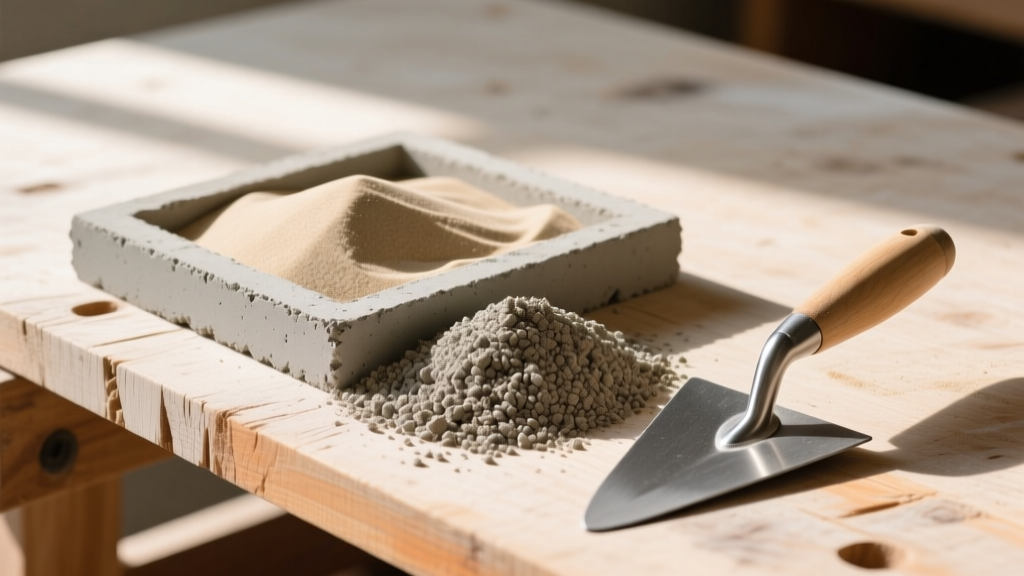
2026 Sourcing, Pricing, and Delivery Logistics
Understanding the cost dynamics of these materials is essential for accurate project bidding. As of 2026, regional quarry consolidation and fuel surcharges have stabilized, but bulk delivery minimums remain a key factor for residential builders.
Bulk Pricing (Per Ton)
- Masonry Sand: $28.00 - $42.00
- Concrete Sand: $22.00 - $35.00
- Note: Washed, low-clay variants command a $5-$8 premium.
Bagged Pricing (50 lb Bag)
- Masonry Sand: $5.50 - $7.00
- Concrete Sand: $4.50 - $6.00
- Note: Bagged sand is dried and screened, offering zero clay content but at a 300% markup over bulk.
Batching Adjustment Rule: Bulk sand delivered from a quarry typically contains 3% to 6% surface moisture by weight. This moisture causes "bulking" (an artificial increase in volume). If your mix design calls for 1 cubic foot of dry sand, you must increase your volume measurement by up to 25% to account for bulking, or switch to weight-based batching (using a scale) to maintain exact water-to-cement ratios and prevent soupy, unworkable batches.
Selecting the correct sand is not a place to cut corners or improvise. By aligning your material choice with the specific ASTM standards and physical demands of your application, you ensure long-term durability, structural compliance, and a professional-grade finish.
Written by
Priya KapoorPriya Kapoor is a real estate market analyst and construction economics researcher with expertise in housing affordability, development feasibility, and infrastructure investment. She holds a Master of Regional Planning from Cornell University and previously worked as a senior analyst at CBRE's Investment Properties group, where she modeled returns for $4B in mixed-use development pipelines. Priya now runs an independent research practice advising developers, municipalities, and REITs on construction cost forecasting and market timing. She publishes the quarterly "BuildMat Market Pulse" report tracking material price indices across 12 commodity categories. Based in Austin, TX, Priya serves on the board of Habitat for Humanity Austin and is a marathon runner.
More from Priya Kapoor
View all
Construction Cost
Cost to Build a 1600 Sq Ft Home in 2026: Full Breakdown
Accurate 2026 cost to build a 1600 sq ft home—material, labor, and regional pricing breakdowns included. Plan your budget with real-time estimates.
Aug 11, 2026

Wood & Lumber
Name the Types of Wood for Pressure Treatment and Preservation
Learn how to name the types of wood best suited for pressure treatment. Compare species treatability, chemical retention levels, and 2026 preservation costs.
Aug 4, 2026

Stone & Masonry
Stone Veneer Suppliers Lindenhurst: 2026 Cost Analysis
Analyze 2026 stone veneer costs in Lindenhurst, NY. Compare local supplier pricing, delivery fees, and Suffolk County installation labor rates.
Aug 4, 2026