How Long Do Concrete Feeders Last? Durability & Lifespan Analysis
Analyze the durability and lifespan of precast concrete feeders. Discover mix designs, degradation factors, and maintenance tips to maximize ROI.
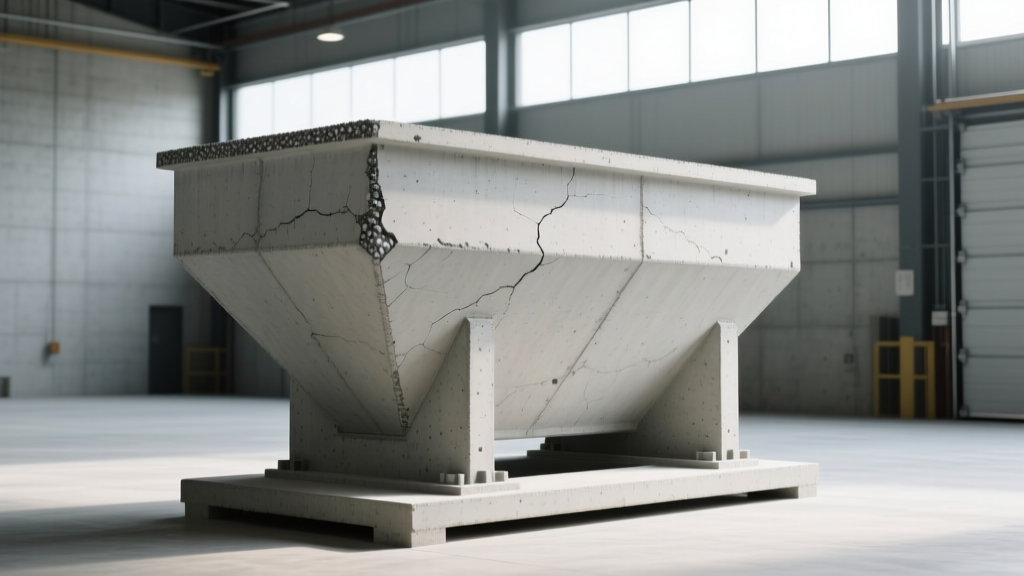
The Anatomy of a Precast Concrete Feeder
When evaluating agricultural infrastructure, precast concrete feeders represent a significant capital expenditure. Unlike polyethylene or galvanized steel alternatives, concrete livestock bunks are engineered for multi-decade service. However, the actual lifespan of a concrete feeder is not a fixed number; it is a direct function of its mix design, reinforcement strategy, and the specific chemical environment of the feedlot. A standard precast concrete feeder typically lasts between 15 and 25 years, but high-performance units engineered for aggressive environments can exceed 40 years of active service.
The baseline for a durable concrete feeder begins at the batch plant. According to guidelines supported by the Portland Cement Association (PCA), agricultural concrete must withstand severe freeze-thaw cycles and chemical attacks. This requires a minimum compressive strength of 4,000 PSI, a strict water-cement (w/c) ratio of 0.40 or lower, and an air-entrainment level of 5% to 7% to create microscopic voids that accommodate expanding ice crystals.
• Standard Mix (3,000 - 4,000 PSI): 12 - 18 years
• High-Performance Mix (5,000+ PSI, w/c < 0.40): 25 - 35 years
• Sealed & Epoxy-Reinforced: 40+ years
Primary Degradation Mechanisms in Livestock Environments
Concrete feeders do not simply 'wear out'; they fail through specific, identifiable degradation pathways. Understanding these mechanisms is critical for specifying the right product for your operation.
Chemical Attack: Silage Effluent and Acidic Manure
The most insidious threat to concrete feeders is chemical degradation. Fermented silage and high-moisture grains produce effluents rich in lactic and acetic acids, which can drop the local pH to between 3.5 and 4.5. Portland cement paste contains a high volume of calcium hydroxide (Ca(OH)2), which is highly alkaline. When acidic silage juice pools in the bunk, it neutralizes the calcium hydroxide, forming soluble calcium salts that leach out of the matrix. This leaves the concrete surface soft, chalky, and highly porous, accelerating further degradation.
Mechanical Abrasion and Impact Loading
Feedlots are high-impact environments. Concrete feeders endure constant abrasion from livestock hooves, the scraping of metal loader buckets during feed push-ups, and the impact of heavy feed clods. While concrete excels in compressive strength, its surface can suffer from micro-fracturing under repeated impact. If the concrete surface is not properly cured or troweled to a hard, dense finish, mechanical abrasion will quickly expose the underlying aggregate and reinforcement.
Freeze-Thaw Spalling
In northern climates, water saturation combined with freezing temperatures is a primary failure mode. If the concrete lacks adequate air entrainment, or if the surface is allowed to remain saturated with water and manure, the 9% volumetric expansion of freezing water creates internal hydraulic pressure. This exceeds the tensile strength of the concrete, causing the surface to flake and spall.
Lifespan Matrix: Standard vs. High-Performance Mixes
Selecting the right feeder specification requires balancing upfront capital costs against long-term replacement cycles. The table below outlines the performance and economic differences across common precast concrete feeder tiers in the current 2026 market.
| Specification Tier | Mix Design & Reinforcement | Expected Lifespan | Approx. Cost (8-ft Bunk) | Best Application |
|---|---|---|---|---|
| Economy Standard | 3,500 PSI, standard rebar, no air entrainment | 10 - 15 Years | $650 - $800 | Dry lots, mild climates, temporary setups |
| Commercial Ag-Grade | 4,500 PSI, 6% air, galvanized wire mesh | 20 - 25 Years | $850 - $1,050 | Standard cattle feedlots, mixed rations |
| High-Performance | 6,000 PSI, w/c 0.38, epoxy rebar, macro-fibers | 35 - 45+ Years | $1,250 - $1,550 | High-acid silage bunks, harsh freeze-thaw zones |
Critical Reinforcement Strategies for Longevity
The structural integrity of a concrete feeder under the torsional stress of heavy machinery and livestock crowding relies entirely on its internal reinforcement. However, reinforcement is also the most common catalyst for premature failure if improperly detailed.
The Spalling Threat: Why Rebar Placement Matters
When standard carbon steel rebar is exposed to moisture and oxygen, it oxidizes and expands up to six times its original volume. This phenomenon, known as 'rust jacking,' creates immense internal tensile forces that blow the concrete cover off the feeder, exposing the structural core. To prevent this, the USDA Natural Resources Conservation Service (NRCS) mandates strict concrete cover requirements. For agricultural feeders, a minimum clear cover of 1.5 inches over all reinforcement is non-negotiable. In highly corrosive environments where de-icing salts or acidic effluents are present, specifying ASTM A775 epoxy-coated rebar or hot-dipped galvanized wire mesh is essential to halt the oxidation cycle.
Synthetic Macro-Fibers for Secondary Crack Control
Modern precast plants increasingly supplement traditional steel with synthetic macro-fibers (such as polypropylene or polyolefin) dosed at 3 to 5 lbs per cubic yard. While fibers do not replace primary structural rebar, they provide three-dimensional secondary reinforcement that intercepts micro-cracks before they propagate to the surface. This drastically reduces the permeability of the feeder, blocking the ingress of acidic silage juices and water.
Maintenance Protocols to Extend Service Life
Even the highest-tier concrete feeder requires proactive maintenance to achieve its maximum lifespan. Implementing the following protocols will mitigate chemical and environmental degradation:
- Initial Penetrating Sealer Application: Within 28 days of installation, apply a silane/siloxane penetrating sealer. Unlike film-forming sealers (like acrylics) that peel under loader bucket friction, penetrating sealers react chemically within the concrete pores to create a hydrophobic barrier. This prevents water and acidic effluents from entering the matrix.
- Routine Effluent Flushing: Do not allow silage juice to pool and dry in the bunk. Flush the feeder with water weekly during heavy silage feeding periods to dilute and remove acidic residues before they can etch the surface.
- Sealer Reapplication: Penetrating sealers degrade under UV exposure and mechanical abrasion. Plan to reapply the silane/siloxane sealer every 3 to 5 years, depending on the intensity of the mechanical scraping from feed push-up equipment.
- Winterizing Drainage: Ensure weep holes at the base of the feeder remain clear of compacted feed and mud. Trapped water freezing inside the bunk cavity will exert outward pressure and crack the side walls.
Cost-Benefit Analysis: Replacement vs. Refurbishment
When a concrete feeder reaches the 20-year mark and exhibits surface spalling, operators must decide between replacement and refurbishment. Replacing an 8-foot commercial ag-grade bunk costs approximately $950, plus $250 for heavy equipment mobilization and placement, totaling $1,200 per unit.
Alternatively, if the structural rebar has not completely compromised, the feeder can be refurbished. This involves hydro-blasting the degraded surface, applying a polymer-modified concrete resurfacer (such as a high-build epoxy mortar) to a depth of 0.5 inches, and sealing the unit. The material and labor cost for this refurbishment is typically $300 to $450 per bunk. While refurbishment adds 7 to 10 years of service life, it is only economically viable if the underlying structural reinforcement remains intact and free of severe section loss. If rust jacking has displaced more than 15% of the concrete cover, replacement is the only structurally sound and economically viable option.
Frequently Asked Questions
Can I use standard concrete sealers from a hardware store on my feeders?
No. Standard acrylic or polyurethane surface sealers form a topical film that will be stripped away by the metal scraping edges of skid steers and loader buckets within weeks. You must use a deep-penetrating silane or siloxane sealer specifically rated for horizontal, high-traffic agricultural applications.
Are polymer-lined concrete feeders worth the premium?
For operations feeding highly acidic rations (like high-moisture corn or wet brewers grains), a precast feeder with a factory-applied high-density polyethylene (HDPE) or polyurea lining is highly recommended. While the upfront cost increases by 30% to 40%, the liner completely isolates the concrete from chemical attack, effectively doubling the chemical lifespan of the unit.