Top Concrete Stamp Brands & Polyurethane Mat Lines for 2026
Compare top concrete stamp brands for 2026. Deep dive into Proline, Butterfield, and Walttools polyurethane mats, Shore A ratings, and contractor pricing.
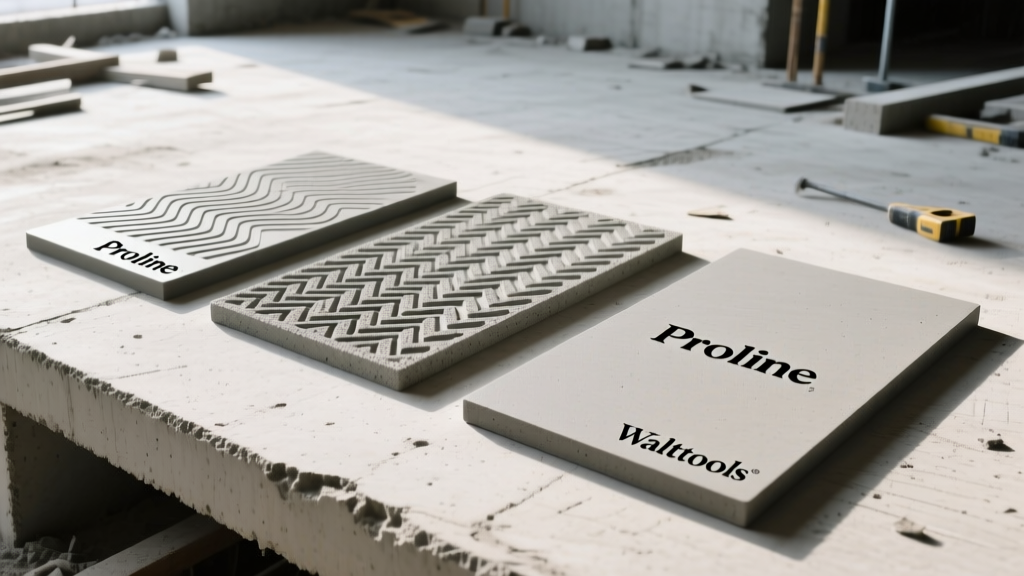
The Anatomy of a Professional Concrete Stamp Mat
The decorative concrete market in 2026 is defined by advanced polyurethane formulations that resist tearing, retain intricate grout line details, and withstand extreme temperature fluctuations during the stamping window. When evaluating a concrete stamp product line, the primary metric is the Shore A durometer rating, which measures the material's hardness and flexibility.
Professional stamping systems rely on a two-tier mat approach:
- Rigid Mats (75A - 85A Shore): Used for the main field of the pour. The higher durometer allows contractors to stand on the mats and use a tamp tool without bottoming out or distorting the pattern.
- Flex Mats (45A - 55A Shore): Used against vertical barriers, foundation walls, and tight corners. The lower durometer allows the mat to bend up to 90 degrees without snapping the polyurethane or blurring the texture edges.
Cheap import mats often use brittle polyurea or low-grade PVC blends that lack the memory of high-quality polyurethane, leading to permanent deformation after just a few pours. According to the American Society of Concrete Contractors (ASCC), using manufacturer-matched stamping tools with the specified color hardeners and release agents is critical to preventing surface micro-cracking and ensuring long-term durability.
Brand Deep-Dive: Proline Concrete Stamps
Proline remains a dominant force in the stamping industry, largely due to their proprietary polyurethane blend that specifically reinforces deep grout joints—the most common failure point in stamp mats.
Flagship Lines: Classic Flat Texture & Seamless
Proline’s Classic Flat Texture series is engineered to mimic natural stone with minimal depth variation, making it ideal for commercial applications where ADA compliance and wheelchair accessibility are required. Their Seamless texture mats (like the popular 'Stone Texture' skins) feature feathered edges that overlap without creating hard grout lines, allowing for rapid coverage of large commercial plazas.
Brand Deep-Dive: Butterfield Color
Butterfield Color approaches the concrete stamp market as an integrated system manufacturer. Their stamping mats are specifically calibrated to the working time and viscosity of their Lithochrome Color Hardener and Antiquing Release agents.
Flagship Lines: Permastone & Mayan
The Permastone line features highly detailed, randomized patterns that replicate cut stone and slate. Butterfield utilizes a slightly softer rigid formulation (around 75A Shore) compared to competitors, which allows the mats to pick up finer surface details from the concrete paste. The Mayan series offers deeply embossed, heavily textured profiles that excel at hiding surface imperfections and minor trowel marks in the underlying slab.
Brand Deep-Dive: Walttools & Global Manufacturing
Walttools (often associated with Global Manufacturing) has captured significant market share among startup contractors and high-volume residential crews by offering aggressive pricing without sacrificing core polyurethane integrity. Their TruTexture line provides excellent depth and realistic stone variations. While their edge detailing on flex mats may require slightly more hand-chiseling post-pour compared to Proline, the cost-to-performance ratio makes them a staple in the 2026 residential patio market.
Comparison Matrix: Top Stamp Mat Specifications
| Brand | Flagship Line | Rigid Shore A | Flex Shore A | Avg Rigid Price | Avg Flex Price |
|---|---|---|---|---|---|
| Proline | Classic Flat Texture | 80A - 85A | 50A | $425 - $550 | $240 - $290 |
| Butterfield | Permastone | 75A - 80A | 45A | $380 - $480 | $210 - $260 |
| Walttools | TruTexture Slate | 78A - 82A | 48A | $320 - $400 | $180 - $230 |
Real-World Failure Modes & Edge Case Troubleshooting
Even with premium equipment, improper technique leads to catastrophic surface failures. ACI Committee 310 (Decorative Concrete) emphasizes that surface preparation, timing, and curing are just as critical as the stamping tools themselves.
1. The 'Ghosting' Effect (Release Agent Embedding)
The Symptom: Patches of solid, uncolored gray concrete appear where the powder release agent failed to wash out, leaving a permanent white ghost mark.
The Cause: Stamping the concrete too late. If the surface bleed water has fully evaporated and the concrete has reached final set, the powder release cannot penetrate the pores. Instead, it sits on top and gets permanently locked into the cement paste under the weight of the tamp.
The Fix: Monitor the 'thumbprint test'. You should be able to press your thumb into the concrete about 1/8 inch with moderate pressure before laying down the first concrete stamp mat.
2. Polyurethane Tearing at Deep Joints
The Symptom: The mat develops a physical rip along the deepest grout line after 10-15 pours.
The Cause: Using a liquid release agent that contains harsh solvents incompatible with the specific polyurethane blend, or dragging the mat horizontally across the slab instead of lifting it vertically.
The Fix: Always lift mats straight up. If using liquid releases, verify chemical compatibility with the manufacturer. For deep-joint patterns (like heavy cobblestone), apply a light spray of silicone mat release to the polyurethane every third pour to reduce friction.
Purchasing Framework: The 400 Sq. Ft. Stamp Kit
For a standard 20x20 foot residential patio (400 sq. ft.), contractors must purchase enough mats to cover the active working width of the pour, typically advancing in 8 to 10-foot strips. Here is the exact purchasing framework and 2026 estimated capital expenditure for a professional startup kit:
- 6 Rigid Mats (3' x 5' each): Covers 90 sq. ft. of active stamping area, allowing a 3-man crew to leapfrog mats efficiently. Estimated Cost: $2,400 (using Walttools TruTexture at $400/ea).
- 2 Flex Mats (3' x 5' each): Essential for the perimeter edges against the house foundation and retaining walls. Estimated Cost: $400 ($200/ea).
- 1 Polyurethane Tamp Tool: Used to seat the mats and ensure deep grout line penetration without damaging the mat surface. Estimated Cost: $120.
- 2 Touch-Up Wheels & Chisels: For cleaning up grout lines where the flex mats couldn't reach perfectly into the 90-degree corners. Estimated Cost: $85.
Total Mat Investment: ~$3,005. This kit will comfortably handle 400 to 600 sq. ft. per day, assuming a well-coordinated crew and optimal weather conditions (65°F - 80°F). Properly maintained, these polyurethane assets will last for 50,000+ sq. ft. of stamped surface before requiring replacement.