Prestressed vs Post Tensioned Concrete: Complete Comparison
Compare prestressed vs post tensioned concrete systems. Explore structural mechanics, 2026 cost data, span limits, and failure modes for optimal design.

The Baseline: Why Traditional Reinforced Concrete Falls Short
Traditional reinforced concrete (RC) relies on passive steel rebar to handle tensile forces only after the concrete has already cracked. For long-span commercial floors, parking garages, and bridge girders, this passive approach results in massive deflection, excessive material weight, and stringent depth requirements. To overcome concrete’s inherent weakness in tension, engineers introduce active compression into the member before service loads are applied. This umbrella technique is known as prestressing. However, the critical engineering decision lies in the execution method: pre-tensioning versus post-tensioning. Understanding the mechanical, financial, and logistical differences between these two systems is essential for optimizing structural design in 2026.
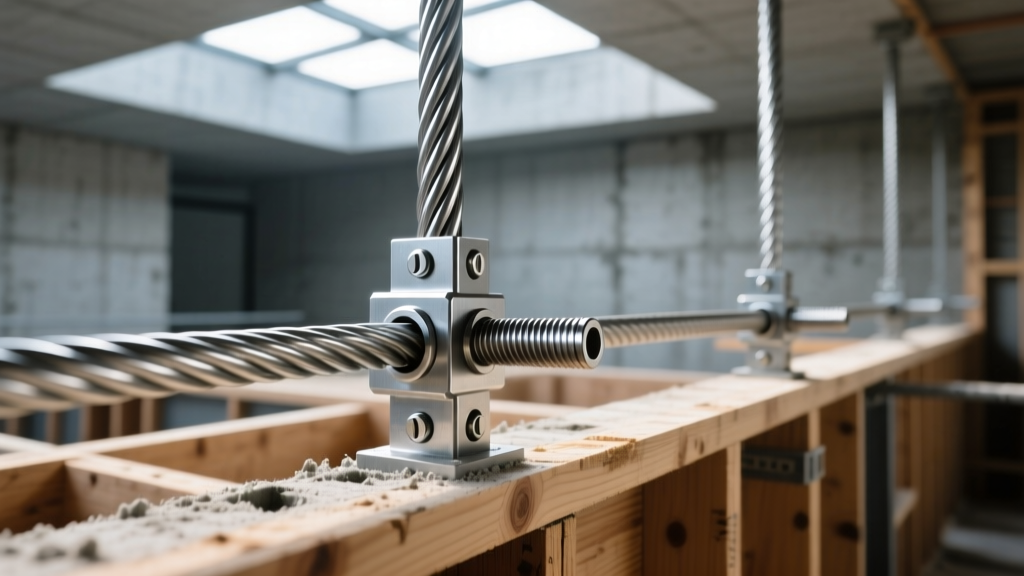
Core Mechanics: Pre-Tensioning vs. Post-Tensioning
The fundamental difference between the two systems lies in the sequence of operations and the bond condition between the steel tendon and the concrete matrix. Both systems typically utilize high-strength, low-relaxation 7-wire steel strands conforming to ASTM A416, with a minimum ultimate tensile strength of 270 ksi (1860 MPa).
In pre-tensioned concrete, the steel strands are stretched between massive external abutments in a precast manufacturing yard before the concrete is poured. Once the concrete reaches a specific compressive strength (usually 4,000 to 5,000 psi), the strands are cut. The steel attempts to return to its original length, transferring the compressive force directly to the concrete through the physical bond and mechanical interlock along the entire length of the strand.
In post-tensioned (PT) concrete, the concrete is cast first around empty plastic or galvanized steel ducts. After the concrete cures to the required strength, the strands are threaded through the ducts, tensioned using hydraulic jacks, and locked into place with steel wedges at the anchorages. The force is transferred to the concrete via the end anchorages rather than a continuous bond, though bonded PT systems later inject grout into the ducts to create a secondary bond and provide corrosion protection.
| Feature | Pre-Tensioned Concrete | Post-Tensioned Concrete |
|---|---|---|
| Tensioning Timing | Before concrete is poured | After concrete has cured |
| Manufacturing Location | Strictly precast plants (off-site) | Cast-in-place (on-site) or precast |
| Force Transfer Mechanism | Continuous bond along the strand | End anchorages (and grout bond if bonded PT) |
| Typical Tendon Profile | Straight or gently draped (limited by bed) | Complex parabolic profiles matching moment diagrams |
| Primary Application | Standardized precast elements (beams, double-tees, hollow core) | Custom cast-in-place slabs, transfer girders, bridges |
Material and Labor Cost Breakdown (2026 Estimates)
When evaluating prestressed vs post tensioned concrete, initial material costs can be misleading if not contextualized against total system savings. Post-tensioning introduces specialized hardware costs but drastically reduces the volume of concrete and mild reinforcing steel required for large spans.
Post-Tensioning System Costs
For a typical commercial cast-in-place slab using unbonded monostrand PT (0.6-inch diameter, 270 ksi), the material cost for the tendons, grease, plastic sheathing, and anchorages ranges from $1.40 to $2.10 per square foot of slab area. Labor for installing the tendons and the subsequent stressing operations adds approximately $0.80 to $1.20 per square foot. However, this premium is offset by reducing the slab thickness by 2 to 4 inches and cutting mild rebar requirements by 60% to 80%, yielding a net savings of $2.50 to $4.00 per square foot on floors spanning over 30 feet.
Pre-Tensioned Precast Costs
Pre-tensioned elements, such as hollow-core planks or double-tee beams, are priced by the linear foot or square foot of the element. In 2026, 8-inch deep pre-tensioned hollow-core planks cost between $18 and $26 per square foot (manufactured and delivered), while 24-inch deep double-tees range from $32 to $45 per square foot. While the unit cost of the precast member is higher than cast-in-place concrete, the elimination of on-site formwork, shoring, and curing time compresses the project schedule by weeks, significantly reducing general conditions and financing costs.
Structural Performance and Span Capabilities
The choice between these systems heavily dictates the architectural possibilities and structural limits of a project.
Deflection and Camber Control
Pre-tensioned precast members are manufactured with precise, predictable camber (upward deflection) because the curing environment and concrete mix designs are strictly controlled in the plant. Post-tensioned cast-in-place slabs, however, are subject to field variables. If a PT slab is stressed too early or if the concrete's elastic modulus varies due to weather conditions, the slab may experience excessive camber or, conversely, long-term deflection. Engineers must carefully calculate the jacking sequence in PT slabs to balance dead loads without over-lifting the formwork.
Seismic and Shear Performance
In high-seismic zones, the ductility of the structural frame is paramount. Unbonded post-tensioning is generally discouraged in primary lateral-force-resisting systems (like moment frames) because the lack of bond prevents the dissipation of seismic energy through yielding. Bonded PT or pre-tensioned systems, combined with mild steel reinforcement for ductility, are required by the American Concrete Institute (ACI) for seismic applications. Pre-tensioned precast moment frames utilize specialized ductile connections to mimic the energy dissipation of cast-in-place structures.
⚠️ Critical Warning: Tendon Failure Modes and Corrosion
The most catastrophic failure mode in post-tensioned concrete is stress corrosion cracking or hydrogen embrittlement of the high-strength steel. If an unbonded PT tendon's plastic sheathing is punctured during concrete placement or subsequent renovations, water ingress will rapidly corrode the 270 ksi strand. Unlike mild rebar, PT strands have very little cross-sectional area to spare; a 10% loss in cross-section can lead to sudden, explosive snapping. According to guidelines from the Post-Tensioning Institute (PTI), strict quality assurance during tendon encapsulation and the use of corrosion-inhibiting grease are non-negotiable. In contrast, pre-tensioned strands are fully encased in high-density plant-cured concrete, offering vastly superior inherent corrosion protection.
Application Decision Matrix: When to Use Which?
Selecting the right system requires matching the structural demands with site logistics. Use the following framework to determine the optimal approach for your project:
- Scenario A: Slab-on-Grade in Expansive Soils (Residential/Light Commercial)
Decision: Use Unbonded Post-Tensioning. The PT tendons act to stiffen the slab, bridging over soil swells and shrinkage without requiring deep, continuous grade beams. - Scenario B: Repetitive Long-Span Floors (Parking Garages, Office Towers)
Decision: Use Pre-Tensioned Precast (Hollow Core or Double-Tees). The speed of erection and immediate load-bearing capacity of pre-tensioned elements make them unbeatable for repetitive grid layouts. - Scenario C: Complex Geometries and Transfer Girders (Irregular Architecture)
Decision: Use Cast-in-Place Bonded Post-Tensioning. PT allows for custom formwork, curved tendons, and massive transfer girders that cannot be transported over public highways from a precast yard. - Scenario D: Long-Span Highway Bridges
Decision: Hybrid Approach. Use pre-tensioned precast concrete girders for the main spans, erected rapidly, and tie them together using cast-in-place post-tensioned deck joints for continuity and composite action.
Constructability and Site Logistics
The physical constraints of the job site often dictate the choice between pre-tensioned and post-tensioned systems. Pre-tensioned concrete requires access to a precast plant, typically within a 300-mile radius to keep transportation costs viable. Furthermore, the site must accommodate heavy cranes (often 150-ton to 300-ton capacity) to lift massive double-tees or bridge girders. If the site is tightly constrained by adjacent buildings or lacks the soil bearing capacity for crane outriggers, pre-tensioned precast becomes logistically impossible.
Post-tensioning, being primarily cast-in-place, requires standard concrete pumping and forming equipment. However, it demands highly skilled specialized subcontractors for the stressing operations. The stressing jacks require physical clearance at the ends of the tendons, which can complicate architectural facades or require temporary block-outs that must be patched later. Additionally, the Precast/Prestressed Concrete Institute (PCI) notes that coordinating the exact placement of PT ducts with dense mild rebar, electrical conduits, and plumbing penetrations requires rigorous 3D BIM coordination prior to the pour to avoid costly field clashes.
Expert FAQ on Tendon Systems
Can post-tensioned slabs be cut or cored after construction?
Cutting a post-tensioned slab is highly risky. Severing an active tendon will instantly release thousands of pounds of force, potentially causing localized slab failure or explosive damage to the anchorage zone. Before any core drilling or saw cutting, contractors must use ground-penetrating radar (GPR) or electromagnetic tendon locators to map the exact parabolic profile of the tendons. Cuts must only be made in the 'soft spots' (the neutral axis zones between tendon bands).
What is wedge seating loss in post-tensioning?
When the hydraulic jack releases the tension on a PT strand, the steel wedges must bite into the steel to lock it in place. This physical movement, known as wedge seating or draw-in, typically measures about 0.25 inches. In short tendons (under 40 feet), this 0.25-inch slip represents a significant percentage of the total tendon elongation, resulting in a measurable loss of prestress force. Engineers must over-stress short tendons to compensate for this seating loss.
Is pre-tensioned concrete always precast?
While 99% of pre-tensioned concrete is precast in a controlled plant environment, there are rare historical and specialized field applications where pre-tensioning is done on-site (often called 'long-line pre-tensioning' for things like large runway slabs or specialized aqueducts). However, for modern commercial construction, pre-tensioning is synonymous with precast manufacturing.
Written by
David NakamuraDavid Nakamura is a licensed architect (AIA) and construction technology writer focused on sustainable building methods, mass timber engineering, and high-performance building envelopes. He holds a Master of Architecture from the University of Washington and is a certified Passive House Consultant (CPHC). David spent eight years at the Seattle firm Mithun, where he led the design of three LEED Platinum projects, before founding his own practice specializing in net-zero residential design. He serves on the editorial advisory board of GreenBuilder Magazine and has authored peer-reviewed papers on cross-laminated timber (CLT) connections for the Journal of Structural Engineering. In his spare time, David teaches woodworking at Pratt Fine Arts Center and kayaks the Puget Sound.
More from David Nakamura
View all
Construction Cost
Labor Cost to Build a Deck Per Sq Ft: 2026 Installation Guide
Discover the exact labor cost to build a deck per sq ft in 2026. This installation guide breaks down contractor rates, complexity factors, and hidden fees.
Aug 4, 2026

Construction Cost
How Much Does It Cost to Build a 3 Bedroom House? Financing Guide
Learn exactly how much it costs to build a 3 bedroom house and explore 2026 financing options, construction loan types, and budget frameworks for your build.
Aug 4, 2026

Construction Cost
Cost to Build a Tennis Court: 2026 Guide
How much does it cost to build a tennis court in 2026? Breakdowns for asphalt, concrete, and synthetic surfaces plus fencing and lighting.
Jul 30, 2026