Average Cost to Build a House in Texas: 2026 Financing Guide
Discover the 2026 average cost to build a house in Texas, regional pricing breakdowns, and expert construction loan strategies to fund your custom build.
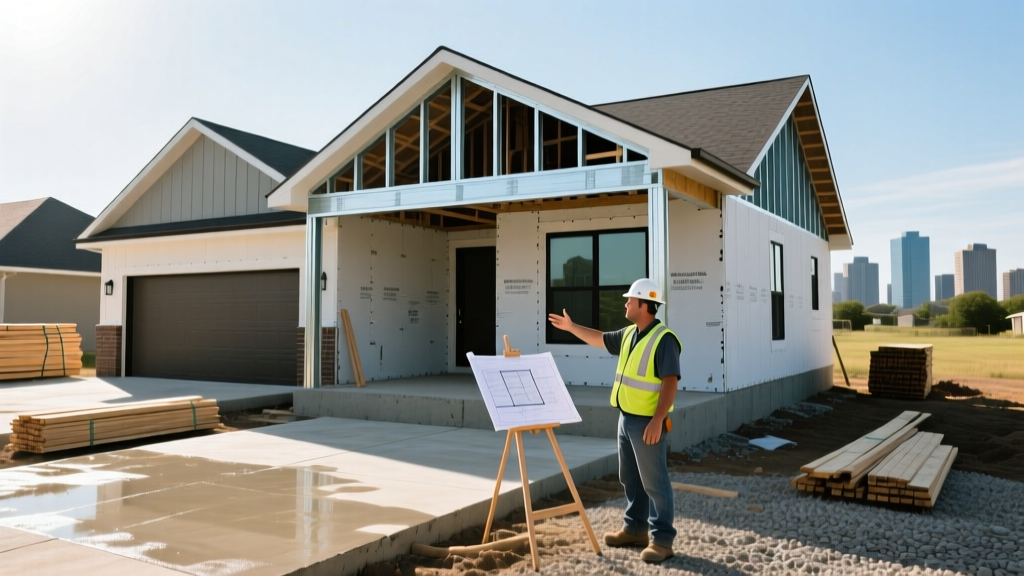
The 2026 Average Cost to Build a House in Texas
Securing financing for a custom build requires more than a pre-approval letter; it demands a granular understanding of regional material costs, labor rates, and site-specific engineering requirements. As of 2026, the average cost to build a house in Texas ranges from $145 to $265 per square foot, heavily dependent on the municipality, soil conditions, and finish levels. For a standard 2,500-square-foot single-family home, total vertical construction costs typically fall between $362,500 and $662,500, excluding land acquisition.
According to economic indicators tracked by the Federal Reserve Bank of Dallas, Texas housing markets have stabilized following post-pandemic supply chain shocks, but localized labor shortages in high-growth corridors like Austin and North Dallas continue to push framing and masonry premiums upward. Understanding these micro-market variations is the first step in structuring a viable construction loan.
• DFW Metroplex & Suburbs: $160 - $210 (Requires post-tension slabs for expansive clay soils)
• Austin & Hill Country: $200 - $280 (High excavation costs due to caliche rock; premium masonry requirements)
• Greater Houston: $155 - $205 (Elevated foundation requirements for flood zones and sandy loam soils)
• Rural / West Texas: $135 - $175 (Lower labor rates, but higher utility tap and well/septic costs)

Matching Your Budget to the Right Construction Loan
The Consumer Financial Protection Bureau (CFPB) defines construction loans as short-term, higher-interest facilities designed specifically to fund the physical erection of a structure. Because the collateral (the house) does not yet exist, lenders underwrite these loans based on the projected appraised value and the builder's track record. Here is how the primary financing vehicles compare for Texas builders:
| Loan Type | Best For | Down Payment | Texas Market Nuance |
|---|---|---|---|
| Construction-to-Permanent (Single Close) | Primary residences with locked-in designs | 20% | Most popular in DFW/Houston suburbs. Converts to a 30-year mortgage upon final certificate of occupancy. |
| Stand-Alone Construction | Complex custom builds, phased projects | 25%+ | Requires a separate refinance into a permanent mortgage. Higher closing costs but allows design changes mid-build. |
| FHA/VA One-Time Close (OTC) | First-time buyers, veterans | 0% - 3.5% | Strict builder approval requirements. VA OTC is highly utilized near Fort Cavazos and Joint Base San Antonio. |
| Hard Money / Private | Rural land, unconventional builds | 30% - 40% | Used in West Texas or Hill Country where traditional appraisers lack comparable data for barndominiums or off-grid builds. |
The Lender's Draw Schedule: How Funds Are Released
Lenders do not hand over the full loan amount upfront. Funds are disbursed in tranches, or "draws," tied to specific construction milestones. A typical Texas single-close loan utilizes a 5-to-7 draw schedule. If your builder requests funds ahead of schedule, the lender will deny the draw, potentially stalling your project.
- Draw 1: Site Prep & Foundation (15-20%) - Covers clearing, grading, plumbing rough-in under the slab, and pouring the foundation. In DFW, this includes the engineering and tensioning of post-tension cables.
- Draw 2: Framing & Roof (20-25%) - The "dried-in" stage. Lumber packages, trusses, and roofing materials are installed. This is the most capital-intensive phase.
- Draw 3: Mechanicals & Insulation (15-20%) - HVAC ductwork, electrical wiring, plumbing top-outs, and spray foam or blown-in insulation. In Texas, HVAC sizing must strictly adhere to ACCA Manual J calculations, with most municipalities now requiring minimum 15.2 SEER2-rated units.
- Draw 4: Drywall & Interior Finishes (20-25%) - Hanging and texturing drywall, installing cabinets, trim, and interior doors.
- Draw 5: Final Completion (10-15%) - Flooring, paint, appliances, landscaping, and final municipal inspections to secure the Certificate of Occupancy (CO).
Before each draw is funded, the lender dispatches a third-party inspector to verify the percentage of completion. If the framer has completed 90% of the roof but the inspector notes missing flashing, the draw will be reduced or withheld until the deficiency is cured.
Texas-Specific Cost Overruns That Derail Financing
When budgeting your line-item costs for the lender, failing to account for regional geological and regulatory hurdles will result in out-of-pocket expenses. The National Association of Home Builders (NAHB) notes that site-work anomalies are the leading cause of construction loan defaults and builder margin erosion.
- Caliche Rock Excavation (Hill Country/Austin): Digging footings or installing septic fields in caliche rock often requires heavy machinery or blasting. Budget an extra $8,000 to $15,000 for rock excavation contingencies.
- Expansive Clay Soils (DFW/Blackland Prairie): Standard slab-on-grade foundations will crack. Engineers will mandate a post-tensioned concrete slab or drilled pier foundation, adding $12,000 to $25,000 to your foundation budget.
- Rural Utility Taps (Unincorporated Counties): If building outside city limits, running a dedicated electrical line from a rural co-op or installing an aerobic septic system (required in many Texas counties with poor soil percolation) can add $20,000+ to your site-work budget.
Structuring Your Line-Item Budget for Loan Approval
To secure a construction-to-permanent loan, your builder must submit a highly detailed cost breakdown. Lenders use this to order the "as-completed" appraisal. Below is a realistic line-item allocation for a $450,000 vertical construction budget in a Texas suburb (excluding land).
| Category | Percentage | Estimated Cost | Key Texas Considerations |
|---|---|---|---|
| Site Work & Foundation | 14% | $63,000 | Includes engineered post-tension slab and grading. |
| Framing & Exterior | 22% | $99,000 | Engineered lumber, architectural shingles, brick veneer. |
| Major Systems (MEP) | 18% | $81,000 | High-efficiency HVAC (mandatory for Texas summers), tankless water heater. |
| Interior Finishes | 28% | $126,000 | Quartz countertops, luxury vinyl plank, custom cabinetry. |
| Finals & Landscaping | 10% | $45,000 | Driveway, basic sod, fencing. |
| Overhead, Profit & Permits | 8% | $36,000 | Builder fee, municipal impact fees, CO inspections. |
| Total Vertical Build | 100% | $450,000 |
Securing the Land: Cash vs. Land Equity
Financing Insight: If you already own the land free and clear, most Texas lenders will allow you to use 100% of the land's appraised equity as your down payment for the construction loan, effectively eliminating the need for liquid cash reserves at closing.
If you are purchasing the land concurrently with the build, the land cost is rolled into the total loan amount. However, this increases your loan-to-cost (LTC) ratio. Lenders typically cap the LTC at 80% for single-close loans. Therefore, if your land costs $100,000 and the build costs $450,000 (Total: $550,000), you must bring $110,000 in cash to closing to satisfy the 20% equity requirement.
Frequently Asked Questions
Do I need to own the land before applying for a construction loan?
No. You can use a land purchase contract as part of your loan application. The lender will appraise the combined value of the land and the proposed improvements. However, owning the land outright significantly strengthens your application and reduces your cash-to-close requirement.
How do interest payments work during the build phase?
During the 9-to-12-month construction phase, you only pay interest on the funds that have actually been drawn. Lenders typically require an "interest reserve" to be built into the loan amount to cover these monthly payments, ensuring you are not paying out-of-pocket while simultaneously paying rent or an existing mortgage.
What happens if my Texas build exceeds the budget?
Construction loans are capped at the approved commitment amount. If your project encounters unforeseen costs (e.g., hitting solid rock during excavation), you must cover the overage out-of-pocket. This is why lenders require a 10% contingency reserve built directly into the initial line-item budget.
Written by
David NakamuraDavid Nakamura is a licensed architect (AIA) and construction technology writer focused on sustainable building methods, mass timber engineering, and high-performance building envelopes. He holds a Master of Architecture from the University of Washington and is a certified Passive House Consultant (CPHC). David spent eight years at the Seattle firm Mithun, where he led the design of three LEED Platinum projects, before founding his own practice specializing in net-zero residential design. He serves on the editorial advisory board of GreenBuilder Magazine and has authored peer-reviewed papers on cross-laminated timber (CLT) connections for the Journal of Structural Engineering. In his spare time, David teaches woodworking at Pratt Fine Arts Center and kayaks the Puget Sound.
More from David Nakamura
View all
Construction Cost
Labor Cost to Build a Deck Per Sq Ft: 2026 Installation Guide
Discover the exact labor cost to build a deck per sq ft in 2026. This installation guide breaks down contractor rates, complexity factors, and hidden fees.
Aug 4, 2026

Construction Cost
How Much Does It Cost to Build a 3 Bedroom House? Financing Guide
Learn exactly how much it costs to build a 3 bedroom house and explore 2026 financing options, construction loan types, and budget frameworks for your build.
Aug 4, 2026

Construction Cost
Cost to Build a Tennis Court: 2026 Guide
How much does it cost to build a tennis court in 2026? Breakdowns for asphalt, concrete, and synthetic surfaces plus fencing and lighting.
Jul 30, 2026