Average Cost to Build Tiny Home: 2026 Budget Breakdown
Discover the average cost to build tiny home projects in 2026. Get detailed budget breakdowns, material costs, and hidden expenses for your build.

The Real Average Cost to Build Tiny Home Projects in 2026
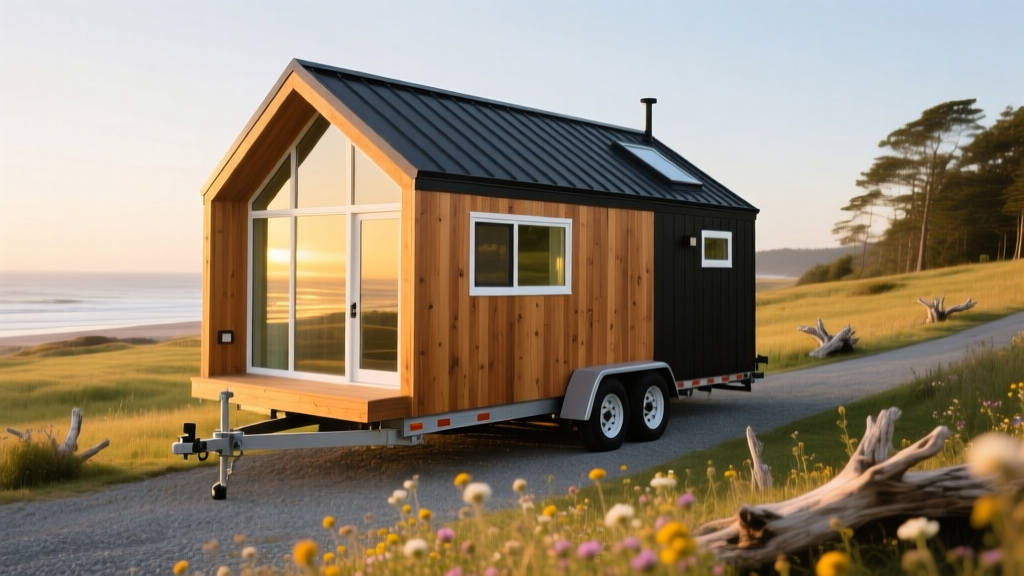
Calculating the average cost to build tiny home structures requires moving beyond generic square-footage estimates. In 2026, the tiny home market has bifurcated into distinct categories, each with radically different pricing models driven by material volatility, off-grid technology integration, and stringent road-legal weight limits. The national average cost to build a tiny home on wheels (THOW) currently sits between $45,000 and $85,000 for a turnkey professional build, while foundation-based tiny homes (often classified as Accessory Dwelling Units or ADUs) range from $150 to $320 per square foot.
Quick Budget Summary (2026)
- DIY THOW (Basic Finishes): $22,000 - $38,000
- Professional Custom THOW: $65,000 - $110,000+
- Tiny Home Kit (Shell Only): $18,000 - $35,000
- Foundation-Built ADU (400 sq ft): $85,000 - $130,000
Cost Allocation by Build Methodology
How you choose to build dictates your labor-to-material ratio. Professional builders absorb liability, RVIA certification costs, and specialized engineering, which inflates the baseline price but ensures financing and insurance viability.
| Build Method | Estimated Cost Range | Labor vs. Material Split | Timeline |
|---|---|---|---|
| 100% DIY Sourced | $22k - $40k | 10% Labor / 90% Material | 8 - 14 months |
| Hybrid (Pro Shell + DIY Interior) | $40k - $60k | 35% Labor / 65% Material | 4 - 7 months |
| Turnkey Custom Builder | $75k - $120k | 45% Labor / 55% Material | 3 - 5 months |
| Structural Kit (SIPs or Steel) | $25k - $45k (Kit only) | Varies by assembly crew | 1 - 2 months (Assembly) |
Deep Dive: Material and Component Pricing
To build an accurate budget, you must price out the five core construction phases. The following costs reflect 2026 market rates for a standard 200 to 240-square-foot THOW.
1. Chassis and Foundation ($4,500 - $12,000)
For mobile units, the trailer is your foundation. Do not use standard utility trailers. You need a custom-built, heavy-duty lowboy or deck-over trailer with a minimum Gross Vehicle Weight Rating (GVWR) of 14,000 lbs. Brands like Big Tex or Kaufman Trailers typically charge between $5,500 and $8,500 for a 24-foot triple-axle chassis equipped with electric brakes, heavy-duty leaf springs, and DOT-compliant lighting packages. If building on a permanent foundation, a concrete pier-and-beam system or helical pile foundation for a 400-square-foot footprint will cost $6,000 to $12,000 depending on soil load-bearing capacity.
2. Framing and Exterior Shell ($11,000 - $22,000)
Weight is the primary enemy of a THOW. Traditional 2x4 SPF (Spruce-Pine-Fir) lumber framing adds significant mass. Many builders now opt for 2x3 kiln-dried lumber, light-gauge steel framing (like VoloAlum), or Structural Insulated Panels (SIPs). SIPs cost roughly 15% to 20% more upfront than stick framing ($9 to $14 per square foot of panel) but eliminate the need for separate insulation and vapor barriers, cutting labor time by 30%. For exterior cladding, James Hardie fiber cement siding is highly durable but heavy (approx. 3.5 lbs per sq ft). Thermally modified wood or engineered wood lap siding (like LP SmartSide) offers a better weight-to-durability ratio at $3.50 to $6.00 per square foot installed.
3. Insulation and Windows ($4,500 - $8,500)
Tiny homes have a high surface-area-to-volume ratio, making thermal bridging and heat loss critical issues. Closed-cell spray foam insulation provides an R-value of roughly R-7 per inch and acts as a structural vapor barrier, costing about $2.50 to $3.50 per board foot. For eco-conscious builds, Havelock Wool (R-3.8 per inch) is a premium alternative that naturally manages moisture, though it costs nearly double. Windows must be highly efficient to prevent condensation in a small, moisture-generating space. According to the U.S. Department of Energy, selecting ENERGY STAR certified windows with a low U-factor (0.25 or less) and appropriate Solar Heat Gain Coefficient (SHGC) for your climate zone is non-negotiable. Expect to pay $600 to $1,200 per high-performance, double-pane, argon-filled vinyl or fiberglass window.
4. Mechanical, Electrical, and Plumbing (MEP) ($9,000 - $18,000)
MEP systems in tiny homes require specialized, space-saving appliances.
- HVAC: A 9,000 to 12,000 BTU ductless mini-split heat pump (e.g., Mitsubishi Hyper-Heat or Pioneer) is the industry standard, costing $1,500 to $2,800 installed. These provide both heating and cooling with exceptional SEER2 ratings.
- Water Heating: Propane tankless water heaters (like the Eccotemp FVI12) cost around $400 to $700, while electric on-demand units require massive electrical service upgrades (often 100+ amps dedicated just to the heater).
- Toilets: Composting toilets (Nature's Head or Cuddy) range from $900 to $1,300 and eliminate the need for black water tanks. Standard RV flush toilets require a 30-to-40-gallon black tank and complex under-floor plumbing.
- Electrical Panels: A standard 50-amp RV hookup panel costs $200, but integrating a 48V off-grid solar system with a 10kWh Lithium Iron Phosphate (LiFePO4) battery bank (using brands like EG4 or SOK) will add $6,500 to $9,500 to your budget.
Hidden Budget Killers in Tiny Home Construction
First-time builders frequently underestimate secondary costs that arise after the shell is closed in. Allocate a minimum 15% contingency fund specifically for these edge cases:
Warning: Certification and Compliance
If you plan to finance, insure, or park your THOW in an RV park, it must be certified. RV Industry Association (RVIA) certification or Pacific West Associates (PWA) third-party inspection requires building strictly to NFPA 1192 or ANSI/RVIA standards. Hiring a certified inspector for plan review and three on-site build visits costs $2,500 to $4,500. Failing an inspection due to improper electrical grounding or inadequate egress window sizing will halt your build.
Weight Reduction Engineering: If your build exceeds the 14,000 lb GVWR of your trailer, you cannot legally tow it without a Commercial Driver's License (CDL) and specialized heavy-duty tow vehicle. Swapping standard wood cabinetry for lightweight aluminum honeycomb panels or bamboo plywood, and replacing copper plumbing with PEX-A, costs an additional $2,000 to $4,000 in premium material upcharges.
Indoor Air Quality (IAQ) Management: In a 200-square-foot space, cooking, breathing, and showering generate massive humidity. The Environmental Protection Agency (EPA) emphasizes that proper ventilation is critical to preventing mold and off-gassing buildup in small enclosures. You must install an Energy Recovery Ventilator (ERV) or a high-CFM exhaust system (like a Panasonic WhisperGreen fan). An ERV system adds $1,200 to $2,000 to the budget but is mandatory for tight, spray-foamed envelopes.
Step-by-Step Budget Planning Framework
Follow this sequential framework to lock in your costs before purchasing materials:
- Define the GVWR Limit: Select your trailer first. Subtract the empty trailer weight from the GVWR to find your exact maximum build weight (e.g., 14,000 lbs - 3,800 lbs trailer = 10,200 lbs max build weight). Track every material weight in a spreadsheet.
- Map Utility Hookups: Decide between off-grid (solar/composting) and on-grid (RV hookups). This single decision swings the MEP budget by up to $8,000.
- Source the Shell Package: Get quotes for SIPs or pre-cut steel framing. Locking in the shell price early protects against lumber and steel tariff fluctuations.
- Allocate 20% for Finishes: Interior finishes (flooring, countertops, fixtures) are where budgets inflate. Set a hard cap on finish costs (e.g., $15 per sq ft for flooring) to prevent scope creep.
- Secure Zoning Approval: According to the National Association of Home Builders (NAHB), local zoning and land-use regulations remain the primary bottleneck for alternative housing. Spend $500 to $1,000 on a land-use consultant or surveyor to verify ADU or THOW parking legality on your target lot before pouring a foundation or buying a trailer.
Frequently Asked Questions
Is it cheaper to buy a tiny home kit or build from scratch?
A structural shell kit (walls, roof panels, and pre-cut floor joists) typically costs $25,000 to $40,000. Building entirely from scratch using raw lumber and sourcing individual components can be 10% to 15% cheaper in pure material costs, but kits drastically reduce framing errors, waste, and weather-exposure delays during the critical shell-closing phase.
How much does it cost to transport a completed tiny home?
Hiring a professional heavy-haul towing service to move a 10,000 to 14,000 lb tiny home averages $3.50 to $5.50 per mile. A 500-mile relocation will cost between $1,750 and $2,750, excluding escort vehicle fees if the home exceeds standard 8.5-foot width limits.
Do tiny homes hold their resale value?
Custom, RVIA-certified THOWs built by reputable manufacturers hold value similarly to high-end travel trailers, depreciating slightly in the first two years before stabilizing. Foundation-built tiny homes (ADUs) appreciate in tandem with local real estate markets, often yielding a higher ROI due to the underlying land value.
Written by
Priya KapoorPriya Kapoor is a real estate market analyst and construction economics researcher with expertise in housing affordability, development feasibility, and infrastructure investment. She holds a Master of Regional Planning from Cornell University and previously worked as a senior analyst at CBRE's Investment Properties group, where she modeled returns for $4B in mixed-use development pipelines. Priya now runs an independent research practice advising developers, municipalities, and REITs on construction cost forecasting and market timing. She publishes the quarterly "BuildMat Market Pulse" report tracking material price indices across 12 commodity categories. Based in Austin, TX, Priya serves on the board of Habitat for Humanity Austin and is a marathon runner.
More from Priya Kapoor
View all
Construction Cost
Cost to Build a 1600 Sq Ft Home in 2026: Full Breakdown
Accurate 2026 cost to build a 1600 sq ft home—material, labor, and regional pricing breakdowns included. Plan your budget with real-time estimates.
Aug 11, 2026

Wood & Lumber
Name the Types of Wood for Pressure Treatment and Preservation
Learn how to name the types of wood best suited for pressure treatment. Compare species treatability, chemical retention levels, and 2026 preservation costs.
Aug 4, 2026

Stone & Masonry
Stone Veneer Suppliers Lindenhurst: 2026 Cost Analysis
Analyze 2026 stone veneer costs in Lindenhurst, NY. Compare local supplier pricing, delivery fees, and Suffolk County installation labor rates.
Aug 4, 2026