How Much Does It Cost to Build a Pergola? 2026 Cost Comparison
Discover how much it costs to build a pergola in 2026. Compare wood, vinyl, aluminum, and fiberglass materials, plus labor rates and hidden fees.

Homeowners frequently ask how much does it cost to build a pergola, and the honest answer is that pricing spans from $1,500 for a basic DIY vinyl kit to over $18,000 for a custom motorized aluminum system. The national average for a professionally installed 12x12 wood pergola sits at approximately $4,500 to $5,500. However, material selection, site preparation, and structural footings drastically alter the final invoice. This guide breaks down exact 2026 material costs, labor multipliers, and the hidden structural expenses that typically derail outdoor construction budgets.
The True Cost to Build a Pergola: Material vs. Labor Matrix
The following matrix outlines the estimated costs for a standard 12x12 freestanding pergola (144 square feet) with a basic open-lattice roof. Labor rates assume a national average of $65 to $95 per hour for a two-person carpentry crew.
| Material Type | Material Cost (12x12) | Labor Cost | Total Installed Cost | Expected Lifespan |
|---|---|---|---|---|
| Pressure-Treated Pine | $1,600 - $2,200 | $1,400 - $1,800 | $3,000 - $4,000 | 10 - 15 years |
| Western Red Cedar | $3,000 - $4,200 | $1,600 - $2,200 | $4,600 - $6,400 | 15 - 25 years |
| Hollow-Core Vinyl | $2,200 - $3,000 | $1,200 - $1,600 | $3,400 - $4,600 | 20+ years |
| Extruded Aluminum | $5,500 - $7,500 | $2,000 - $3,000 | $7,500 - $10,500 | 30+ years |
| Motorized Louvered Roof | $12,000 - $16,000 | $3,500 - $5,000 | $15,500 - $21,000 | 20+ years |
Deep Dive: Wood Pergola Costs & Species Selection
Wood remains the most popular choice for pergolas due to its natural aesthetic and workability. However, not all lumber performs equally in exterior, ground-adjacent environments.
Pressure-Treated Southern Yellow Pine
Standard ground-contact pressure-treated pine is the most budget-friendly option, costing $3 to $5 per linear foot for 6x6 posts. The critical flaw with standard wet PT lumber is severe warping and checking as it dries in the sun. To mitigate this, specify KDAT (Kiln-Dried After Treatment) lumber. KDAT pine costs roughly 20% more but arrives stable, pre-dried, and ready for immediate staining. According to Home Depot's structural guides, all cut ends of PT lumber must be field-treated with a copper naphthenate preservative to maintain the warranty against rot.
Western Red Cedar & Tropical Hardwoods
Western Red Cedar offers natural rot resistance and dimensional stability, pricing out at $8 to $14 per linear foot for structural 6x6 posts. Cedar contains high levels of tannins that will bleed and stain surrounding materials. You must use Type 304 or 316 stainless steel fasteners and Simpson Strong-Tie ZMAX connectors; standard galvanized hardware will react with the tannins, creating permanent black streaks.
If upgrading to Ipe or Cumaru ($18-$25 per linear foot), be aware that these woods have a Janka hardness rating exceeding 3,500 lbf. Standard carpentry bits will burn out instantly. Budget an extra $300-$500 in labor and carbide-tipped drill bits for pre-drilling every fastener hole, or utilize hidden clip fastening systems designed specifically for high-density hardwoods.
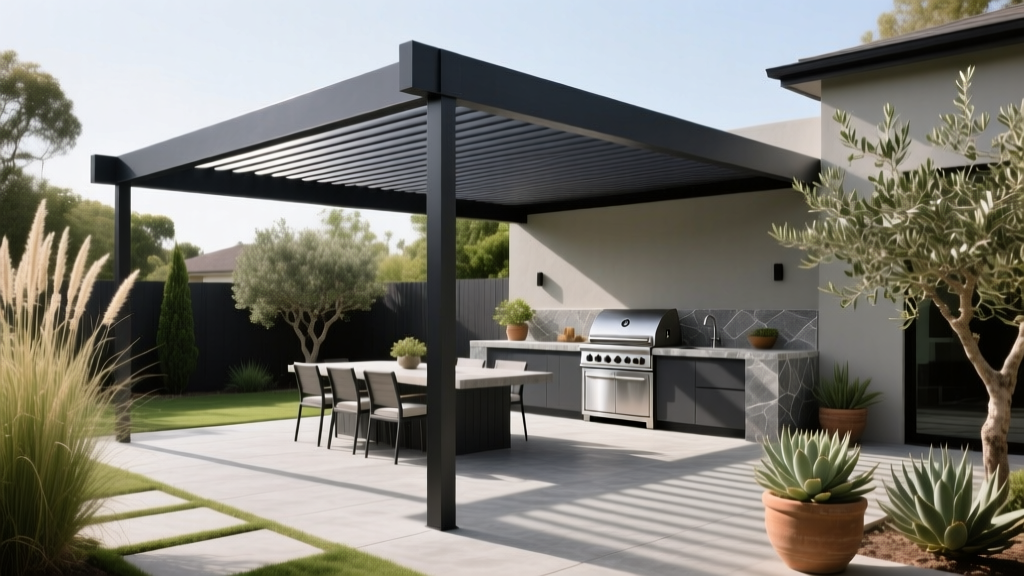
Low-Maintenance Alternatives: Aluminum and Vinyl
For homeowners unwilling to re-seal wood every two years, manufactured alternatives offer long-term durability, though the upfront capital requirement is significantly higher.
Extruded Aluminum Systems
Brands like Trex and Alumawood dominate the aluminum pergola market. Unlike roll-formed aluminum (which is lightweight and prone to denting), extruded aluminum features thick-walled structural profiles that can span up to 20 feet without intermediate support posts. Expect to pay $45 to $75 per square foot for the materials. Aluminum structures are impervious to termites and rot, and their powder-coated finishes typically carry 20-year fade warranties.
Cellular PVC and Vinyl Kits
Hollow-core vinyl pergolas are common in big-box stores, but they lack structural rigidity. Wind loads can easily twist hollow posts. For a permanent installation, specify cellular PVC or vinyl kits that require internal wood or aluminum post inserts (sleeves). These kits cost between $25 and $40 per square foot and require virtually zero maintenance beyond an annual power washing.
Hidden Costs That Derail Pergola Budgets
The material and labor quotes above assume a flat, ready-to-build surface. Real-world site conditions introduce secondary costs that must be factored into your estimation.
- Footings and Frost Heave: Standard Sonotube concrete footings must be dug below the local frost line (e.g., 36 inches in Zone 5). If digging is impossible due to bedrock or existing concrete pads, contractors use helical piles (e.g., Techno Metal Post). Helical piles cost $250 to $450 per pier installed but bypass frost heave and eliminate concrete curing time.
- Electrical Trenching: Integrating LED post-cap lighting, ceiling fans, or motorized louver controls requires running underground conduit. Trenching 50 feet of schedule 40 PVC and pulling 12-gauge UF-B wire typically adds $800 to $1,400 to the project.
- Permitting and HOA Fees: Most municipalities require a building permit for pergolas exceeding 120 to 200 square feet, or for any structure attached to the primary residence. Permit fees range from $75 to $250. Additionally, Homeowner Associations often charge $50 to $150 for architectural review submissions.
- Staining and Sealing: Raw cedar or pine must be sealed within 30 to 60 days of installation. Professional application of a high-quality penetrating oil sealer (like TWP or Cabot) adds $3 to $5 per square foot.
Decision Framework: Which Pergola Material Should You Choose?
Use this practical framework to align your material choice with your specific property constraints and budget.
If your primary goal is budget optimization...
Choose KDAT Pressure-Treated Pine. It provides the structural mass and aesthetic of natural wood at the lowest price point, provided you are willing to apply a water-repellent sealer every 24 months.
If you live in a high-humidity or termite-prone region...
Choose Extruded Aluminum. Wood will inevitably wick moisture and attract subterranean termites in coastal or deep-south climates. Aluminum eliminates biological degradation entirely.
If you want adjustable shade and rain protection...
Choose a Motorized Louvered Aluminum Roof (e.g., StruXure or Azenco). While costing upwards of $100 per square foot, the integrated rain sensors and adjustable pitch provide year-round utility that fixed-lattice wood pergolas cannot match.
Expert FAQs on Pergola Pricing
Is it cheaper to buy a pergola kit or build from scratch?
For standard 10x10 or 12x12 dimensions, engineered vinyl and aluminum kits are generally 15% to 20% cheaper than buying raw materials and cutting them on-site, as the manufacturer optimizes material yields. However, for custom dimensions or non-standard roof pitches, buying raw lumber and cutting it locally is more cost-effective and avoids the massive freight shipping surcharges associated with oversized kits.
Does a pergola add value to my home?
According to Architectural Digest landscape analyses, well-integrated outdoor living structures yield a high return on investment by expanding usable square footage. A $6,000 cedar pergola built over a properly graded patio can increase overall property appeal and recoup 50% to 80% of its cost at resale, provided it matches the architectural style of the primary home.
How much does it cost to build a pergola attached to the house?
Attaching a pergola to your home's ledger board typically adds $500 to $1,200 to the total cost compared to a freestanding structure. This covers the cost of structural lag bolts, flashing, waterproofing membranes, and the additional labor required to safely anchor into your home's rim joist or brick veneer without compromising the building envelope.
Written by
David NakamuraDavid Nakamura is a licensed architect (AIA) and construction technology writer focused on sustainable building methods, mass timber engineering, and high-performance building envelopes. He holds a Master of Architecture from the University of Washington and is a certified Passive House Consultant (CPHC). David spent eight years at the Seattle firm Mithun, where he led the design of three LEED Platinum projects, before founding his own practice specializing in net-zero residential design. He serves on the editorial advisory board of GreenBuilder Magazine and has authored peer-reviewed papers on cross-laminated timber (CLT) connections for the Journal of Structural Engineering. In his spare time, David teaches woodworking at Pratt Fine Arts Center and kayaks the Puget Sound.
More from David Nakamura
View all
Construction Cost
Labor Cost to Build a Deck Per Sq Ft: 2026 Installation Guide
Discover the exact labor cost to build a deck per sq ft in 2026. This installation guide breaks down contractor rates, complexity factors, and hidden fees.
Aug 4, 2026

Construction Cost
How Much Does It Cost to Build a 3 Bedroom House? Financing Guide
Learn exactly how much it costs to build a 3 bedroom house and explore 2026 financing options, construction loan types, and budget frameworks for your build.
Aug 4, 2026

Construction Cost
Cost to Build a Tennis Court: 2026 Guide
How much does it cost to build a tennis court in 2026? Breakdowns for asphalt, concrete, and synthetic surfaces plus fencing and lighting.
Jul 30, 2026