How Much Does a Cargo Ship Cost to Build? 2026 Pricing
Discover how much a cargo ship costs to build in 2026. Detailed CapEx breakdowns, shipyard pricing, steel costs, and dual-fuel engine premiums.
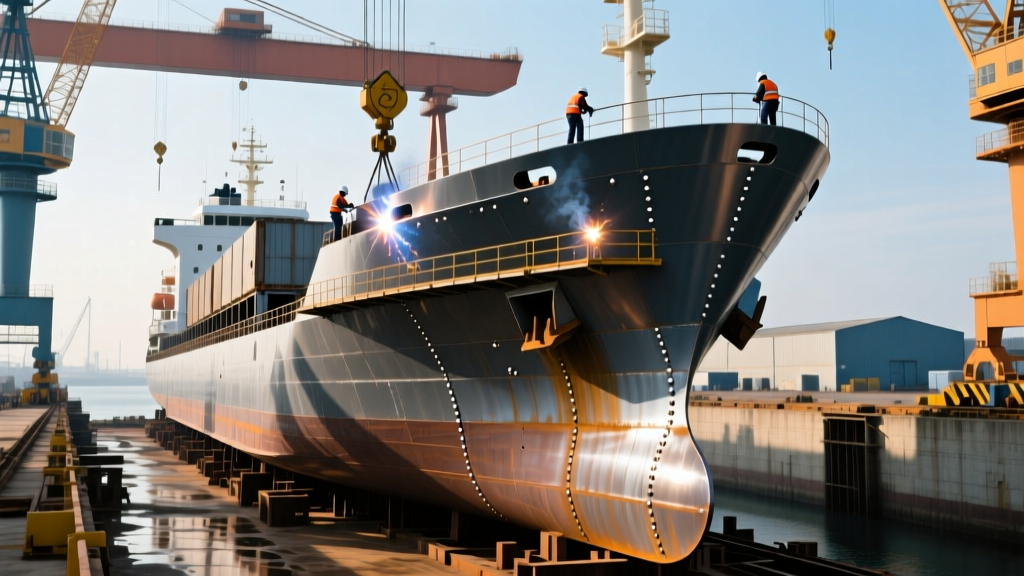
Capital Expenditure Baselines for Modern Cargo Vessels
When evaluating how much does a cargo ship cost to build, maritime investors and fleet operators must navigate a highly volatile pricing environment. In 2026, the capital expenditure (CapEx) for a newbuild cargo vessel ranges from $32 million for a Handysize bulk carrier to well over $220 million for a 24,000 TEU Ultra Large Container Vessel (ULCV). Unlike commercial real estate, shipbuilding costs are heavily indexed to global steel markets, shipyard capacity utilization, and increasingly stringent environmental regulations.
According to data tracked by UNCTAD's Review of Maritime Transport, the global shipbuilding orderbook has reached historic highs, pushing delivery slots at top-tier Asian shipyards out to 2028 and 2029. This scarcity of dry dock space has created a seller's market, inflating baseline newbuild prices by 15% to 22% compared to early-2020 benchmarks.
Vessel Class Pricing Matrix (2026 Estimates)
The following table outlines the estimated newbuild costs across primary cargo vessel classes, contrasting conventional heavy fuel oil (HFO) propulsion with modern dual-fuel (Methanol/LNG) configurations.
| Vessel Class | Capacity / DWT | Conventional Propulsion Cost | Dual-Fuel (Green) Cost | Primary Shipyard Hubs |
|---|---|---|---|---|
| Handysize Bulker | 35,000 DWT | $32M - $36M | $38M - $42M | China, Japan |
| Panamax Bulker | 82,000 DWT | $40M - $45M | $48M - $54M | China, Japan |
| Mid-Size Container | 4,500 TEU | $65M - $75M | $80M - $92M | South Korea, China |
| ULCV Container | 24,000 TEU | $170M - $190M | $210M - $240M | South Korea, China |
| VLCC (Tanker) | 300,000 DWT | $115M - $125M | $135M - $150M | South Korea, Japan |
The Anatomy of Shipbuilding Costs
To build an accurate budget, fleet planners must deconstruct the shipyard contract into its core cost centers. A standard shipbuilding contract allocates capital across four primary pillars:
1. Raw Materials and Hull Fabrication (25% - 35%)
The hull represents the largest single material expense. Modern cargo ships rely heavily on AH36 and DH36 high-tensile shipbuilding steel to reduce structural weight while maintaining longitudinal strength. A Very Large Crude Carrier (VLCC) requires approximately 40,000 metric tons of steel. At an average 2026 market rate of $750 to $850 per metric ton for specialized marine-grade plate steel, the raw material cost for the hull alone exceeds $30 million. Shipyard contracts typically include a steel price escalation clause, meaning if the spot price of steel rises between the signing date and the steel-cutting ceremony, the buyer absorbs the differential.
2. Propulsion and Machinery (25% - 30%)
The main engine and auxiliary generators constitute the mechanical heart of the vessel. For large container ships and tankers, two-stroke crosshead diesel engines from manufacturers like MAN Energy Solutions or WinGD are the industry standard. A single MAN B&W 9G95ME-C10.6 engine can cost upwards of $12 million. Auxiliary systems, including boilers, purifiers, and pumping networks, add another $8 million to $15 million depending on the vessel's complexity.
3. Outfitting, Navigation, and Safety (15% - 20%)
This category encompasses everything from the bridge navigation suite to the crew accommodations. Mandatory environmental systems have drastically inflated this budget line. For instance, integrating a high-capacity Ballast Water Treatment System (BWTS) utilizing UV or electro-chlorination technology costs between $1 million and $2.5 million. Furthermore, advanced bridge systems featuring dual ECDIS (Electronic Chart Display and Information System) and solid-state marine radar arrays add approximately $1.5 million.
4. Shipyard Labor and Overhead (20% - 25%)
Labor costs vary wildly based on geography. While automated welding and robotic block assembly have reduced the total man-hours required to assemble a hull, the specialized labor needed for pipefitting, electrical cabling, and engine alignment remains highly manual.
Under the International Maritime Organization (IMO) GHG reduction strategy, newbuilds are increasingly ordered with dual-fuel capabilities (Methanol or LNG). Retrofitting a vessel later is often economically unviable. Ordering a dual-fuel methanol engine and the associated specialized cryogenic or pressurized fuel storage tanks adds a 'Green Premium' of 15% to 25% to the total CapEx. For a ULCV, this premium can exceed $40 million, but it future-proofs the asset against impending carbon levies like the EU Emissions Trading System (ETS).
Shipyard Geography and Labor Arbitrage
Where you build is just as critical as what you build. The global shipbuilding industry is an oligopoly dominated by three nations, each with distinct pricing and specialty profiles:
- China (CSSC and private yards): Controls over 50% of global tonnage. Chinese shipyards offer the most competitive pricing for bulk carriers, mid-size tankers, and RoRo vessels. Their massive domestic steel supply chains allow them to undercut competitors on raw material costs.
- South Korea (HD Hyundai, Samsung Heavy Industries, Hanwha Ocean): The undisputed leaders in high-complexity, high-value vessels. If you are budgeting for a 24,000 TEU ULCV or a specialized LNG carrier, South Korean yards are the default choice. Their pricing is 10% to 15% higher than Chinese equivalents, justified by superior project management, higher automation levels, and extensive experience with dual-fuel integration.
- Japan (Imabari, Oshima, Tsuneishi): Renowned for extreme reliability, fuel-efficient hull designs, and high-quality welding. Japanese yards are highly favored for Handysize and Supramax bulk carriers. Their pricing sits between China and South Korea, but their delivery schedules are notoriously rigid and conservative.
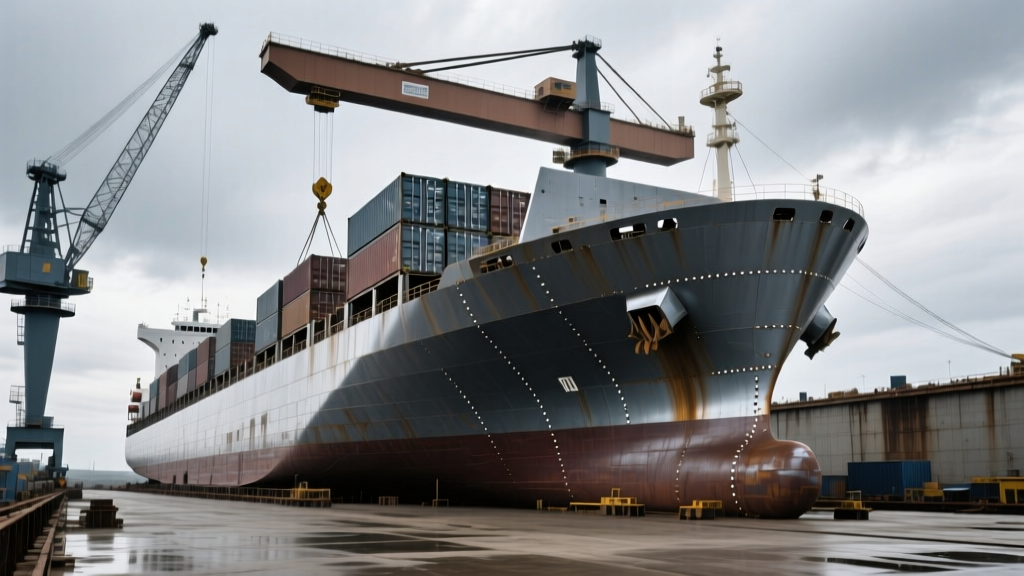
Hidden Budget Killers in the Build Process
Fleet operators frequently underbudget by focusing solely on the shipyard contract price. A realistic financial model must account for the following peripheral costs:
Classification Society and Regulatory Fees
Every commercial vessel must be classed by an International Association of Classification Societies (IACS) member, such as DNV, Lloyd's Register, or ABS. The classification society reviews the naval architecture plans, surveys the steel quality, and inspects the vessel during construction. Surveyor fees, plan approval charges, and statutory certification typically consume $500,000 to $1.2 million per build.
Owner's Furnished Equipment (OFE)
Shipyards often exclude specific high-value items from their base contract, expecting the buyer to procure and deliver them to the dock. Common OFE includes the main propulsion propeller, specialized cargo cranes (e.g., Liebherr or MacGregor systems costing $2M+ each), and specific communication arrays. Managing the logistics of delivering OFE to a foreign shipyard on time is a major project management hurdle.
Builder's Risk Insurance and Financing
Marine construction spans 18 to 36 months. During this period, the buyer must pay for Builder's Risk Insurance, which covers the hull against fire, natural disasters, or shipyard insolvency. Additionally, if the build is financed through maritime banks, interest during construction (IDC) can add 8% to 12% to the final delivered cost, depending on global SOFR rates and the payment milestone schedule (e.g., 20% at steel cutting, 20% at keel laying, 20% at launch, 40% at delivery).
Sea Trials and Delivery Logistics
Before final handover, the vessel undergoes rigorous sea trials to verify the main engine's maximum continuous rating (MCR), maneuverability, and fuel consumption guarantees. The cost of fuel burned during these trials—often 500 to 1,000 metric tons of VLSFO or specialized biofuels—can cost upwards of $600,000. Finally, the buyer must budget for the delivery crew, provisioning, and the initial voyage to the vessel's operational deployment zone.
Strategic Budgeting Framework for Fleet Expansion
To accurately forecast how much a cargo ship costs to build for your specific operational profile, apply this decision framework:
- Define the Operational Route: Route constraints dictate vessel dimensions (e.g., Panama Canal beam restrictions limit container ships to roughly 14,000 TEU unless designed for the Suez route). This immediately narrows the vessel class.
- Select the Fuel Strategy: Evaluate the trade-off between lower CapEx (conventional HFO + Scrubber) versus higher CapEx (Dual-Fuel Methanol/LNG). Model the projected fuel spread over a 20-year amortization period.
- Solicit Shipyard Bids with Caveats: Request formal quotations from at least three yards, ensuring the contract explicitly caps steel escalation clauses and defines liquidated damages for late delivery (typically 0.1% of the contract price per week of delay, capped at 5%).
- Allocate a 7% Contingency Reserve: Supply chain disruptions for critical components like main engine crankshafts or high-voltage switchboards can cause costly delays. A 7% contingency buffer protects the project's internal rate of return (IRR).
Building a cargo ship is a multi-year capital commitment that requires meticulous alignment of naval architecture, global supply chain forecasting, and regulatory compliance. By understanding the granular breakdown of steel, propulsion, and green technology premiums, operators can secure financing and negotiate shipyard contracts with absolute precision.
Written by
Marcus ChenMarcus Chen is a licensed structural engineer (PE) and building materials analyst with over 12 years of experience across residential, commercial, and industrial construction. He holds a Master of Science in Civil Engineering from UC Berkeley and spent six years at Thornton Tomasetti before transitioning to independent consulting and technical writing. Marcus specializes in material selection for seismic-prone regions, concrete reinforcement strategies, and lifecycle cost analysis. His work has been cited by the American Concrete Institute (ACI) and the Structural Engineers Association of California (SEAOC). When he is not on a job site or at his desk, you will find him hiking the Sierra Nevada or restoring a 1920s craftsman bungalow in Oakland, CA.
More from Marcus Chen
View all
Construction Cost
How Much Did the Eiffel Tower Cost to Build?
How much did the Eiffel Tower cost to build in 1889? We adjust for inflation and compare its budget to modern skyscraper construction.
Aug 4, 2026

Fire Resistance
What Is a Fire Resistant Material? Testing & Certification Guide
Discover what is a fire resistant material through ASTM and UL testing. Learn how fire ratings, certifications, and assemblies work in construction.
Aug 4, 2026

Construction Cost
How Much Did the Burj Khalifa Cost to Build?
How much did the Burj Khalifa cost to build? We break down the $1.5B project and extract 5 money-saving strategies for your next build.
Jul 30, 2026