Complete Cost to Build a Home in Colorado: 2026 Pricing Guide
Discover the true cost to build a home in Colorado in 2026. Breakdowns of regional pricing, WUI codes, expansive soil foundations, and tap fees.
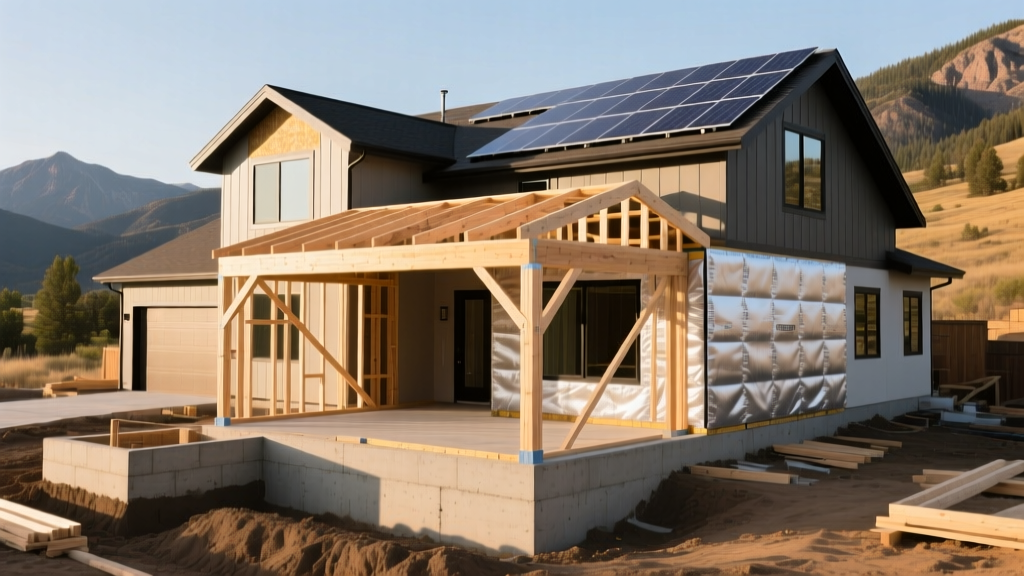
The Colorado Construction Landscape in 2026
Calculating the exact cost to build a home in Colorado requires navigating a complex matrix of extreme microclimates, stringent municipal codes, and unique geological challenges. While national averages provide a baseline, Colorado's construction economy operates on its own tier. According to the National Association of Home Builders (NAHB), regional topography and local code adoptions can cause construction costs to fluctuate by over 150% within the same state. In 2026, material stabilization has offset some inflation, but specialized engineering requirements for snow loads, expansive soils, and wildfire mitigation continue to drive premium pricing in specific zones.
- Statewide Average: $185 - $240 per square foot
- Mountain Resort Average: $450 - $850+ per square foot
- Average Timeline: 10 to 16 months (highly dependent on winter weather windows)
- Primary Cost Adders: Utility tap fees, WUI compliance, and deep-pier foundations
Base Construction Costs by Region
Colorado is not a monolith. The pricing delta between building on the Eastern Plains versus constructing in the San Juan Mountains is vast. The table below outlines the baseline hard construction costs (excluding land acquisition and site development) across the state's primary building regions.
| Region | Avg Cost / Sq Ft | Primary Cost Drivers | Geological & Climate Factors |
|---|---|---|---|
| Front Range (Denver, Colorado Springs, Fort Collins) | $185 - $260 | Labor premiums, expansive soil mitigation, strict energy codes | Bentonite clay soils, moderate snow loads (20-40 psf), high wind corridors |
| Mountain Resorts (Vail, Aspen, Breckenridge, Telluride) | $450 - $850+ | Logistics, heavy timber engineering, extreme snow loads, short build seasons | 100-150 psf snow loads, alpine terrain, bedrock excavation, avalanche zones |
| Western Slope (Grand Junction, Montrose, Durango) | $170 - $230 | Wildfire mitigation (WUI), water scarcity infrastructure, solar mandates | Expansive soils, high desert climate, severe wildfire risk zones |
| Eastern Plains (Limon, Sterling, Burlington) | $150 - $190 | Wind engineering, rural utility extensions, well/septic systems | 110+ mph wind loads, stable soils, extreme temperature swings |
Critical Colorado-Specific Cost Drivers
To build an accurate budget, you must account for the engineering and code requirements that do not exist in other parts of the country. Ignoring these during the estimation phase is the leading cause of budget overruns for out-of-state buyers and novice developers.
1. Expansive Soils & Foundation Engineering
The Front Range and Western Slope are notorious for Pierre Shale and Bentonite clay. These expansive soils swell significantly when wet and shrink during droughts, capable of exerting enough upward pressure to shatter standard concrete slab-on-grade foundations. Geotechnical engineers will almost universally mandate a drilled concrete pier foundation. This involves drilling shafts 15 to 30 feet deep into stable bedrock and suspending a structural floor system above the expanding soil. Budget Impact: Expect to add $18,000 to $35,000 to your foundation budget for a standard 2,500 sq ft footprint compared to a standard slab.
2. Snow Load Engineering & Roof Systems
Mountain municipalities enforce rigorous International Building Code (IBC) amendments for ground snow loads, which translate to even higher roof snow load requirements. In Summit or Eagle counties, roof systems must often withstand 110 to 150 pounds per square foot (psf). Standard 2x4 trusses spaced 24 inches on-center will fail inspection. You will need engineered trusses with 2x6 top chords spaced 12 inches on-center, or Structural Insulated Panels (SIPs). Additionally, you must budget for snow retention systems (snow guards and heavy-duty snow rails) to prevent lethal avalanches onto walkways and lower rooflines. Budget Impact: $4.50 to $8.00 extra per square foot of roof area.
3. Wildland-Urban Interface (WUI) Compliance
Counties like Jefferson, Boulder, and El Paso enforce strict WUI codes to protect homes from wildfires. According to the Colorado State Forest Service, WUI compliance dictates the use of non-combustible exterior materials. This means upgrading from standard asphalt shingles to Class A fire-rated roofing (such as stone-coated steel or concrete tile), utilizing ignition-resistant siding like James Hardie fiber cement, and installing 1/8-inch metal mesh ember-resistant vents. Budget Impact: WUI compliance typically adds 8% to 12% to your total exterior shell budget.
4. Advanced Energy Code Adoption
Front Range municipalities are aggressively adopting the 2021 and 2024 International Energy Conservation Code (IECC). Achieving the mandated blower door score of < 3.0 ACH50 requires investing in fluid-applied weather barriers (like Prosoco R-Guard), continuous exterior insulation (ci), and high-performance triple-pane windows. Sourcing from regional manufacturers like Alpen High Performance Products can mitigate shipping costs, but the upfront material premium remains significant. Budget Impact: $12,000 to $18,000 for envelope upgrades on a mid-sized home.
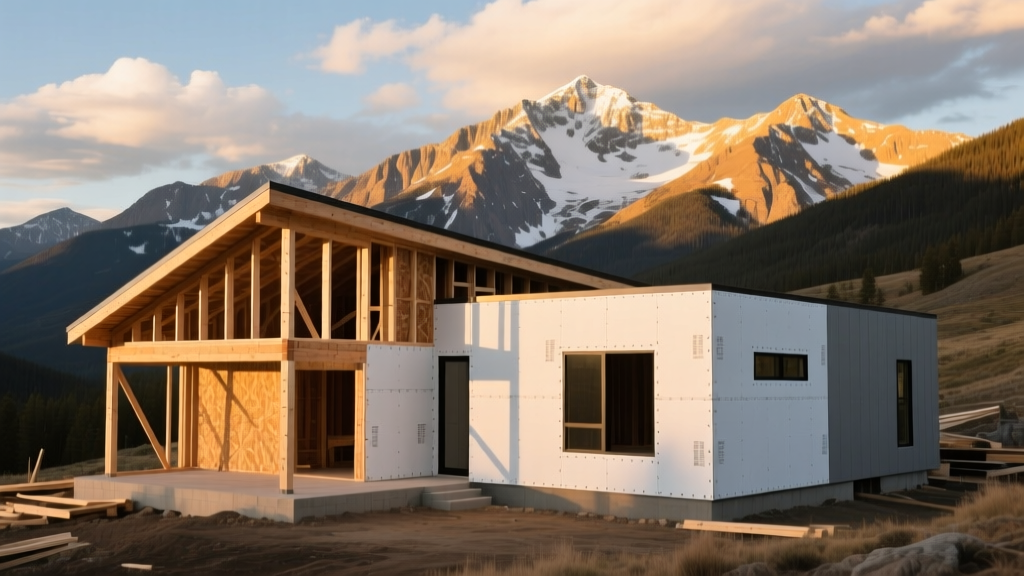
Hidden Costs: Tap Fees and Site Development
The most frequently underestimated line item in Colorado construction estimating is the municipal utility tap fee. Unlike many states where utility connection is a nominal administrative charge, Colorado municipalities treat water and sewer taps as major revenue sources to fund infrastructure expansion.
Furthermore, if you are building on a rural or semi-rural lot, you must budget for site development. Drilling a domestic water well in Colorado bedrock can cost between $8,000 and $25,000 depending on the aquifer depth, while engineering and installing a modern aerobic septic system in poor-draining clay soils will add another $15,000 to $22,000.
Step-by-Step Budgeting Framework for Colorado Builders
To prevent capital shortfalls, structure your pro-forma using this localized allocation framework, validated by data from the Home Builders Association of Metro Denver:
- Land & Entitlements (20-25%): Includes raw land acquisition, soil testing ($2,500-$4,000), topographical surveys, and municipal tap fees.
- Site Work & Foundation (12-15%): Excavation in rocky terrain, driveway engineering, retaining walls, and drilled pier foundations.
- Vertical Construction & Shell (35-40%): Framing (heavy timber or engineered lumber), WUI-compliant siding, Class A roofing, and high-performance window packages.
- MEP & Interior Finishes (20-25%): Mechanical systems (including mandatory HRV/ERV systems for airtight homes), electrical, plumbing, and interior millwork.
- Contingency (10-15%): Crucial for Colorado builds to cover weather delays, winter heating enclosures, and unforeseen bedrock excavation costs.
Expert FAQ: Colorado Building Nuances
Do I need to hire a local Colorado architect or structural engineer?
Yes. Out-of-state architects frequently underestimate local snow load vectors and wind shear requirements. A local structural engineer will know the specific micro-climate amendments of your exact county and will design foundation systems that account for localized expansive soil maps, saving you from catastrophic structural failure and costly change orders during the permitting phase.
How does the short mountain build season affect labor costs?
In high-altitude zones (above 7,500 feet), the viable concrete pouring and exterior framing season is typically limited to May through October. To combat this, mountain builders often utilize prefabricated wall panels or SIPs that can be dried-in rapidly. However, the compressed timeline creates intense competition for specialized subcontractors, driving labor premiums 20% to 30% higher than Front Range rates.
Estimator's Rule of Thumb: Never use national cost-per-square-foot calculators for Colorado mountain properties. The logistical cost of transporting ready-mix concrete up a 12% grade with switchbacks, combined with mandatory winter heating enclosures for curing, can easily double the baseline cost of flatland concrete work.
Written by
Priya KapoorPriya Kapoor is a real estate market analyst and construction economics researcher with expertise in housing affordability, development feasibility, and infrastructure investment. She holds a Master of Regional Planning from Cornell University and previously worked as a senior analyst at CBRE's Investment Properties group, where she modeled returns for $4B in mixed-use development pipelines. Priya now runs an independent research practice advising developers, municipalities, and REITs on construction cost forecasting and market timing. She publishes the quarterly "BuildMat Market Pulse" report tracking material price indices across 12 commodity categories. Based in Austin, TX, Priya serves on the board of Habitat for Humanity Austin and is a marathon runner.
More from Priya Kapoor
View all
Construction Cost
Cost to Build a 1600 Sq Ft Home in 2026: Full Breakdown
Accurate 2026 cost to build a 1600 sq ft home—material, labor, and regional pricing breakdowns included. Plan your budget with real-time estimates.
Aug 11, 2026

Wood & Lumber
Name the Types of Wood for Pressure Treatment and Preservation
Learn how to name the types of wood best suited for pressure treatment. Compare species treatability, chemical retention levels, and 2026 preservation costs.
Aug 4, 2026

Stone & Masonry
Stone Veneer Suppliers Lindenhurst: 2026 Cost Analysis
Analyze 2026 stone veneer costs in Lindenhurst, NY. Compare local supplier pricing, delivery fees, and Suffolk County installation labor rates.
Aug 4, 2026