Calculate the Cost to Build a House in North Carolina by Size & Scope
Calculate the exact cost to build a house in North Carolina. Explore 2026 size and scope pricing matrices, regional multipliers, and material specs.
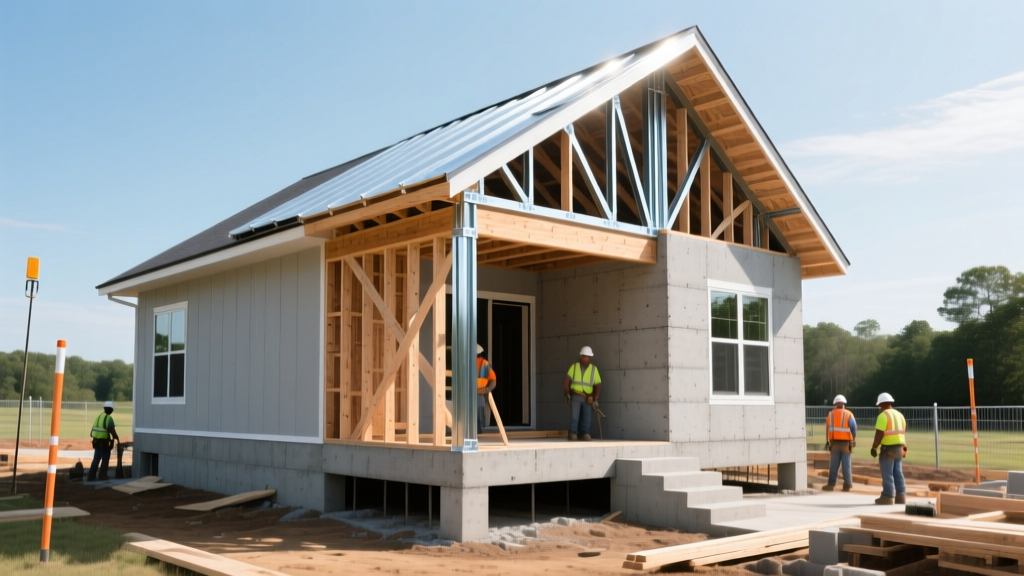
The True Cost to Build a House in North Carolina: Size and Scope Baseline
Estimating the cost to build a house in North Carolina requires moving beyond national averages and accounting for the state's diverse topography, strict regional building codes, and localized material availability. As of 2026, the baseline construction cost in North Carolina ranges from $145 to $420 per square foot, heavily dependent on the home's total square footage, finish level, and specific geographic zone. According to data from the National Association of Home Builders (NAHB), regional labor shortages and updated energy code compliance have shifted the baseline upward by 4.2% over the previous year.
To accurately calculate your scope, you must first establish the base shell and interior finish matrix. The table below provides a realistic 2026 pricing framework for a standard slab-on-grade or crawlspace foundation in a flat-terrain Piedmont location.
| Home Size (Sq Ft) | Builder Grade ($145-$175/sqft) | Semi-Custom ($185-$245/sqft) | Luxury / High-End ($275-$420/sqft) |
|---|---|---|---|
| 1,500 | $217,500 - $262,500 | $277,500 - $367,500 | $412,500 - $630,000 |
| 2,000 | $290,000 - $350,000 | $370,000 - $490,000 | $550,000 - $840,000 |
| 2,500 | $362,500 - $437,500 | $462,500 - $612,500 | $687,500 - $1,050,000 |
| 3,500 | $507,500 - $612,500 | $647,500 - $857,500 | $962,500 - $1,470,000 |
Regional Multipliers: Coast, Piedmont, and Mountains
North Carolina is not a monolith. The state's three distinct geographic regions dictate vastly different site preparation, foundation, and structural framing requirements. Applying the correct regional multiplier to your base scope is critical for an accurate estimate.
1. The Coastal Zone (Wilmington, Outer Banks, Brunswick County)
Building on the coast introduces severe environmental stressors. Sandy, low-bearing-capacity soils often preclude standard continuous footings. Instead, engineers typically specify helical piers (such as Chance Helical Piles) driven 20 to 40 feet into the ground to reach stable load-bearing strata. Expect foundation costs to increase by $25,000 to $45,000 compared to inland builds. Furthermore, coastal homes require elevated living spaces with engineered breakaway walls below the Base Flood Elevation (BFE). The North Carolina Department of Insurance mandates specific windstorm mitigation techniques, including continuous load path framing using heavy-duty hurricane ties (e.g., Simpson Strong-Tie H2.5A) and structural sheathing nailed at 4-inch intervals on the edges.
2. The Piedmont Region (Raleigh, Charlotte, Greensboro)
The Piedmont represents the most standardized building environment in the state, but it hides a subterranean challenge: expansive Cecil soil series (red clay). This soil shrinks and swells dramatically with moisture fluctuations. To prevent foundation cracking and drywall stress fractures, site prep often requires over-excavation of the top 24 inches of clay and importing compacted structural fill, or utilizing post-tensioned concrete slabs. Budget an additional $4,500 to $8,000 for soil remediation and engineered foundation plans.
3. The Mountain Region (Asheville, Boone, Highlands)
Mountain construction is defined by slope, rock, and snow loads. Excavating solid mica schist or granite can cost $15 to $25 per cubic yard, compared to $3 per cubic yard for Piedmont clay. Blasting or mechanical hammering is frequently required, adding $10,000 to $30,000 to site prep. Additionally, the frost line depth varies drastically: it is 12 inches on the coast, 24 inches in the Piedmont, and 30 inches or deeper in the mountains. Deeper footings and retaining walls (often requiring geogrid reinforcement and engineered drainage behind the block) are standard scope additions for mountain builds.
Material Specifications and Scope Creep Triggers
When calculating the cost to build a house in North Carolina, material selections dictate both the immediate budget and long-term operational efficiency. North Carolina's mixed-humid climate demands specific material performance thresholds.
- Exterior Sheathing and Moisture Management: Standard OSB sheathing is highly susceptible to the state's summer humidity and driving rain. Upgrading to a structural insulated panel system or ZIP System R-12 sheathing provides continuous exterior insulation, meeting the 2024 NC Energy Code (which is heavily enforced in 2026) while creating a sealed water-resistive barrier. Expect a premium of $1.85 to $2.40 per square foot of wall area.
- Roofing Systems: In wind-prone areas, standard 3-tab or architectural shingles are a liability. Specify SBS (Styrene-Butadiene-Styrene) modified asphalt shingles, such as Owens Corning Duration Flex, which offer superior pliability and wind resistance up to 130 mph. Pair this with a synthetic roof underlayment and ice-and-water shield applied at least 6 feet past the interior warm wall line.
- HVAC and Dew Point Control: North Carolina's high latent cooling loads mean standard single-stage AC units struggle with humidity. Scope your HVAC to include variable-speed compressors (e.g., Trane XV20i or equivalent SEER2 18+ units) paired with a dedicated whole-house dehumidifier (like the Santa Fe Ultra series) integrated into the return ductwork. This prevents mold growth and wood flooring cupping during the muggy August months.
- Plumbing Infrastructure: PEX-A (Uponor) is the standard for supply lines due to its freeze-expansion tolerance, which is vital for occasional mountain hard freezes. However, if building in areas with highly acidic well water (common in the western counties), you must scope in an automatic acid neutralizer tank to prevent premature pinhole leaks in the plumbing system.
Site Preparation: The Hidden NC Budget Killers
'Never finalize a construction loan without a comprehensive geotechnical soil report and a topographical survey. In North Carolina, the dirt you build on dictates the foundation you must buy.'
Site work averages 10% to 15% of the total project cost, but can easily spike to 25% if hidden variables are ignored. According to the U.S. Census Bureau Construction Statistics, site development delays are the primary driver of carrying cost overruns in the Southeast. Key NC-specific site prep costs include:
- Tree Clearing and Stump Grinding: Dense hardwood and pine forests require heavy machinery. Clearing and grubbing a 1-acre homesite costs $4,000 to $8,000. If local ordinances require preserving specific canopy trees, you may need to install protective root-zone fencing and use specialized hand-digging for nearby utility trenches.
- Erosion Control and Silt Fencing: The NC Department of Environmental Quality (NCDEQ) strictly enforces stormwater runoff regulations. Budget $2,500 to $5,000 for silt fencing, construction entrances (stone tracking pads), and temporary sediment basins.
- Septic vs. Sewer: In rural or semi-rural tracts, municipal sewer is rarely available. A conventional gravity septic system costs $6,000 to $9,000. However, if the soil percolation rate is poor (common in dense red clay), an engineered drip dispersal or aerobic treatment unit (ATU) can push costs to $18,000 to $25,000.
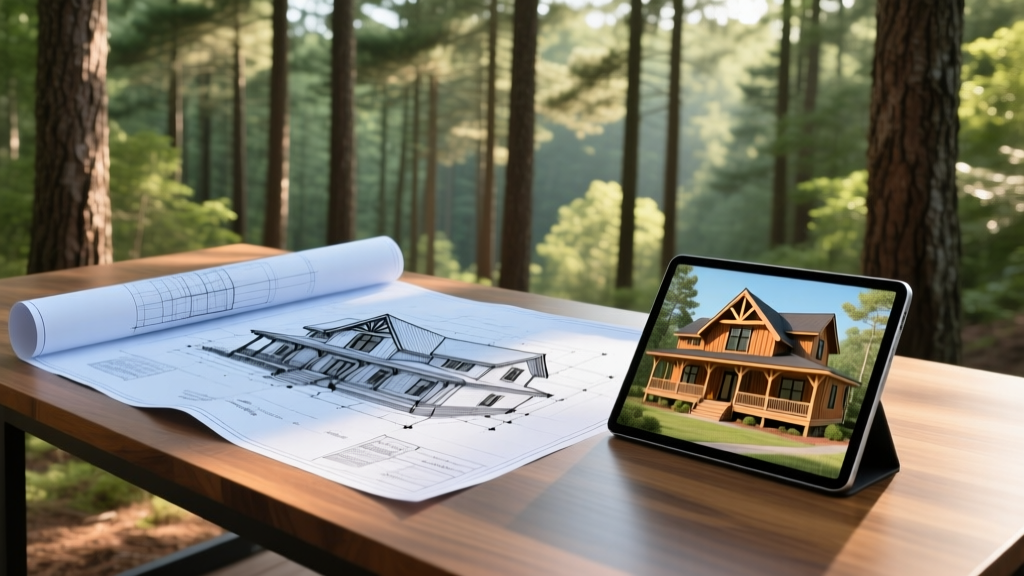
Step-by-Step Scope Calculator Framework
To build your own customized estimate, follow this sequential framework rather than relying on a single square-footage multiplier.
Step 1: Calculate Base Shell and MEP
Multiply your heated square footage by the regional baseline ($145 for Piedmont builder-grade, up to $220 for coastal). This covers framing, roofing, windows, and rough MEP (mechanical, electrical, plumbing).
Step 2: Add Finish Allowances
Assign specific dollar-per-square-foot allowances for hard finishes. Semi-custom cabinets: $65/linear foot. Engineered hardwood: $9-$14/sq ft installed. Quartz countertops: $75-$110/sq ft installed.
Step 3: Apply Site and Foundation Modifiers
Add flat-rate costs for site prep based on your topographical survey. Add foundation premiums for helical piers (coast) or retaining walls (mountains).
Step 4: Factor in Soft Costs and Permitting
Allocate 8% to 12% of the hard construction costs for architectural plans, structural engineering, county permitting, impact fees, and construction loan interest reserves.
Frequently Asked Questions
Is it cheaper to build a two-story or one-story house in North Carolina?
A two-story house is generally 8% to 12% cheaper to build per square foot than a ranch-style one-story home. A two-story footprint requires a smaller foundation slab, less roofing material, and more compact plumbing and HVAC duct runs. However, if building in the mountain region, a two-story walk-out basement design on a sloped lot can negate these savings due to the massive retaining walls and structural steel required to support the cantilevered upper floors.
How do North Carolina impact fees affect the total cost?
Impact fees vary wildly by municipality. In rapidly growing areas like Wake County (Raleigh suburbs) or Cabarrus County (Charlotte suburbs), water and sewer capacity fees, school impact fees, and road improvement assessments can add $8,000 to $15,000 per lot before a single shovel hits the dirt. Always verify the exact municipal fee schedule with the local planning department before purchasing land.
What is the timeline for building a custom home in NC in 2026?
The average build time for a 2,500 sq ft semi-custom home in North Carolina is 8 to 11 months. Mountain builds often extend to 14 months due to winter weather delays, rock excavation, and difficult material delivery logistics on narrow, winding roads. Coastal builds can be delayed by hurricane season (June through November), which frequently halts crane operations and roofing work.
Written by
Priya KapoorPriya Kapoor is a real estate market analyst and construction economics researcher with expertise in housing affordability, development feasibility, and infrastructure investment. She holds a Master of Regional Planning from Cornell University and previously worked as a senior analyst at CBRE's Investment Properties group, where she modeled returns for $4B in mixed-use development pipelines. Priya now runs an independent research practice advising developers, municipalities, and REITs on construction cost forecasting and market timing. She publishes the quarterly "BuildMat Market Pulse" report tracking material price indices across 12 commodity categories. Based in Austin, TX, Priya serves on the board of Habitat for Humanity Austin and is a marathon runner.
More from Priya Kapoor
View all
Construction Cost
Cost to Build a 1600 Sq Ft Home in 2026: Full Breakdown
Accurate 2026 cost to build a 1600 sq ft home—material, labor, and regional pricing breakdowns included. Plan your budget with real-time estimates.
Aug 11, 2026

Wood & Lumber
Name the Types of Wood for Pressure Treatment and Preservation
Learn how to name the types of wood best suited for pressure treatment. Compare species treatability, chemical retention levels, and 2026 preservation costs.
Aug 4, 2026

Stone & Masonry
Stone Veneer Suppliers Lindenhurst: 2026 Cost Analysis
Analyze 2026 stone veneer costs in Lindenhurst, NY. Compare local supplier pricing, delivery fees, and Suffolk County installation labor rates.
Aug 4, 2026