How Much Would It Cost to Build Your Own House? A Financing Guide
Discover how much it costs to build your own house and how to finance it. Explore construction loans, draw schedules, and hidden lender fees.
The True Baseline: Calculating Hard, Soft, and Capital Costs
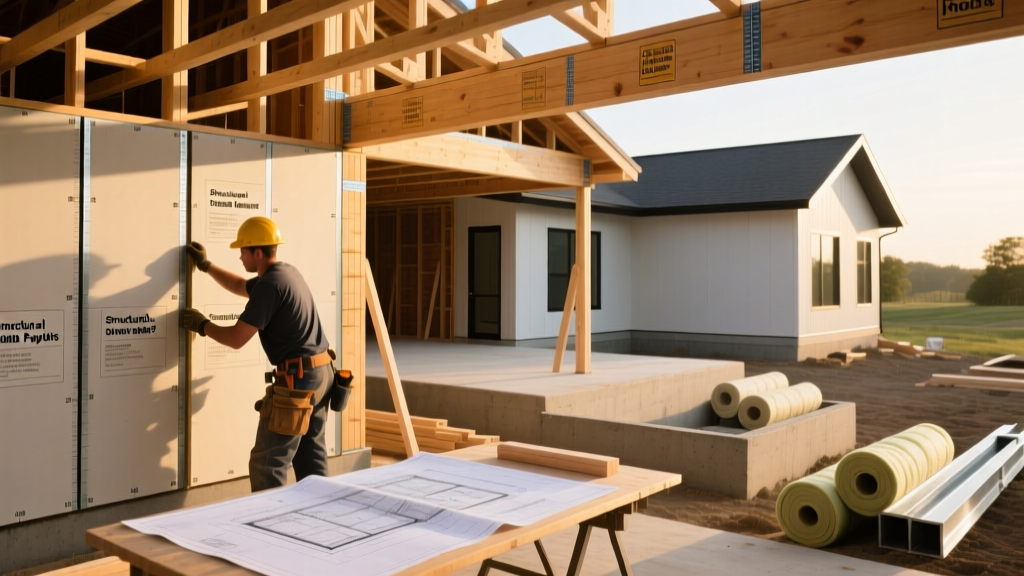
Determining exactly how much it would cost to build your own house requires moving beyond simple per-square-foot material estimates. While the National Association of Home Builders (NAHB) tracks material and labor trends showing hard costs averaging between $150 and $275 per square foot depending on the region, the financing mechanism you use introduces a secondary layer of expenses known as soft costs and capital reserves. For a 2,200-square-foot custom home, hard construction costs will range from $330,000 to $605,000. However, securing the capital to fund that build adds 15% to 25% in soft costs, including loan origination fees, architectural plans, permits, and capitalized interest.
Decoding Construction Loan Products
The Consumer Financial Protection Bureau (CFPB) outlines several pathways for financing a ground-up build. Choosing the wrong product can cost you tens of thousands of dollars in duplicate closing costs or expose you to variable interest rate volatility. Here is how the primary loan structures compare in the current lending environment.
| Loan Type | Down Payment | Interest Rate Structure | Best For |
|---|---|---|---|
| Construction-to-Permanent (C2P) | 10% - 20% | Variable (SOFR/Prime) converting to Fixed | Borrowers with strong credit wanting one closing |
| FHA One-Time Close (OTC) | 3.5% | Fixed rate locked at initial closing | Buyers with limited cash reserves or lower credit |
| Stand-Alone Construction | 20% - 25% | Variable (Interest-Only during build) | Owner-builders or highly custom luxury builds |
The FHA One-Time Close is particularly advantageous for budget-conscious builders. According to HUD guidelines, the FHA OTC allows you to lock in your 30-year fixed permanent mortgage rate before ground is broken, shielding you from rate hikes during the 9-to-12-month construction phase. Conversely, a Stand-Alone construction loan requires you to qualify for a second mortgage upon completion, exposing you to market rate fluctuations and a second round of origination and title fees.
The Draw Schedule: Managing Cash Flow During the Build
Construction lenders do not hand you a lump sum. Funds are disbursed in tranches, known as draws, tied to specific completion milestones. A typical 2,200-square-foot build utilizes a 6-draw schedule over 9 months. Understanding this schedule is critical for managing subcontractor payments and avoiding mechanic's liens.
- Draw 1 (15%): Site Prep and Foundation. Covers clearing, grading, digging footings, and pouring the slab or basement walls.
- Draw 2 (20%): Framing and Dried-In. Funds the lumber package, roof trusses, sheathing, and exterior windows. The house must be weather-tight.
- Draw 3 (20%): Rough Mechanicals. Pays for HVAC ductwork, plumbing rough-ins, and electrical wiring before the inspector signs off for insulation.
- Draw 4 (15%): Insulation and Drywall. Covers hanging, taping, and mudding drywall, preparing the interior for finishes.
- Draw 5 (15%): Interior Finishes and Cabinets. Funds flooring, trim, cabinet installation, and setting countertops.
- Draw 6 (15%): Final Completion. Pays for appliances, landscaping, driveway paving, and the final certificate of occupancy (CO).
Hidden Financing Fees That Derail Owner-Builder Budgets
When calculating how much it costs to build your own house, most budgets fail to account for the friction costs of construction lending. These fees are rarely discussed during initial pre-approval but can add $8,000 to $15,000 to your total project cost.
- Interest Reserves: Lenders require you to prepay the interest on the construction loan during the build phase. For a $500,000 loan at an 9.5% variable rate, the 9-month interest reserve will be approximately $35,600. This amount is capitalized into the total loan balance.
- Draw Inspection Fees: Every time you request a draw, the lender sends a third-party inspector to verify the work is complete. At $150 to $250 per visit across 6 to 8 draws, expect to pay $1,200 to $2,000 in inspection fees.
- Rate Lock Extension Fees: If your build takes 11 months instead of the projected 8 months due to supply chain delays or permit holdups, your initial rate lock will expire. Lenders charge extension fees, typically 0.25% to 0.50% of the loan amount per month, which can instantly cost you $2,500+.
- Title Updates and Endorsements: Each draw disbursement requires a title company to verify no new mechanic's liens have been filed against the property. These update fees range from $75 to $150 per draw.
Qualifying Metrics: What Lenders Actually Scrutinize
Securing construction financing is significantly more rigorous than buying an existing home. Lenders underwrite the project based on the projected future value of the completed home, known as the 'as-completed' appraisal. Your Debt-to-Income (DTI) ratio will be calculated using the projected permanent mortgage payment, not the interest-only construction payments.
"Lenders will stress-test your budget by adding the estimated monthly payment of the permanent mortgage, plus property taxes and homeowners insurance, to your existing debts. If your projected housing expense exceeds 36% to 43% of your gross monthly income, the loan will be denied regardless of your cash reserves."
To maximize your approval odds and secure the most favorable SOFR margin, ensure your credit score is above 720, maintain a minimum of 6 months of post-closing liquidity reserves, and present a fully fixed-price contract from a licensed, insured general contractor. Owner-builders acting as their own GC face intense scrutiny and are often required to put down 25% to 30% to offset the lender's perceived risk of project mismanagement.
Finalizing Your Capital Strategy
Accurately forecasting the cost to build your own house demands a synthesis of construction estimating and financial engineering. By mapping your hard costs against the specific draw schedules of a Construction-to-Permanent or FHA OTC loan, factoring in a mandatory 15% contingency, and budgeting for capitalized interest reserves, you transition from a speculative builder to a financially secured developer. Secure your land, lock your contractor, and align your loan product with your timeline before breaking ground.
Written by
David NakamuraDavid Nakamura is a licensed architect (AIA) and construction technology writer focused on sustainable building methods, mass timber engineering, and high-performance building envelopes. He holds a Master of Architecture from the University of Washington and is a certified Passive House Consultant (CPHC). David spent eight years at the Seattle firm Mithun, where he led the design of three LEED Platinum projects, before founding his own practice specializing in net-zero residential design. He serves on the editorial advisory board of GreenBuilder Magazine and has authored peer-reviewed papers on cross-laminated timber (CLT) connections for the Journal of Structural Engineering. In his spare time, David teaches woodworking at Pratt Fine Arts Center and kayaks the Puget Sound.
More from David Nakamura
View all
Construction Cost
Labor Cost to Build a Deck Per Sq Ft: 2026 Installation Guide
Discover the exact labor cost to build a deck per sq ft in 2026. This installation guide breaks down contractor rates, complexity factors, and hidden fees.
Aug 4, 2026

Construction Cost
How Much Does It Cost to Build a 3 Bedroom House? Financing Guide
Learn exactly how much it costs to build a 3 bedroom house and explore 2026 financing options, construction loan types, and budget frameworks for your build.
Aug 4, 2026

Construction Cost
Cost to Build a Tennis Court: 2026 Guide
How much does it cost to build a tennis court in 2026? Breakdowns for asphalt, concrete, and synthetic surfaces plus fencing and lighting.
Jul 30, 2026