How Much Would It Cost to Build a Duplex? Full Breakdown
Discover exactly how much it costs to build a duplex. Get a detailed phase-by-phase breakdown, material matrices, and per-unit pricing data.
The True Baseline: National Averages vs. Per-Unit Realities
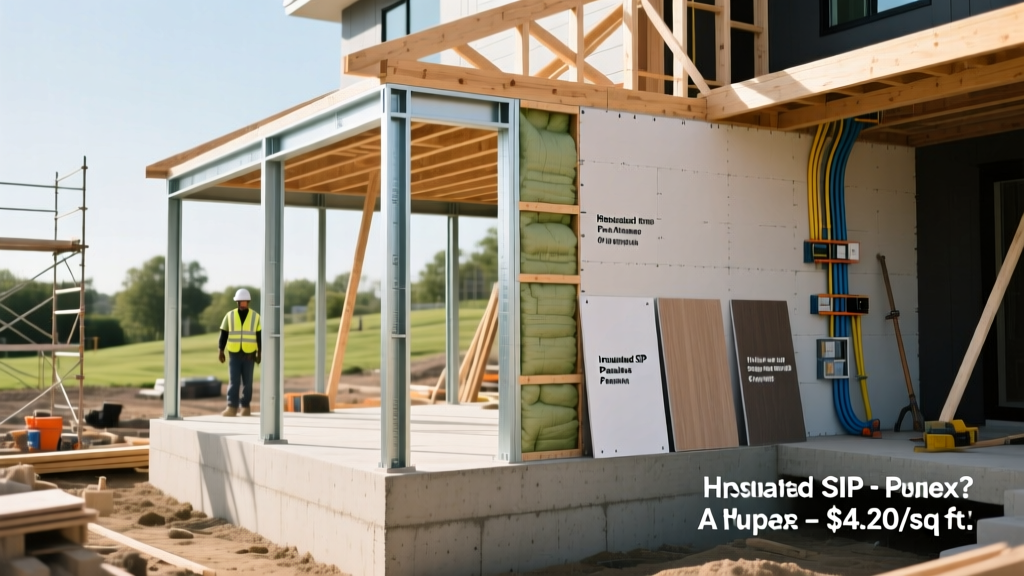
When investors and developers ask how much would it cost to build a duplex, the answer requires separating gross square footage from per-unit economics. A standard side-by-side duplex totaling 2,400 square feet (1,200 sq. ft. per unit) typically costs between $315,000 and $580,000 to build from the ground up. This translates to a national average of $131 to $241 per square foot. However, treating a duplex simply as a 'double house' leads to severe budget miscalculations. Duplexes require duplicated mechanical systems, specialized acoustic engineering for the party wall, and dual utility tap-ins that fundamentally alter the cost-per-square-foot ratio compared to single-family homes.
Low-End (Builder Grade): $315,000 - $360,000
Mid-Range (Custom Standard): $385,000 - $460,000
High-End (Premium Finishes): $490,000 - $580,000+
According to data tracked by the U.S. Census Bureau Cost of Construction, multi-family and attached residential structures carry a 7% to 12% premium in soft costs and site-work compared to detached single-family homes of the exact same total square footage. Understanding where this premium originates is critical for accurate pro-forma modeling.
Phase-by-Phase Construction Cost Breakdown
The following matrix breaks down the capital expenditure for a mid-range 2,400 sq. ft. duplex built on a flat, easily accessible lot. This data aligns with current labor rates and material indexes published by the National Association of Home Builders (NAHB).
| Construction Phase | % of Budget | Cost Range | Duplex-Specific Variables |
|---|---|---|---|
| Site Prep & Foundation | 12% - 14% | $42,000 - $81,000 | Dual sewer taps, wider trenching, reinforced party wall footings. |
| Framing & Exterior | 18% - 22% | $68,000 - $125,000 | Fire-rated party wall framing, doubled exterior sheathing for acoustic mass. |
| Roofing & Flashing | 8% - 10% | $28,000 - $55,000 | Complex valley intersections, dual HVAC curb penetrations. |
| MEP (Mech/Elec/Plumb) | 16% - 19% | $56,000 - $110,000 | Two separate HVAC units, dual water heaters, duplicated electrical panels. |
| Insulation & Drywall | 9% - 11% | $31,000 - $62,000 | STC-50+ acoustic insulation, QuietRock or double-layer Type X drywall. |
| Interior Finishes | 20% - 25% | $70,000 - $140,000 | Duplicated cabinetry, flooring, and fixture packages (economies of scale apply). |
| Exterior Work/Landscaping | 6% - 8% | $21,000 - $45,000 | Dual driveways, fenced privacy dividers, separate walkways. |
Duplex-Specific Engineering: The Party Wall & Acoustics
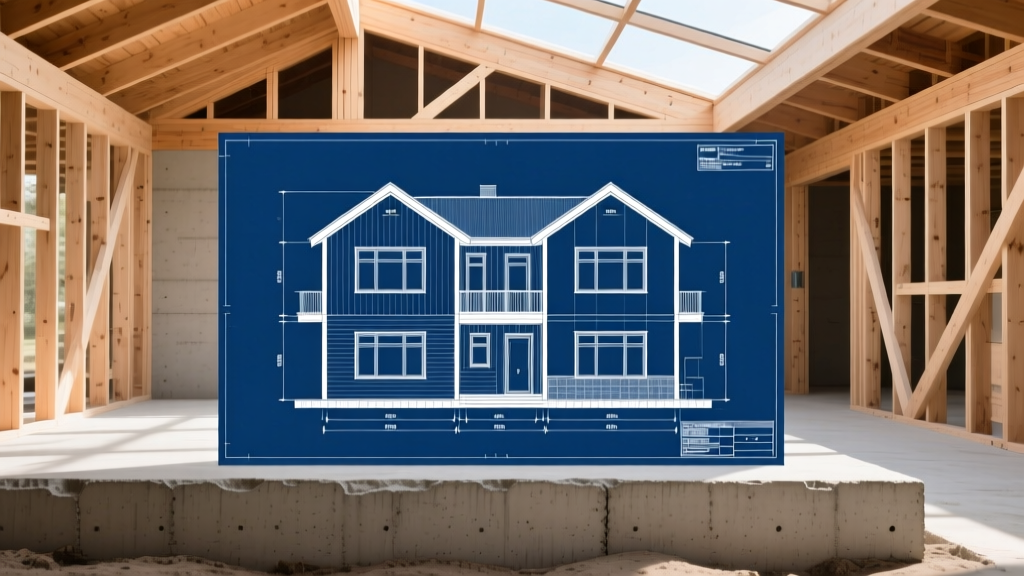
The most common failure point in duplex construction is acoustic bleed between units, leading to high tenant turnover. Building codes (such as the International Building Code Section 1206) mandate a minimum Sound Transmission Class (STC) of 50 for walls separating dwelling units. Standard fiberglass batts and single-layer drywall only achieve an STC of 33 to 38.
Achieving STC 52-55 Without Breaking the Budget
- The Cavity: Use Rockwool Safe'n'Sound mineral wool insulation. Unlike standard fiberglass, its high-density stone fibers dampen mid-to-high frequency sounds (voices, TVs). Cost premium: ~$0.45 per sq. ft. over R-13 fiberglass.
- The Studs: Frame the party wall using staggered stud construction on a single 2x6 plate, or build two separate 2x4 walls with a 1-inch air gap. The air gap breaks the physical transmission path for low-frequency bass.
- The Drywall: Install QuietRock 510 (1/2-inch acoustic drywall) on both sides of the party wall. Alternatively, use two layers of standard 5/8-inch Type X fire-rated drywall with Green Glue damping compound sandwiched between them. QuietRock is faster to install, saving roughly $1,200 in labor per duplex, despite higher material costs.
Mechanical, Electrical, and Plumbing (MEP) Duplication
When evaluating how much it would cost to build a duplex, MEP duplication represents the largest divergence from single-family pricing. You are essentially building two independent life-support systems under one roof.
While installing a single, high-capacity zoned HVAC system or a single commercial-grade water heater might save $4,000 to $6,000 upfront, it creates severe legal and operational liabilities. If the shared water heater fails, both units lose hot water, doubling your emergency repair urgency and potential tenant relocation costs. Always install completely separate, individually metered systems for each unit.
HVAC Sizing and Selection
For two 1,200 sq. ft. units, you will need two separate 2-ton or 2.5-ton heat pump systems (depending on your climate zone). A reliable mid-tier choice is the Carrier Performance 16 SEER2 series. Purchasing two identical units allows you to standardize replacement parts and maintenance contracts. Expect to pay between $8,500 and $11,500 per unit for the complete ducted system, totaling $17,000 to $23,000 for the duplex.
Plumbing: PEX-A vs. PEX-B
Run PEX-A (Uponor) rather than PEX-B or Copper. PEX-A's expansion fittings drastically reduce the risk of burst joints in the walls—a critical factor when a leak could damage two units simultaneously. Furthermore, run dedicated home-run manifold systems for each unit. This ensures that when Unit A flushes a toilet, Unit B's shower does not experience a pressure drop or scalding temperature spike.
Material Tier Matrix: Builder-Grade vs. Premium
Because you are purchasing materials for two identical or mirrored units, duplex builders can leverage wholesale volume discounts that single-family custom builders cannot. According to Bankrate's construction cost analysis, bulk purchasing can reduce interior finish costs by 8% to 12%.
| Material Category | Builder-Grade (Entry Level) | Mid-Range (Renter Preferred) | Premium (Owner-Occupant/Condo) |
|---|---|---|---|
| Exterior Siding | Vinyl Dutch Lap ($3.50/sq ft) | LP SmartSide Engineered Wood ($6.50/sq ft) | HardiePlank Fiber Cement ($9.00/sq ft) |
| Roofing | 3-Tab Asphalt Shingle | Architectural Shingle (Owens Corning Duration) | Standing Seam Metal Roofing |
| Countertops | Post-Form Laminate | Prefab Quartz (e.g., MSI Q Premium) | Custom Fabricated Granite/Quartzite |
| Flooring | LVP (Luxury Vinyl Plank) 12-mil | LVP 20-mil with attached cork pad | Engineered Hardwood (White Oak) |
| Windows | Single-Pane Aluminum Frame | Double-Pane Vinyl (Low-E) | Triple-Pane Fiberglass (Marvin Essential) |
Soft Costs, Permitting, and Utility Hookups
Hard construction costs only tell half the story. Soft costs for a duplex are disproportionately high because municipalities treat the project as a multi-family commercial endeavor rather than a residential one.
- Impact Fees: Many municipalities charge impact fees (for schools, roads, and parks) per dwelling unit. Expect to pay two separate residential impact fees, which can range from $4,000 to $15,000 per unit depending on the county.
- Utility Tap Fees: You will likely need two separate water meters and two separate sewer taps to ensure tenants can be billed independently by the city. Dual water meter installations and trenching can add $6,000 to $12,000 to your site work budget.
- Architectural & Engineering: Because a duplex requires a fire-rated party wall and specific structural load calculations for the shared roof trusses, architectural plans will cost 20% to 30% more than a comparable single-family home. Budget $8,000 to $14,000 for a complete set of stamped, permit-ready drawings.
Regional Variance and Labor Indexes
Where you build dictates the final tally. Labor markets and material supply chains cause massive regional fluctuations.
'A common mistake out-of-state investors make is applying national cost-per-square-foot averages to high-barrier coastal markets. In regions like Southern California or the Northeast, union labor requirements, strict seismic or hurricane tie-down codes, and extended permitting timelines can push the cost to build a duplex past $350 per square foot.' — Senior Estimator, Commercial Multi-Family Division
In the Midwest and Southeast (e.g., Ohio, Texas, Georgia), where land is flat, labor is non-union, and frost-line foundation requirements are shallow, you can realistically achieve the $131 to $150 per square foot metric. Conversely, in markets with stringent energy codes (like California's Title 24), you will be forced to install high-efficiency heat pumps, continuous exterior insulation (like Zip System R-sheathing), and solar-ready infrastructure, pushing baseline costs well over $220 per square foot.
Strategic Takeaways for Developers
To accurately forecast how much it would cost to build a duplex, you must underwrite the project based on duplicated systems and specialized acoustic engineering, not just multiplied square footage. Prioritize separate utility metering, invest heavily in the STC rating of the party wall, and leverage bulk-purchasing power on interior finishes. By treating the duplex as two distinct mechanical entities sharing a single structural envelope, you protect your asset from long-term operational friction and maximize both tenant retention and resale valuation.
Written by
James ThorntonJames Thornton is a construction industry veteran with 25 years of hands-on experience in wood framing, lumber grading, and residential building codes. He started as a framing carpenter in rural Oregon, earned his ICC Residential Building Inspector certification, and eventually became a senior plan reviewer for the City of Portland Bureau of Development Services. James holds a B.S. in Wood Science & Technology from Oregon State University and is a certified lumber grader through the West Coast Lumber Inspection Bureau (WCLIB). He has inspected over 3,000 residential construction sites and authored the city's internal guide on advanced framing techniques (2x6 at 24" O.C.). James lives in Bend, OR, where he builds custom timber-frame cabins and competes in lumberjack sports.
More from James Thornton
View all
Insulation
Best Home Insulation Materials: Complete 2026 Guide
Compare top home insulation materials for 2026. Find R-values, installed costs per square foot, and best uses for fiberglass, spray foam, and mineral wool.
Aug 4, 2026

Sustainable Building
Certify Your Green Building Material for LEED and WELL
Step-by-step guide to certifying a green building material for LEED v5 and WELL v2. Master EPDs, HPDs, and VOC limits for 2026 project specifications.
Aug 4, 2026

Stone & Masonry
Veneer Stacked Stone Panels: Interior Design & Style Showcase
Discover how veneer stacked stone panels transform interiors. Explore modern design profiles, material pairings, and technical installation specs.
Aug 4, 2026