Cost to Build a Boat Dock: 2026 Budget Planning Guide
Discover the true cost to build a boat dock. Break down material, labor, and permit expenses to create an accurate budget for your waterfront project.

The Real Cost to Build a Boat Dock: Beyond the Basics
Budgeting for a waterfront structure requires navigating variables that standard terrestrial decks simply do not face. When calculating the true cost to build a boat dock, property owners must account for water depth, lakebed substrate composition, stringent environmental regulations, and marine-grade material premiums. A standard 4x20 foot dock (80 square feet) might seem like a simple weekend project, but the moment piles hit the water, the complexity—and the budget—shifts dramatically.
As of 2026, the national average cost to build a boat dock ranges from $4,500 to $12,000 for a basic stationary timber structure, while large, multi-slip composite or aluminum floating docks with integrated marine electrical systems frequently exceed $35,000. This guide dissects the exact material, labor, and regulatory costs required to build an accurate, bulletproof budget for your waterfront project.
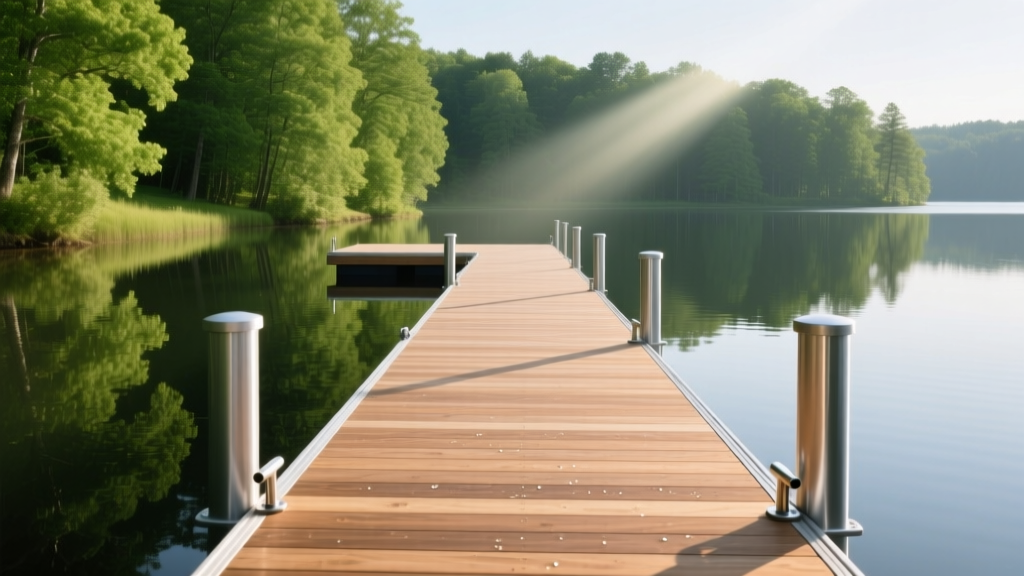
Material Cost Breakdown: Decking and Framing
The decking and substructure materials dictate the baseline of your budget. Marine environments demand materials resistant to constant moisture, UV degradation, and galvanic corrosion. Below is a comparative matrix of the most common marine decking materials and their associated costs per square foot (materials only).
| Material Type | Specific Grade/Brand | Cost per Sq. Ft. | Lifespan | Maintenance Requirement |
|---|---|---|---|---|
| Pressure-Treated Pine | AWPA UC5A (Marine Submerged) | $18 - $26 | 10 - 15 years | High (Annual sealing) |
| Tropical Hardwood | Ipe or Garapa (FSC Certified) | $35 - $55 | 25 - 40 years | Medium (UV oiling) |
| Capped Composite | Trex Transcend / Fiberon Paramount | $42 - $65 | 25 - 30 years | Low (Soap & water) |
| Marine Aluminum | ShoreMaster / Aranda Aluminum | $55 - $85 | 50+ years | None |
| Recycled HDPE | Lumberock / Tangent | $48 - $70 | 50+ years | None |
Critical Material Insight: If you opt for pressure-treated wood, standard ground-contact lumber (AWPA UC4A) will rot rapidly when submerged. You must specify UC5A (marine-grade) for any piling or framing that touches the water. For composite decking, verify the manufacturer's warranty regarding continuous water submersion; some brands will void warranties if the boards are installed less than 12 inches above the high-water mark. Always review the Trex Marine Decking Specifications to ensure compliance with waterfront installation guidelines.
Hidden Expenses That Derail Dock Budgets
The most common budgeting failure occurs when property owners calculate only the decking and pilings, ignoring the site preparation and regulatory overhead. Allocate an additional 20% to 35% of your base material budget for the following hidden expenses.
Warning: Sovereign Submerged Lands (SSL) Permits
Almost all states own the land beneath navigable waters. Building a dock requires a Sovereign Submerged Lands lease or permit. In states like Florida, the Florida Department of Environmental Protection strictly regulates dock footprints to protect manatee habitats and seagrass beds. Permit fees range from $300 to $800, but hiring an environmental consultant to draft the required site plans and biological surveys can add $1,500 to $4,000 to your budget.
Tip: Bathymetric Surveys and Soil Boring
Before driving a single piling, you need to know what lies beneath the mud. A bathymetric survey maps the lakebed contours and identifies submerged hazards, costing between $800 and $1,500. If you are building a heavy-duty boat lift dock, soil borings ($1,200 - $2,500) are required to determine the load-bearing capacity of the substrate, which dictates whether you need standard timber pilings or deep-driven helical piles.
Shoreline Stabilization (Riprap)
Wave action generated by boats docking will erode your shoreline over time. Most local zoning boards mandate the installation of Class I or Class II riprap (angular stone) along the shoreline adjacent to the dock. Budget $60 to $110 per ton for riprap, including delivery and placement via excavator.
Foundation Systems: Pilings vs. Helical vs. Floating
The foundation system is heavily dictated by your water body's characteristics: depth, ice flow, and bottom composition.
- Timber Pilings (12-inch to 14-inch diameter): The traditional standard for stationary docks. Southern Yellow Pine treated to UC5A standards costs $250 to $450 per piling, installed. This requires a vibratory hammer or drop hammer, which adds equipment mobilization fees.
- Helical Piles (e.g., Chance or Hubbell): Galvanized steel shafts with helical bearing plates screwed into the lakebed. They require no concrete curing time and can be loaded immediately. Costs range from $800 to $1,400 per pile installed. Helical piles are mandatory in areas with deep, unstable muck where timber pilings cannot reach a load-bearing stratum.
- Floating Docks (Polyethylene Drums): Ideal for lakes with extreme water level fluctuations or bedrock bottoms where driving pilings is impossible. A heavy-duty commercial float system (like EZ Dock or Roll-N-Dock) costs $45 to $85 per square foot. You must budget for gangways and concrete transition ramps ($2,000 - $5,000) to connect the floating dock to the shore.
Labor and Marine Contracting Realities
Do not hire a standard residential deck builder to construct a boat dock. Marine contracting requires specialized equipment, tide or water-level scheduling, and underwater expertise. Marine contractors typically charge 25% to 40% more per hour ($125 - $225/hour) than land-based carpenters.
Equipment Mobilization: If your property lacks a clear path to the water for heavy machinery, the contractor must use a work barge. Barge mobilization and daily rental rates range from $600 to $1,500 per day. If the water is too deep for standard wading installation, a commercial dive team ($1,500+ per day) may be required to secure underwater cross-bracing and pile caps.
Hardware Specifications: Labor costs also reflect the time required to work with marine-grade hardware. You must mandate the use of 316-grade stainless steel fasteners for any saltwater or brackish environments to prevent galvanic corrosion. Hot-dipped galvanized (HDG) hardware is acceptable for freshwater, but 316 stainless steel bolts, lag screws, and joist hangers will increase your hardware budget by approximately 40%.
Step-by-Step Budgeting Framework for Waterfront Projects
To ensure your financing covers the entire scope of the project, follow this sequential budgeting framework:
- Define the Footprint and Use Case: Determine if you need a simple walkway (minimum 4 feet wide) or a T-shaped dock with boat slips and a 10,000-lb boat lift. A standard boat lift adds $6,000 to $12,000 to the final cost.
- Conduct a Site Feasibility Study: Pay for the bathymetric survey and verify property lines. Docks built even a few feet over a neighboring property line or into a protected navigation easement will face mandatory demolition.
- Secure Regulatory Approvals: Apply for local zoning variances, state SSL permits, and, if applicable, US Army Corps of Engineers (USACE) Section 10 permits for navigable waters. Budget 3 to 6 months for this phase.
- Solicit Marine-Specific Bids: Request itemized quotes from at least three licensed marine contractors. Ensure bids separate material costs, equipment mobilization, and underwater labor.
- Allocate Contingency Funds: Waterfront construction is highly susceptible to weather delays and hidden subsurface obstacles (e.g., submerged boulders). Maintain a strict 20% contingency fund that is untouched until the final piling is driven.
Frequently Asked Questions
Do I need a permit to build a boat dock?
Yes. According to the Wisconsin Department of Natural Resources and similar state agencies, almost all permanent dock structures require a permit to ensure they do not impede public navigation, disrupt fish habitats, or alter natural water flow. Building without a permit can result in daily fines and forced removal.
How long does it take to build a boat dock?
The physical construction of a standard 80-square-foot stationary dock takes 3 to 7 days. However, the permitting and environmental review process typically takes 2 to 4 months before any tools touch the water.
Is composite decking slippery when wet?
Early generations of composite decking were notoriously slick. Modern capped composite boards feature embossed wood-grain textures and micro-grooves specifically designed to increase slip resistance. When budgeting, look for boards with a high coefficient of friction (COF) rating for wet conditions.
Can I add electricity and water to my dock?
Yes, but it requires specialized marine electrical work. Running a 30-amp or 50-amp marine shore power pedestal and installing a dockside water spigot typically costs $1,500 to $3,500. All wiring must be run through rigid galvanized or PVC conduit and utilize GFCI (Ground Fault Circuit Interrupter) breakers rated for damp locations.
Written by
David NakamuraDavid Nakamura is a licensed architect (AIA) and construction technology writer focused on sustainable building methods, mass timber engineering, and high-performance building envelopes. He holds a Master of Architecture from the University of Washington and is a certified Passive House Consultant (CPHC). David spent eight years at the Seattle firm Mithun, where he led the design of three LEED Platinum projects, before founding his own practice specializing in net-zero residential design. He serves on the editorial advisory board of GreenBuilder Magazine and has authored peer-reviewed papers on cross-laminated timber (CLT) connections for the Journal of Structural Engineering. In his spare time, David teaches woodworking at Pratt Fine Arts Center and kayaks the Puget Sound.
More from David Nakamura
View all
Construction Cost
Labor Cost to Build a Deck Per Sq Ft: 2026 Installation Guide
Discover the exact labor cost to build a deck per sq ft in 2026. This installation guide breaks down contractor rates, complexity factors, and hidden fees.
Aug 4, 2026

Construction Cost
How Much Does It Cost to Build a 3 Bedroom House? Financing Guide
Learn exactly how much it costs to build a 3 bedroom house and explore 2026 financing options, construction loan types, and budget frameworks for your build.
Aug 4, 2026

Construction Cost
Cost to Build a Tennis Court: 2026 Guide
How much does it cost to build a tennis court in 2026? Breakdowns for asphalt, concrete, and synthetic surfaces plus fencing and lighting.
Jul 30, 2026