Financing the Cost to Build a House in Missouri: 2026 Guide
Learn how to finance the cost to build a house in Missouri in 2026. Explore construction loans, regional pricing, draw schedules, and site prep costs.
The True Baseline: Regional Construction Costs in Missouri
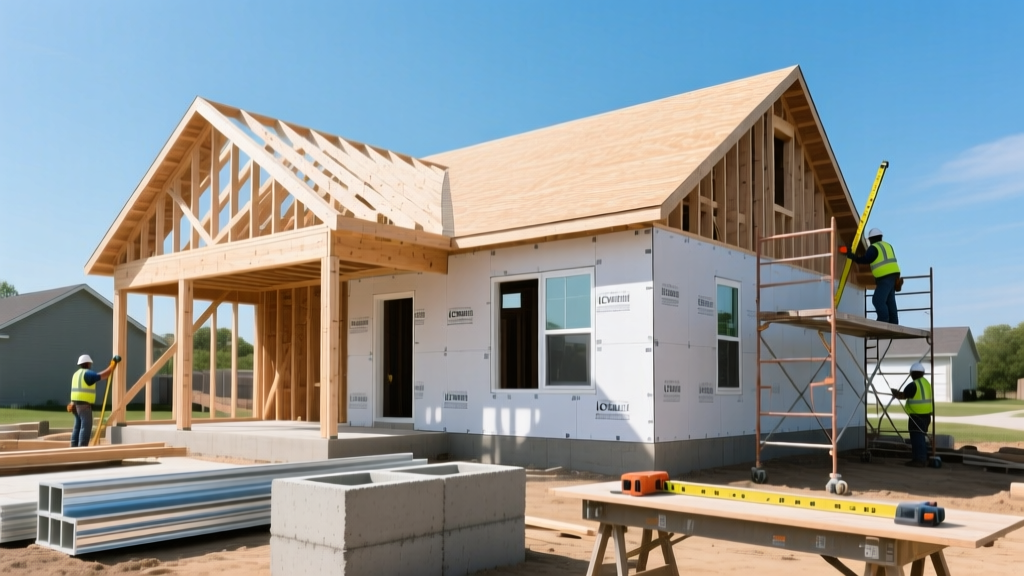
When evaluating the cost to build a house in Missouri, financing is rarely a single lump-sum transaction. Construction loans operate on a reimbursement basis, meaning your capital must be strategically allocated across months of phased building. In 2026, the baseline construction cost in Missouri ranges from $165 to $245 per square foot for a custom, mid-to-high-finish home, excluding land acquisition. For a standard 2,200-square-foot build, you are looking at a hard construction budget between $363,000 and $539,000.
Average Hard Cost: $195 / sq. ft.
Average Land Cost: $45,000 - $120,000 (varies heavily by county)
Typical Construction Loan Rate: 6.75% - 8.25% (Interest-only during build phase)
Required Down Payment: 20% minimum for conventional; 3.5% for FHA One-Time Close (OTC)
Regional variances drastically alter your loan-to-value (LTV) calculations. Lenders will appraise the future value of the home based on local comps, which dictates your maximum borrowing capacity.
| Missouri Region | Avg. Cost / Sq. Ft. | Estimated 2,200 Sq Ft Total | Primary Cost Driver |
|---|---|---|---|
| St. Louis Metro (St. Charles, Franklin) | $210 - $260 | $462,000 - $572,000 | High labor rates, strict municipal codes |
| Kansas City Metro (Cass, Platte, Clay) | $190 - $245 | $418,000 - $539,000 | Expansive clay soil mitigation |
| Springfield / Ozarks (Greene, Christian) | $175 - $220 | $385,000 - $484,000 | Karst topography foundation engineering |
| Rural / Columbia / Jefferson County | $165 - $200 | $363,000 - $440,000 | Well/septic installation, long material transport |
Construction Loan Mechanics: Single-Close vs. Stand-Alone
Securing capital for a custom build requires specialized lending products. Standard mortgages cannot be used for unimproved land or active construction sites. According to the Consumer Financial Protection Bureau (CFPB), construction loans carry higher risk for lenders, resulting in stricter underwriting, higher interest rates during the build phase, and mandatory builder vetting.
Construction-to-Permanent (Single-Close) Loans
This is the most common vehicle for Missouri custom builds. You close once, securing both the construction financing and the 30-year fixed mortgage. During the 9-to-14-month build phase, you pay interest-only on the funds drawn. Upon completion and final inspection, the loan automatically converts to your permanent mortgage without a second closing.
- Pros: One set of closing costs (saving $4,000–$8,000 in Missouri), locked-in permanent interest rate at initial closing, protection against rate hikes during construction.
- Cons: Strict builder approval requirements; if the project stalls beyond 12 months, you may face extension fees of 0.25% to 0.50% of the loan balance per month.
Stand-Alone Construction Loans
Used primarily by borrowers who plan to sell an existing home upon completion or those executing complex, multi-year luxury builds. You take out a short-term (12-24 month) construction loan, then apply for a completely separate traditional mortgage once the certificate of occupancy (CO) is issued.
- Pros: Greater flexibility in builder selection and design changes mid-build; easier to finance non-warrantable or highly unique architectural designs.
- Cons: Two sets of closing costs; exposure to interest rate volatility when refinancing into the permanent mortgage.
Hidden Missouri-Specific Site Prep Costs
The most frequent cause of construction loan defaults or mid-build capital shortfalls is underestimating site preparation. Missouri’s diverse geology introduces severe hidden costs that standard appraisal models often miss. When calculating the cost to build a house in Missouri, you must allocate a 10% to 15% contingency specifically for subsurface conditions.
- Karst Topography (Ozarks / Southwest MO): Areas around Springfield and Branson feature limestone bedrock riddled with caves and sinkholes. Standard spread footings will fail inspection. You will likely need drilled caissons or micropiles driven to solid bedrock, adding $15,000 to $30,000 to your foundation budget.
- Expansive Clay Soils (Kansas City Metro): The blue clay in Clay and Platte counties expands massively when wet and shrinks when dry, capable of cracking standard slab-on-grade foundations. Engineers will require post-tensioned slabs, structural void forms, or over-excavation with engineered fill, adding $8,000 to $14,000.
- Rural Wastewater Systems (Statewide Rural Counties): If building outside municipal sewer districts (common in Warren, Lincoln, or rural Cass counties), you must install a private septic system. Traditional lateral field systems cost $6,000 to $9,000, but if the soil percolation test fails (common in heavy clay areas), you will need an engineered aerobic treatment unit (ATU) or a lagoon system, pushing costs to $15,000 to $22,000.
The 6-Draw Schedule: How Your Funds Are Released
Lenders do not hand over $450,000 on day one. Funds are released in "draws" tied to verified completion milestones. A third-party inspector must visit the site before each disbursement. Understanding this schedule is critical for managing your builder's cash flow expectations and your own interest-only payments.
- Draw 1 (10-15%): Land & Site Prep. Covers land acquisition (if rolled into the loan), clearing, grading, and temporary utilities. Interest begins accruing on this amount immediately.
- Draw 2 (15-20%): Foundation & Underground. Excavation, footings, foundation walls, slab pouring, and underground plumbing rough-ins.
- Draw 3 (20%): Framing & Dried-In. Lumber package, roof trusses, sheathing, and roofing material. The house is "weather-tight" at the end of this draw.
- Draw 4 (20%): Mechanical Rough-Ins. HVAC ductwork, electrical wiring, plumbing top-outs, and insulation installation.
- Draw 5 (20%): Interior Finishes. Drywall, trim, cabinetry, flooring, painting, and fixture installation.
- Draw 6 (10-15%): Final Completion. Driveways, landscaping, final grading, municipal inspections, and the issuance of the Certificate of Occupancy (CO).
Financing Approvals & Rural Options
For borrowers targeting rural Missouri counties, the USDA Rural Development program offers specialized construction-to-permanent loans with zero down payment requirements, provided the household income falls below regional limits and the build site is in a designated rural zone. However, finding builders approved for USDA construction draws is notoriously difficult, often requiring a 15% to 20% down payment in practice to satisfy secondary market overlays.
Furthermore, the National Association of Home Builders (NAHB) emphasizes that lender underwriting for construction loans heavily scrutinizes the builder's track record. Expect your lender to request your builder's proof of insurance, a detailed line-item budget, and references from the last three completed projects before approving your loan commitment.
Frequently Asked Questions
Can I act as my own general contractor to save money on a construction loan?
Most conventional lenders (Chase, Bank of America, regional Missouri banks like Commerce Bank) strictly prohibit owner-builder construction loans unless you are a licensed, insured general contractor with verifiable business financials. If you act as your own GC, you will likely be restricted to specialized portfolio lenders or hard money lenders, where interest rates can exceed 11% to 14%.
What happens if construction costs exceed my loan amount?
>You are personally responsible for any overages. If your $400,000 loan is fully drawn and the builder issues a $25,000 change order for unforeseen rock excavation, you must pay that $25,000 out-of-pocket. This is why maintaining a minimum 10% cash contingency reserve outside of your loan structure is mandatory for a safe build.Do I have to pay property taxes while the house is being built?
Yes, but they are assessed based on the unimproved land value or the partial improvement value during the build phase. Once the final county assessment is completed post-CO, your property tax bill will adjust to reflect the full improved value of the new structure.
Written by
Marcus ChenMarcus Chen is a licensed structural engineer (PE) and building materials analyst with over 12 years of experience across residential, commercial, and industrial construction. He holds a Master of Science in Civil Engineering from UC Berkeley and spent six years at Thornton Tomasetti before transitioning to independent consulting and technical writing. Marcus specializes in material selection for seismic-prone regions, concrete reinforcement strategies, and lifecycle cost analysis. His work has been cited by the American Concrete Institute (ACI) and the Structural Engineers Association of California (SEAOC). When he is not on a job site or at his desk, you will find him hiking the Sierra Nevada or restoring a 1920s craftsman bungalow in Oakland, CA.
More from Marcus Chen
View all
Construction Cost
How Much Did the Eiffel Tower Cost to Build?
How much did the Eiffel Tower cost to build in 1889? We adjust for inflation and compare its budget to modern skyscraper construction.
Aug 4, 2026

Fire Resistance
What Is a Fire Resistant Material? Testing & Certification Guide
Discover what is a fire resistant material through ASTM and UL testing. Learn how fire ratings, certifications, and assemblies work in construction.
Aug 4, 2026

Construction Cost
How Much Did the Burj Khalifa Cost to Build?
How much did the Burj Khalifa cost to build? We break down the $1.5B project and extract 5 money-saving strategies for your next build.
Jul 30, 2026