Calculating the Cost to Build a Luxury House by Scope
Learn how to calculate the cost to build a luxury house using a size and scope framework, featuring 2026 pricing tiers, material matrices, and MEP data.
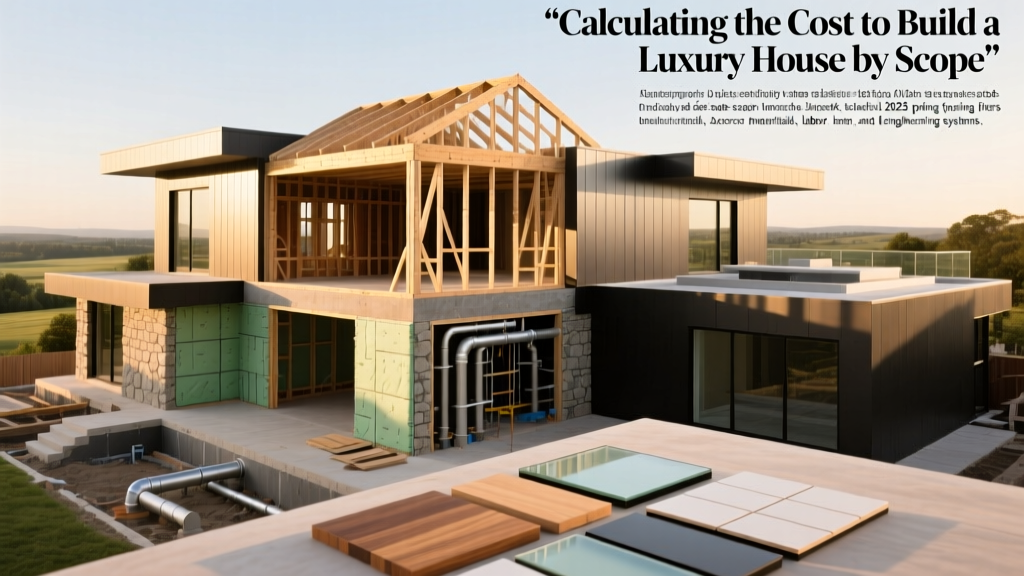
The Baseline: Defining 'Luxury' in Modern Construction
When estimating the cost to build a luxury house, the first critical error is treating 'luxury' as a monolithic category. In the 2026 construction market, luxury residential building is strictly segmented into three distinct tiers, each with vastly different cost drivers, labor requirements, and material lead times. According to data tracked by the National Association of Home Builders Economics division, the spread between premium custom and ultra-luxury trophy homes can exceed 400% on a per-square-foot basis.
The Three Luxury Tiers
- Premium Custom ($400–$550 per sq. ft.): High-end production finishes, custom cabinetry, standard smart home integration (e.g., Control4), and premium engineered hardwoods. Architectural complexity is moderate.
- High-End Luxury ($600–$850 per sq. ft.): Fully custom architectural plans, imported natural stone, commercial-grade HVAC zoning, and advanced lighting systems (e.g., Lutron RadioRA 3). Site work often includes significant grading and landscaping.
- Ultra-Luxury / Trophy ($1,000–$2,500+ per sq. ft.): Bespoke everything. Book-matched exotic stone, structural glass walls, acoustic decoupling, geothermal climate control, and enterprise-grade AV/IT infrastructure. Labor involves specialized artisans rather than standard subcontractors.
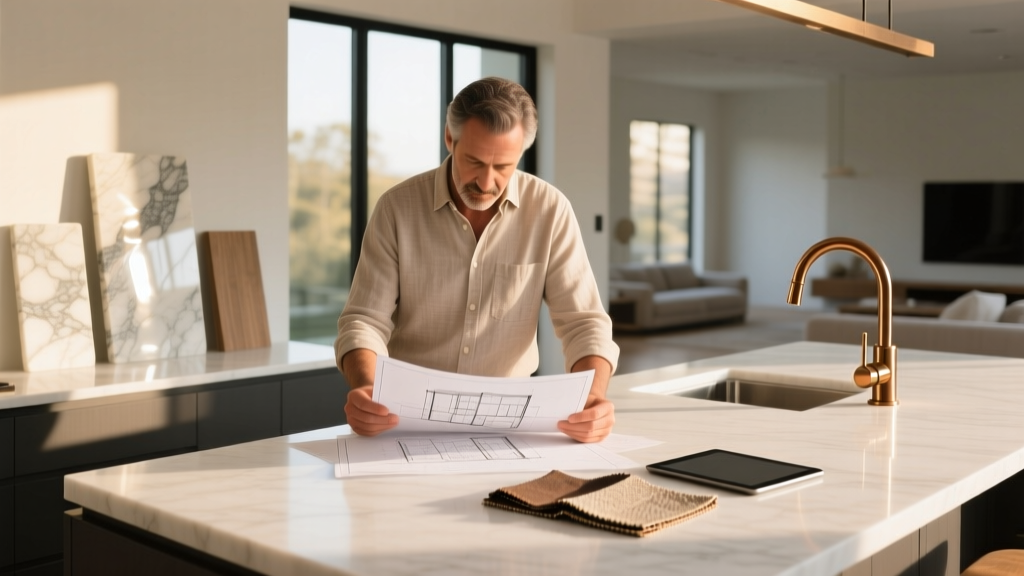
The Size Multiplier: Non-Linear Cost Scaling
A common misconception in residential estimating is that economies of scale apply linearly to luxury builds. In standard construction, a 4,000 sq. ft. home costs less per square foot than a 2,000 sq. ft. home due to fixed costs (kitchens, bathrooms, site prep) being amortized over a larger area. In luxury construction, this rule breaks down. As the footprint expands, the scope of complexity scales exponentially, not linearly.
Larger luxury estates require structural steel instead of dimensional lumber, deep helical pier foundations rather than standard footings, and multi-zone mechanical systems that require dedicated mechanical rooms. The U.S. Census Bureau Construction Data consistently reflects higher valuation metrics for larger custom footprints, driven by these compounding structural and mechanical requirements.
| Home Size (Sq. Ft.) | Premium Custom | High-End Luxury | Ultra-Luxury |
|---|---|---|---|
| 3,000 - 4,500 | $1.2M - $2.4M | $1.8M - $3.8M | $3.5M - $6.0M |
| 5,000 - 7,500 | $2.0M - $4.1M | $3.5M - $6.3M | $6.5M - $12.5M |
| 8,000 - 12,000+ | $3.6M - $6.6M | $6.0M - $10.2M | $12.0M - $25.0M+ |
Scope Variables: Site, Structure, and Systems
The physical footprint is only one axis of your calculator. The 'Scope' axis encompasses site conditions, structural engineering, and mechanical/electrical/plumbing (MEP) complexity. These variables frequently account for 25% to 40% of the total budget before interior finishes are even selected.
Never estimate foundation costs based solely on square footage. A standard post-tensioned slab on grade might cost $25–$35 per sq. ft. of footprint. However, if your luxury build is on an expansive clay slope requiring helical piers and a structural floor system, that cost jumps to $85–$120 per sq. ft. Always allocate a minimum of $15,000 for a comprehensive geotechnical survey before finalizing the structural scope.
MEP Systems in Luxury Builds
In ultra-luxury homes, MEP systems are not just functional; they are invisible and silent. Standard forced-air HVAC is replaced by high-velocity systems (like Unico or SpacePak) or hydronic radiant heating paired with dedicated ERVs (Energy Recovery Ventilators). Electrical scopes must account for enterprise-grade networking (Cat6A or fiber backbone to every room) and motorized shading infrastructure, which requires deep junction boxes and dedicated low-voltage panels.
Material & Finish Scope: The Budget Expanders
Finish selections represent the most volatile variable in your size and scope calculator. The difference between 'high-end' and 'ultra-luxury' is often dictated by the provenance, customization, and installation complexity of the materials. Proper American Institute of Architects (AIA) Contract Documents emphasize defining finish schedules explicitly to prevent scope creep during procurement.
| Category | High-End Luxury Selection | Ultra-Luxury Selection | Cost Variance |
|---|---|---|---|
| Glazing / Windows | Pella Architectural Series (Aluminum-clad wood) | Loewen Custom Bronze-Clad or Sky-Frame structural glass | +150% to +300% |
| Stone Surfaces | Premium Quartzite or high-end Porcelain slabs | Book-matched Calacatta Viola or imported Breccia marble | +200% to +400% |
| Lighting Control | Lutron RadioRA 3 (Wireless, retrofit-friendly) | Lutron HomeWorks QSX with Palladiom keypads (Wired, centralized) | +150% (Hardware + Labor) |
| Millwork / Cabinetry | Semi-custom frameless (e.g., Crystal Cabinets) | Fully bespoke, hand-finished veneer with integrated brass inlays | +250% to +500% |
Step-by-Step Size & Scope Calculation Framework
To build an accurate estimate, abandon simple 'price per square foot' multipliers and use this layered calculation framework:
- Calculate the Core Shell & Site (Fixed + Variable): Multiply the footprint by the site-specific foundation cost. Add the exterior envelope cost (framing, roofing, glazing) based on the roof pitch and wall assembly complexity (e.g., standard 2x6 vs. insulated concrete forms with exterior mineral wool).
- Apply the MEP Multiplier: For High-End Luxury, allocate 18-22% of the shell cost to MEP. For Ultra-Luxury, allocate 25-30% to account for smart home integration, acoustic treatments, and specialized climate zones (e.g., humidity-controlled wine cellars and art galleries).
- Layer the Interior Finish Schedule: Calculate finishes by room type, not by gross square footage. Kitchens and primary baths in luxury homes can exceed $1,500 per sq. ft. for finishes alone, while secondary bedrooms and hallways may sit at $250 per sq. ft. Weight the average accordingly.
- Factor in Soft Costs & Logistics: Luxury builds require extensive architectural, structural, and interior design fees (typically 12-18% of hard costs). Add 5-8% for expedited freight, specialized material handling, and secure on-site storage for imported finishes.
Hidden Scope Creeps to Model in Your Calculator
Many estimators fail to account for acoustic and thermal decoupling in luxury scopes. Ultra-luxury clients expect absolute silence between floors and zero thermal bridging. This requires staggered-stud framing, resilient channels, mass-loaded vinyl (MLV), and continuous exterior insulation. Failing to model the labor hours for acoustic sealing (which can add 15-20% to the drywall and framing labor budget) will result in severe margin erosion.
Additionally, the 'smart home' scope frequently creeps during construction. A pre-wire for a Lutron HomeWorks system requires dedicated 2-inch low-voltage pathways, centralized rack space with dedicated cooling, and specialized low-voltage contractors who charge a premium over standard electricians. Always include a 10% contingency specifically earmarked for low-voltage and AV scope expansion, as client requests for motorized shades, hidden speakers, and security perimeters invariably expand after the framing stage is complete.
By treating the cost to build a luxury house as a multi-variable equation—where size dictates structural complexity and scope dictates finish and system density—you can generate estimates that reflect the true realities of the 2026 high-end residential market.
Written by
Priya KapoorPriya Kapoor is a real estate market analyst and construction economics researcher with expertise in housing affordability, development feasibility, and infrastructure investment. She holds a Master of Regional Planning from Cornell University and previously worked as a senior analyst at CBRE's Investment Properties group, where she modeled returns for $4B in mixed-use development pipelines. Priya now runs an independent research practice advising developers, municipalities, and REITs on construction cost forecasting and market timing. She publishes the quarterly "BuildMat Market Pulse" report tracking material price indices across 12 commodity categories. Based in Austin, TX, Priya serves on the board of Habitat for Humanity Austin and is a marathon runner.
More from Priya Kapoor
View all
Construction Cost
Cost to Build a 1600 Sq Ft Home in 2026: Full Breakdown
Accurate 2026 cost to build a 1600 sq ft home—material, labor, and regional pricing breakdowns included. Plan your budget with real-time estimates.
Aug 11, 2026

Wood & Lumber
Name the Types of Wood for Pressure Treatment and Preservation
Learn how to name the types of wood best suited for pressure treatment. Compare species treatability, chemical retention levels, and 2026 preservation costs.
Aug 4, 2026

Stone & Masonry
Stone Veneer Suppliers Lindenhurst: 2026 Cost Analysis
Analyze 2026 stone veneer costs in Lindenhurst, NY. Compare local supplier pricing, delivery fees, and Suffolk County installation labor rates.
Aug 4, 2026