How Much Does It Cost to Build a Granny Flat? 2026 Cost Comparison
Discover how much it costs to build a granny flat in 2026. Compare prefab, modular, and stick-built ADU prices, materials, and hidden fees.

2026 Quick Cost Summary
The average cost to build a 600-square-foot granny flat (Accessory Dwelling Unit) in 2026 ranges from $135,000 to $260,000. This translates to $225–$433 per square foot. The final price depends heavily on your construction method (stick-built vs. modular), site accessibility, and local utility hookup requirements.
The Base Cost Matrix: Construction Methods Compared
When asking how much does it cost to build a granny flat, the single largest variable is the construction methodology. In 2026, labor shortages and supply chain shifts have made off-site construction increasingly competitive with traditional building.
| Method | Cost per Sq. Ft. | Total (600 sq ft) | Timeline | Best For |
|---|---|---|---|---|
| Stick-Built | $280 - $433 | $168k - $260k | 9 - 14 months | Complex sites, high customization |
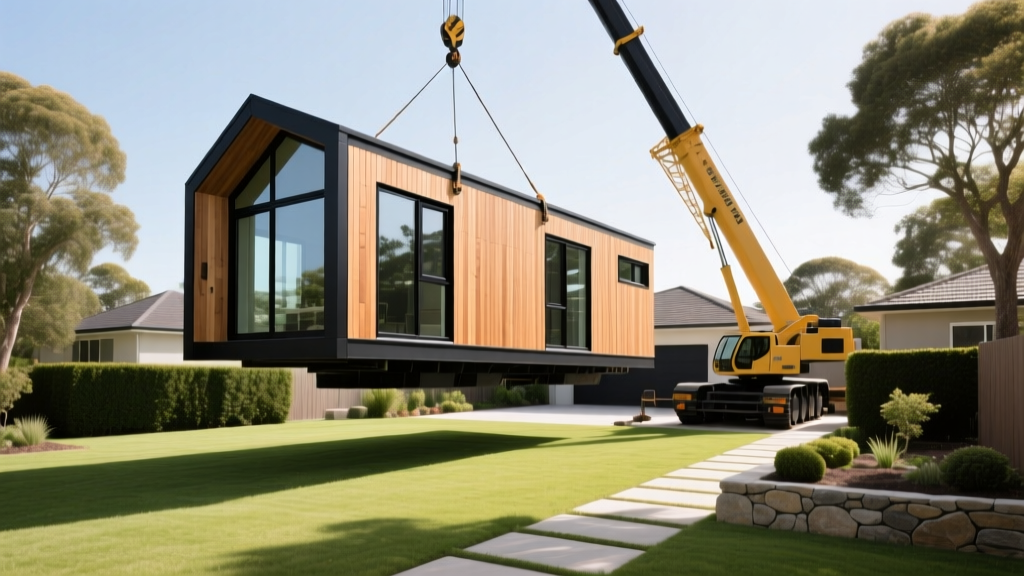
| Modular | $225 - $320 | $135k - $192k | 4 - 7 months | Flat lots with crane access |
| Prefab / Pod | $180 - $250 | $108k - $150k | 2 - 4 months | Tight budgets, standard layouts |
According to data from the UC Berkeley ADU Research Center, modular and prefab units have captured over 40% of the new ADU market share in coastal states due to their predictable pricing and accelerated timelines. However, stick-built remains necessary for sloped lots or properties with strict architectural review board (ARB) mandates requiring custom exterior detailing.
Site Preparation and Utility Hookups: The Hidden Budget Killers
Many homeowners focus solely on the structure's price tag and underestimate site work. Site preparation and utility connections typically consume 15% to 25% of your total budget.
- Sewer Lateral Trenching: Connecting the granny flat to the main sewer line requires trenching. Expect to pay $75 to $120 per linear foot. If your main house is 60 feet away and you need to trench under a concrete driveway, add $2,500 for concrete cutting and patching.
- Electrical Panel Upgrades: Most older homes have 100-amp main panels, which cannot support an additional dwelling unit. Upgrading to a 200-amp or 320-amp service panel costs between $2,800 and $4,500, including utility drop fees and permits.
- Soil Testing and Grading: A geotechnical soil percolation test and bearing capacity report costs $1,200 to $2,500. If your lot requires retaining walls or extensive grading to create a flat pad, budget an additional $8,000 to $15,000.
- Fire Sprinkler Tie-ins: In many western municipalities, if the main house has fire sprinklers, the ADU must tie into the same system. Upgrading the main water meter from 5/8-inch to 1-inch to handle the flow demand can cost $3,500 to $6,000 in municipal capacity fees.
Material Specifications and Finish Levels
The materials you select dictate both the upfront cost and the long-term maintenance of the granny flat. Below is a comparison of mid-tier versus premium exterior and mechanical specifications.
Exterior Siding and Roofing
For siding, LP SmartSide engineered wood is a cost-effective, moisture-resistant option, running $8 to $11 per square foot installed. For a premium, virtually maintenance-free facade, the James Hardie Artisan Collection fiber cement siding costs $14 to $19 per square foot installed but offers superior fire resistance and a 50-year limited warranty.
For roofing, architectural asphalt shingles like GAF Timberline HDZ remain the standard at $4.50 to $6.00 per square foot. However, standing seam metal roofing (e.g., Bridger Steel 24-gauge) costs $12 to $18 per square foot but is highly recommended for flat or low-slope ADU roofs to prevent water pooling and extend the roof lifespan to 50+ years.
HVAC and Mechanicals
Ductless mini-split heat pumps are the industry standard for granny flats due to their high efficiency and lack of ductwork. The Mitsubishi M-Series MSZ-GL (12,000 BTU) is a premium choice costing $5,000 to $6,500 installed, offering whisper-quiet operation (19 dB) and hyper-heating capabilities for cold climates. A budget-friendly alternative is the Bosch Climate 5000 series, which runs $3,800 to $4,500 installed but operates slightly louder at 26 dB.
Zoning Insight: Before finalizing your floor plan, check local ADU size limits. In California, State Law AB 13 waives local agency impact fees (which can exceed $10,000) for ADUs that are 750 square feet or smaller. Designing a 745-square-foot unit instead of an 800-square-foot unit can instantly save you thousands in municipal fees.
Financing Your Granny Flat in 2026
Securing capital for an Accessory Dwelling Unit requires navigating specific lending products. Traditional mortgages do not apply to standalone backyard structures. The Freddie Mac and Fannie Mae ADU guidelines now allow lenders to factor in projected rental income from the ADU when calculating your debt-to-income (DTI) ratio for a refinance, provided you have a signed lease or a market-rent appraisal.
HELOC / Home Equity Loan
Best for: Homeowners with significant equity.
2026 Rates: 7.5% - 9.2% variable.
Pros: Fast closing (30 days), interest-only payment options on HELOCs.
Cons: Variable rates expose you to market shifts; requires 20%+ equity.
RenoFi / ADU Construction Loan
Best for: Borrowers needing to finance based on the future appraised value of the property post-construction.
2026 Rates: 8.0% - 10.5% fixed.
Pros: Allows borrowing up to 90% of the after-renovation value.
Cons: Strict underwriting, requires detailed architectural plans upfront.
ROI and Rental Income Potential
Building a granny flat is primarily an investment vehicle. According to NAHB Housing Economics reports, ADUs in high-demand coastal and suburban markets yield an average annual gross rental return of 8% to 12% on the construction cost.
For example, a $160,000 modular granny flat in a mid-tier suburban market might rent for $1,600 per month. After accounting for property tax increases, insurance, and a 5% maintenance reserve, the net operating income (NOI) is roughly $14,400 annually, resulting in a 9% cap rate. In premium markets like Los Angeles, Seattle, or Austin, a well-designed 600-square-foot ADU can command $2,200 to $2,800 monthly, drastically compressing the payback period to under 7 years.
Frequently Asked Questions
Can I build a granny flat myself to save money?
While owner-builder permits exist, acting as your own general contractor on an ADU is highly discouraged unless you have professional construction experience. Coordinating subcontractors for foundation pouring, framing, plumbing, and electrical rough-ins requires strict sequencing. A single failed municipal inspection can delay the project by months, eating up any labor savings in carrying costs and loan interest.
Does adding a granny flat increase my property taxes?
Yes. Municipal assessors will evaluate the new square footage and add it to your property's assessed value. Typically, the tax increase is based solely on the value added by the ADU, not a reassessment of the entire primary residence. Expect your annual property tax bill to increase by 1% to 1.5% of the ADU's construction cost.
What is the cheapest way to build a granny flat?
The most cost-effective route in 2026 is converting an existing attached garage into an ADU (often called a JADU or Junior ADU). Because the foundation, roof, and exterior walls already exist, garage conversions typically cost between $85,000 and $120,000, bypassing the most expensive phases of new construction.
Written by
Marcus ChenMarcus Chen is a licensed structural engineer (PE) and building materials analyst with over 12 years of experience across residential, commercial, and industrial construction. He holds a Master of Science in Civil Engineering from UC Berkeley and spent six years at Thornton Tomasetti before transitioning to independent consulting and technical writing. Marcus specializes in material selection for seismic-prone regions, concrete reinforcement strategies, and lifecycle cost analysis. His work has been cited by the American Concrete Institute (ACI) and the Structural Engineers Association of California (SEAOC). When he is not on a job site or at his desk, you will find him hiking the Sierra Nevada or restoring a 1920s craftsman bungalow in Oakland, CA.
More from Marcus Chen
View all
Construction Cost
How Much Did the Eiffel Tower Cost to Build?
How much did the Eiffel Tower cost to build in 1889? We adjust for inflation and compare its budget to modern skyscraper construction.
Aug 4, 2026

Fire Resistance
What Is a Fire Resistant Material? Testing & Certification Guide
Discover what is a fire resistant material through ASTM and UL testing. Learn how fire ratings, certifications, and assemblies work in construction.
Aug 4, 2026

Construction Cost
How Much Did the Burj Khalifa Cost to Build?
How much did the Burj Khalifa cost to build? We break down the $1.5B project and extract 5 money-saving strategies for your next build.
Jul 30, 2026