How Much Does a Car Wash Cost to Build? 2026 Budget Breakdown
Discover how much a car wash costs to build in 2026. Explore detailed budget planning for express tunnels, in-bay automatics, and self-serve bays.
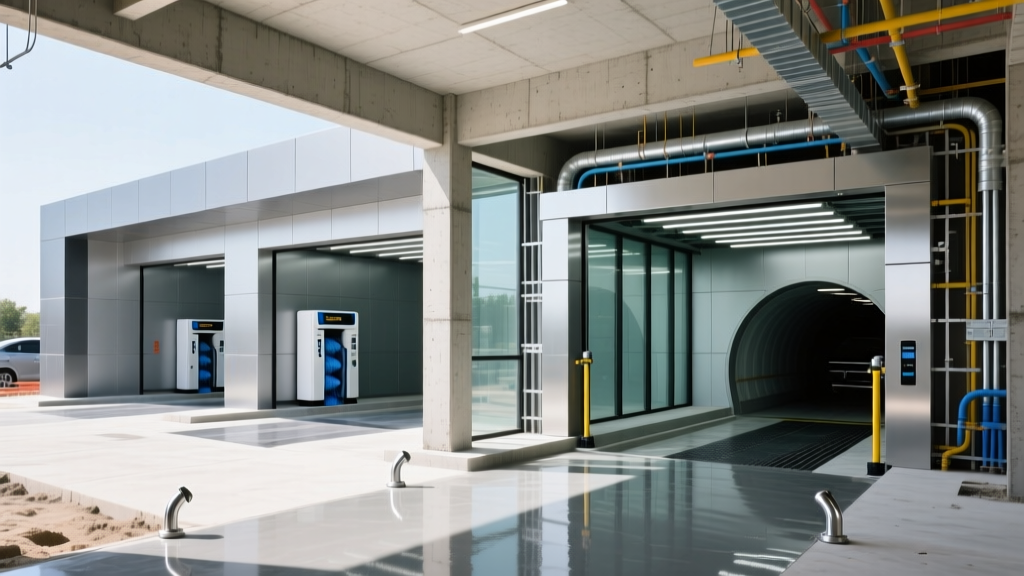
The Real Cost of Building a Car Wash: Beyond the Land
When evaluating commercial real estate opportunities, prospective investors frequently ask: how much does a car wash cost to build? The answer in 2026 requires looking far beyond the price of raw land. While a prime corner lot with high daily traffic counts is essential, the true capital expenditure lies in specialized site work, heavy-duty infrastructure, and proprietary washing technology. According to industry data tracked by the International Carwash Association, the shift toward automated, labor-light models has driven initial capital requirements higher, even as long-term operational costs have stabilized.
Budget planning for a car wash is not a single-line item. It is a complex matrix of real estate acquisition, municipal utility tap fees, structural engineering, and specialized equipment procurement. This guide breaks down the exact costs, material specifications, and hidden expenses you must account for when financing a modern car wash facility.
Quick Cost Ranges by Model (2026 Estimates)
- Express Exterior Tunnel: $3.5M - $6.5M+ (100-130 ft. tunnel)
- In-Bay Automatic (Rollover): $450,000 - $850,000 per bay
- Self-Serve Wand/Brush Bays: $250,000 - $500,000 (3-4 bay setup)
Cost Breakdown by Car Wash Business Model
The business model you choose dictates your site footprint, utility requirements, and equipment costs. Each model serves a different consumer demographic and requires a distinct capital allocation strategy.
1. Express Exterior Tunnel (High-Volume)
The express tunnel is the dominant model for new builds, favored for its high throughput and subscription-based recurring revenue. A standard 100-foot to 130-foot tunnel requires a building footprint of 3,500 to 5,000 square feet, plus extensive exterior queuing space.
- Building & Site Work: $1.5M - $2.5M. This includes the tunnel structure, technical rooms, and heavy concrete paving.
- Wash Equipment: $800,000 - $1.5M. Premium manufacturers like Sonny's The CarWash Factory or MacNeil Wash Systems provide the conveyor, friction materials, and high-pressure arches. Over-the-top belt conveyors (e.g., Sonny's ProGuide) cost $150,000 to $250,000 more than traditional chain-and-roller systems but drastically reduce vehicle damage claims and handle low-clearance vehicles.
- Queueing & Stacking: You must budget for at least 150 feet of stacking lanes before the pay station. At 20 feet per vehicle, this holds 7 cars. Insufficient stacking causes street spillage, leading to municipal code violations and abandoned transactions.
2. In-Bay Automatic (Rollover)
In-bay automatics (IBAs) are ideal for gas station add-ons or smaller, irregularly shaped parcels where a tunnel footprint is impossible. The vehicle parks in a bay, and the machine rolls over it.
- Equipment: $150,000 - $250,000 per bay. Touchless systems (like the PDQ LaserWash 360) or friction hybrids are standard. Touchless systems require higher chemical concentrations and more powerful pumps, slightly increasing electrical and plumbing rough-in costs.
- Building & Paving: $100,000 - $150,000 per bay for the structural enclosure, bay doors, and trench drains.
3. Self-Serve Wand and Brush Bays
Self-serve bays have the lowest barrier to entry but generate the lowest revenue per square foot. They are highly dependent on location and local demographics (e.g., areas with high populations of off-road enthusiasts or apartment dwellers without driveway access).
- Equipment: $30,000 - $45,000 per bay for boom-mounted wands, foaming brushes, and vacuum systems (brands like Innovatex or Coleman).
- Infrastructure: $150,000 - $300,000 for a 3-to-4 bay canopy, equipment room, and mat-cleaning stations.
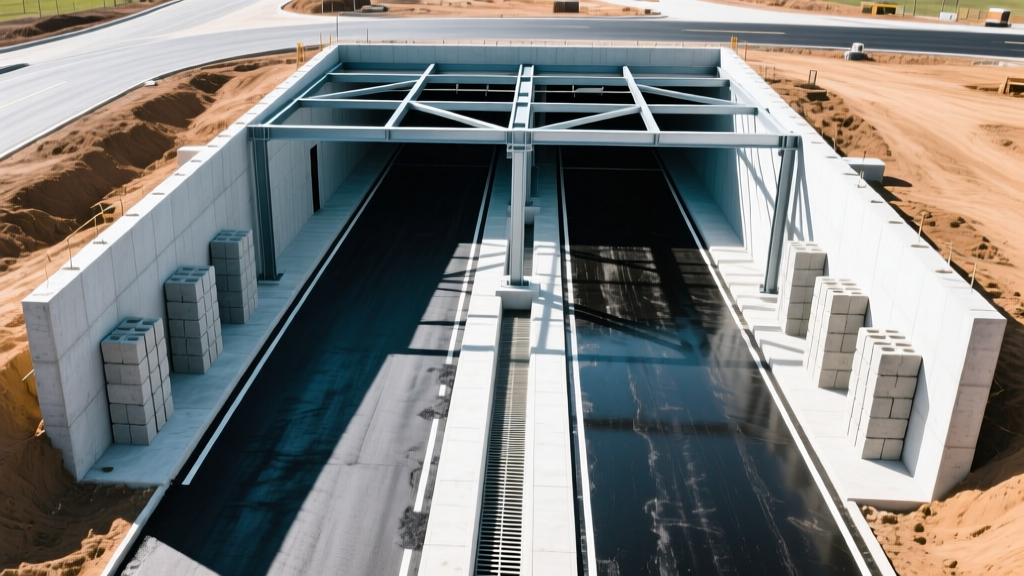
Hard Costs vs. Soft Costs: The Budget Matrix
Understanding the ratio of hard costs (physical construction and equipment) to soft costs (engineering, permits, financing) is critical for securing commercial loans. Below is a representative budget matrix for a standard $4.5M express tunnel project.
| Category | Line Item | Estimated Cost Range | Budget % |
|---|---|---|---|
| Land | Acquisition & Closing Costs | $500,000 - $1,200,000 | 15% - 25% |
| Site Work | Grading, Retaining Walls, Paving | $600,000 - $900,000 | 15% - 20% |
| Building | Tunnel Structure, Tech Room, Canopies | $800,000 - $1,200,000 | 20% - 25% |
| Equipment | Wash System, Conveyors, Dryers | $900,000 - $1,400,000 | 20% - 30% |
| Utilities | Water Taps, Electrical, Gas | $150,000 - $350,000 | 5% - 8% |
| Soft Costs | Architectural, Permits, Legal, SBA Fees | $200,000 - $400,000 | 5% - 10% |
Critical Infrastructure and Hidden Utility Costs
The most common budget overruns in car wash construction occur underground and at the municipal utility connection points. Car washes are incredibly resource-intensive facilities, and local municipalities often impose steep fees to accommodate them.
Warning: Municipal Water Tap Fees
Do not assume water and sewer access is standard. Municipal water tap fees for a high-volume express tunnel can range from $20,000 to over $150,000, depending on the city's infrastructure capacity. Always request a formal 'Will Serve' letter and fee schedule from the local water authority before purchasing land.
Water Reclamation Systems
In 2026, many municipalities mandate water reclamation for new commercial wash facilities to reduce strain on municipal treatment plants. According to EPA water reuse guidelines, commercial reclamation systems can reduce freshwater intake by up to 85%. Systems from manufacturers like Aqua Chem or PurClean cost between $45,000 and $90,000 installed. While expensive upfront, they reduce monthly water/sewer bills by thousands of dollars and ensure compliance with local environmental codes.
Oil/Water Separators and Drainage
All wash water must pass through an industrial oil/water separator before entering the municipal sewer system. High-capacity, multi-compartment separators (such as those from Mercer International or Highland Tank) cost $15,000 to $35,000. Furthermore, the site will require extensive trench drains (often 100+ linear feet of heavy-duty ductile iron grating) to manage surface runoff in the vacuum and queuing areas.
Electrical Upgrades
Express tunnels require massive electrical loads to power high-velocity centrifugal dryers (often 30HP to 50HP motors each) and high-pressure pump stations. Upgrading a site to 3-phase power and installing a new pad-mounted transformer can cost $30,000 to $60,000 if the existing grid capacity is insufficient.
Concrete and Paving Specifications
A car wash site endures extreme abuse: constant water exposure, chemical spills, and heavy static loads from SUVs and trucks idling in queue lines. Standard commercial parking lot asphalt or thin concrete will fail rapidly, leading to expensive trenching and repairs.
- Compressive Strength: Specify a minimum 4,000 PSI concrete mix for all drive aisles, queuing lanes, and the tunnel floor.
- Thickness & Reinforcement: Pour a minimum 6-inch slab (8-inch in heavy truck queue areas) reinforced with #4 rebar on an 18-inch on-center grid.
- Fiber Additives: Incorporate macro-synthetic fibers (e.g., Fibermesh) into the mix design to reduce plastic shrinkage cracking and improve impact resistance.
- Sloping and Drainage: The tunnel floor must be sloped precisely (typically 1/8 inch per foot) toward the center trench drain to prevent standing water, which degrades the conveyor system and creates slip hazards.
Financing Your Build: 2026 Capital Strategies
Because car washes are highly specialized, single-purpose real estate, traditional commercial mortgages can be difficult to secure with favorable terms. Most developers utilize government-backed financing to bridge the gap between land acquisition and equipment procurement.
The SBA 504 Loan Program is heavily utilized in the car wash industry. It allows developers to finance owner-occupied commercial real estate and heavy, long-lived equipment with as little as 10% down. The SBA 504 structure typically involves a first mortgage from a conventional lender (covering 50%), a second mortgage from a Certified Development Company (CDC) backed by the SBA (covering up to 40%), and a 10% equity injection from the borrower. This preserves working capital for the critical pre-opening marketing and staffing phases.
Strategic Decision Framework: Which Model Fits Your Budget?
Use this decision matrix to align your available capital, land parcel, and risk tolerance with the appropriate car wash model.
Capital & Land Alignment Guide
- If you have $4M+ and 1.5+ acres on a high-traffic arterial road: Build an Express Exterior Tunnel. The high capital cost is offset by massive throughput (100+ cars per hour) and high-margin monthly subscription programs.
- If you have $500k - $1M and a small parcel (or existing gas station): Install an In-Bay Automatic. It requires minimal labor, operates 24/7 without staff, and integrates seamlessly into existing convenience store traffic patterns.
- If you have under $500k and secondary real estate: Build Self-Serve Bays. Focus on neighborhoods with high renter density or off-road vehicle communities. Keep technology simple and focus on robust, vandal-resistant coin/card acceptors.
Accurately estimating how much a car wash costs to build requires meticulous attention to subterranean infrastructure, municipal utility demands, and equipment longevity. By budgeting for high-PSI concrete, adequate stacking lanes, and modern water reclamation systems from day one, developers can avoid the catastrophic change orders that frequently derail commercial construction timelines.
Written by
Elena RodriguezElena Rodriguez is a civil engineer and technical writer specializing in concrete technology, masonry systems, and ASTM/ACI compliance. She earned her B.S. in Civil Engineering from Texas A&M University and spent a decade at a materials testing laboratory, performing over 2,000 concrete compressive strength tests and masonry prism evaluations. Elena is an ACI-certified Field Testing Technician (Grade I) and a member of ASTM Committee C12 on Natural Building Stone. She currently consults on forensic engineering cases involving concrete failures and moisture intrusion. Based in San Antonio, TX, Elena is a proud member of the Society of Women Engineers (SWE) and coaches her daughter's FIRST Robotics team.
More from Elena Rodriguez
View all
Walls & Panels
Cost Analysis: Light Gauge Steel Framing Advantages and Disadvantages
Evaluate light gauge steel framing advantages and disadvantages through a strict cost analysis lens, comparing material, labor, and lifecycle expenses.
Aug 4, 2026

Walls & Panels
Gypsum Board Types: Exact Specifications, Thickness & Dimensions
Compare standard, Type X, and moisture-resistant gypsum board types. Get exact specifications, thicknesses, dimensions, and ASTM standards for your project.
Aug 4, 2026

Fire Resistance
Best Fire-Resistant Outdoor Decking Materials: 2026 Buyer Guide
Discover the best fire-resistant outdoor decking materials for 2026. Compare Class A PVC, aluminum, and hardwood options for WUI compliance and safety.
Aug 4, 2026