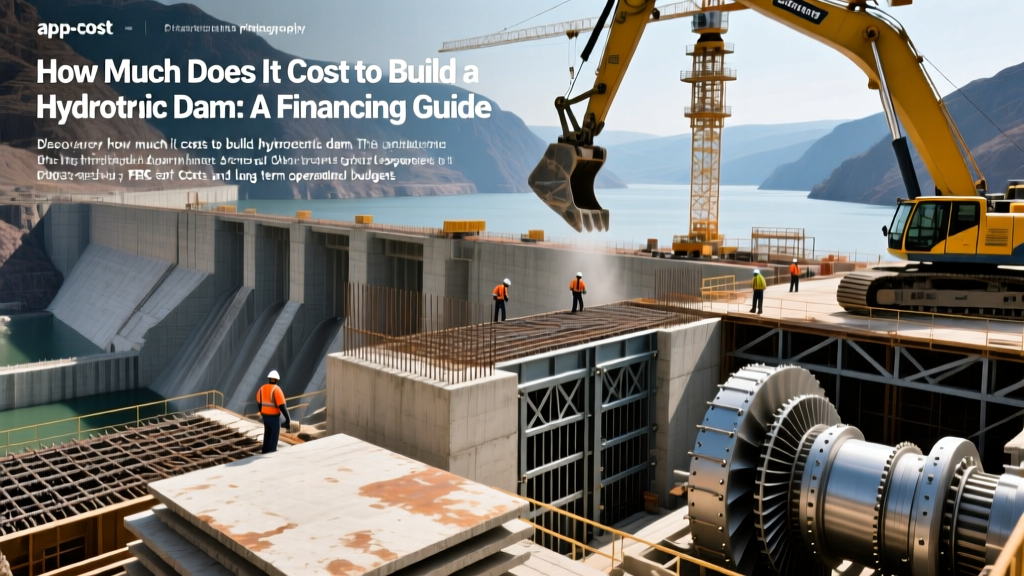
How Much Does It Cost to Build a Hydroelectric Dam: A Financing Guide
Discover how much it costs to build a hydroelectric dam. This financing guide breaks down capital expenses, FERC soft costs, and project funding stacks.
Executive Summary: The True Cost per Kilowatt
When evaluating how much does it cost to build a hydroelectric dam, developers must look beyond raw concrete and steel. The total capital expenditure (CapEx) for small to medium-scale hydroelectric projects (1 MW to 50 MW) typically ranges from $2,500 to $7,500 per installed kilowatt (kW). For a standard 5 MW run-of-river facility, total project costs generally fall between $12.5 million and $37.5 million.
However, civil works and electromechanical equipment account for only 60% to 70% of the total budget. The remaining capital is consumed by "soft costs"—environmental permitting, geotechnical surveys, grid interconnection studies, and Federal Energy Regulatory Commission (FERC) licensing. Understanding this full financial picture is critical for structuring a viable capital stack and securing project finance.
Capital Expenditure (CapEx) Breakdown by Project Scale
Construction costs scale non-linearly. Micro-hydro projects suffer from a lack of economies of scale, while medium-scale impoundment dams benefit from bulk material pricing but face exponential environmental mitigation costs.
| Project Classification | Capacity | Estimated Cost per kW | Total Estimated CapEx |
|---|---|---|---|
| Micro-Hydro | < 100 kW | $4,500 - $8,000 | $450k - $800k |
| Small Run-of-River | 100 kW - 5 MW | $3,500 - $6,500 | $3.5M - $32.5M |
| Medium Impoundment | 5 MW - 50 MW | $2,500 - $5,000 | $12.5M - $250M |
Hard Cost Drivers: Civil Works and Turbine Selection
The choice of dam structure heavily dictates civil costs. Roller-compacted concrete (RCC) gravity dams are the industry standard for medium-head projects, reducing concrete placement costs by 20% to 30% compared to traditional vibratory concrete arch dams.
Turbine selection must match the site's hydraulic head and flow rate:
- Francis Turbines: Ideal for medium head (30m - 300m). Represent the bulk of global installations. Cost: $800 - $1,200 per kW.
- Kaplan Turbines: Required for low head (< 30m) and high flow. Features adjustable blades, increasing manufacturing costs by 15% to 25% over Francis units.
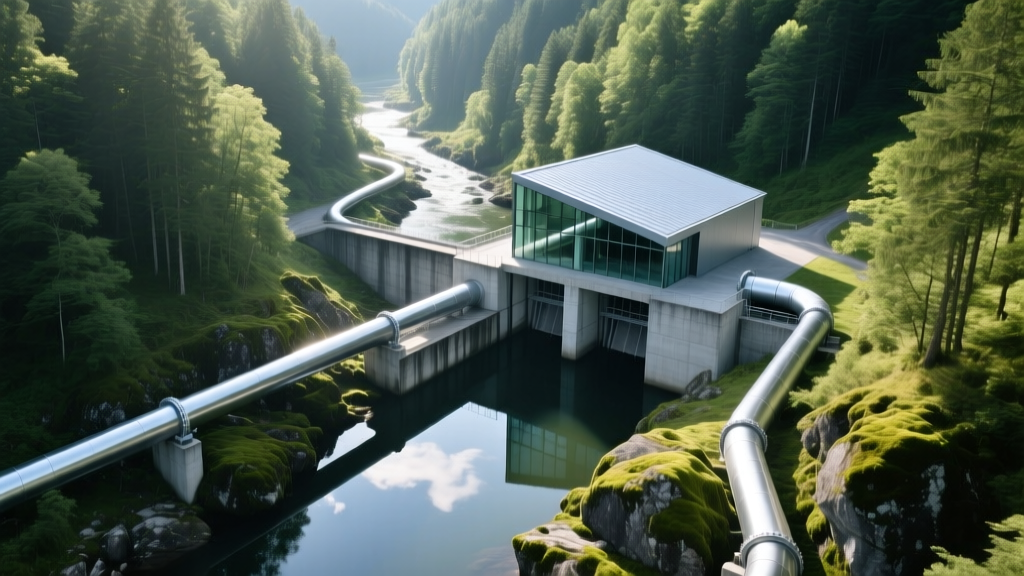
- Pelton Wheels: Used for high head (> 300m) and low flow. Requires extensive, high-pressure steel penstocks which often exceed the cost of the turbine itself.
The "Soft Cost" Trap: FERC Licensing and Permitting
The most common cause of budget overruns in hydroelectric development is underestimating soft costs. In the United States, non-federal hydropower projects must be licensed by the Federal Energy Regulatory Commission (FERC).
Developers must choose between the Traditional Licensing Process (TLP - FERC Part 4) or the Integrated Licensing Process (ILP - FERC Part 5). The ILP is mandatory for most new projects and enforces strict, upfront environmental study schedules.
FERC licensing takes an average of 3 to 5 years. During this pre-construction phase, developers will spend between $500,000 and $1.5 million on biological assessments, geotechnical drilling, hydrological modeling, and legal fees before a single yard of concrete is poured. Ensure your development capital is structured to survive a 60-month runway with zero revenue.
Environmental Mitigation Expenses
Modern hydroelectric financing must account for stringent ecological protections. Mandatory fish passage systems (e.g., Alaska-style fish ladders or bypass screens) can add 15% to 25% to the total civil works budget. Furthermore, maintaining minimum ecological flow rates downstream reduces the project's gross energy yield, directly impacting revenue models.
Structuring the Capital Stack: Financing Mechanisms
Because hydroelectric dams have high upfront CapEx but near-zero marginal operating costs and 50-to-100-year lifespans, they are uniquely suited for long-term, fixed-rate project finance. The standard capital stack for a privately developed 5 MW project typically follows a 70/30 or 60/40 Debt-to-Equity ratio.
1. Power Purchase Agreements (PPAs) as Debt Collateral
Commercial lenders will not underwrite hydroelectric debt based on merchant market power prices. A long-term PPA (15 to 25 years) with an investment-grade utility or corporate off-taker is mandatory. The PPA must include a guaranteed floor price that covers O&M, debt service, and the required DSCR.
2. Federal Incentives and Tax Equity
The Inflation Reduction Act (IRA) fundamentally altered hydroelectric project finance. Under Section 45Y, the Clean Electricity Production Credit provides a technology-neutral tax credit for zero-emission power generation. Developers can monetize these credits through tax equity partnerships or utilize the new direct pay/transferability provisions to secure upfront capital. For detailed incentive structures, developers should consult the Department of Energy's Water Power Technologies Office.
3. Green Bonds and State Revolving Funds
Municipalities and public-private partnerships can issue Green Bonds to fund run-of-river projects. Additionally, many state-level clean energy funds offer low-interest subordinated debt or forgivable loans for the feasibility and permitting phases, de-risking the project for senior commercial lenders.
Levelized Cost of Energy (LCOE) and Revenue Modeling
To determine if the CapEx is justified, financial models rely on the Levelized Cost of Energy (LCOE). For new-build small hydro, the LCOE typically ranges from $0.06 to $0.14 per kWh.
"Hydropower is a generational asset. While the initial LCOE may appear higher than utility-scale solar PV, the capacity factor of a well-designed run-of-river dam (40% - 60%) and its ability to provide baseload or peaking capacity makes its grid value substantially higher than intermittent renewables."
When modeling revenue, developers must calculate the Capacity Factor. A site with high spring runoff but dry summers may only achieve a 25% capacity factor, whereas a regulated impoundment or steady glacial-fed river can sustain 55%+. This directly dictates the payback period, which for well-capitalized hydro projects averages 12 to 18 years.
Risk Allocation and Contingency Budgeting
Construction lenders mandate strict risk allocation. To secure financing, your budget must include specific contingency line items:
- Hydrology Risk (10% Contingency): River flows can deviate from historical USGS gauge data due to climate shifts. Lenders will size debt based on the P90 flow year (90% probability of exceeding this yield).
- Geotechnical Risk (15% Contingency): Subsurface karst topography or fractured bedrock can require extensive grouting and foundation stabilization, easily adding millions to civil costs.
- Grid Interconnection Risk (5% Contingency): Upgrades to local transmission lines required by the regional transmission organization (RTO) can trigger unexpected network upgrade fees.
For developers exploring capital access, reviewing current DOE funding opportunities can provide non-dilutive grants to offset the heavy burden of early-stage geotechnical and hydrological feasibility studies.
Frequently Asked Questions (FAQ)
How long does it take to build a hydroelectric dam?
While actual physical construction of a small to medium dam takes 18 to 36 months, the total development timeline from initial site identification to commercial operation is typically 5 to 8 years, heavily weighted by environmental permitting and FERC licensing.
What are the ongoing O&M costs for a hydroelectric facility?
Operating and Maintenance (O&M) costs are remarkably low compared to thermal generation. Expect annual O&M to range from $15 to $35 per kW per year, covering turbine bearing inspections, trash rack clearing, transformer maintenance, and site security.
Can I finance a dam without a Power Purchase Agreement (PPA)?
It is exceedingly difficult. Without a contracted off-taker, the project is considered a "merchant" facility. Commercial banks rarely finance merchant hydro due to wholesale price volatility. You would need to rely on high-risk private equity or specialized infrastructure funds demanding much higher equity IRRs (15%+).
Written by
Priya KapoorPriya Kapoor is a real estate market analyst and construction economics researcher with expertise in housing affordability, development feasibility, and infrastructure investment. She holds a Master of Regional Planning from Cornell University and previously worked as a senior analyst at CBRE's Investment Properties group, where she modeled returns for $4B in mixed-use development pipelines. Priya now runs an independent research practice advising developers, municipalities, and REITs on construction cost forecasting and market timing. She publishes the quarterly "BuildMat Market Pulse" report tracking material price indices across 12 commodity categories. Based in Austin, TX, Priya serves on the board of Habitat for Humanity Austin and is a marathon runner.
More from Priya Kapoor
View all
Construction Cost
Cost to Build a 1600 Sq Ft Home in 2026: Full Breakdown
Accurate 2026 cost to build a 1600 sq ft home—material, labor, and regional pricing breakdowns included. Plan your budget with real-time estimates.
Aug 11, 2026

Wood & Lumber
Name the Types of Wood for Pressure Treatment and Preservation
Learn how to name the types of wood best suited for pressure treatment. Compare species treatability, chemical retention levels, and 2026 preservation costs.
Aug 4, 2026

Stone & Masonry
Stone Veneer Suppliers Lindenhurst: 2026 Cost Analysis
Analyze 2026 stone veneer costs in Lindenhurst, NY. Compare local supplier pricing, delivery fees, and Suffolk County installation labor rates.
Aug 4, 2026