How Much It Will Cost to Build a Swimming Pool in 2026
Discover exactly how much it will cost to build a swimming pool in 2026. Breakdowns for gunite, fiberglass, and vinyl, plus hidden excavation fees.

The True Baseline: National Averages vs. Reality
Calculating how much it will cost to build a swimming pool requires moving past generic national averages. While industry aggregates place the average inground pool cost between $75,000 and $125,000, real-world pricing is dictated by material selection, soil composition, and regional labor rates. In 2026, a standard 14x28-foot rectangular pool (392 square feet) built with mid-tier finishes will cost approximately $450 to $650 per square foot. Luxury custom builds featuring natural stone coping, integrated spas, and advanced automation easily exceed $1,200 per square foot.
Material Matrix: Gunite, Fiberglass, and Vinyl Liner Costs
The shell material accounts for 40% to 50% of your total budget. Each material dictates a different construction methodology, timeline, and long-term maintenance profile. The Pool & Hot Tub Alliance (PHTA) categorizes these three materials as the standard for residential inground construction.
| Feature | Gunite (Concrete) | Fiberglass | Vinyl Liner |
|---|---|---|---|
| Average Cost (14x28) | $95,000 - $150,000+ | $75,000 - $110,000 | $55,000 - $85,000 |
| Installation Time | 3 to 6 months | 3 to 6 weeks | 4 to 8 weeks |
| Customization | Unlimited (any shape/depth) | Limited to manufacturer molds | Moderate (custom wall shapes) |
| Shell Lifespan | 50+ years (resurface every 10-15) | 30+ years (gelcoat maintenance) | Walls 50+ years (liner replaced every 7-10) |
Gunite (Concrete) Deep Dive
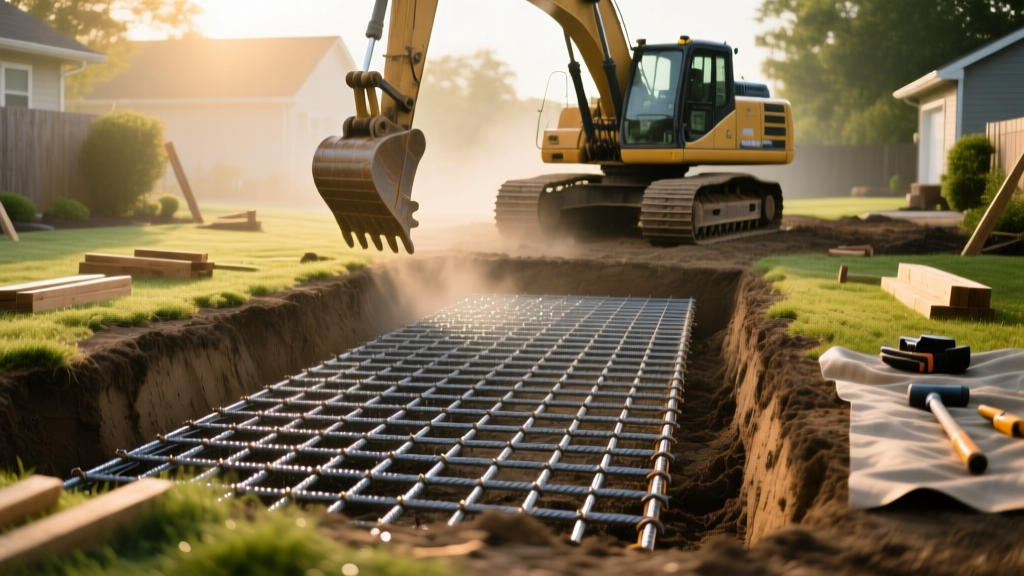
Gunite pools are built using a dry-mix concrete process sprayed over a grid of #3 or #4 steel rebar tied on 10-inch to 12-inch centers. The structural shell must maintain a minimum thickness of 6 inches. Contractors should use a 4,000 PSI concrete mix. The primary cost driver is labor; shaping the rebar, shooting the concrete, and hand-troweling the finish require specialized crews. Interior finishes range from standard white quartz plaster ($6,000-$8,000) to premium pebble aggregates like PebbleTec ($12,000-$18,000).
Fiberglass Shell Installation
Fiberglass pools are manufactured off-site and craned into the excavation. While the shell itself is comparable in price to gunite, site access dictates the final cost. If a 300-ton crane cannot reach the backyard from the street, you will incur heavy equipment fees or need to opt for a smaller shell. Backfilling a fiberglass shell requires clean, crushed angular stone (typically 3/8-inch chip) compacted in lifts. Using sand or native dirt for backfill is a critical failure mode that leads to hydrostatic pressure bulging and shell deformation.
Vinyl Liner Construction
Vinyl pools utilize galvanized steel or structural polymer walls anchored in a concrete footing. The interior is lined with a custom-cut vinyl sheet. For 2026 installations, specify a 27-mil or 30-mil virgin vinyl liner with UV inhibitors and fiberglass mesh backing. Thicker liners resist punctures and fading but cost roughly 20% more. The primary long-term cost is the mandatory liner replacement every 7 to 10 years, which costs between $4,500 and $7,000 depending on the pool size.
Excavation and Site Prep: The Hidden Cost Drivers
Before any material is ordered, the site must be prepped. Excavation costs average $3,000 to $8,000 for standard dirt removal. However, subsurface conditions can drastically alter this estimate.
- Rock Encounters: If the excavator hits bedrock, mechanical hammering or blasting is required. Rock removal adds $5,000 to $15,000 to the project.
- Expansive Clay Soil: In regions with heavy clay, contractors must over-excavate and backfill with compacted gravel to prevent soil expansion from cracking the pool shell.
- High Water Tables: Sites with high groundwater require a hydrostatic relief valve in the main drain and potentially a permanent perimeter French drain system, adding $2,500 to $4,500.
- Access Restrictions: If standard backhoes cannot fit through side yards, contractors must use mini-excavators, which increases the digging timeline and labor costs by up to 40%.
Plumbing, Electrical, and Equipment Upgrades
The equipment pad and underground plumbing network represent roughly 15% to 20% of the total build cost. Modern building codes and energy standards have shifted baseline equipment specifications.
Plumbing Specifications
Insist on Schedule 40 PVC for all underground lines, with Schedule 80 used for high-pressure areas near the pump. All main drains, skimmers, and return lines should be a minimum of 2 inches in diameter. Using 1.5-inch piping increases water velocity, creating head loss that forces the pump to work harder, ultimately increasing electricity costs and reducing equipment lifespan.
Electrical and Bonding
Pools require a dedicated 240V circuit for the pump and a separate 120V GFCI circuit for lighting. Crucially, the entire pool structure, equipment, and surrounding metal structures within 5 feet must be tied into a continuous copper bonding grid to prevent stray voltage electrocution. Improper bonding is a leading cause of failed municipal inspections.
Equipment Upgrades and Pricing
- Variable-Speed Pumps: Mandated by the Department of Energy for most new builds. A premium model like the Pentair IntelliFlo3 VSF costs $2,200 to $2,800 installed but reduces pumping energy costs by up to 90% compared to single-speed models. Read more on DOE pool pump efficiency standards.
- Salt Chlorine Generators: Systems like the Hayward AquaRite ($1,800-$2,500 installed) convert dissolved salt into chlorine. This eliminates the need to manually dose liquid chlorine, though you must factor in the cost of replacement salt cells every 3 to 5 years ($600-$800).
- Automation Systems: Smart panels (e.g., Pentair IntelliCenter) allow remote control of lighting, heating, and variable pump speeds via smartphone. Expect to pay $3,500 to $6,000 for full automation integration.
Hardscaping: Coping and Decking Costs
The transition from the pool shell to the surrounding landscape is where budgets frequently overflow. Coping is the capstone that borders the pool edge, while decking is the surrounding walkable surface.
| Material | Average Cost (Per Sq. Ft. Installed) | Durability & Heat Retention |
|---|---|---|
| Poured Concrete (Broom Finish) | $12 - $18 | High durability, retains high heat in direct sun. |
| Stamped/Colored Concrete | $20 - $30 | Moderate durability, prone to cracking over time if base is poor. |
| Travertine Pavers | $35 - $55 | Excellent durability, naturally stays cool underfoot due to porous structure. |
| Bluestone / Flagstone | $50 - $75+ | Premium look, very high durability, but can retain heat depending on color. |
Decision Framework: Which Pool Type Fits Your Budget?
Budget Under $65,000
Recommendation: Vinyl Liner. Focus your budget on a robust structural polymer wall system and a 30-mil liner. You will sacrifice some custom shaping, but you gain a functional, high-quality swimming environment without the structural costs of concrete.
Budget Between $75,000 and $100,000
Recommendation: Fiberglass. If your property has wide access for a crane and you want a rapid installation timeline (under 6 weeks), fiberglass provides a non-porous, algae-resistant shell with minimal long-term chemical maintenance.
Budget Over $110,000
Recommendation: Gunite. If you require specific depths (e.g., a 10-foot diving well), custom vanishing edges, or integrated tanning ledges, gunite is the only viable option. Allocate at least 15% of your total budget for premium interior finishes and natural stone coping.
Frequently Asked Questions
Does a swimming pool increase home resale value?
In most markets, a well-maintained inground pool adds 5% to 8% to the home's appraised value. However, it rarely yields a 100% return on investment compared to the initial construction cost.
What is the most expensive phase of pool construction?
Excavation and structural shell formation (steel and gunite) represent the highest labor and material costs. However, poor site access or unforeseen rock can make the excavation phase the most volatile variable in the budget.
Can I finance a pool build?
Yes, most builders partner with specialty lenders offering home improvement loans. Rates and terms vary, but borrowing $100,000 over 15 years at a 7.5% fixed rate will add roughly $920 to your monthly expenses.
Written by
Priya KapoorPriya Kapoor is a real estate market analyst and construction economics researcher with expertise in housing affordability, development feasibility, and infrastructure investment. She holds a Master of Regional Planning from Cornell University and previously worked as a senior analyst at CBRE's Investment Properties group, where she modeled returns for $4B in mixed-use development pipelines. Priya now runs an independent research practice advising developers, municipalities, and REITs on construction cost forecasting and market timing. She publishes the quarterly "BuildMat Market Pulse" report tracking material price indices across 12 commodity categories. Based in Austin, TX, Priya serves on the board of Habitat for Humanity Austin and is a marathon runner.
More from Priya Kapoor
View all
Construction Cost
Cost to Build a 1600 Sq Ft Home in 2026: Full Breakdown
Accurate 2026 cost to build a 1600 sq ft home—material, labor, and regional pricing breakdowns included. Plan your budget with real-time estimates.
Aug 11, 2026

Wood & Lumber
Name the Types of Wood for Pressure Treatment and Preservation
Learn how to name the types of wood best suited for pressure treatment. Compare species treatability, chemical retention levels, and 2026 preservation costs.
Aug 4, 2026

Stone & Masonry
Stone Veneer Suppliers Lindenhurst: 2026 Cost Analysis
Analyze 2026 stone veneer costs in Lindenhurst, NY. Compare local supplier pricing, delivery fees, and Suffolk County installation labor rates.
Aug 4, 2026