How Much Does It Cost to Build a Nuclear Plant? Cost Breakdown
Discover how much it costs to build a nuclear plant. Detailed budget breakdown, SMR vs Gen III+ costs, and financing strategies for utility mega-projects.
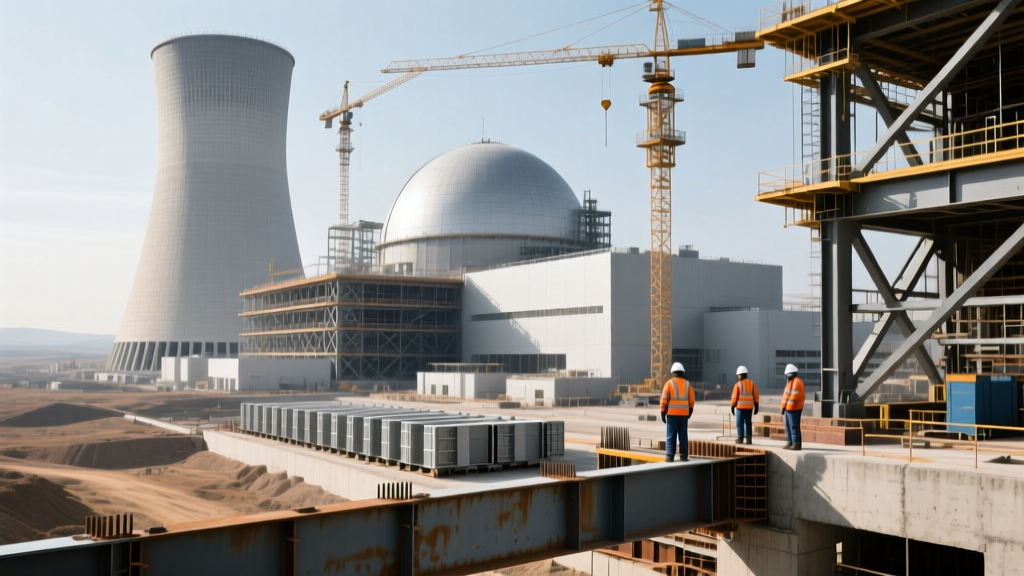
When utility executives, sovereign wealth funds, and government planners ask how much does it cost to build a nuclear plant, the answer requires separating base engineering costs from macroeconomic financing realities. As of current market conditions, the total capital cost for a traditional large-scale Generation III+ nuclear reactor ranges from $6 billion to over $30 billion per facility. On a per-kilowatt basis, this translates to an all-in cost between $5,500 and $15,000+ per kW of installed capacity.
However, nuclear construction is not a standard commercial building project; it is a multi-decade infrastructure mega-project. Budget planning must account for extreme regulatory oversight, specialized nuclear-grade supply chains, and the heavy burden of construction financing. Below is a comprehensive breakdown of the capital expenditures, financing structures, and emerging Small Modular Reactor (SMR) economics that define modern nuclear budgets.
Overnight Capital Costs vs. All-In Financing Costs
To accurately estimate a nuclear budget, planners must distinguish between two critical financial metrics:
The Overnight Cost vs. IDC Distinction
Overnight Capital Cost: The theoretical cost to build the plant instantly, covering engineering, procurement, construction (EPC), and owner's costs. For a Gen III+ reactor, this typically sits between $4,000 and $6,500 per kW.
Interest During Construction (IDC): Because nuclear plants take 7 to 12 years to build, the debt accumulated during construction accrues massive interest. According to the U.S. Energy Information Administration (EIA), financing can add 30% to 100% to the final plant cost, depending on the Weighted Average Cost of Capital (WACC) and construction duration.
If a 1,100 MW reactor has an overnight cost of $6 billion, a 10-year construction timeline at an 8% WACC will push the final all-in budget past $12 billion before a single megawatt of electricity is sold to the grid.
Capital Expenditure (CapEx) Breakdown
Understanding where the capital is deployed allows budget managers to identify areas for value engineering and risk mitigation. The following matrix outlines the typical CapEx distribution for a standard pressurized water reactor (PWR).
| Project Phase / Component | Budget Share | Key Cost Drivers & Specifics |
|---|---|---|
| Civil & Structural Works | 25% - 30% | Seismic Category I reinforced concrete, base isolation systems, cooling tower hyperbolic shells, and deep bedrock anchoring. |
| Nuclear Steam Supply System (NSSS) | 25% - 30% | Reactor pressure vessel (SA-508 low-alloy steel), steam generators, pressurizer, and primary coolant pumps. Forged components are a major bottleneck. |
| Turbine Island & BOP | 20% - 25% | Arabelle or similar half-speed steam turbines, condensers, feedwater heaters, and the Balance of Plant (BOP) piping networks. |
| Electrical & I&C Systems | 10% - 15% | Nuclear-grade Instrumentation & Control (I&C), redundant diesel backup generators, switchyards, and grid interconnection infrastructure. |
| Engineering, Licensing & PM | 10% - 15% | NRC design certification, environmental impact statements, quality assurance (10 CFR 50 Appendix B), and project management overhead. |
Large-Scale Gen III+ vs. Small Modular Reactors (SMRs)
The nuclear industry is currently bifurcated between gigawatt-scale traditional reactors and factory-assembled SMRs. Budget planners must weigh the economies of scale against the modularity and reduced financing risks of SMRs. The U.S. Department of Energy's Liftoff Report highlights that while SMRs promise lower upfront capital requirements, first-of-a-kind (FOAK) pricing remains volatile.
| Reactor Type | Capacity | Est. Total Plant Cost | Cost per kW | Build Time |
|---|---|---|---|---|
| Westinghouse AP1000 (Gen III+ PWR) | 1,117 MW | $13B - $16B | $11,500 - $14,500 | 8 - 12 Years |
| EDF EPR (Gen III+ PWR) | 1,650 MW | $15B - $35B+ | $9,000 - $21,000 | 10 - 15 Years |
| NuScale Power Module (SMR) | 77 MW (per module) | $600M - $900M | $7,800 - $11,500 | 3 - 4 Years |
| TerraPower Natrium (Advanced SMR) | 345 MW + Storage | $3B - $4.5B | $8,700 - $13,000 | 4 - 6 Years |
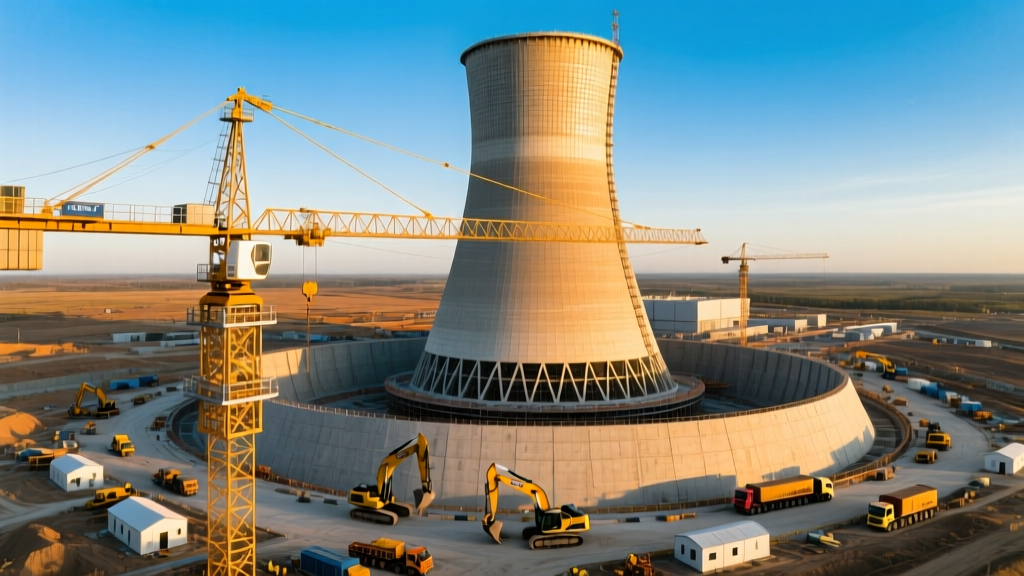
Global Case Studies: Actual vs. Estimated Budgets
Historical data reveals a persistent trend in nuclear construction: initial budget estimates are frequently eclipsed by final costs due to supply chain bottlenecks and regulatory ratcheting. Analyzing these case studies is mandatory for realistic contingency planning.
1. Plant Vogtle Units 3 & 4 (United States)
Equipped with Westinghouse AP1000 reactors, Vogtle is the only new large-scale nuclear construction completed in the U.S. in the last three decades. Initially estimated at $14 billion for two units (approx. $6,300/kW), the project suffered from first-of-a-kind engineering delays, the bankruptcy of lead contractor Westinghouse, and severe labor shortages. The final cost ballooned to over $30 billion (approx. $13,500/kW), requiring massive state utility commission bailouts and federal loan guarantees.
2. Hinkley Point C (United Kingdom)
Featuring two EDF EPR reactors, Hinkley Point C was originally budgeted at £18 billion ($23 billion) with a 2025 completion target. Complexities in pouring the massive nuclear-grade concrete basemat and installing miles of specialized safety cabling have pushed the estimated budget to £31 billion - £35 billion ($39B - $44B), with delays extending into the 2030s.
3. Olkiluoto 3 (Finland)
The first EPR built in Europe, Olkiluoto 3 is the textbook example of nuclear budget overruns. Originally contracted as a fixed-price turnkey project for €3.2 billion in 2005, fierce disputes between the vendor (Areva/Siemens) and the utility (TVO) led to years of arbitration. The plant finally entered regular electricity production in 2023, with final estimated costs reaching €11 billion ($12 billion).
Critical Budget Risks and Mitigation Strategies
To prevent budgets from spiraling out of control, project sponsors must proactively manage three primary risk vectors:
- The Heavy Forging Monopoly: The reactor pressure vessel requires massive, ultra-pure steel ingots. Currently, only a handful of facilities globally—most notably Japan Steel Works (JSW) and Sheffield Forgemasters—possess the capacity to produce these nuclear-grade forgings. Mitigation: Secure forging slot reservations 3 to 5 years before breaking ground, or utilize modular SMR designs that require smaller, commercially available forgings.
- Regulatory Ratcheting: Mid-construction changes mandated by nuclear regulatory bodies (like the NRC or ONR) can halt work and require expensive re-engineering. Mitigation: Insist on building a reactor design that has already achieved Final Design Approval (FDA) or Design Certification (DC) in the host country before pouring the first concrete.
- Labor Productivity & Welding: Nuclear piping requires thousands of certified nuclear welders. A shortage of qualified personnel leads to schedule slippage and compounding IDC costs. Mitigation: Invest heavily in off-site modularization. Building pipe racks and containment sub-assemblies in controlled factory environments reduces on-site welding hours by up to 40%.
Strategic Budget Planning Framework for Mega-Projects
For utility CFOs and infrastructure investors, finalizing the budget for a nuclear plant requires a phased approach to capital deployment. According to data synthesized by the World Nuclear Association, the most successful modern nuclear projects utilize the following financial architecture:
- Regulated Asset Base (RAB) Model: Instead of relying solely on post-completion power purchase agreements (PPAs), utilize a RAB framework that allows the utility to levy a small surcharge on ratepayers during the construction phase. This drastically reduces the debt burden and shaves billions off the final IDC.
- Government Loan Guarantees: Secure sovereign backing (such as the U.S. DOE Title 17 Loan Programs Office) to lower the cost of debt. A reduction in WACC from 9% to 5% can reduce the all-in cost per kW by over $2,000.
- Phased SMR Deployment: If opting for SMRs, structure the budget to commission the first 2-4 modules to establish site infrastructure and labor workflows, then exercise options for subsequent modules at a locked-in, reduced NOAK price.
Ultimately, determining how much it costs to build a nuclear plant is less about the price of concrete and steel, and more about the cost of time, capital, and risk management. Planners who prioritize standardized designs, secure early supply chain contracts, and leverage government-backed financing models are the only ones capable of delivering these zero-carbon mega-projects on budget.
Written by
Priya KapoorPriya Kapoor is a real estate market analyst and construction economics researcher with expertise in housing affordability, development feasibility, and infrastructure investment. She holds a Master of Regional Planning from Cornell University and previously worked as a senior analyst at CBRE's Investment Properties group, where she modeled returns for $4B in mixed-use development pipelines. Priya now runs an independent research practice advising developers, municipalities, and REITs on construction cost forecasting and market timing. She publishes the quarterly "BuildMat Market Pulse" report tracking material price indices across 12 commodity categories. Based in Austin, TX, Priya serves on the board of Habitat for Humanity Austin and is a marathon runner.
More from Priya Kapoor
View all
Construction Cost
Cost to Build a 1600 Sq Ft Home in 2026: Full Breakdown
Accurate 2026 cost to build a 1600 sq ft home—material, labor, and regional pricing breakdowns included. Plan your budget with real-time estimates.
Aug 11, 2026

Wood & Lumber
Name the Types of Wood for Pressure Treatment and Preservation
Learn how to name the types of wood best suited for pressure treatment. Compare species treatability, chemical retention levels, and 2026 preservation costs.
Aug 4, 2026

Stone & Masonry
Stone Veneer Suppliers Lindenhurst: 2026 Cost Analysis
Analyze 2026 stone veneer costs in Lindenhurst, NY. Compare local supplier pricing, delivery fees, and Suffolk County installation labor rates.
Aug 4, 2026