Cost to Build Raised Beds: 2026 Financing & Budget Guide
Discover the true cost to build raised beds in 2026. Compare material prices, uncover hidden soil expenses, and explore smart financing options.

The True Cost to Build Raised Beds in 2026
When homeowners begin researching the cost to build raised beds, they often focus exclusively on the lumber. However, a comprehensive landscaping budget must account for structural materials, specialized soil blends, heavy-duty hardware, and site preparation. In 2026, the average cost to build a standard 4-foot by 8-foot raised garden bed ranges from $350 to $1,400, depending entirely on your material selection and soil sourcing strategy.
Understanding these baseline costs is the first step in determining which financing pathway makes sense for your outdoor project. Unlike interior renovations, landscaping projects rarely qualify for traditional secured home improvement loans unless they are part of a larger hardscape overhaul. Below, we break down the material costs, hidden expenses, and strategic financing options available this year.
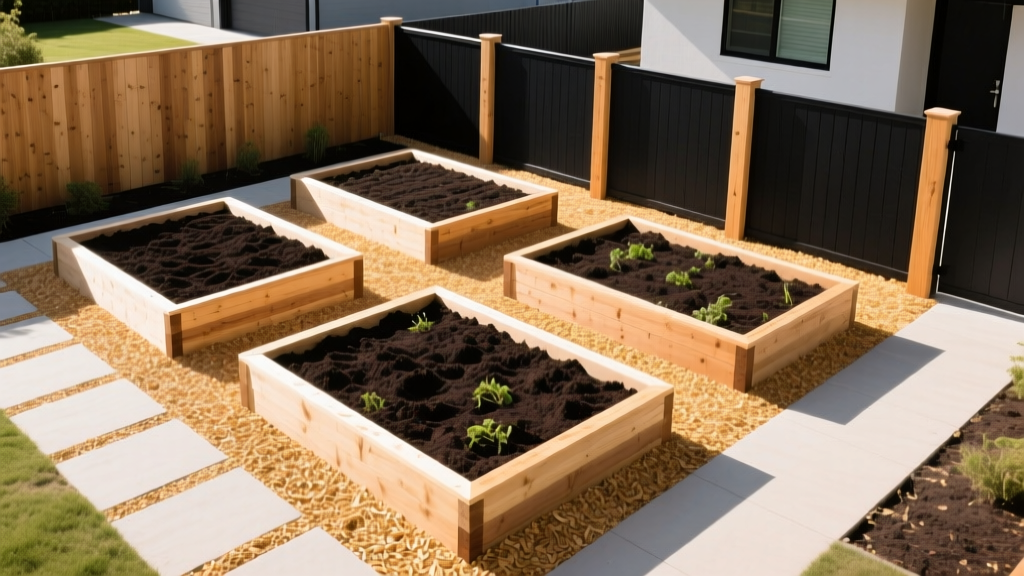
Material Breakdown: Upfront Costs vs. Long-Term Value
Choosing the right material dictates both your immediate cash flow requirements and the long-term ROI of your garden. The University of Minnesota Extension notes that untreated wood will rot within 3 to 5 years, making it a poor financial investment compared to rot-resistant alternatives.
| Material | Cost per 4x8 Bed | Lifespan | Financing Suitability |
|---|---|---|---|
| Untreated Pine | $80 - $120 | 3 - 5 Years | Cash only (Do not finance) |
| Western Red Cedar | $200 - $350 | 10 - 15 Years | 0% Retail Cards / Cash |
| Corrugated Galvanized Steel | $150 - $250 | 20+ Years | 0% Retail Cards / Cash |
| Composite (e.g., Trex) | $600 - $950 | 25+ Years | Personal Loan / HELOC bundle |
| Concrete Masonry Units (CMU) | $180 - $300 | 50+ Years | Cash / Phased Budgeting |
Hidden Costs That Derail Landscaping Budgets
The most common reason garden builds exceed their budget is a failure to calculate volumetric soil requirements and structural hardware needs. According to soil management guidelines, a standard 4x8 bed that is 12 inches deep requires exactly 32 cubic feet (roughly 1.2 cubic yards) of soil.
The Soil Delivery Trap
If you are building only one or two beds, bulk soil delivery is financially inefficient. Most landscape suppliers enforce a 3-to-5 cubic yard minimum delivery fee, which can add $150 to $300 in transport surcharges to a $90 soil order. For small builds, purchasing bagged premium raised bed mix (approx. $8 per 1.5 cu. ft. bag) is actually more cost-effective, despite the higher per-unit price. For builds of four or more beds, bulk delivery becomes the superior financial choice.
Hardware and Irrigation
- Structural Screws: Do not use standard exterior deck screws. The moisture and acidity of garden soil will corrode them, causing the bed to bow and fail. Budget $35-$50 per bed for ceramic-coated structural screws (like GRK Fasteners RSS) or stainless steel timber screws.
- Drip Irrigation: Adding a dedicated drip zone to your raised beds costs roughly $75 to $120 per bed for 1/4-inch tubing, emitters, and a pressure regulator. Tying this into an existing smart controller (like a Rachio 3) adds $150 to the total project cost.
- Pathway Materials: Decomposed granite (DG) or cedar mulch pathways between beds cost $2.50 to $4.00 per square foot installed. For a 100-square-foot garden footprint, add $250 to $400 to your budget.
Financing Your Garden Build: 4 Strategic Pathways
Because the cost to build raised beds usually falls between $1,000 and $6,000, it sits in an awkward middle ground for traditional financing. It is too expensive for casual out-of-pocket spending for many, but too small to justify the closing costs of a mortgage refinance. Here are the four most effective ways to finance this specific type of outdoor structure in 2026.
1. Retailer 0% APR Credit Cards (Best for $1k - $5k Builds)
Major home improvement retailers offer consumer credit cards with 12-to-24-month 0% APR promotional periods on purchases over $299. If your total material cost for lumber, composite panels, and irrigation supplies is $3,500, utilizing a 24-month 0% APR card allows you to pay roughly $145 per month without incurring interest. Warning: If the balance is not paid in full before the promotional period ends, deferred interest (often 29.99%) is applied retroactively to the original purchase amount.
2. Phased Cash-Flow Budgeting (Best for Tight Budgets)
Rather than taking on debt, utilize a phased construction approach. Phase 1 (Spring): Clear the site, lay down cardboard and arborist woodchips (often free from local tree services), and build the physical frames. Phase 2 (Early Summer): Order bulk soil and fill the beds. Phase 3 (Late Summer/Fall): Install irrigation and pathway hardscaping. This spreads a $4,000 project across three separate monthly cash-flow cycles.
3. Municipal & Utility Landscaping Grants
Many municipalities and water districts offer rebates for replacing water-thirsty turf with permeable landscaping or drought-tolerant garden beds. The EPA WaterSense program highlights that efficient landscaping can reduce outdoor water use by up to 50%. Check your local water authority for "turf replacement" or "urban agriculture" grants, which can provide $500 to $2,000 in direct rebates, effectively subsidizing the cost of your raised bed materials and drip irrigation.
4. HELOC Bundling (Best for $15k+ Complete Overhauls)
A Home Equity Line of Credit (HELOC) is generally a poor choice for a standalone raised bed project due to minimum draw requirements (often $10,000) and annual fees. However, if you are financing a larger outdoor living space—such as a pergola, patio, and fencing—bundling the raised beds into the HELOC draw makes sense. According to the Consumer Financial Protection Bureau, HELOCs offer flexible draw periods, but you must ensure your combined loan-to-value (CLTV) ratio remains below 85% to secure the best 2026 interest rates.
ROI and Property Value Impact
"While a standalone vegetable garden does not directly appraise for its material cost, high-end, permanently integrated raised beds with stone retaining walls and automated irrigation contribute to the overall 'curb appeal' and functional utility metrics that modern homebuyers prioritize, often yielding a 100% to 200% return on investment when the home is sold."
If your goal is purely financial ROI, avoid cheap pine beds that will rot and look dilapidated within four years. Invest in composite materials, stone, or thick cedar, and ensure the beds are perfectly leveled with clean, weed-free pathways. The aesthetic integration of the garden into the broader landscape design is what drives property value, not the vegetables grown inside.
Frequently Asked Financing Questions
Can I use an FHA Title I Property Improvement Loan for raised beds?
Generally, no. FHA Title I loans are designed for structural alterations, accessibility improvements, and essential home systems. Cosmetic landscaping and vegetable gardens rarely meet the underwriting criteria for these government-backed loans unless the beds are part of a massive, engineered retaining wall system preventing soil erosion.
Is it cheaper to build my own raised beds or buy pre-fab kits?
Building from scratch using dimensional lumber (like 2x6 or 2x8 cedar boards) is typically 20% to 30% cheaper than buying high-quality pre-fab kits. However, pre-fab galvanized steel or composite kits save you 3 to 4 hours of labor per bed. If your time is valued at more than $40/hour, the pre-fab kit is the superior financial choice.
How do I budget for soil replacement in future years?
Raised bed soil settles and depletes over time. Budget for a 2-inch top-dressing of premium compost every spring. For a 4x8 bed, this requires about 5.5 cubic feet of compost, costing roughly $35 to $50 per bed annually. Factor this into your ongoing home maintenance budget rather than your initial construction loan.
Written by
David NakamuraDavid Nakamura is a licensed architect (AIA) and construction technology writer focused on sustainable building methods, mass timber engineering, and high-performance building envelopes. He holds a Master of Architecture from the University of Washington and is a certified Passive House Consultant (CPHC). David spent eight years at the Seattle firm Mithun, where he led the design of three LEED Platinum projects, before founding his own practice specializing in net-zero residential design. He serves on the editorial advisory board of GreenBuilder Magazine and has authored peer-reviewed papers on cross-laminated timber (CLT) connections for the Journal of Structural Engineering. In his spare time, David teaches woodworking at Pratt Fine Arts Center and kayaks the Puget Sound.
More from David Nakamura
View all
Construction Cost
Labor Cost to Build a Deck Per Sq Ft: 2026 Installation Guide
Discover the exact labor cost to build a deck per sq ft in 2026. This installation guide breaks down contractor rates, complexity factors, and hidden fees.
Aug 4, 2026

Construction Cost
How Much Does It Cost to Build a 3 Bedroom House? Financing Guide
Learn exactly how much it costs to build a 3 bedroom house and explore 2026 financing options, construction loan types, and budget frameworks for your build.
Aug 4, 2026

Construction Cost
Cost to Build a Tennis Court: 2026 Guide
How much does it cost to build a tennis court in 2026? Breakdowns for asphalt, concrete, and synthetic surfaces plus fencing and lighting.
Jul 30, 2026