Regional Cost to Build an Apartment Building: 2026 Guide
Analyze the regional cost to build an apartment building in 2026. Compare labor, material, and land prices across major US markets for mid-rise projects.

The Baseline: National Averages for Mid-Rise Construction
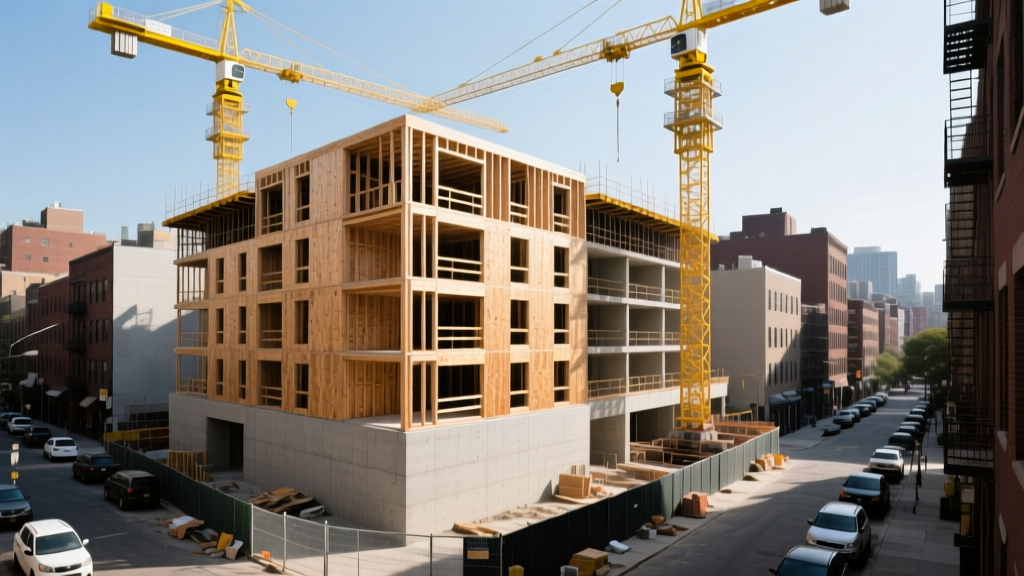
When underwriting a multifamily development, understanding the true cost to build an apartment building requires moving beyond national averages. In 2026, the baseline hard cost for a standard 5-over-1 mid-rise structure (Type V-A wood framing over a Type I concrete podium) ranges from $215 to $265 per square foot. However, this baseline is practically useless for regional feasibility studies. According to industry data tracked by the National Association of Home Builders, regional variances in labor rates, material logistics, and code-mandated engineering can swing total project costs by over 60% between the most and least expensive metropolitan statistical areas (MSAs).
This analysis deconstructs the regional cost to build an apartment building, isolating the specific material, labor, and regulatory variables that dictate profitability in Tier 1 and Tier 2 markets.
Regional Cost Matrix: Price Per Square Foot by Market
The following matrix outlines estimated hard costs (site work, concrete, framing, MEP, finishes) for a 120-unit, 5-over-1 mid-rise apartment building across key US regions. Soft costs are represented as a multiplier, reflecting local entitlement timelines and impact fees.
| Region / Key MSA | Hard Cost / SF | Soft Cost Multiplier | Total Est. Cost / SF | Primary Cost Driver |
|---|---|---|---|---|
| Northeast (NYC, Boston) | $320 - $390 | 1.35x - 1.45x | $432 - $565 | Union labor, staging logistics |
| West Coast (SF, LA, Seattle) | $295 - $370 | 1.30x - 1.50x | $383 - $555 | Seismic detailing, Title 24 energy |
| Sunbelt (Austin, Dallas, Atlanta) | $185 - $225 | 1.15x - 1.25x | $212 - $281 | Favorable soil, non-union labor |
| Midwest (Chicago, Minneapolis) | $230 - $270 | 1.20x - 1.30x | $276 - $351 | Winter build premiums, frost walls |
| Southeast (Miami, Tampa) | $210 - $250 | 1.15x - 1.20x | $241 - $300 | Hurricane impact glazing, concrete |
Tier 1 Markets: The Northeast and West Coast Premium
In high-barrier-to-entry markets, the cost to build an apartment building is heavily inflated by site logistics and specialized engineering. In New York City and Boston, the lack of laydown space requires just-in-time material delivery, adding 8% to 12% to overall material costs due to freight premiums and double-handling. Furthermore, prevailing wage requirements and dense unionization mean that a journeyman carpenter or ironworker commands 40% to 65% higher fully-burdened hourly rates compared to the national average.
On the West Coast, the lateral load resisting system dictates the budget. A 5-over-1 building in Los Angeles requires extensive steel moment frames and continuous tiedown systems (such as the Simpson Strong-Tie ATS or HDU series) anchored deep into the concrete podium. This specialized seismic detailing adds $12 to $18 per square foot to the structural framing package compared to a wind-load-only design in the Southeast.
Tier 2 Markets: Sunbelt and Midwest Efficiencies
The Sunbelt remains the most forgiving region for multifamily developers. In markets like Dallas and Austin, expansive but relatively stable soil conditions often allow for shallower foundation systems, such as post-tensioned slab-on-grade or shallow spread footings, avoiding the $40,000+ per floor expense of deep caissons required in coastal or high-water-table areas. Additionally, the prevalence of open-shop (non-union) labor pools keeps MEP (Mechanical, Electrical, Plumbing) installation costs 20% to 30% below Tier 1 benchmarks.
Deconstructing the Variance: Material and Code Impacts
Beyond labor, regional building codes fundamentally alter the material bill of quantities. When calculating the cost to build an apartment building, developers must account for these localized material mandates:
- Fire Retardant Treated (FRT) Lumber: In California and dense urban corridors, exterior load-bearing wood walls must utilize FRT lumber to meet fire separation distances. In 2026, FRT SPF (Spruce-Pine-Fir) carries a premium of $1.40 to $1.90 per board foot over standard dimensional lumber, adding roughly $85,000 to a 120-unit project.
- MEP Systems and Electrification: States with aggressive decarbonization mandates (e.g., Washington, New York, California) effectively ban natural gas in new construction. This forces the installation of commercial VRF (Variable Refrigerant Flow) systems, like the Mitsubishi CITY MULTI, and heat pump water heaters. While VRF systems offer superior efficiency, the upfront equipment and specialized refrigerant piping installation costs 35% more than traditional PTAC units with gas-fired central boilers.
- Glazing and Envelope: In Florida, the High-Velocity Hurricane Zone (HVHZ) requires impact-resistant laminated glass and reinforced concrete masonry unit (CMU) ground-floor podiums. Miami-Dade NOA (Notice of Acceptance) certified windows cost $85 to $120 per square foot, compared to $45 to $60 for standard commercial aluminum storefronts in the Midwest.
Hard Costs vs. Soft Costs: The Hidden Regional Multipliers
While hard costs (brick, mortar, labor) dominate the ledger, soft costs frequently destroy regional profit margins. Data from the Dodge Construction Network highlights that entitlement delays and municipal impact fees are the most volatile variables in multifamily pro formas.
Soft costs in Tier 1 markets routinely consume 30% to 40% of the total project budget. In California, CEQA (California Environmental Quality Act) compliance and local design review boards can add 18 to 24 months of carrying costs before a single shovel hits the dirt, inflating the soft cost multiplier to 1.50x or higher.
Conversely, in business-friendly Sunbelt municipalities, by-right zoning and expedited permitting can compress soft costs to 15% to 18% of hard costs, dramatically improving the project's internal rate of return (IRR).
Strategic Framework: Underwriting Regional Risk in 2026
To accurately forecast the cost to build an apartment building in a new market, development teams should apply this three-step underwriting framework:
- Geotechnical Baseline Adjustment: Before applying national RSMeans data, commission a preliminary geotechnical report. If the site requires deep foundations (driven piles or drilled shafts) due to poor soil bearing capacity, add a flat $25 to $40 per gross square foot to your hard cost baseline.
- Labor Index Calibration: Do not rely on national labor averages. Pull the local Davis-Bacon prevailing wage rates (if utilizing LIHTC or federal funding) or query local open-shop estimators. Adjust your MEP and framing line items by the specific local labor index.
- Code-Mandated Upgrades: Review the municipality's adopted energy code. If the jurisdiction has adopted the 2024 IECC or equivalent local green building standards (like NYC Local Law 97 or CALGreen), increase your envelope insulation budget by 12% and your HVAC budget by 20% to account for mandatory heat recovery ventilators (HRVs) and continuous exterior insulation (ci).
By isolating these regional variables, developers can move beyond generic square-foot estimates and build highly accurate, localized pro formas that reflect the true economic realities of the 2026 construction landscape.
Written by
Priya KapoorPriya Kapoor is a real estate market analyst and construction economics researcher with expertise in housing affordability, development feasibility, and infrastructure investment. She holds a Master of Regional Planning from Cornell University and previously worked as a senior analyst at CBRE's Investment Properties group, where she modeled returns for $4B in mixed-use development pipelines. Priya now runs an independent research practice advising developers, municipalities, and REITs on construction cost forecasting and market timing. She publishes the quarterly "BuildMat Market Pulse" report tracking material price indices across 12 commodity categories. Based in Austin, TX, Priya serves on the board of Habitat for Humanity Austin and is a marathon runner.
More from Priya Kapoor
View all
Construction Cost
Cost to Build a 1600 Sq Ft Home in 2026: Full Breakdown
Accurate 2026 cost to build a 1600 sq ft home—material, labor, and regional pricing breakdowns included. Plan your budget with real-time estimates.
Aug 11, 2026

Wood & Lumber
Name the Types of Wood for Pressure Treatment and Preservation
Learn how to name the types of wood best suited for pressure treatment. Compare species treatability, chemical retention levels, and 2026 preservation costs.
Aug 4, 2026

Stone & Masonry
Stone Veneer Suppliers Lindenhurst: 2026 Cost Analysis
Analyze 2026 stone veneer costs in Lindenhurst, NY. Compare local supplier pricing, delivery fees, and Suffolk County installation labor rates.
Aug 4, 2026